The Ultimate Beginner’s Guide to Cottage Pie (That Actually Works)
The first time I made cottage pie, I ended up with something closer to beef soup with a mashed potato raft floating on top. Sound familiar? If you’ve ever pulled a cottage pie out of the oven only to watch it collapse into a puddle the second you cut into it, you’re not alone — and you’re definitely not doing anything wrong that a few small fixes won’t solve.
Cottage pie is one of those dishes that looks foolproof on paper: mince, veg, mash, oven. Done. But there’s a reason so many home cooks quietly Google “how do you stop cottage pie from being watery” at 6pm on a Tuesday. This guide walks you through it properly, step by step, the way I’d teach it to someone standing next to me in the kitchen.
Key Takeaways
- Cottage pie uses beef; shepherd’s pie uses lamb — that’s the entire difference, despite what the internet tells you
- A watery filling almost always comes down to two things: too much liquid, or not enough time reducing it
- Flour (or cornflour) isn’t optional — it’s what turns “meat in liquid” into an actual gravy
- Crispy mash topping needs butter, a fork-raked surface, and a hot oven — no shortcuts
- You can build the whole thing ahead and it’ll taste even better the next day
What Is Cottage Pie, Really?
Here’s the thing that trips up almost every beginner: cottage pie and shepherd’s pie are not the same dish wearing different names. Shepherd’s pie is made with lamb — it’s literally named after the people who herded sheep. Cottage pie is made with beef, and it’s older; the name comes from the humble “cottage” kitchens where it was originally cooked as a way to use up leftover meat. If a recipe swaps in lamb and still calls itself cottage pie, it’s technically wrong, though I won’t tell anyone if you don’t.
Traditionally, the meat is minced beef, simmered slowly with vegetables and a savoury gravy, then topped with mashed potato and baked until the top turns golden and slightly crisp at the edges. That’s it. No trickery, no fancy technique — just patience in the right places.
What You’ll Need
For the filling:
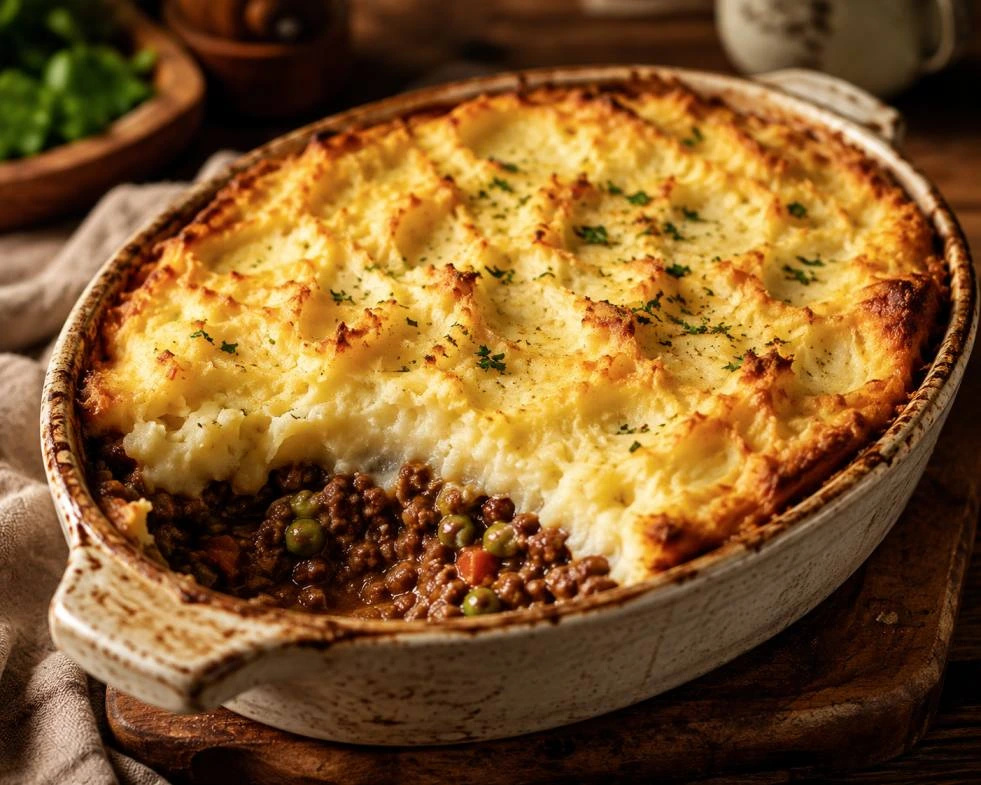
Classic British Cottage Pie
Ingredients
Notes
The Method, Step by Step
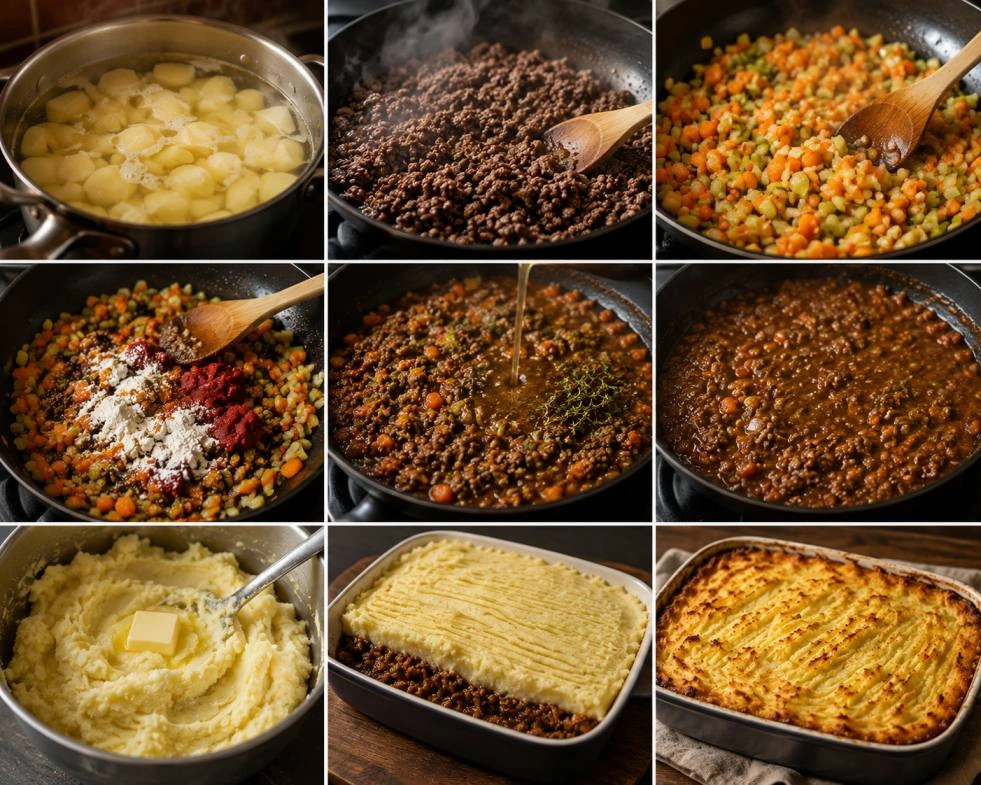
Step 1 — Get the mash started first. Put your chopped potatoes into a pot of cold salted water, bring to the boil, then simmer for 15-20 minutes until they’re properly soft when pierced with a knife. Doing this early means it’s resting and ready by the time your filling is done.
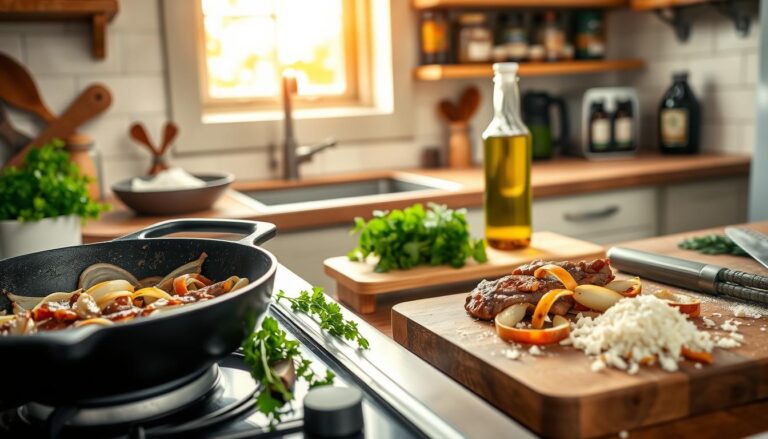
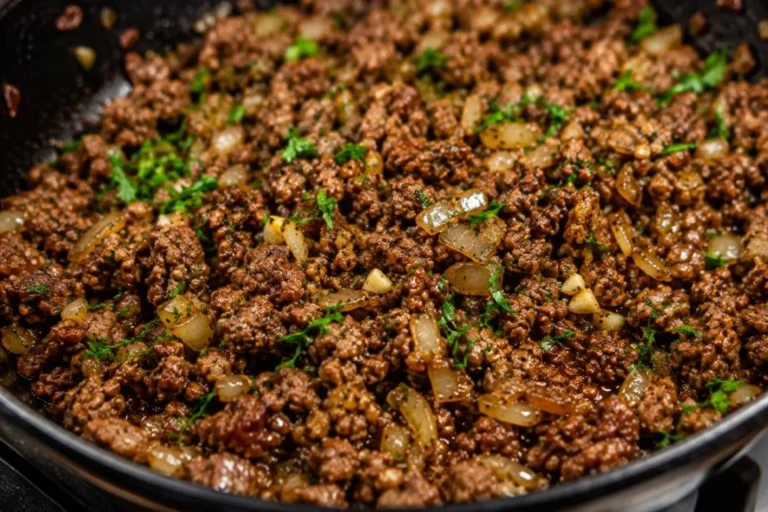
Step 2 — Brown the beef properly. Heat the oil in a large pan over high heat and add the mince in batches if needed. You want an actual sear with some colour on it, not grey steamed meat — this is where most of your flavour comes from. Once browned, remove it and set aside, leaving the fat behind.
Step 3 — Soften the vegetables. In the same pan, add the onion, carrot, and celery, and cook gently for about 8 minutes until softened. Add the garlic in the last minute so it doesn’t burn.
Step 4 — Build the gravy base. Stir in the tomato purée and flour, and cook for a minute — this coats the vegetables and starts thickening things before any liquid goes in, which is the step most rushed recipes skip.
Step 5 — Return the meat and add liquid. Put the beef back in, then add the Worcestershire sauce, stock, and thyme. Stir well, bring to a gentle simmer, and season with salt and pepper.
Step 6 — Reduce, uncovered, for 25-30 minutes. This is the step that actually determines whether your pie ends up watery. Leave the lid off and let it simmer gently until the liquid has visibly thickened into a proper gravy that coats the back of a spoon. If it still looks soupy at 25 minutes, keep going — there’s no fixed clock here, only the texture in front of you.
Step 7 — Mash the potatoes. Drain them well, then mash with the butter and warm milk until smooth. Season with salt. A drier mash holds its shape on top far better than a loose, sloppy one.
Step 8 — Assemble. Spoon the beef filling into an oven dish, spreading it evenly. Top with the mash, spreading right to the edges to seal in the filling (this stops it bubbling up and over). Rake the surface with a fork — those ridges are what catch and crisp in the oven. Sprinkle cheese on top if using.
Step 9 — Bake. Place in an oven preheated to 200°C (180°C fan) for 25-30 minutes, until the top is golden brown and slightly crisp at the peaks. Let it sit for 5 minutes before serving — it holds together far better once it’s had a moment to settle.
A Few Things I’d Tell Any Beginner
Honestly, the difference between a good cottage pie and a great one usually comes down to seasoning and patience, not skill. Taste the gravy before it goes anywhere near the potatoes — if it tastes flat, it’s very likely under-seasoned, not under-cooked. A splash more Worcestershire sauce or a pinch more salt usually fixes it instantly.
If you want a genuinely crisp top rather than just golden, brush the raked mash lightly with melted butter before it goes in the oven. And if you’re after extra flavour depth, a splash of red wine added at the same time as the stock does wonders — cook it off for a minute first so it isn’t harsh.
Frequently Asked Questions:
What’s the difference between cottage pie and shepherd’s pie?
The meat. Cottage pie is made with beef, shepherd’s pie with lamb. Everything else about the dish — the mash topping, the gravy base, the method — is essentially the same.
Which meat is traditionally used in a cottage pie?
Minced beef. It’s the defining ingredient, and it’s what separates cottage pie from its lamb-based cousin, shepherd’s pie.
How do you stop cottage pie from being watery?
Simmer the filling uncovered for at least 25-30 minutes so the liquid actually reduces into a gravy, and make sure you’ve added flour early on to help it thicken. A watery pie is almost always a filling that went into the oven before it had properly reduced.
How do you get a crispy cottage pie topping?
Use a drier mash, rake the surface with a fork before baking to create ridges, and bake at a proper 200°C. A light brush of melted butter over the top gives the ridges an extra edge of crispness.
Give It a Go
Cottage pie rewards patience more than technique — the gravy step is really the only place beginners rush, and it’s the one place you shouldn’t. Get that right, and everything else falls into place. Try it this week, and if your gravy needs a bit longer than the recipe says, let it run — your pie will thank you for it.