Liver and Onions Recipe: A Classic Homemade Cooking Guide
Do you still remember the aroma of liver and onions cooking slowly in a grandmother’s kitchen? For some, it brings warmth and comfort; for others, it may feel a little unfamiliar. Either way, this dish carries deep memories for countless American families, blending nostalgia, tradition, and nourishment in every bite.
The traditional Liver and Onions Recipe has been part of home cooking since the early 20th century. It became especially popular during the Great Depression, when families relied on affordable, nutrient-rich meals. The combination of tender liver and naturally sweet caramelized onions turned simple ingredients into something truly satisfying.
Today, it deserves a place back on your table. When prepared correctly, liver and onions can be incredibly flavorful and tender. The real difference lies in the technique—proper preparation, precise cooking time, and careful handling of the liver.
In this guide, you’ll discover how to prepare a delicious Liver and Onions Recipe using both traditional Southern methods and fresh farm-to-table approaches. Whether you’re trying it for the first time or recreating a childhood memory, this dish can become a rewarding classic in your kitchen.
Key Takeaways
- Beef liver should be soaked before cooking to reduce bitterness and improve tenderness
- Slowly caramelized onions bring out the signature sweetness of the dish
- Correct heat control prevents liver from turning tough or rubbery
- This Liver and Onions Recipe is influenced by English, German, and American culinary traditions
- Beef liver is rich in iron, B vitamins, and high-quality protein
- Proper storage helps keep leftovers fresh for several days
Why This Classic Liver and Onions Recipe Never Goes Out of Style
More than just a meal, this dish carries generations of home cooking traditions and family memories. In many Southern kitchens, recipes like this have been passed down and cherished for decades.
Even as food trends come and go, the comfort of a classic Liver and Onions Recipe remains unchanged. It delivers a simple, satisfying experience that lingers well beyond the dinner table. Many families remember grandparents preparing it long before modern cooking styles existed.
- Affordable protein that fits any budget
- Naturally rich in iron, vitamins, and essential nutrients
- Simple ingredients commonly found in most kitchens
- Quick preparation, ideal for busy weeknights
- Deep, savory flavor without complicated cooking methods
During the Great Depression, liver and onions became a practical solution for many households. It offered both nourishment and affordability, and that wisdom continued through generations.
When prepared well, this dish is more than just economical—it’s comforting, hearty, and deeply rooted in tradition. It doesn’t rely on modern trends or complex techniques. Instead, it stays true to its origins: honest, simple home cooking.
That authenticity is exactly why the Liver and Onions Recipe continues to be loved and passed down from one generation to the next.
Essential Ingredients for Perfect Liver and Onions
Great results start with choosing the right ingredients. Every component in this dish plays a role in building its flavor, texture, and overall balance.
A well-prepared beef liver dish depends on quality ingredients and proper handling from the start.
Choosing the Right Type of Liver
Beef liver is the most commonly used option for this recipe. It has a bold, rich taste and becomes tender when cooked correctly. Always look for fresh liver with a deep red color and a clean, fresh smell.
If possible, ask your butcher for the freshest cut available. Some cooks prefer slicing it themselves for control over thickness, while others choose pre-sliced options. Thin slices are generally preferred because they cook evenly and stay tender.
The Role of Onions in This Classic Dish
Onions are just as important as the liver itself in this recipe. Typically, two large yellow onions are used, sliced into rings. Yellow onions are ideal because they caramelize beautifully and develop a natural sweetness that balances the richness of the liver.
- Yellow onions offer the best caramelized flavor
- Onion rings cook evenly and create a classic presentation
- Slow caramelization usually takes 15 to 20 minutes
Flour, Seasonings, and Flavor Enhancers
A light coating of all-purpose flour helps create a delicate crust while cooking. About half a cup is usually enough, combined with simple seasonings that enhance the natural flavor.
Salt, black pepper, garlic powder, and paprika work together to add depth without overpowering the dish.
Butter is the best fat for frying, about three tablespoons. Beef broth makes a rich gravy. Fresh herbs like parsley and thyme enhance the dish. These additions make your beef liver recipe stand out.
| Ingredient | Amount | Purpose |
|---|---|---|
| Beef liver | 1 pound | Main protein |
| Yellow onions | 2 large | Caramelized aromatics |
| All-purpose flour | ½ cup | Dredging coating |
| Butter | 3 tablespoons | Cooking medium |
| Beef broth | 1 cup | Gravy base |
| Salt and pepper | To taste | Seasoning |
Having these ingredients ready makes cooking beef liver easier. Quality ingredients make your dish taste better and feel more rewarding.
How to Prep Beef Liver Before Cooking
Preparing your beef liver is key to a great dish. The work you do now affects the taste and texture of your meal. Start by rinsing the liver under cold water and then dry it with paper towels. This removes excess moisture that can prevent browning.
Next, find the thin, shiny membrane on the liver. It looks like clear plastic wrap. Use a small knife to carefully remove it. This step is important for a tender dish.
Soaking the liver is essential. It softens the flavor and reduces bitterness. Here are some soaking options:
- Soak liver slices in milk or buttermilk for 30 minutes to 2 hours in a covered shallow dish in the refrigerator
- For a longer soak, leave it overnight or up to 4 hours for milder flavor
- If you avoid dairy, use cold water mixed with 2 tablespoons of apple cider vinegar or lemon juice
After soaking, rinse the liver under cold water and dry it again. Slice it into 1/2 to 3/4-inch thick pieces. This ensures even cooking when you cook liver and onions.
Step-by-Step Liver and Onions Recipe
Making a tasty pan fried liver and onions dish needs careful steps. This recipe shows you how to cook it, from caramelizing onions to making a rich gravy. Each step helps make tender liver and onions that taste like they’re from a restaurant.
Caramelizing the Onions to Perfection
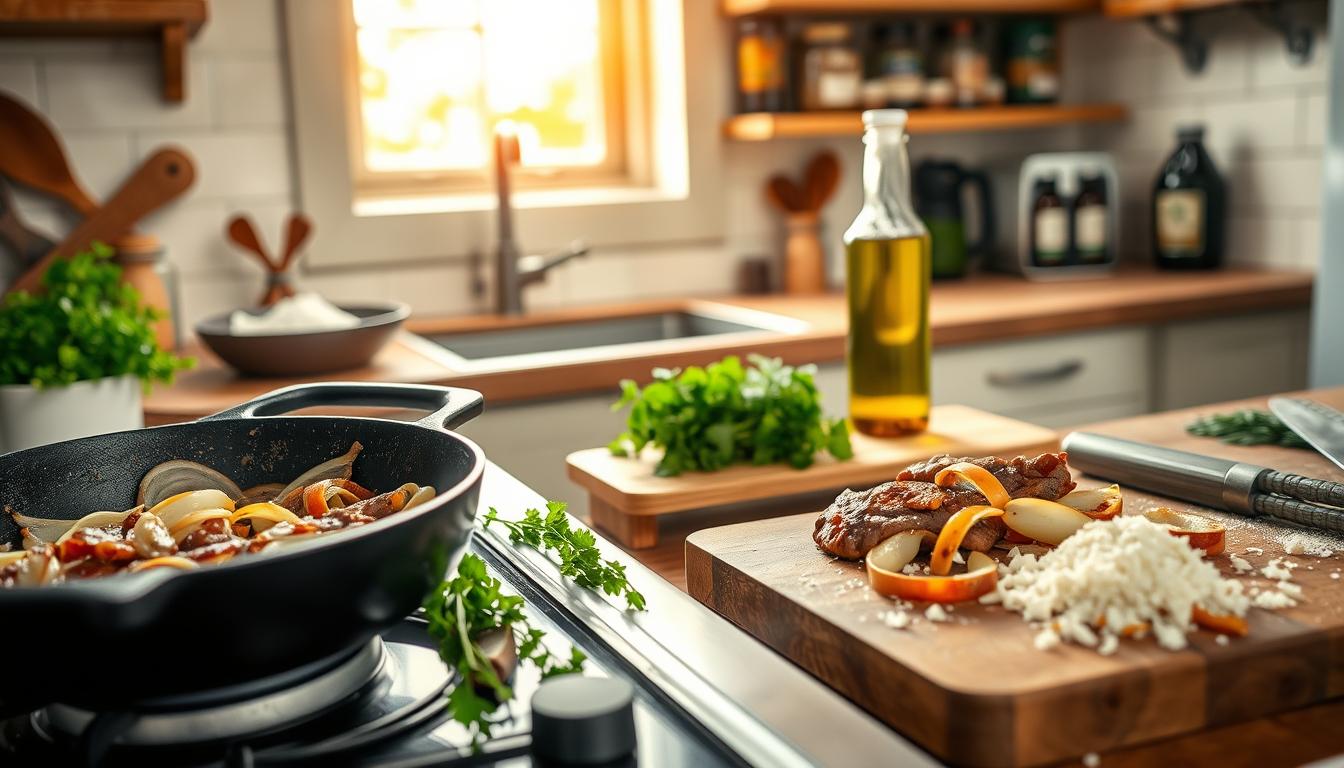
Begin by cutting your onions into thin slices. Heat two tablespoons of butter in a big skillet over medium heat. Add the onions and cook slowly for 15-20 minutes, stirring now and then. They should turn golden brown and taste sweet and rich.
- Use medium heat to prevent burning
- Stir every few minutes for even browning
- Look for a deep golden color, not dark brown
- The slower cooking creates better flavor
When your onions are perfectly caramelized, take them out of the pan and set them aside. You’ll use them later with your cooked liver.
Dredging and Frying the Liver
Pat your beef liver dry with paper towels. Mix flour, salt, pepper, and your favorite seasonings in a shallow bowl. Coat each piece of liver in the flour mixture, making sure both sides are evenly covered.
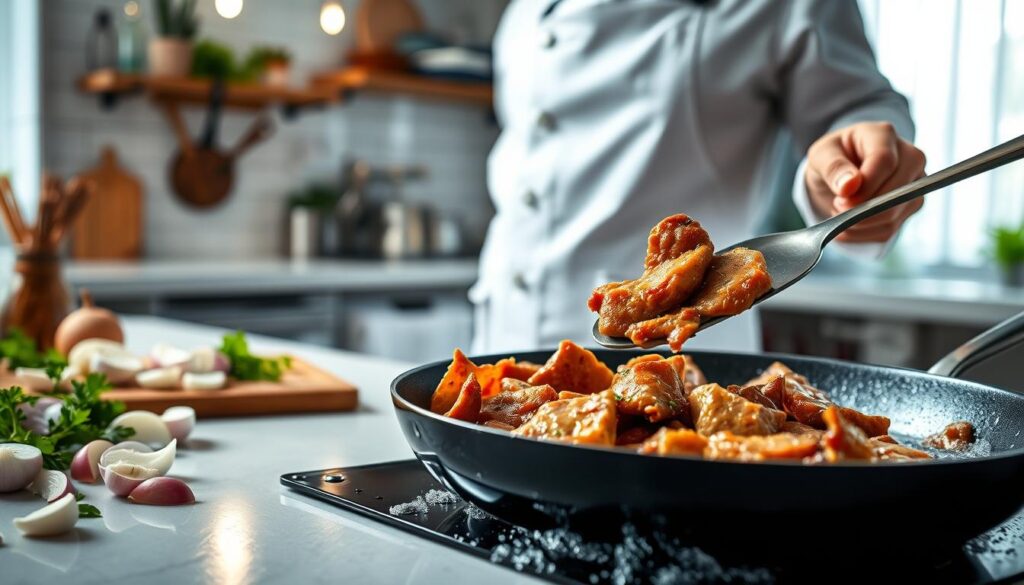
Heat one tablespoon of butter and one tablespoon of oil in your skillet over medium-high heat. Once it’s hot, carefully put your liver pieces in the pan. Cook for 3-4 minutes on each side. This way, you avoid overcooking the meat and make tender liver and onions.
- Heat the pan until butter is foaming
- Place liver pieces without crowding the pan
- Cook until golden brown on the first side
- Flip and cook the second side
- Internal temperature should reach 160°F
Making Rich Pan Gravy
Making liver and onions with gravy is the last step. Keep the pan drippings after removing your liver. Sprinkle one tablespoon of flour over the drippings and stir constantly for one minute.
Slowly pour in one cup of beef broth while stirring to avoid lumps. Keep cooking until the gravy thickens, about 3-5 minutes. Add your caramelized onions back to the pan and gently mix in your cooked liver.
Season your liver and onions with gravy to taste. A pinch of Worcestershire sauce or fresh thyme adds extra depth. Serve your pan fried liver and onions while hot for the best flavor and texture.
Best Tips for Cooking Tender Liver and Onions
Getting tender liver and onions right is all about a few key techniques. These tips are easy to follow once you know what’s important. Success comes from choosing the right pan, controlling the heat, timing, and how you prepare the ingredients.
When cooking beef liver, the size of your skillet is crucial. A large skillet prevents overcrowding, which is bad for tender meat. Overcrowded pans make liver steam instead of sear, leading to tough meat.
Patience with your onions is just as important. Don’t rush the caramelization by turning up the heat too high. Medium to medium-high heat helps onions turn sweet and golden, balancing the liver’s rich flavor.
Key Cooking Guidelines
- Use a large skillet to prevent overcrowding the pan
- Maintain medium to medium-high heat for your floured liver
- Cook liver just until barely cooked through with a slight pink center
- Allow onions time to caramelize slowly without rushing
- Coat each slice in flour mixture after drying for a crisp exterior
- Serve your dish immediately while it’s still hot and tender
Timing is everything when cooking beef liver. It cooks fast, so stay alert. Liver is done when it’s just barely cooked through, with a light pink center. Overcooking makes it dry and loses its appeal.
Before frying, make sure your liver is ready. After soaking and drying, coat each slice in flour. This adds texture and softens the liver’s strong flavor. The flour coating needs room to develop, which is why pan size and spacing are important.
| Cooking Element | What Works Best | What to Avoid |
|---|---|---|
| Pan Size | Large, wide skillet with 12+ inches diameter | Small pans that force overcrowding |
| Heat Level | Medium to medium-high for searing | High heat that burns the coating |
| Cooking Time | Just until barely cooked through | Extended cooking that dries out meat |
| Liver Spacing | Single layer with space between slices | Crowded pieces that steam together |
| Onion Timing | Slow caramelization over 10-15 minutes | Quick cooking that burns them |
| Serving | Immediately after cooking finishes | Holding warm, which toughens the meat |
One final tip: have your side dishes ready before you start cooking. Tender liver and onions don’t hold well after cooking. Serve your dish immediately after cooking to ensure it’s hot, tender, and delicious.
Common Mistakes to Avoid When Making Liver and Onions
Learning to cook liver and onions takes time. Knowing what to avoid helps you avoid frustration. Many home cooks make mistakes that make the dish tough and unpleasant. By understanding these mistakes, you can make a tender, flavorful meal that everyone will love.
When you cook liver and onions right, you avoid common mistakes. The difference between a tasty dish and a bad dinner often comes down to a few errors. By avoiding these mistakes, you’re more likely to succeed.
Overcooking the Liver
Liver gets tough and bitter if cooked too long. Most people cook it too long out of fear. To get a tender, juicy liver, cook it for just a few minutes on each side.
A good crispy liver recipe cooks at high heat for 3-4 minutes per side, depending on thickness. The internal temperature should reach 160°F. But, take the liver out of the pan a bit before that. It will continue to cook from the heat it retains.
Skipping the Soaking Step
Many people skip soaking the liver before cooking. This step removes blood and strong flavors that can make the dish taste bad. Soak your liver in milk or cold water for 30 minutes to 2 hours before cooking. This makes the liver taste milder and become more tender.
- Soak liver in whole milk for best results
- Cold water works as a budget-friendly alternative
- Never skip this step if you want tender results
- Pat the liver dry before dredging for a crispy liver recipe
Understanding these common mistakes can greatly improve your liver and onions cooking. Take your time with preparation, respect the cooking time, and your dinner will be delicious and memorable.
What to Serve With Liver and Onions
Choosing the right side dishes is key to a complete liver and onions with gravy meal. You want sides that complement the rich flavors of your main dish. The best sides soak up the delicious pan gravy, making the meal even more satisfying.
Think of your sides as supporting players. They should make your liver and onions with gravy even better, without taking over. Look for sides that absorb liquid well and add comfort without overpowering the main dish’s bold flavors.
- Mashed potatoes – The undefeated classic pairing that soaks up gravy beautifully
- Boiled or buttered potatoes – Simple preparations that let gravy shine
- Roasted potatoes – A heartier option with golden, crispy edges
- Green beans or peas – Add color and nutrition without overwhelming the plate
- Roasted or glazed carrots – Provide subtle sweetness that balances liver’s richness
- White rice or buttered baked rice – Accessible alternatives that hold gravy well
Your liver and onions with gravy deserves sides that let it be the star. Every side should aim to capture every drop of that golden gravy. Mashed potatoes are a classic favorite because their creamy texture is perfect for your homemade pan sauce.
Storing, Freezing, and Reheating Leftovers
When you make a liver and onions recipe, you often have leftovers. It’s important to know how to store and reheat them. This keeps your meal fresh and safe to eat. The right storage methods prevent bacteria and spoilage.
Your liver and onions recipe can stay delicious for several days. Just follow the right steps.
Proper Storage Methods
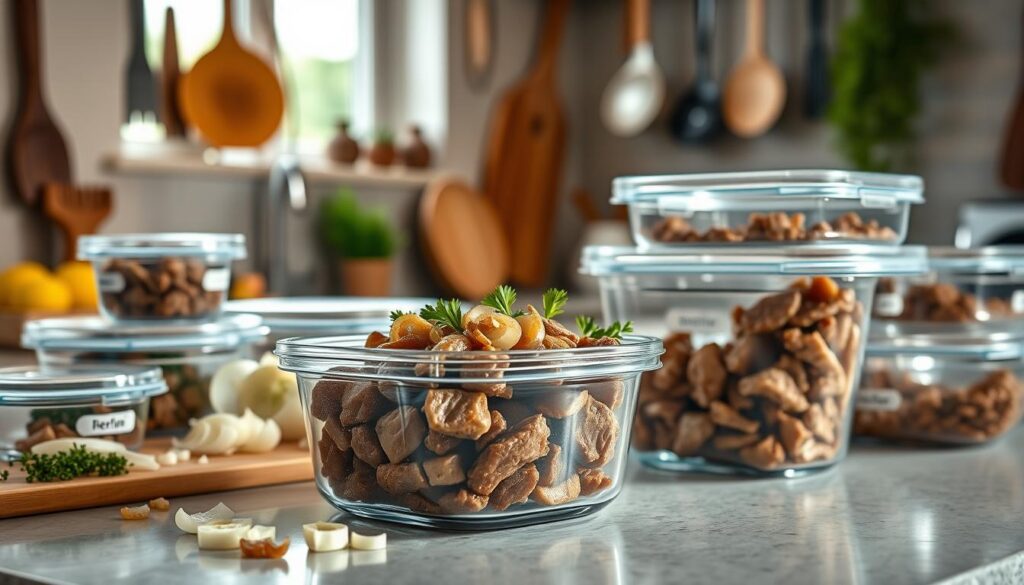
Let your liver and onions cool down to room temperature first. Then, put it in an airtight container. Glass containers with sealed lids are best for keeping it fresh.
Put your leftovers in the fridge within two hours of cooking. They will stay good for three to four days.
If you want to keep it longer, freezing is the way to go. Divide your dish into meal-sized portions before freezing. Use freezer bags or airtight containers to prevent freezer burn.
Label each container with the date and what’s inside. Your frozen liver and onions recipe can last up to three months.
Portioning for Meal Prep
Splitting your liver and onions into individual portions makes meal prep easy. Use ice cube trays or small freezer containers for single servings. This saves time on busy weekdays.
When you need to eat it, your portions thaw quickly. Reheat your liver and onions gently over low heat in a skillet. Add a splash of water or beef broth to keep it moist.
Avoid high heat, as it makes the liver tough. Your reheated liver and onions taste best when warmed slowly for five to ten minutes.
- Store in airtight containers
- Refrigerate within two hours
- Keep refrigerated leftovers for three to four days
- Freeze portions for up to three months
- Label all containers with dates
- Reheat gently over low heat
Nutritional Benefits of Beef Liver and Onions
Your beef liver recipe is packed with nutrients that are hard to find in other foods. A 3-ounce cooked serving has about 149 calories, 23 grams of protein, and only 4 grams of fat. It’s a great source of lean protein for your meals.
Beef liver is a nutritional powerhouse. It gives you more than 100% of your daily Vitamin A, which is good for your eyes, immune system, and skin. It also has lots of B vitamins, including B12 for your nerves and red blood cells, folate for DNA, and riboflavin for energy.
Beef liver is also rich in iron, which your body absorbs well. This is great for people who might not get enough iron. Liver gets its high nutrient levels because it filters blood and stores nutrients in cattle.
| Nutrient | Amount per 3 oz Serving | Daily Value % |
|---|---|---|
| Calories | 149 | 7% |
| Protein | 23g | 46% |
| Fat | 4g | 6% |
| Vitamin A | 6,582 IU | 131% |
| Vitamin B12 | 60.3 mcg | 1,005% |
| Iron | 5.2mg | 29% |
| Folate | 145 mcg | 36% |
Health experts like WebMD say to eat liver only about once a week. This is because it’s so rich in nutrients, especially Vitamin A. It’s better to include it in your meals a few times a week, not every day.
- Beef liver provides more B12 than almost any other food source
- One serving covers your entire daily vitamin A needs
- Iron in beef liver is highly absorbable by your body
- Folate content supports healthy cell division and DNA formation
- Riboflavin helps convert food into usable energy
Your beef liver recipe is more than just comfort food. It’s one of the most nutritious meals you can make. Knowing its benefits makes it clear why it’s a great choice for a healthy diet.
Conclusion
The Liver and Onions Recipe is more than just a simple home-cooked meal—it’s a timeless dish rooted in tradition, comfort, and nourishment. From its humble beginnings as an affordable family staple to its place in modern kitchens, it continues to prove that simple ingredients can create something truly satisfying.
When prepared with care, especially through proper soaking, slow caramelized onions, and careful cooking of the liver, this dish transforms into a rich and flavorful experience. Whether you’re revisiting a childhood memory or discovering it for the first time, the Liver and Onions Recipe offers a hearty, nutritious meal that never goes out of style.
Bring it back to your table, take your time with the preparation, and enjoy the depth of flavor that comes from a true classic.
FAQs
1. How do you make liver less bitter in the Liver and Onions Recipe?
Soaking the liver in milk or water for 30–60 minutes helps reduce bitterness and improves its tenderness and flavor.
2. What type of liver is best for the Liver and Onions Recipe?
Beef liver is the most commonly used option because of its rich flavor and firm texture, but calf liver is also a popular, milder alternative.
3. Why are onions important in this recipe?
Onions add natural sweetness and balance the strong flavor of the liver. When caramelized slowly, they enhance the overall taste of the dish.
4. How do you know when liver is fully cooked?
Liver cooks quickly—usually in a few minutes per side. It should be slightly pink inside but not raw, as overcooking can make it tough.
5. Can you store leftover Liver and Onions Recipe?
Yes, leftovers can be stored in an airtight container in the refrigerator for up to 2–3 days and reheated gently before serving.