How to Bake a Traditional British Bride Cake: A Beginner’s Guide from My Kitchen
I still remember the first wedding cake I ever baked. I was terrified of it. Three tiers of rich fruit cake, a layer of marzipan that had to sit perfectly flat, and royal icing that either sets like glass or cracks like a bad decision. Twenty years later, I can tell you the truth that nobody shares at the start: a traditional British bride cake looks far more intimidating than it actually is. Once you understand the logic behind each layer, it becomes one of the most forgiving bakes in your repertoire.
If you’ve ever typed “what is a bride cake” into Google at midnight while planning a wedding, you’re in good company. It’s one of the most searched wedding baking questions in the UK, and for good reason — the terminology, tradition and etiquette around it can feel like its own secret language. So let’s clear all of that up, and then get our hands into the mixing bowl.
Key Takeaways
- A “bride cake” is simply the traditional term for what most of us now call the wedding cake.
- The classic British version is a rich, boozy fruit cake — not sponge — covered in marzipan and royal icing.
- You don’t need professional training to make one; you need patience and the right order of operations.
- The cake actually improves with age, so baking it well ahead of the big day is tradition, not a shortcut.
What Exactly Is a “Bride Cake”?
Here’s the thing: “bride cake” and “wedding cake” are the same thing, but the older name tells you something the newer one doesn’t. Historically in Britain, the cake was seen as belonging to the bride specifically, baked (or commissioned) as part of her side of the celebration, while the groom traditionally had his own, smaller, darker fruit cake known as the groom’s cake. That custom has mostly faded in modern Britain, but you’ll still spot references to it in older recipe books and etiquette guides.
The name has also picked up folklore along the way. Unmarried guests were once encouraged to take a piece of bride cake home and sleep with it under their pillow, supposedly to dream of their future spouse. Whether or not you believe in cake-based fortune telling, it tells you how deeply this bake is woven into British wedding tradition.
What Makes It “Traditional British”?
Picture a Victorian-era wedding table, and you’ll picture this cake: a dense, dark fruit cake, packed with dried fruit that’s been soaking in brandy or sherry for weeks, wrapped in a smooth layer of almond marzipan, and finished with crisp white royal icing piped into delicate patterns. Unlike the light sponge cakes popular in American-style weddings, the British version is built to last. It’s not unusual for couples to keep the top tier in the freezer and eat it a year later at a christening, which says everything about how sturdy this cake is meant to be.
What You’ll Need (Beginner Quantities, Single Tier)
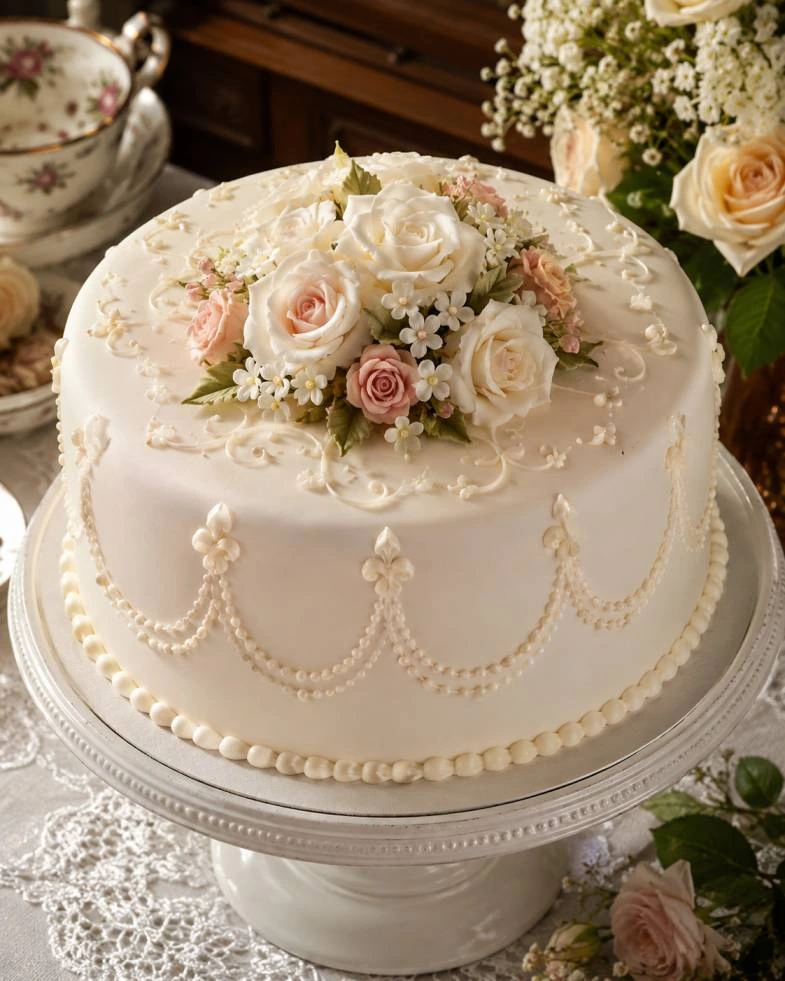
Recipe Title: Traditional British Bride Cake
Ingredients
Notes
- Let the cake cool completely before decorating.
- For the best flavor, prepare the fruit cake a day ahead and allow it to rest before icing.
- Store the finished cake in an airtight container in a cool, dry place.
- Decorate with white icing and simple traditional details for an elegant finish.
- Bring the cake to room temperature before serving for the best texture and flavor.
Step-by-Step: Your First Bride Cake
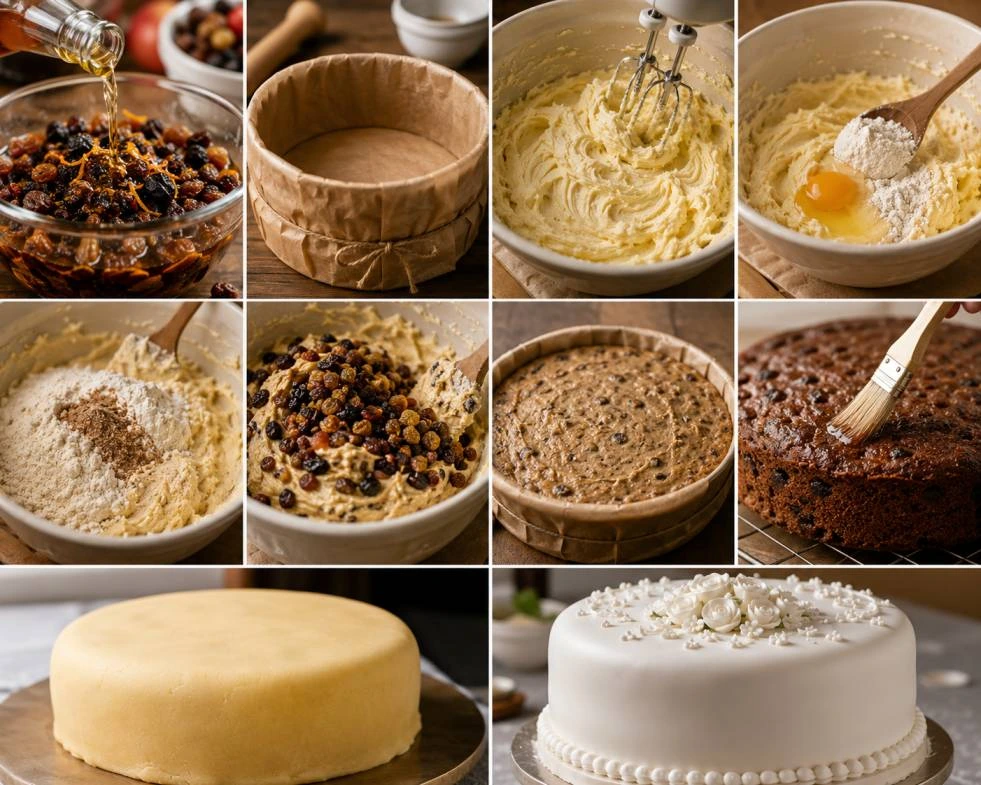
- Soak the fruit. The night before (or up to a month ahead), combine the dried fruit, citrus zest and brandy in a bowl. Cover and leave at room temperature so the fruit plumps up and drinks in the flavour.
- Prepare your tin. Grease and double-line a deep 20cm round tin with baking parchment, and wrap the outside with a layer of brown paper. This slows the heat and stops the edges burning during a long, low bake.
- Cream the butter and sugar. Beat until pale and fluffy — this takes longer than you’d think, so don’t rush it. It’s the step that gives the cake its structure.
- Add the eggs gradually. One at a time, with a spoonful of flour alongside each, to stop the mixture curdling.
- Fold in the dry ingredients. Sift in the flour, mixed spice and ground almonds, then fold gently by hand.
- Stir in the soaked fruit. Fold through, along with any leftover brandy, until evenly combined.
- Bake low and slow. Spoon into the tin, smooth the top, and bake at 140°C (fan) for roughly 3 to 3.5 hours. A skewer should come out clean, not wet.
- Feed the cake. Once cooled, pierce the top with a skewer and brush over a tablespoon of brandy. Wrap in parchment and foil, and repeat every week or two — this is what gives a bride cake its famous depth of flavour.
- Cover with marzipan. At least a week before serving, brush the cake with warmed apricot jam, then roll out and smooth on the marzipan, trimming neatly at the base.
- Finish with royal icing. Whip the royal icing sugar to stiff peaks and spread or pipe it over the marzipan. Leave to dry completely before adding any decoration.
Tips from the Kitchen
Honestly, the single biggest mistake beginners make is rushing the feeding stage. Give the cake time — the brandy isn’t just for flavour, it’s what keeps the crumb moist for weeks. On the flip side, don’t over-soak the fruit before baking, or your cake will sink in the middle. And if your royal icing cracks slightly as it dries, don’t panic — a light dusting of edible lace or fresh flowers covers a multitude of small imperfections. You’re not alone in worrying about this part; even professional bakers have off days with icing.
Frequently Asked Questions
What is a bride cake?
A bride cake is the traditional British name for what’s now more commonly called a wedding cake. Historically, it was associated specifically with the bride’s side of the celebration, distinct from the groom’s smaller, darker fruit cake.
What is the traditional British wedding cake?
It’s a rich, dark fruit cake made with dried fruit, spices and alcohol, then covered in marzipan and finished with royal icing. It’s designed to be sturdy enough to store, and often improves in flavour over time.
Who pays for the bride’s cake?
Traditionally in the UK, the bride’s family covered the cost of the bride cake as part of the wider wedding expenses, while the groom’s family historically paid for his own cake. In modern weddings, couples very often split or share all costs themselves, so this is more a guideline than a rule today.
How much should you expect to pay for a wedding cake?
Prices vary hugely depending on size, tiers and decoration, but a professionally made three-tier British wedding cake typically starts from a few hundred pounds and can run into the thousands for elaborate designs. Baking your own, as above, is a genuinely cost-effective and personal alternative.
Ready to Give It a Go?
There’s something quietly wonderful about handing someone a cake you made yourself on one of the biggest days of their life. It takes patience, yes, and a few weeks of planning ahead — but the technique itself is well within reach for a confident beginner. Give the recipe a try, feed your cake faithfully, and don’t be afraid to make it your own with the decoration. If you do bake one, I’d genuinely love to hear how it turns out — drop a comment and let me know which part felt trickiest.