Crochet Flower Blankets: A Beginner-Friendly Guide to Making Your Own
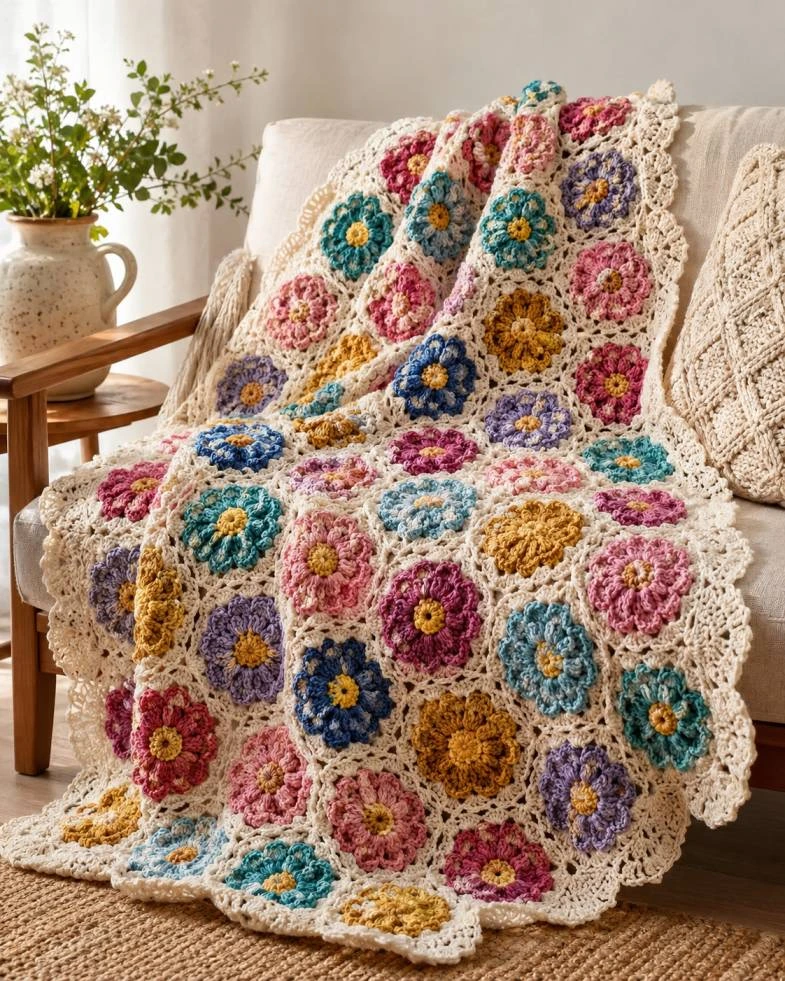
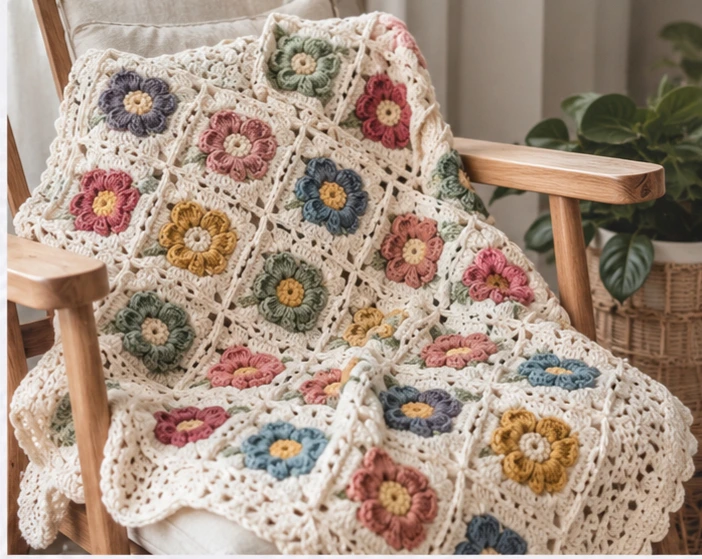
Crochet flower blankets have become one of the most beloved projects for both new and experienced crocheters, and it’s easy to see why. These blankets take a simple, cozy foundation and dress it up with rows or clusters of crocheted flowers, turning an everyday throw into something that feels handmade, personal, and genuinely pretty. Whether you picture a soft pastel blanket dotted with tiny blooms or a bold, colorful design bursting with flower motifs, a crochet flower blanket lets you combine two crochet skills you probably already love: making granny-square-style panels and crocheting little flowers. If you’ve been wanting a project that feels a little more decorative than a plain solid-color blanket, this is a great place to start.
What Makes This Crochet Project Special
A crochet flower blanket stands out because it turns a functional item into a piece of textile art. Instead of a single flat surface, the finished blanket has texture and dimension, with flowers that catch the light differently than the background stitches around them. This style works well for several reasons:
- It’s highly customizable. You can crochet the flowers separately and appliqué them onto a plain blanket, or work them directly into strips or squares as you go.
- It suits almost any color palette, from soft nursery pastels to rich jewel tones for an adult throw.
- It’s a satisfying project to break into smaller pieces. Making flowers in batches, then assembling them later, keeps the work from feeling overwhelming.
- It’s a lovely gift item. A flower blanket feels thoughtful and handmade in a way that a plain blanket sometimes doesn’t.
This design also appeals to crocheters who enjoy variety in their stitching. You get the rhythm of repetitive rounds while making flowers, plus the different rhythm of joining rows or panels for the blanket base.
Materials You May Need
Exact yarn weight, hook size, and finished dimensions will depend on the specific pattern and size blanket you choose to make, so treat the list below as a general starting point rather than a fixed specification.
- Yarn: A medium worsted weight (Category 4) yarn is a common and practical choice for blankets because it works up at a reasonable pace and creates a warm, sturdy fabric. Some crocheters prefer a lighter DK weight for a more delicate look with smaller flowers.
- Yarn colors: One main color for the blanket background, plus several accent colors for the flowers and flower centers. A soft neutral (cream, white, or gray) background tends to make bright flower colors pop.
- Crochet hook: A hook size appropriate for your chosen yarn weight (often somewhere in the range recommended on the yarn label). Always check your gauge before committing to a full-size project.
- Yarn needle: For weaving in ends and sewing flowers onto the blanket, if you’re making them as separate appliqués.
- Scissors
- Stitch markers: Helpful for keeping track of rounds when making flowers or joining blanket panels.
- Measuring tape: Useful for checking your blanket size as you go.
If you plan to attach flowers after the blanket is finished, you may also want pins to hold them in place while you sew.
How to Make It
Step 1: Choose Your Blanket Construction Method
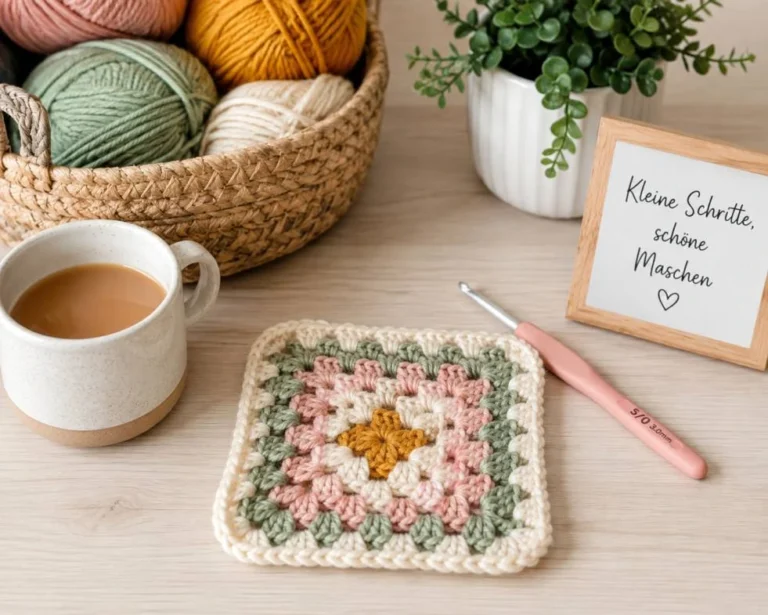
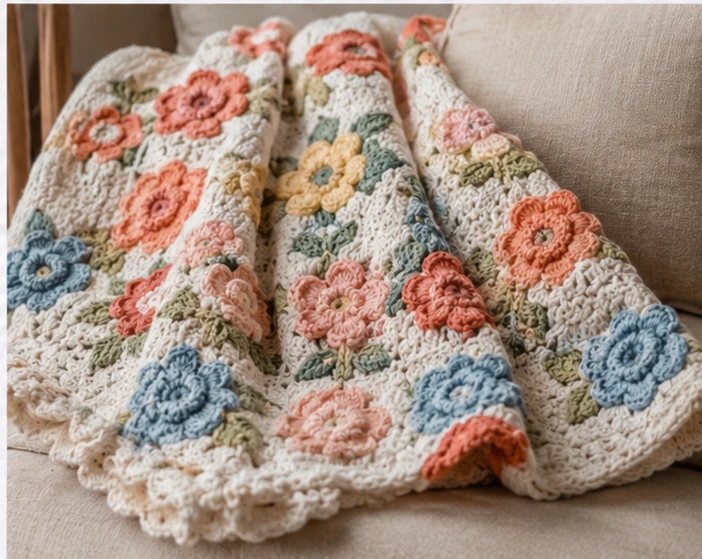
Decide whether you want to crochet flower motifs directly into blanket squares or strips, or make the base blanket first and appliqué separate flowers on top. Both approaches are common. Working flowers into squares (similar to a flower granny square) creates a more integrated, textured look, while appliquéd flowers give you more flexibility with placement and are often easier for beginners to control.
Step 2: Crochet the Flower Motifs
Most simple crochet flowers start with a magic ring or a small foundation chain joined into a ring, followed by a round of petals worked as clusters of stitches into each stitch or space around the ring. A common beginner-friendly flower uses five or six petals, each made from a small group of double crochets or half double crochets worked into the same stitch, then a slip stitch before moving to the next petal. Once you’re comfortable with one flower style, you can experiment with layering a second, smaller petal round on top in a contrasting color for extra dimension.
Step 3: Crochet the Blanket Base
If your flowers will be appliquéd, crochet your blanket base using your preferred stitch pattern, whether that’s a simple single crochet, a textured stitch, or granny squares joined together. Keep your tension consistent and measure periodically to make sure the blanket is growing evenly and reaching your target size.
Step 4: Plan Your Flower Placement
Lay the finished blanket flat and arrange your flowers before sewing anything down. This lets you experiment with spacing, whether you want an even grid pattern, a scattered bouquet look, or a border of flowers along one edge.
Step 5: Attach the Flowers
Using a yarn needle and matching or contrasting thread, sew each flower onto the blanket through the back of the petals, catching just enough of the blanket fabric to hold it securely without stitches showing on the front. Add a contrasting flower center, either crocheted separately or embroidered with a few French knots, for a finishing touch.
Step 6: Weave in Ends and Give It a Final Check
Weave in all loose ends securely on the back of the work, then check the blanket for any missed stitches or loose petals before considering it finished.
Tips for a Better Result
- Choose yarn thoughtfully. A soft, machine-washable yarn is ideal for blankets that will actually get used, especially if the blanket is for a child or a gift.
- Pick a color scheme first. Deciding on 2–4 flower colors plus one background color before you start keeps the finished blanket looking cohesive rather than scattered.
- Watch your tension. Consistent tension matters more on a large flat surface like a blanket than on small projects, since uneven stitches are much more visible.
- Test one flower before committing. Crochet a single flower first to check that the size and stitch count work with your yarn and hook before making a whole batch.
- Block your flowers. Lightly steaming or wet-blocking flower motifs before attaching them helps the petals lie flat and look neater.
- Secure your seams. Whipstitch or a mattress stitch along blanket panel seams tends to be less bulky and more durable than a bulky slip-stitch seam for a project this size.
Top 4 Crochet Trends
1. Nature-Inspired Textures
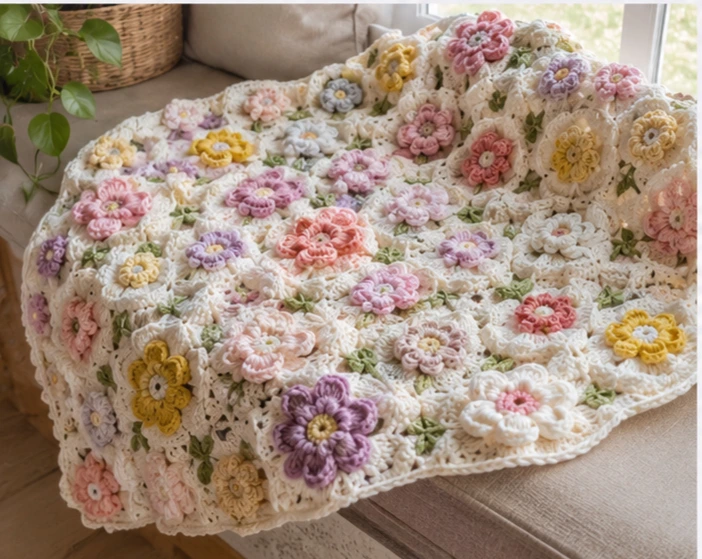
Botanical and nature-themed crochet, including flowers, leaves, and organic shapes, continues to be popular because it adds visual interest without requiring complex colorwork. For a flower blanket, you can lean into this trend by adding a few crocheted leaves or vines between your flowers to soften the layout and make it feel more like a garden than a grid.
2. Mixed Texture Blankets
Many crocheters are moving away from uniform stitch patterns and instead combining textures, such as bobble stitches, shells, and smooth single crochet, within one piece. You can bring this into your flower blanket by varying the background stitch pattern behind your flowers, or by giving some petals a puffier texture with bobble or popcorn stitches.
3. Soft, Muted Color Palettes
Dusty pastels, sage greens, and warm neutrals have been popular alternatives to bright primary colors in recent crochet projects. A flower blanket in this palette, think blush pink, sage, and cream, feels modern and works well in adult living spaces rather than only nursery settings.
4. Modular and Appliqué Techniques
Making individual motifs and joining or attaching them later, rather than crocheting a project in one continuous piece, remains a favored approach because it’s portable and lets you work on a project in short sessions. This fits naturally with the flower-appliqué method described above, since each flower can be a quick, satisfying project on its own before it ever becomes part of the blanket.
Styling and Ideas
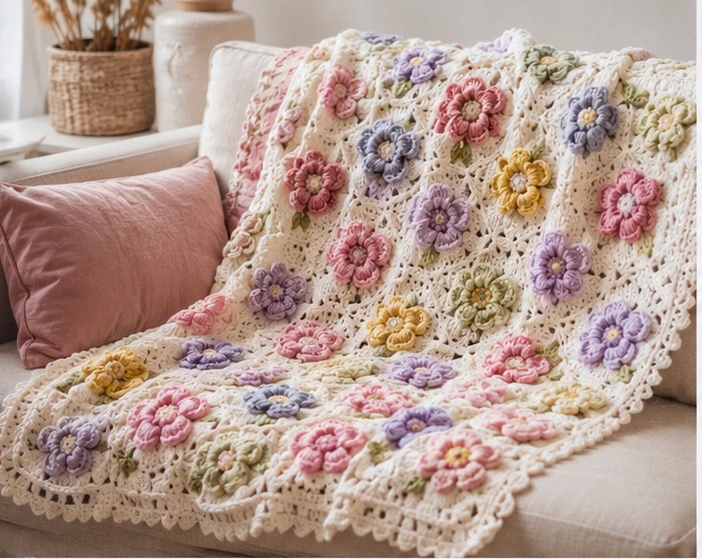
A crochet flower blanket works well in more places than just the crib or the couch. Consider using a smaller version as a lap blanket for reading, or a larger one as a decorative throw folded over the end of a bed. Flower blankets also make thoughtful gifts for baby showers, birthdays, weddings, or as a housewarming present. If you want to customize the project further, try making a monochrome flower version in different shades of a single color for an elegant, textured look, or go bold with a rainbow flower garden for a playful, cheerful blanket. Adding a scalloped or shell-stitch border around the edge is another simple way to tie the whole design together.
FAQs
What is the easiest flower to crochet for beginners? Simple five- or six-petal flowers made with a magic ring center and one round of clustered stitches for the petals are generally the easiest place to start. They require only basic stitches and a small number of rounds, making them approachable even for someone new to crochet.
How much yarn does it take to crochet a flower blanket? The amount depends heavily on the blanket size and how many flowers you plan to include, since a lap blanket with scattered flowers will use much less yarn than a full-size blanket with dense flower coverage. It’s a good idea to buy a bit more yarn than your estimate, especially in your background color, so you don’t run short partway through.
How to make a crochet flower blanket step by step? In general, you crochet your flower motifs first, then either work them into a blanket base directly or crochet a plain base and appliqué the flowers afterward. Planning your color scheme and flower placement before you start sewing pieces together makes the process much smoother.
Which yarn is best for crocheting flowers? A smooth worsted weight yarn tends to show off petal shaping clearly and is easy to work with for beginners. Cotton or cotton-blend yarns can give flowers a bit more structure and definition, while acrylic yarns are budget-friendly and easy to care for.
Conclusion
Crochet flower blankets offer a rewarding middle ground between simple blankets and more advanced colorwork projects, giving you the chance to practice flower motifs while building something warm and useful. Whether you scatter a few blooms across a soft neutral background or cover the whole surface in a garden of color, this style of blanket lets your creativity show through in every petal. With a little planning around color, yarn, and layout, a crochet flower blanket can become a treasured handmade piece you’ll want to make again and again.