Crochet Newborn Blankets: A Complete Guide to Making a Cozy Baby Gift
There’s something special about a handmade blanket waiting for a new baby. Crochet newborn blankets are one of the most popular projects for beginners and experienced crocheters alike, and it’s easy to see why. They’re small enough to finish in a reasonable amount of time, forgiving enough for practicing new stitches, and meaningful enough to become a keepsake a family holds onto for years. Whether you’re crocheting for your own baby, a baby shower gift, or a shop order, this guide walks you through everything you need to know: sizing, stitch choices, materials, a beginner-friendly process, and answers to the questions people ask most often before starting their first baby blanket.
What Makes This Crochet Project Special
Newborn blankets sit in a sweet spot among crochet projects. They’re smaller than adult throws, so they don’t demand weeks of work, but they still give you real practice with tension, stitch consistency, and finishing techniques. Because babies don’t need a blanket the size of a full afghan, you can experiment with a new stitch pattern or color combination without a huge time investment.
They’re also endlessly customizable. A simple single crochet blanket in soft white reads as classic and timeless, while a shell stitch or granny square version feels more textured and decorative. Pastels remain popular, but many crocheters now lean into soft neutrals, sage green, mustard, terracotta, or gender-neutral color palettes that work for any nursery. The size and shape are flexible too, so the same basic techniques can produce a swaddle-style wrap, a stroller blanket, or a heavier crib blanket depending on what the recipient needs.
Materials You May Need
Exact yarn brands, hook sizes, and yardage will vary depending on the pattern and stitch you choose, but most crocheters working on a newborn blanket reach for:
- Yarn: A soft, baby-safe yarn is essential since the blanket will be against delicate skin. Many crocheters choose acrylic or acrylic-blend yarns labeled as baby yarn because they’re machine washable and hold up well to frequent laundering. Cotton and cotton blends are also popular for warmer climates or lighter blankets.
- Crochet hook: The hook size should match the yarn weight and the tension recommended on the yarn label. A slightly larger hook can create a softer, drapier fabric, which many people prefer for baby blankets.
- Scissors: For trimming yarn ends.
- Yarn needle: For weaving in ends and joining pieces if you’re working in sections like granny squares.
- Stitch markers: Helpful for keeping track of rounds, repeats, or corners.
- Measuring tape: To check your blanket against your target size as you work.
- Optional: A blocking mat and pins if your stitch pattern benefits from blocking to lie flat evenly.
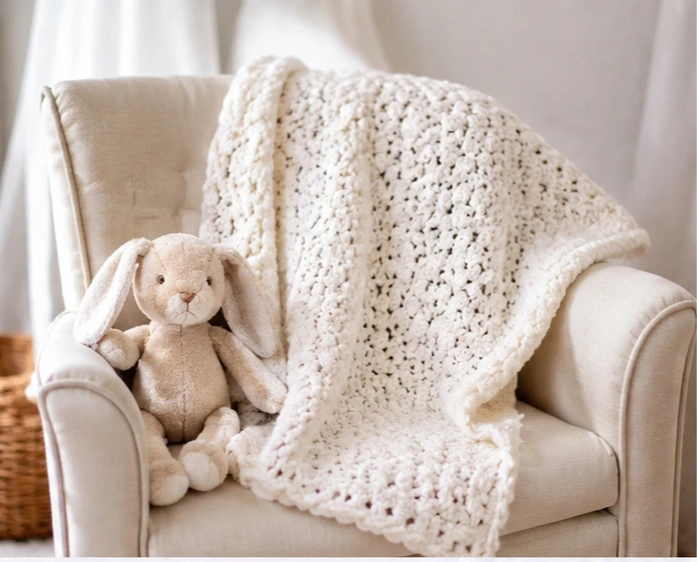
Since exact yardage and hook sizing depend on the specific pattern and yarn weight you select, check your yarn label’s recommended hook size as a starting point and adjust based on your own gauge.
How to Make It
Step 1: Decide on Your Blanket Size
A common question new crocheters ask is what size blanket is appropriate for a newborn. There’s no single official measurement, but many crocheters aim for something in the range of roughly 30 to 36 inches square for a receiving-style blanket, while a crib blanket might run larger, closer to 36 to 45 inches. A smaller lovey or stroller blanket can be as compact as 20 inches square. Choose your target size based on how the blanket will be used, then plan your chain length and row count around that goal.
Step 2: Choose Your Stitch
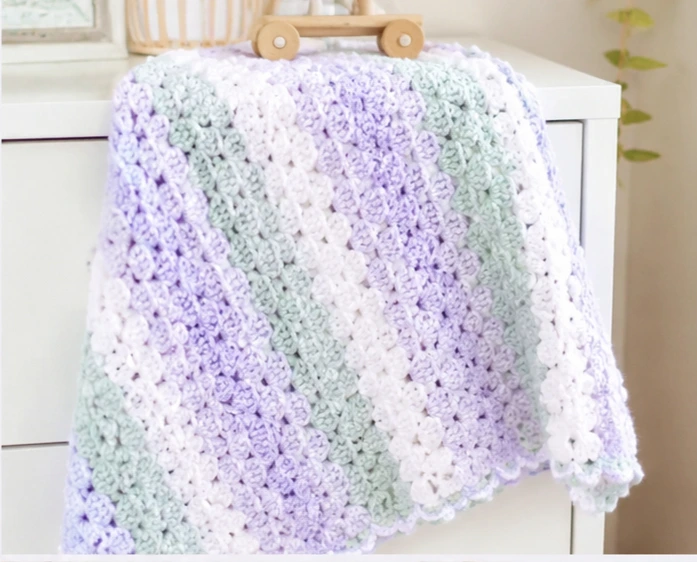
The stitch you pick affects both the look and the speed of your project. Single crochet creates a dense, warm fabric that’s great for beginners because it’s simple to keep consistent. Half double crochet works up faster while still creating a solid fabric, which is why many crocheters consider it one of the quicker options for a baby blanket. Double crochet moves even faster and creates a slightly more open, drapey fabric. For more texture, shell stitch and granny square patterns are popular choices, often mentioned as some of the prettiest options for baby blankets because of their decorative, lacy appearance.
If you’re new to crochet, starting with single crochet or half double crochet in a simple rectangle is the most beginner-friendly route.
Step 3: Chain Your Foundation Row
To figure out how many chains you need, first make a small swatch using your chosen yarn and hook, and count how many stitches per inch you get. Multiply that number by your target blanket width, then add a chain or two extra depending on your stitch pattern’s turning chain requirements. Working from a swatch rather than guessing helps you land close to your intended size without unraveling and restarting.
Step 4: Work Your Rows
Once your foundation chain is set, work your chosen stitch across each row, turning at the end of every row and repeating until your blanket reaches your target length. Keep an eye on your edges as you go. Uneven edges are one of the most common issues in blanket projects, and they’re much easier to fix early than after dozens of rows.
Step 5: Add a Border
A simple border of single crochet or a decorative edging like a shell or picot stitch gives the blanket a finished, polished look and helps stabilize the edges so they don’t curl or stretch out of shape over time.
Step 6: Weave In Ends and Block if Needed
Weave in all loose ends securely so nothing comes undone with washing. If your stitch pattern has some texture or the edges aren’t lying flat, a light blocking session can even everything out before gifting.
Tips for a Better Result
- Choose yarn with baby skin in mind. Soft, non-scratchy yarn matters more here than in most other projects.
- Keep your tension consistent. Uneven tension is more noticeable on a large flat piece like a blanket than on smaller projects, so try to crochet in a relaxed, steady rhythm.
- Test your gauge before committing to a size. A quick swatch saves you from ending up with a blanket that’s too small or too large for its intended use.
- Count your stitches regularly. It’s easy to accidentally add or drop a stitch on a long row, so checking your count every few rows helps catch mistakes early.
- Block your finished blanket if the stitch pattern has any waviness or curling, especially with textured stitches like shells or clusters.
- Wash your yarn choice ahead of time if unsure. If you’re not certain how a yarn will hold up to washing, test a swatch in the washing machine before committing to a full blanket.
Top 4 Crochet Trends
1. Neutral and Earth-Tone Palettes
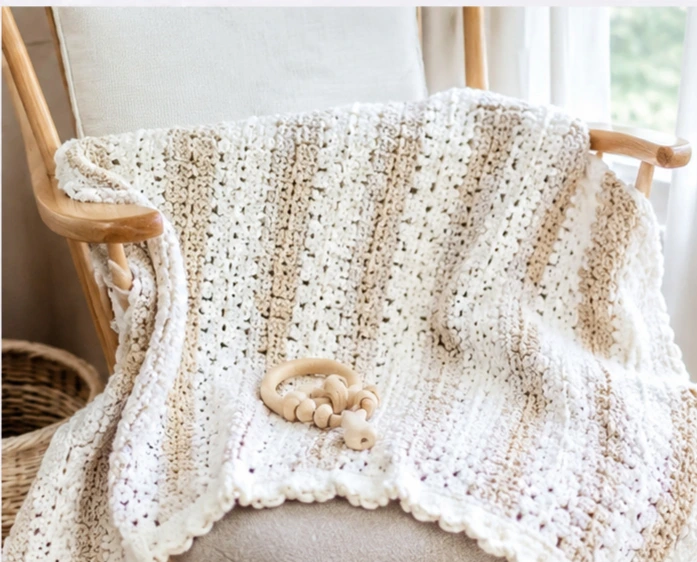
Soft neutrals like oatmeal, sage, terracotta, and warm taupe have become increasingly popular alternatives to traditional pastel pink or blue for baby items. These tones photograph beautifully and suit any nursery style. Consider working your blanket in a neutral base color, possibly paired with a single accent stripe or trim in a slightly deeper shade from the same palette.
2. Textured Stitch Patterns
Simple stockinette-style fabric has given way to more textured stitch work, including waffle stitch, moss stitch, and puff stitch details. These add visual interest without requiring intarsia or complicated colorwork. Try swapping a plain single crochet body for a moss or waffle stitch pattern to give your blanket more dimension while keeping the technique approachable.
3. Personalized and Named Blankets
Adding a baby’s name or initials through simple embroidery or a crocheted letter panel has become a popular way to make a handmade blanket feel extra special. If you want to try this, keep the lettering simple and stitch it onto a finished, blocked blanket for the cleanest result.
4. Chunky, Quick-Finish Blankets
Alongside traditional lightweight baby yarns, some crocheters are choosing slightly heavier yarn weights to finish blankets faster and create a plush, huggable texture. If you’re short on time, working a smaller lovey-sized blanket in a heavier yarn with a larger hook can give you a finished, gift-ready piece much faster than a traditional lightweight version.
Styling and Gifting Ideas
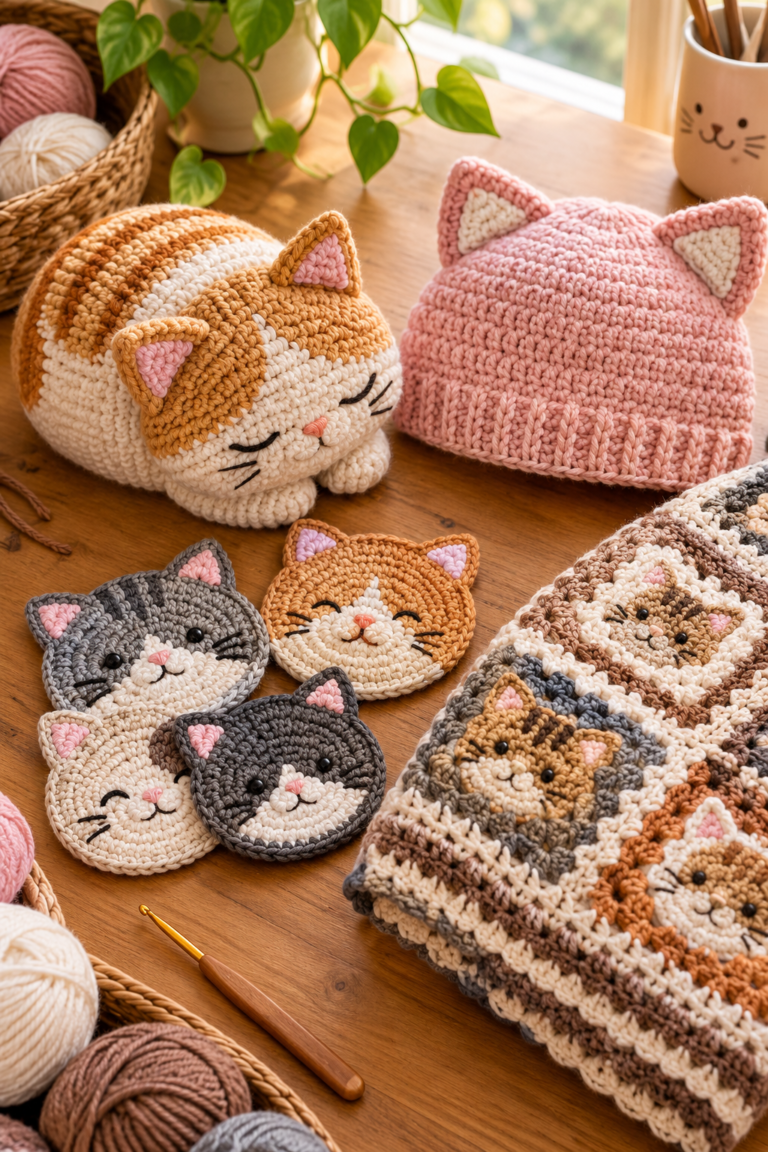
- Pair the blanket with a matching crocheted hat or booties for a coordinated baby shower gift set.
- Fold and tie the blanket with ribbon for a simple, elegant presentation.
- Add a small tag noting the yarn care instructions, which new parents will appreciate.
- Use leftover yarn to make a matching stuffed toy or lovey for a cohesive gift.
- Consider a seasonal color palette if the baby is due around a specific holiday.
- For a keepsake feel, choose a classic stitch pattern in white or cream that will suit the child for years, not just infancy.
FAQs
What is a good size for a newborn crochet blanket? Many crocheters aim for around 30 to 36 inches square for a versatile receiving blanket, though smaller lovey-style blankets and larger crib blankets are both common depending on how the blanket will be used.
Which crochet stitch is best for a baby blanket? It depends on your priorities. Single crochet is dense and beginner-friendly, half double croch-et works up faster while staying solid, and shell or granny square patterns offer more decorative texture. There isn’t one universally “best” stitch, just the one that fits your skill level and desired look.
What is the easiest baby blanket crochet pattern? A simple rectangle worked in single crochet or half double crochet, with a basic border, is generally considered the easiest starting point since it only requires one repeated stitch and straightforward turning.
What is the fastest crochet stitch for a baby blanket? Taller stitches like double crochet or half double crochet generally work up faster than single croch-et because each stitch covers more height per row, meaning fewer rows are needed to reach your target length.
How many chains should I do for a crochet baby blanket? There’s no fixed universal number since it depends on your yarn, hook, and stitch pattern. The most reliable method is to crochet a small swatch, measure your stitches per inch, and multiply that by your target width, then adjust for your stitch pattern’s turning chain.
Conclusion
Crochet newborn blankets remain one of the most rewarding projects to make, whether you’re a beginner working through your first big rectangle or an experienced crocheter experimenting with texture and color. With the right yarn, a comfortable stitch, and a size that fits how the blanket will be used, you can create a soft, lasting gift that means far more than anything store-bought. Once you’ve made one crochet newborn blanket, you’ll likely find yourself reaching for the yarn again the next time someone you know welcomes a new baby.