The Only Lemon Drizzle Cake Recipe You’ll Ever Need (No More Soggy Bottoms, I Promise)
I’ve lost count of how many lemon drizzle cakes I’ve pulled out of ovens over the years — some glorious, some absolute disasters. There was one particularly memorable Sunday when I opened the oven door, beaming with pride, only to watch the middle of my “perfect” cake collapse like a deflating balloon in front of a dinner party. Lesson learned. Several times over, if I’m honest.
Here’s the thing about lemon drizzle: it looks deceptively simple. A sponge, a bit of syrup, done. But that simplicity is exactly why so many home bakers get caught out — a soggy bottom here, a cracked top there, a cake that tastes suspiciously more of sugar than lemon. If you’ve ever wondered why your cake sank in the middle or why the lemon flavour just isn’t punching through, you’re not alone. These are, hands down, the questions I get asked most.
So let’s fix that. This is a proper, no-nonsense guide — the recipe itself, plus the troubleshooting I wish someone had handed me years ago.
Key Takeaways
- Room-temperature butter and eggs are non-negotiable for a light, even crumb
- Don’t overmix once the flour goes in — that’s the fastest route to a dense cake
- Drizzle the syrup while the cake is still warm and still in the tin, using a skewer to help it soak in
- Zest first, juice second — the zest carries most of the actual lemon flavour
- A cracked top is usually just your oven running hot, not a mistake on your part
What You’ll Need
This makes one 2lb loaf, enough for 8–10 generous slices.

Easy Lemon Drizzle Cake
Ingredients
Notes
The Method, Step by Step
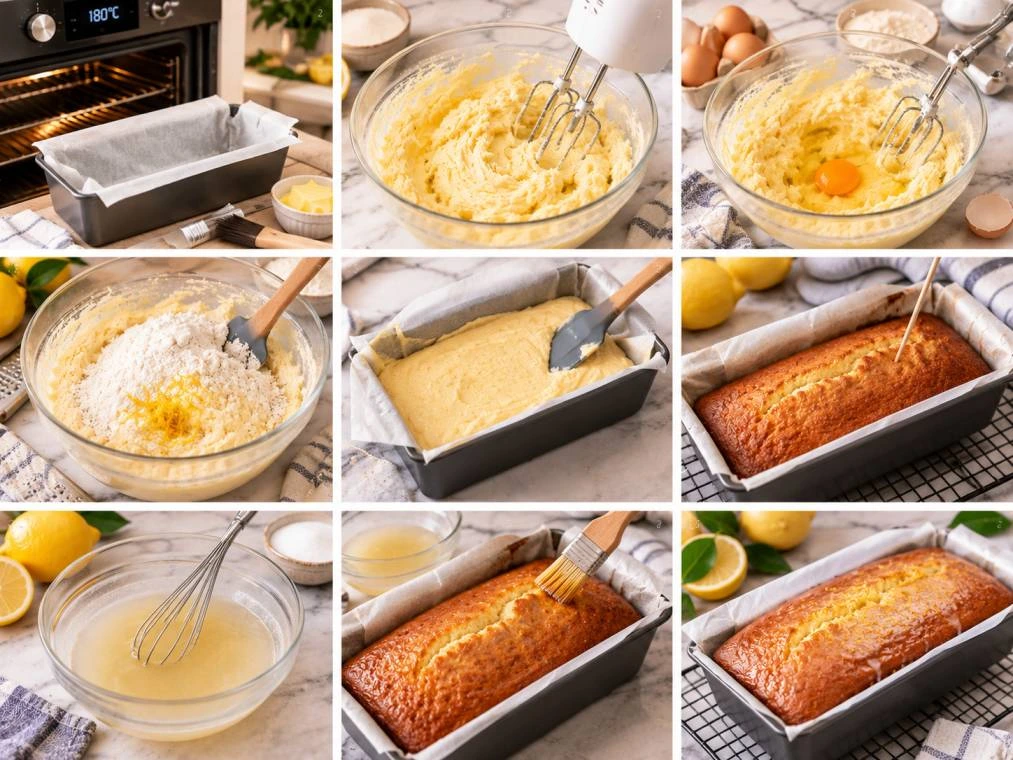
1. Get your oven and tin sorted first. Preheat to 180°C (160°C fan). Grease a 2lb loaf tin and line it with baking parchment — don’t skip this, it’s what saves you from a cake that won’t budge later.
2. Cream the butter and sugar. Beat them together until pale, light, and noticeably fluffy — this usually takes a good 3–4 minutes with an electric whisk. This step is doing more work than you’d think; it’s what traps the air that gives you a light sponge, so don’t rush it.
3. Add the eggs gradually. One at a time, beating well between each. If the mixture looks like it’s about to curdle, add a spoonful of your flour — it settles things right down.
4. Fold in the flour and zest. Gently now — a metal spoon or spatula, not the electric whisk. Overmixing at this stage knocks the air back out and you’ll end up with a dense, heavy cake instead of a fluffy one.
5. Fill the tin and smooth the surface. Bake for 45–55 minutes. Resist opening the oven door for the first 30 minutes — a sudden drop in temperature is one of the most common reasons cakes sink in the middle.
6. Check it’s done. A skewer inserted into the centre should come out clean. If it’s browning too fast on top but still wet inside, loosely cover with foil and give it more time.
7. Make the drizzle while the cake bakes. Just mix the lemon juice and granulated sugar in a bowl — don’t heat it. You want the sugar to stay slightly gritty so it forms that crackly crust on top.
8. Drizzle immediately, while the cake is still warm and still in the tin. Prick the top all over with a skewer first, then spoon the syrup over slowly, letting it soak in as you go. This is the step people rush, and it’s the one that matters most — a warm cake drinks up syrup; a cold one just sits there looking wet on top.
9. Leave it in the tin until completely cool before turning out. Patience now means a cake that holds together properly later.
Why Do Lemon Drizzle Cakes Go Wrong? (The Questions I Get Asked Constantly)
Right, let’s talk troubleshooting, because I know this is what half of you are really here for.
Why has my cake sunk in the middle? Nine times out of ten, it’s one of two things: the oven door was opened too early, or there’s too much raising agent doing too much work too fast, so the structure collapses before it’s set. Trust the bake time, keep that door shut, and make sure your oven temperature is actually accurate — a cheap oven thermometer is worth its weight in gold here.
Why has the top cracked? Honestly? This one’s rarely your fault. A cracked top usually just means your oven is running a touch hot, causing the outside to set and rise faster than the middle can catch up. A slightly domed, cracked lemon drizzle is completely normal — some would say it’s part of the charm.
Why is the bottom soggy? This is almost always a drizzle problem, not a baking problem. If you pour syrup over a cake that’s already cool, it sits on the surface and pools rather than soaking in evenly, leaving you with a wet, heavy base. Warm cake, warm syrup, prick it well — that’s the fix.
Why doesn’t my cake taste very lemony? This one catches so many people out. The zest is where nearly all the actual lemon flavour lives — the juice is mostly there for tartness and moisture. If your cake tastes flat, double the zest next time rather than adding more juice, which can actually make the crumb soggy without boosting flavour much at all.
A Few Final Thoughts
Lemon drizzle cake rewards patience more than skill. Every single issue above comes down to timing — when you open the oven, when you pour the syrup, how long you let things cool. Get those right and the rest genuinely takes care of itself.
Give this one a go this weekend, and don’t be afraid to tweak the zest-to-juice ratio to suit your own taste — that’s exactly how the best versions of this cake get discovered. I’d love to hear how yours turns out, cracks, drizzle and all.
Frequently Asked Questions
Why is my lemon drizzle cake sinking in the middle?Usually caused by opening the oven door too early or too often during baking, which drops the temperature and causes the structure to collapse before it’s fully set. Please keep the door closed for a minimum of 30 minutes.
Why has my lemon drizzle cake cracked on top?A cracked top is typically a sign your oven is running slightly hot, causing the surface to set before the inside has finished rising. It’s largely cosmetic and doesn’t affect the taste — many bakers consider it part of the cake’s classic look.
How do you prevent a soggy bottom on lemon drizzle cake? Pour the drizzle over the cake while it is still warm and in the tin, after pricking the surface with a skewer.. A warm sponge absorbs syrup evenly; a cooled one lets it pool on top and soak into the base instead.
How do you increase the lemon flavour in the cake?Add more lemon zest rather than more juice — the zest contains the concentrated citrus oils where most of the flavour lives. Using the zest of two lemons is a good starting point; adding additional juice may result in a wetter sponge without significantly enhancing the flavor.