The Only 3-Ingredient Butter Cookie Recipe You’ll Ever Need
I still remember the first time I burned a batch of butter cookies. I was seventeen, working my first kitchen job, and my chef looked at the tray of sad, dark discs and said, “Cookies don’t forgive distraction.” That line stuck with me for twenty years. Butter cookies look simple — because they are simple — but that simplicity is exactly why so many home bakers get them wrong.
Here’s the good news: once you understand the why behind each step, this recipe becomes almost foolproof. No fancy equipment, no obscure ingredients, no culinary degree required. Just butter, sugar, and flour, treated with a little respect.
What Makes a Butter Cookie a Butter Cookie?
Let’s clear something up before we start mixing. A butter cookie isn’t defined by a long ingredient list — it’s defined by the absence of one. There are no eggs here, no leaveners, no vanilla masking the flavor. Butter is the star, and everything else exists to support it.
That’s what separates this recipe from, say, a soft sugar cookie or a chewy chocolate chip cookie. Butter cookies are meant to be crisp, a little sandy in texture, and unapologetically buttery. If you’ve ever had a Danish butter cookie from one of those blue tins, you already know the flavor I’m talking about.
The Only Three Ingredients You Need
You won’t need a shopping list for this one. Here’s everything that goes into the dough:
- Unsalted butter (1 cup / 227g, softened but still cool) — use real butter, not margarine. This is non-negotiable.
- Granulated sugar (2/3 cup / 130g) — for structure and a delicate crunch.
- All-purpose flour (2 cups / 250g) — the backbone of the dough.
- A pinch of salt (optional, but I always add it — it sharpens the butter flavor)
That’s it. No baking powder, no baking soda. This is one of those recipes where quality matters more than quantity — so if you’ve been saving that good European-style butter for a special occasion, this is it.
How to Make Basic Butter Cookies, Step by Step:
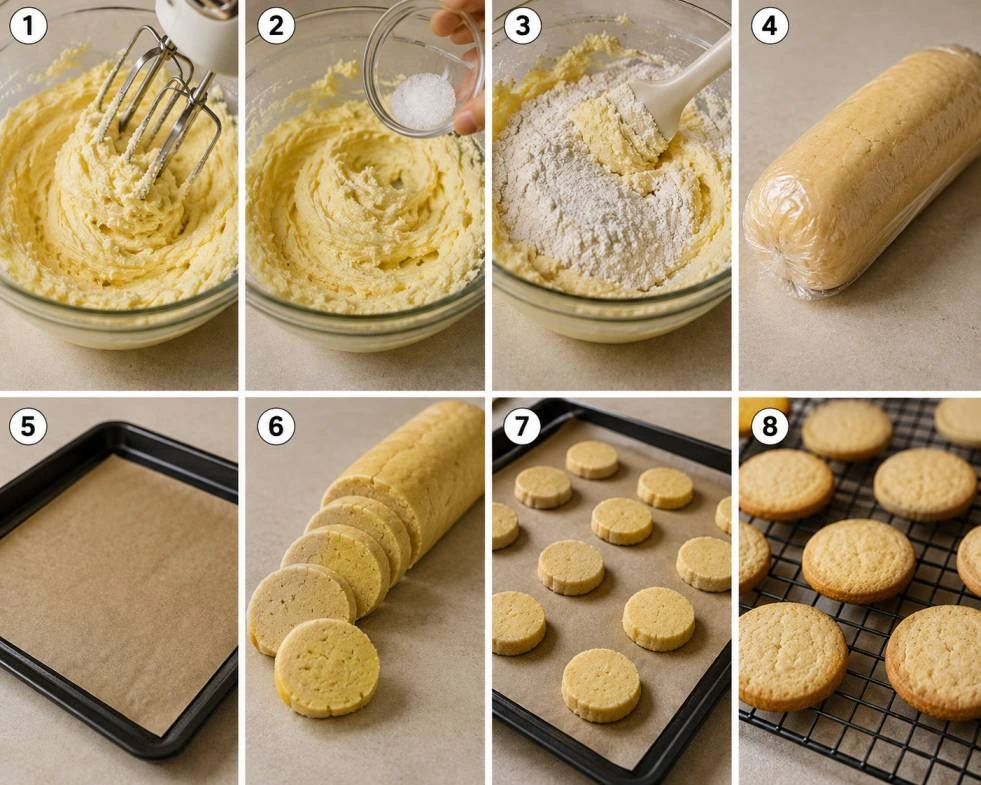
Cream the butter and sugar.
In a large bowl, beat the softened butter and sugar together for about 3 minutes, until pale and fluffy. Don’t rush this — it’s where the cookie’s texture is actually built.
Add the salt
Mix it in evenly so you don’t end up with a salty bite in one cookie and none in the next.
Add the flour gradually.
Fold in the flour in two or three additions, mixing on low speed or by hand. Stop as soon as the flour disappears — overworking the dough at this stage develops gluten, and gluten makes cookies tough instead of tender.
Shape the dough
Roll the dough into a log about 2 inches thick, wrap it tightly in plastic wrap, and refrigerate for at least 1 hour (overnight is even better).
Preheat your oven to 350°F (175°C).
Line two baking sheets with parchment paper.
Slice the dough
Cut the chilled log into rounds about 1/4-inch thick. Keep them consistent so they bake evenly.
Arrange and bake.
Place the rounds an inch apart on the sheets and bake for 10-12 minutes, until the edges just turn golden. The centers will look slightly underdone — that’s exactly what you want.
Cool completely
Let the cookies rest on the tray for 5 minutes, then transfer to a wire rack. They’ll firm up and crisp as they cool, so resist the urge to judge them straight out of the oven.
And that’s it — real, honest butter cookies, made the way they’ve been made for generations.
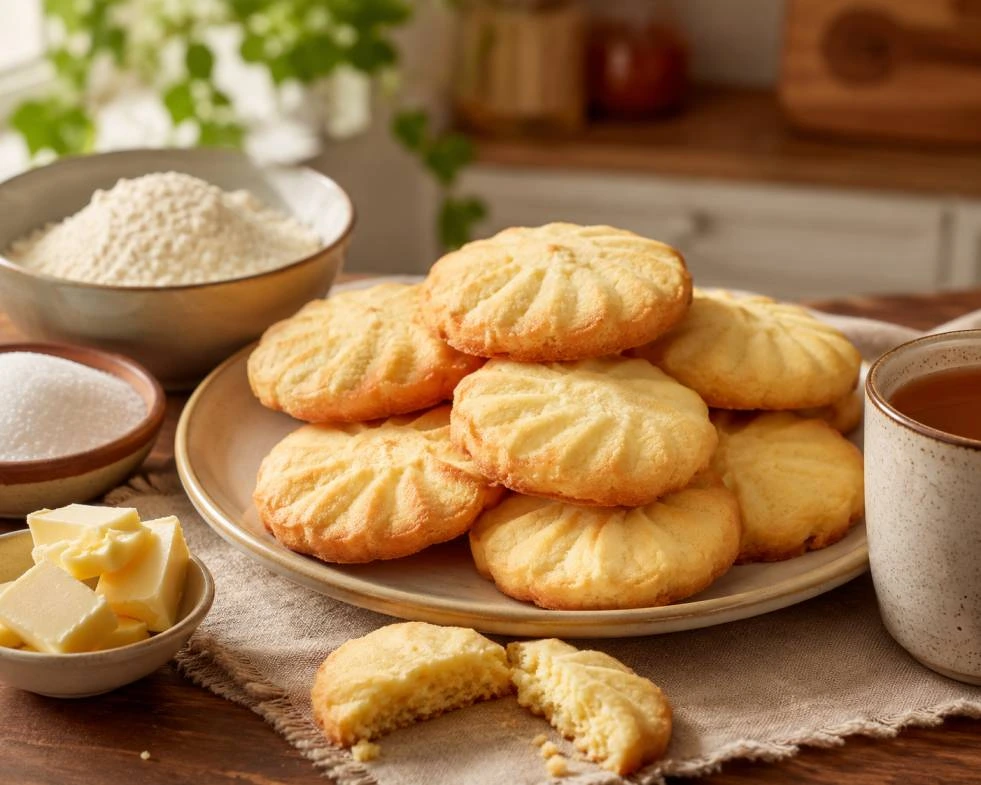
Easy 3-Ingredient Butter Cookies (Melt-in-Your-Mouth Recipe)
Ingredients
Notes
Key Takeaways
- Real butter cookies need only three ingredients — butter, sugar, and flour
- Cold, properly creamed butter is the single biggest factor in texture
- Butter cookies and shortbread are cousins, not twins — the ratios differ
- Overmixing the dough is the most common mistake beginners make
- Resting the dough before baking prevents spreading and keeps edges crisp
Common Mistakes to Avoid
I’ve corrected these same mistakes in culinary students more times than I can count, so let’s save you the trouble.
- Using melted butter. Melted butter changes the entire chemistry of the dough. You want it softened, not liquid — press a finger into it and it should leave an indent without your finger sinking in.
- Overmixing after adding flour. This is the number one reason cookies turn out tough or hard instead of tender.
- Skipping the chill time. Warm dough spreads too much in the oven, giving you thin, greasy cookies instead of neat, crisp ones.
- Overbaking. Because these cookies are pale to begin with, it’s tempting to leave them in “just a little longer.” Pull them the moment the edges turn gold — carryover heat finishes the job.
Frequently Asked Questions
How do you make a 3-ingredient butter cookie?
Cream together softened butter and sugar until fluffy, then fold in flour until just combined. Chill the dough, slice it into rounds, and bake at 350°F for 10-12 minutes. That’s the entire process — no eggs, no leaveners, no extra steps.
Are butter cookies the same as shortbread?
They’re close relatives, but not identical twins. Shortbread traditionally uses a higher ratio of butter to flour and less sugar, giving it a denser, more crumbly texture. Butter cookies use a bit more sugar and slightly less butter proportionally, which produces a crisper snap and a lighter bite. If shortbread is the quiet, rustic cousin, butter cookies are the polished one you’d bring to a party.
How do you make basic butter cookies at home?
Follow the same core method: cream your fat and sugar, fold in dry ingredients gently, chill the dough so it holds its shape, then bake at a moderate temperature until just golden. The “basic” version is really just this classic 3-ingredient formula — everything else, like vanilla or citrus zest, is an optional variation layered on top.
What are some common butter cookie mistakes?
The biggest culprits are using butter that’s too soft or melted, overmixing once the flour goes in, skipping the chilling step, and overbaking because the cookies still look pale. Each of these affects texture in a different way, but they’re all avoidable once you know what to watch for.
Final Thoughts
Butter cookies are proof that you don’t need a long ingredient list to make something memorable — you just need to respect the few ingredients you’re using. Treat your butter well, don’t overwork your dough, and give it time to chill before it hits the oven. Do that, and you’ll turn out a batch that tastes like it came from a much fancier kitchen than yours.
Give this recipe a try this weekend, and let me know how your first batch turns out. And if you’ve got a butter cookie tip passed down from your own kitchen mentor, I’d genuinely love to hear it — recipes like this one only get better when they’re shared.