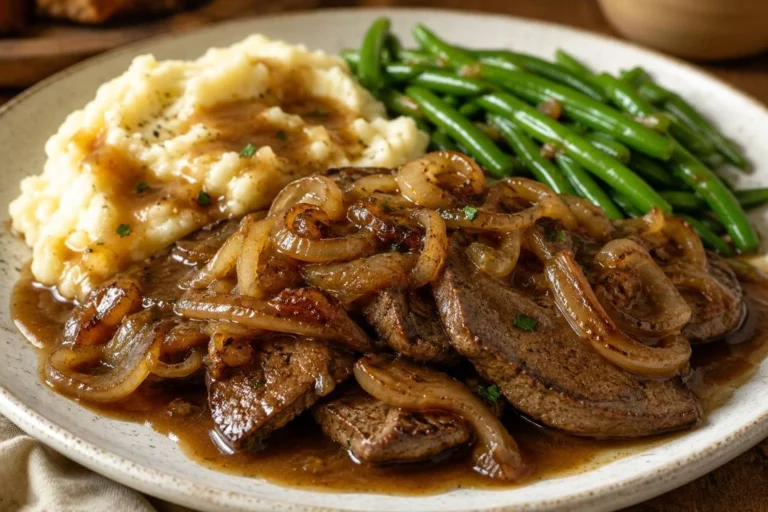
Beef Bacon: The Breakfast Meat Nobody Told You About (Until Now)
I still remember the first time a cook I trained under slid a few strips of beef bacon into a hot pan instead of the usual pork. I raised an eyebrow. He didn’t even look up. “Just try it,” he said. “Then tell me pork’s the only bacon worth eating.” He was right to be smug about it. That pan gave off the same hiss, the same smoky perfume — but underneath it was something deeper, meatier, almost steak-like. I was sold before the first bite hit my plate.
If you’ve never cooked with beef bacon, you’re not alone. Most home cooks have heard of turkey bacon, maybe even tried the odd veggie strip at a hotel buffet, but beef bacon rarely gets its due. That’s a shame, because it’s one of the easiest ways to bring bold flavor to your kitchen — whether you’re avoiding pork for religious, cultural, or personal reasons, or You are simply interested in understanding the reason behind all the excitement.
So, What Exactly Is Beef Bacon Made Of?
Here’s the thing — bacon isn’t really about the pig. It’s about the process. Any fatty cut of meat can become “bacon” once you cure it, smoke it, and slice it thin. For beef bacon, that usually means the belly (sometimes called the navel or plate) or the brisket, though leaner versions are made from the round.
The cure itself is straightforward: salt, sugar, and a curing agent — either traditional pink curing salt or a natural nitrate source like celery powder — worked into the meat over several days. That cure does two things: it locks in that unmistakable pink color, and it develops the salty-sweet flavor you associate with real bacon. After curing, the beef gets smoked low and slow, then sliced into strips. Same process as pork, completely different animal.
Why Isn’t It on Every Grocery Shelf?
Honestly? Habit more than anything. Pork bacon has a century-long head start in Western kitchens, and supply chains are built around it. Beef belly and brisket are also in high demand for other cuts — think steaks and pastrami — so butchers don’t always have surplus to turn into bacon. That scarcity keeps beef bacon in the “specialty” aisle rather than the everyday one.
It’s not because it’s inferior. In my experience, once people taste it, the “why don’t I see this more?” question answers itself — it’s simply a supply-and-demand story, not a flavor problem.
How Beef Bacon Stacks Up, Health-Wise
You might be wondering if it’s actually better for you. It depends on the cut. Bacon made from lean round can run noticeably lower in fat than traditional pork belly bacon, while still delivering a solid hit of protein per slice. Belly-cut beef bacon, on the other hand, keeps that rich marbling — more indulgent, less lean. Either way, it’s still a cured, smoked meat, so moderation is the name of the game, same as with any bacon.
Step-by-Step:
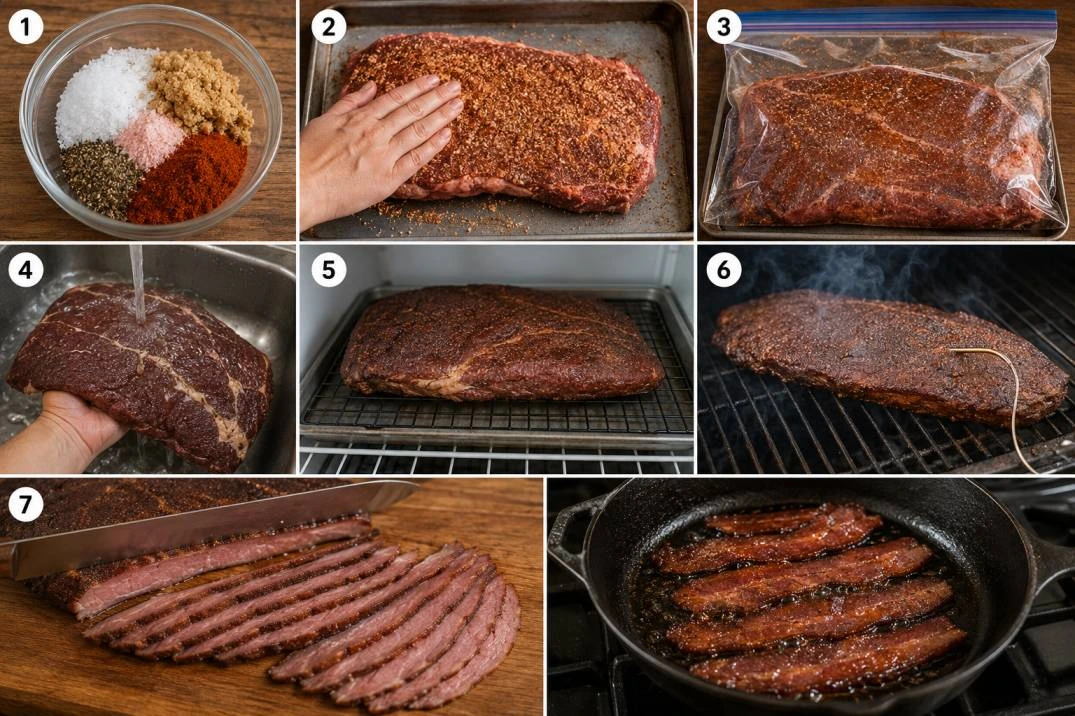
Mix the cure
Combine the salt, brown sugar, curing salt, pepper, and paprika in a small bowl until evenly blended.
Coat the beef
Rub the cure mixture into every surface of the meat, pressing it in so it sticks.
Cure it cold
Place the beef in a resealable bag or non-reactive container and refrigerate for 5–7 days, flipping it once a day so the cure distributes evenly.
Rinse and dry
Once cured, rinse off the excess cure under cold water and pat the meat completely dry. Let it air-dry, uncovered, in the fridge for a few hours to form a tacky surface (this helps the smoke adhere).
Smoke low and slow
Smoke at 180–200°F until the internal temperature hits 150°F, about 2–3 hours depending on thickness.
Chill before slicing
Let the beef bacon cool completely, then refrigerate for at least an hour — this makes it far easier to slice thin and even.
Slice and cook
Cut into strips and sear in a hot cast-iron skillet until browned and crisp on both sides. Skip the microwave — you’ve earned better than that.
No smoker at home? No problem. You can still cure the beef as directed, then finish it in a low oven (around 200°F) until it reaches temperature, and pan-sear as normal. You’ll lose a bit of smokiness, but the flavor still holds up.
Let’s Make It: Home-Cured Beef Bacon
This isn’t a weeknight recipe — good bacon takes patience — but the hands-on time is minimal. Here’s how I’d walk a beginner through it.
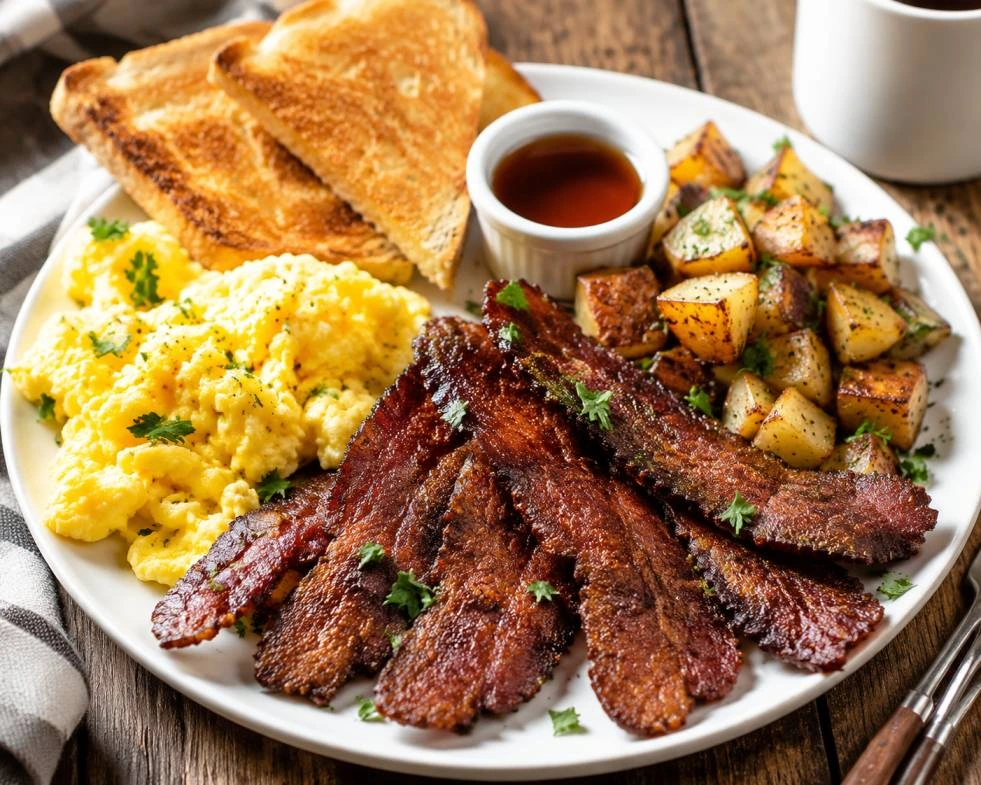
Crispy Beef Bacon (Easy Stovetop & Oven Recipe)
Ingredients
Notes
Key Takeaways
- Beef bacon is cured and smoked beef — usually from the belly, brisket, or round — not pork.
- It’s a common halal and kosher-friendly alternative when made from properly sourced and cured beef.
- Leaner cuts like round make for a lower-fat bacon; belly cuts give you that classic marbled richness.
- You can make it at home with a simple dry cure, or find it at butcher counters and specialty grocers.
- It cooks just like pork bacon — same pan, same sizzle, different depth of flavor.
The Verdict
Beef bacon isn’t trying to replace pork bacon — it’s doing its own thing, and doing it well. Whether you’re cooking around a dietary restriction or just chasing a bolder breakfast, it earns its spot in the pan. Cure it yourself if you’re the hands-on type, or grab a halal-certified or specialty pack from your butcher if you’d rather skip straight to the skillet. Either way, give it a real shot before you decide pork’s the only bacon worth your time.
Frequently Asked Questions:
What is beef bacon made out of?
Beef bacon is made from cuts of beef — typically the belly, brisket, or round — cured with salt, sugar, and a curing agent, then smoked and sliced thin, just like traditional pork bacon.
Can Muslims eat beef bacon?
Yes, provided it’s made from beef slaughtered and processed according to halal standards. Since beef itself is halal, beef bacon made from halal-certified meat and halal-compliant curing ingredients is permissible, unlike pork bacon, which is forbidden.
Why isn’t beef bacon more popular?
It largely comes down to supply and tradition. Pork bacon has dominated Western kitchens for generations, and cuts like beef belly and brisket are often already in demand for other dishes, leaving less surplus to turn into bacon.
What is a good substitute for beef bacon?
If you can’t find beef bacon, turkey bacon and lamb bacon are the closest in spirit for those avoiding pork, while pastrami-style beef offers a similar smoky, cured flavor profile in a different form.
Ready to try it yourself? Fire up the skillet, grab a pack of beef bacon — or cure your own — and let me know how it turns out.