The Secret Behind Perfect Beef and Broccoli at Home
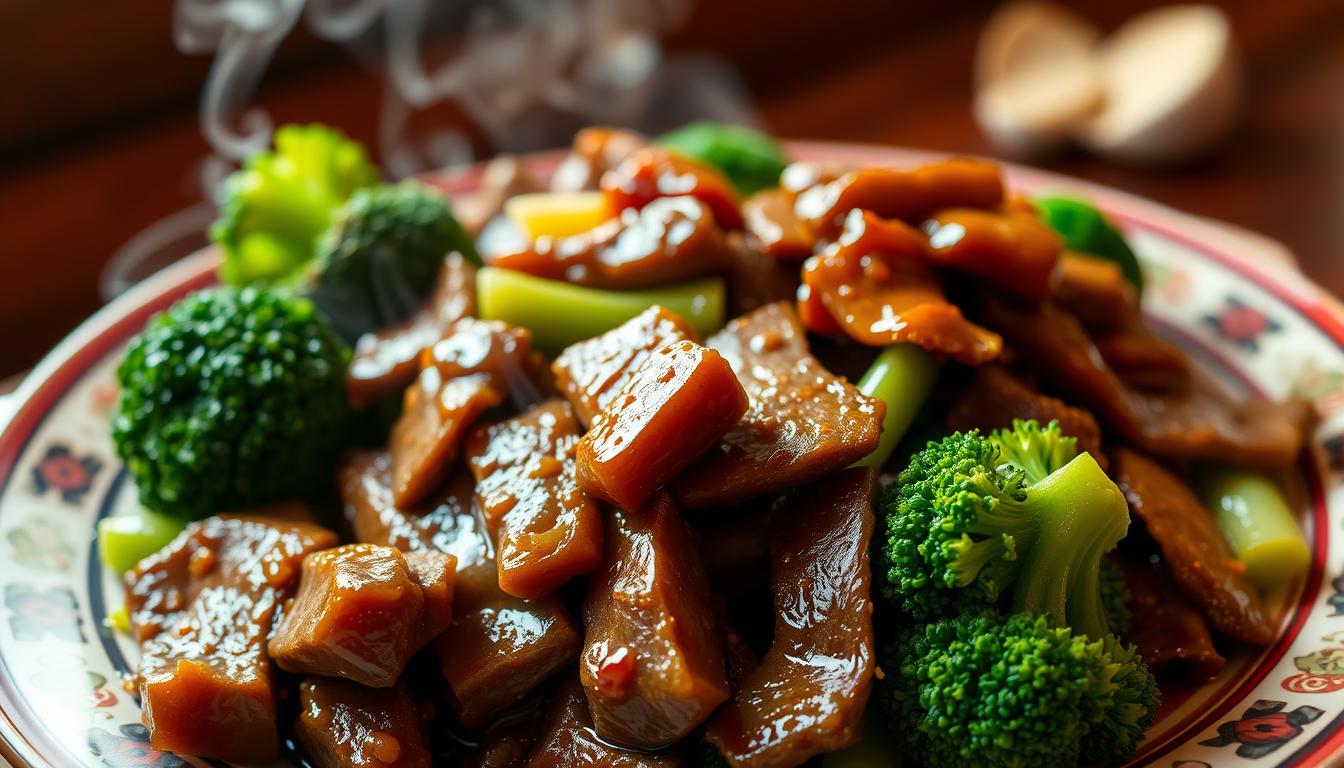
There’s something incredibly satisfying about opening a takeout container filled with beef and broccoli. The rich aroma of soy sauce, the subtle nuttiness of sesame oil, and the combination of tender beef with fresh broccoli make it a favorite comfort food for many. While it may seem like a dish best left to restaurants, the truth is that you can recreate those same delicious flavors right in your own kitchen.
Beef and broccoli is one of the most popular Chinese-American dishes, loved for its simple ingredients and bold flavor. Juicy slices of beef are paired with crisp-tender broccoli and coated in a savory sauce that comes together quickly. Even better, this homemade version can be on your table in about 30 minutes using ingredients you likely already have in your pantry.
One of the biggest secrets to achieving restaurant-quality results is a technique called velveting. Widely used in Chinese cooking, this method helps keep the beef exceptionally tender and juicy. A light coating of cornstarch combined with a short marinade transforms everyday beef into silky, flavorful bites.
In this guide, you’ll discover everything you need to know about making beef and broccoli from scratch. From choosing the best cut of beef to mastering cooking techniques and balancing flavors, you’ll learn how to create a dish that rivals your favorite takeout. Plus, making it yourself gives you complete control over the ingredients and seasoning.
Key Takeaways
- Beef and broccoli is a classic Chinese-American dish that can be prepared at home in about 30 minutes.
- Velveting the beef with cornstarch helps lock in moisture and creates a tender texture.
- Simple pantry staples such as soy sauce and sesame oil provide authentic flavor.
- Cutting beef against the grain ensures every bite stays tender.
- Properly cooked broccoli should remain slightly crisp while still being tender.
- Restaurant-style results depend on using the right heat and ingredient proportions.
- The recipe can easily be customized with additional vegetables or sauce adjustments to suit your preferences.
Why Beef and Broccoli Became a Chinese-American Favorite
Ordering beef and broccoli means enjoying more than just a delicious meal—you’re experiencing a dish shaped by history, cultural adaptation, and culinary innovation.
Although many people associate it with traditional Chinese cuisine, the version we know today was actually developed in the United States. Chinese immigrants brought their cooking techniques to America and adapted them to locally available ingredients, creating a unique style of cuisine that would eventually become known as Chinese-American food.
The Influence of Chinese Immigrants in California
During the 19th century, Chinese immigrants settled throughout California and introduced cooking traditions rooted in Cantonese cuisine. Stir-frying quickly became a signature technique, allowing cooks to prepare flavorful meals efficiently.
As Chinese-owned restaurants began serving both immigrant communities and American customers, recipes evolved to match local tastes and ingredient availability. This process led to the creation of many iconic dishes, including beef and broccoli.
Some important developments included:
- Traditional Cantonese stir-frying methods being adapted for American diners.
- Local ingredients being incorporated into familiar recipes.
- Chinese restaurants expanding throughout California during the late 1800s.
- Menus evolving to appeal to both Chinese and non-Chinese customers.
How American Broccoli Changed the Dish
One of the most significant adaptations involved the vegetable itself. Traditional Chinese recipes often featured gai lan, also known as Chinese broccoli. This leafy vegetable has a slightly bitter flavor and a different texture from the broccoli commonly found in American grocery stores.
Because gai lan was difficult to source in early California, cooks substituted it with American broccoli. The change proved successful, as broccoli was affordable, widely available, and appealing to local diners. Over time, the substitution became standard, helping define the modern version of beef and broccoli.
By the 1920s, the dish had become a regular feature on Chinese-American restaurant menus. Throughout the decades that followed, its popularity continued to grow, eventually becoming one of the most frequently ordered takeout dishes in the United States.
A Brief Timeline
| Time Period | Development | Key Details |
|---|---|---|
| 1800s | Immigration and adaptation | Chinese immigrants brought Cantonese cooking traditions to California. |
| Late 1800s | Ingredient substitution | American broccoli replaced Chinese broccoli due to availability. |
| 1920s | Restaurant expansion | Beef and broccoli became a common menu item. |
| 1900s–Present | National popularity | The dish became a staple of Chinese-American takeout cuisine. |
More than just a recipe, beef and broccoli represents a story of cultural exchange, creativity, and adaptation. By blending traditional cooking methods with local ingredients, Chinese immigrant communities created a dish that continues to be enjoyed by generations of diners.
Essential Ingredients for Authentic Beef and Broccoli
Creating great beef and broccoli starts with selecting the right ingredients. While the recipe is simple, each component plays an important role in delivering the flavor, texture, and appearance that make this dish so popular.
The foundation of the dish includes:
- 1 to 1½ pounds of thinly sliced beef
- About 4 cups of fresh broccoli florets (roughly 2 small heads)
- Soy sauce
- Sesame oil
- Cornstarch
- Garlic and other seasonings
The sauce is what ties everything together. Low-sodium soy sauce (1/3 to 1/4 cup) lets you control salt. Oyster sauce (2 tablespoons) adds depth and sweetness, making it taste like a restaurant dish. These two are the sauce’s core.
Aromatic ingredients make the dish flavorful. You’ll use minced garlic (2 to 4 cloves) and grated fresh ginger (1/2 inch piece). Scallions add brightness to every bite.
Core Sauce Components
- Sesame oil (1 teaspoon) for a nutty aroma
- Shaoxing wine or dry sherry (2 tablespoons) for complexity
- Rice vinegar (2 tablespoons) for sweet acidity
- Brown sugar (2 tablespoons) to balance flavors
- Low-sodium beef broth (2/3 cup) for richness
- Cornstarch for both marinating and thickening
Cornstarch is key in your recipe. It tenderizes the beef and makes the sauce smooth. Vegetable oil is needed for high-heat cooking and searing. You can add optional ingredients like baking soda (1/4 teaspoon) for tender meat or sriracha for heat.
The Secret to Tender Beef: Velveting Technique Explained
The secret to tender beef and broccoli is velveting. This Chinese cooking method makes meat silky and tender. It locks in moisture, so the beef stays juicy while searing.
Mastering velveting makes your dish as good as takeout. It seals in juices, giving you that tender texture. Knowing this technique helps you cook like a pro at home.
How Cornstarch Transforms Your Meat
Cornstarch is key in velveting. It coats the beef, keeping it moist. When heated, it browns the outside while keeping the inside juicy.
Your velveting marinade should include:
- 2 tablespoons cornstarch
- Soy sauce (2 tablespoons)
- Oyster sauce (1 tablespoon)
- Ground black pepper (½ teaspoon)
- Baking soda (¼ teaspoon, optional)
The cornstarch and other ingredients tenderize the meat gently. This keeps your dish flavorful and tender.
Proper Marinating Time for Maximum Tenderness
Marinating time is crucial for velveting. Marinate for at least 10 minutes for a good coat. For even more tenderness, marinate for 20-30 minutes. This lets the marinade penetrate deeper.
Here’s a practical guide for marinating:
| Marinating Time | Tenderness Level | Best For |
|---|---|---|
| 10 minutes | Good | Quick meals when time is limited |
| 20 minutes | Excellent | Standard beef and broccoli recipes |
| 30 minutes | Superior | Maximum tenderness and flavor |
A helpful tip: freeze your beef for 20 minutes before slicing. This makes it firmer and easier to cut. Thinner cuts marinate better and cook faster, making your dish tender and quick.
Building the Perfect Savory Sauce
The sauce makes your homemade beef and broccoli go from good to great. It’s all about finding the right mix of flavors. This creates that glossy coating you love from takeout.
Your sauce starts with low-sodium soy sauce for its salty taste. This gives your dish that Asian flavor. Then, add beef broth or water to get the right thickness. This way, the sauce sticks to your meat and veggies without dripping.
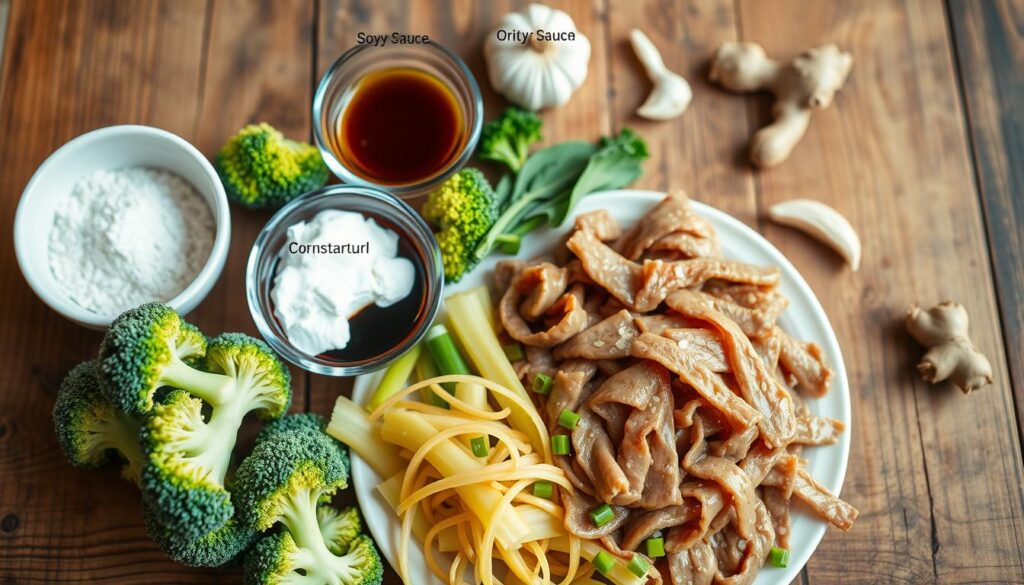
Brown sugar adds a touch of sweetness to balance the salt. Oyster sauce adds a rich umami flavor, key to Chinese-American dishes. Fresh ginger adds a warm, bright taste that complements the richness.
Here are the main sauce ingredients you’ll need:
- Soy sauce—1/4 cup (provides salty foundation)
- Beef broth or water—1/4 to 2/3 cup (adjusts consistency)
- Brown sugar—1-2 tablespoons (adds sweetness)
- Oyster sauce—2 tablespoons (creates umami depth)
- Fresh grated ginger—1 teaspoon (brings warmth)
- Sesame oil—1 teaspoon (adds nutty aroma)
- Cornstarch—1-1.5 tablespoons (creates glossy thickness)
- Sriracha—2 teaspoons optional (for heat)
Cornstarch makes your sauce thick and glossy. Mix all ingredients together before cooking to avoid lumps. This ensures a smooth sauce.
Make your sauce ahead of time and have it ready. If it’s too thick, add a bit of water. If it’s too thin, cook it a bit longer until it’s just right.
Step-by-Step Guide to Making Restaurant-Style Beef and Broccoli
Creating restaurant-quality beef and broccoli at home is easier than you might think, but preparation is everything. Since stir-frying happens quickly, it’s important to have all your ingredients measured, sliced, and ready to go before you turn on the heat. This classic cooking approach, known as mise en place, ensures a smooth cooking process and prevents overcooking.
Once your ingredients are prepared, the key is to cook each component at the right time and temperature.
How to Get a Perfect Sear on the Beef
A beautifully seared exterior is what gives beef and broccoli its signature flavor. Begin by heating a wok or large skillet over high heat for about two minutes. Once hot, add your oil and wait until it starts to shimmer.
To achieve the best results, cook the beef in small batches rather than adding it all at once. Overcrowding the pan lowers the temperature and causes the meat to steam instead of developing a rich, golden-brown crust.
Let the beef cook undisturbed for about one minute before stirring. This allows the surface to caramelize properly. Continue cooking for another minute or so until the beef is just cooked through. Remove it from the pan immediately to avoid overcooking and set it aside while you prepare the remaining ingredients.
Cooking Broccoli to the Perfect Texture
The best beef and broccoli features broccoli that is tender yet still slightly crisp. To achieve this texture, heat a tablespoon of oil in your wok and stir-fry the broccoli for about 30 seconds.
Next, add a small amount of water and cover the pan. Allow the broccoli to steam for 1 to 3 minutes, depending on the size of the florets. It should become bright green and slightly tender while maintaining a pleasant crunch.
Transfer the broccoli to a plate and set it aside until the final stages of cooking.
Bringing Everything Together
Now it’s time to combine all the elements of your beef and broccoli.
Reduce the heat to medium and cook the garlic and aromatics until fragrant, about 2 minutes. Return the broccoli to the pan, pour in the prepared sauce, and cover for several minutes so the flavors can blend together.
Finally, add the beef back to the skillet and toss everything well. Continue cooking for 2 to 3 minutes, stirring frequently, until the sauce thickens slightly and all the ingredients are heated through.
Cooking Timeline
| Step | Action | Time | Heat Level |
|---|---|---|---|
| 1 | Preheat wok and oil | 2 minutes | High |
| 2 | Stir-fry and steam broccoli | 1–3 minutes | High |
| 3 | Sear beef in batches | 1–2 minutes per batch | High |
| 4 | Cook garlic and aromatics | 2 minutes | Medium |
| 5 | Add broccoli and sauce | 3 minutes | Medium |
| 6 | Return beef and finish cooking | 2–3 minutes | Medium |
For the best beef and broccoli, respect the cooking time of each ingredient. Broccoli cooks much faster than beef, while garlic and ginger need just enough time to release their flavor without burning. When everything comes together at the end, you’ll have a delicious homemade meal that rivals your favorite takeout restaurant.
Common Mistakes to Avoid When Making Beef and Broccoli
Even with quality ingredients, a few simple mistakes can prevent your beef and broccoli from reaching its full potential. Understanding these common issues will help you achieve better texture, flavor, and consistency every time.
Overcrowding the Pan
One of the most common mistakes is cooking too much beef at once. When the pan becomes crowded, the temperature drops and the beef releases moisture instead of searing properly.
For the best results, cook the beef in smaller batches. While it takes a little longer, you’ll be rewarded with beautifully browned and flavorful meat.
Using a Pan That Isn’t Hot Enough
High heat is essential for authentic beef and broccoli. Before adding the beef, make sure the oil is hot and shimmering. A properly heated pan helps create the signature sear that gives the dish its rich flavor.
If the pan isn’t hot enough, the beef may become gray, tough, and less flavorful.
Skipping Preparation
Stir-frying moves quickly, leaving little time for chopping vegetables or measuring ingredients once cooking begins. Prepare your beef, broccoli, garlic, and sauce before turning on the stove.
Having everything ready allows you to focus on cooking rather than rushing through the process.
Other Common Mistakes
- Slicing the beef with the grain instead of against it, resulting in a tougher texture.
- Not marinating the beef long enough for proper velveting.
- Cooking the broccoli until it becomes overly soft.
- Forgetting to prepare ingredients in advance.
- Using medium heat when high heat is needed for searing.
Avoid Overcooking the Broccoli
Broccoli should remain vibrant green with a slight crunch. Keep in mind that it will continue to cook slightly when combined with the hot sauce and beef.
Removing it from the pan a little early helps preserve its texture and color, ensuring your beef and broccoli stays fresh, flavorful, and visually appealing.
Best Cuts of Beef and Preparation Tips
Choosing the right beef cut is key for a great beef and broccoli dish. The meat’s tenderness and how well it soaks up sauce depend on it. Knowing what to look for at the butcher shop boosts your confidence.
Why Flank Steak Works Best
Flank steak is the top pick for this dish. It comes from the cow’s belly and has lots of marbling. This fat makes the steak juicy and adds a deep, beefy flavor.
The steak’s grain is easy to see, making slicing simple. You’ll need 1 to 1.5 pounds for 4 to 6 people. Skirt steak is a good substitute if you can’t find flank steak.
Sirloin is a budget-friendly choice. Look for a piece with a fat cap. This fat keeps the meat moist while it cooks.
Slicing Against the Grain for Maximum Tenderness
The key to tender beef and broccoli is slicing against the grain. This means cutting across the muscle fibers, not with them.
Examine your meat to find the grain lines. Cut across these lines for tender bites. This method shortens the fibers, making your steak tender.
- Freeze your flank steak for 20 minutes before slicing
- Slice pieces about 1/4 inch thick
- Cut perpendicular to the visible grain lines
- Never freeze the meat solid
Freezing the steak briefly makes it firm enough for even slices. Thinner slices marinate and cook faster, staying tender under high heat.
Serving Suggestions and Variations
You’ve learned how to cook beef and broccoli. Now, let’s talk about how to serve it. Serving it over steamed white rice is a classic choice. This way, you can put rice in bowls and add your stir-fry on top.
The rice absorbs the sauce’s flavors. It also lets the beef and broccoli stand out.
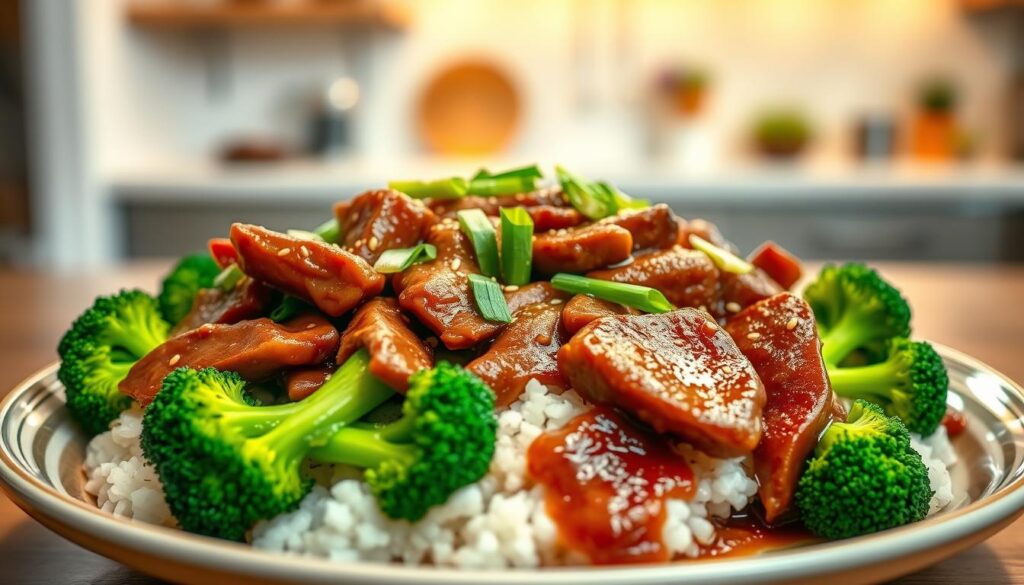
But rice isn’t the only option. Beef and broccoli also taste great over egg noodles or lo mein. These choices make the meal more filling and interesting.
Building a Complete Meal
Make your beef and broccoli into a full Chinese-American meal. Add side dishes like:
- Yang Chow fried rice for an authentic takeout experience
- Pan-fried noodles for added textural contrast
- Scallion pancakes as a savory starter
- Smashed cucumber salad for refreshing crunch
- Lumpia for an extra appetizer component
Don’t forget the finishing touches. Sprinkle toasted sesame seeds for a nutty crunch. Add sliced green scallions for fresh color and flavor.
Recipe Variations and Storage Tips
You can make your beef and broccoli your own way. Filipino cooks add liquid seasoning like Knorr for extra flavor. Cooking beef in batches prevents steaming. Broccoli cooks well in one batch.
Store leftovers in an airtight container in the fridge for three days. It’s perfect for busy weeks.
Conclusion
Making beef and broccoli at home is easier than many people think. With a few simple ingredients, the right cooking techniques, and a flavorful homemade sauce, you can create a restaurant-quality meal in less than 30 minutes. From selecting the best cut of beef to mastering the velveting process, every step helps achieve the tender texture and rich taste that make this dish so popular.
One of the greatest advantages of homemade beef and broccoli is the ability to customize it to your preferences. Whether you prefer extra sauce, additional vegetables, or a lower-sodium version, you have complete control over the final result. Serve it over steamed rice or noodles for a satisfying meal that the whole family will enjoy.
Frequently Asked Questions
What is the best cut of beef for beef and broccoli?
Flank steak is one of the most popular choices for beef and broccoli because it becomes tender when sliced thinly against the grain. Sirloin, skirt steak, and flat iron steak also work well.
Why is restaurant beef and broccoli so tender?
Restaurants often use a technique called velveting, which involves marinating the beef with cornstarch and other ingredients before cooking. This helps lock in moisture and creates a soft, tender texture.
Can I make beef and broccoli ahead of time?
Yes, beef and broccoli can be prepared in advance and stored in an airtight container in the refrigerator for up to 3 days. Reheat gently to maintain the best texture.
Can I use frozen broccoli instead of fresh broccoli?
Yes, frozen broccoli can be used if fresh broccoli is unavailable. For the best results, thaw and drain it before cooking to prevent excess moisture from thinning the sauce.
Is beef and broccoli healthy?
Beef and broccoli can be part of a balanced diet. It provides protein from the beef and important vitamins, minerals, and fiber from the broccoli. You can make it lighter by reducing the amount of oil and using low-sodium soy sauce.
What should I serve with beef and broccoli?
The most common side dish for beef and broccoli is steamed white rice. Brown rice, fried rice, cauliflower rice, or noodles are also excellent options.
How do I keep broccoli crisp in beef and broccoli?
Avoid overcooking the broccoli. Cook it just until it becomes bright green and tender-crisp. This helps preserve its texture and prevents it from becoming mushy.
Can I add other vegetables to beef and broccoli?
Absolutely. Popular additions include bell peppers, carrots, snap peas, mushrooms, onions, and water chestnuts. These vegetables add color, texture, and extra flavor to beef and broccoli.