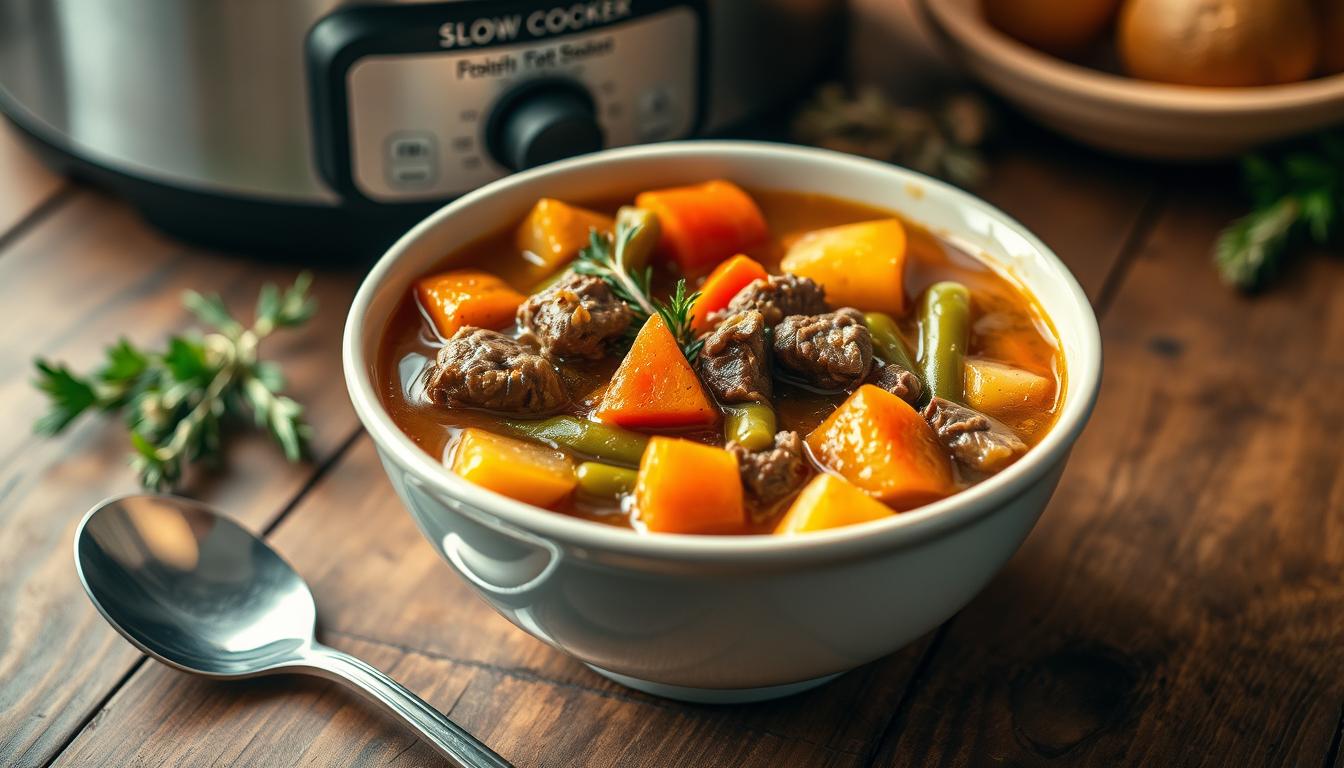
Slow Cooker Beef Stew – Simple Homemade Comfort Food
Slow Cooker Beef Stew – Easy Homemade Recipe
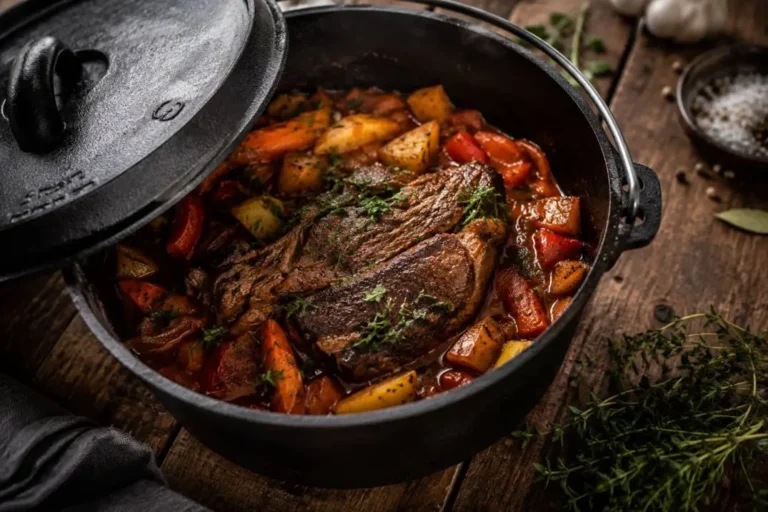
Coming home after a long, tiring day and being greeted by the aroma of beef stew is pure comfort. You don’t need advanced cooking skills or hours stuck in the kitchen. A homemade beef stew slow cooker recipe delivers that cozy, slow-cooked flavor with almost no effort.
Learn how simple it is to prepare restaurant-quality beef stew at home. This method removes the stress of complicated prep while still giving you tender beef, perfectly cooked vegetables, and a rich, flavorful broth. Your slow cooker does all the hard work while you get on with your day.
This slow cooker beef stew is ideal for busy weeknights, relaxed family dinners, or even meal prep. It makes a generous batch with plenty of leftovers you can freeze for later. The process is straightforward, with no complicated steps or long ingredient lists—just honest, comforting home cooking that tastes like it simmered all day.
Key Takeaways
- No need for pre-browning, making this recipe quick and beginner-friendly
- Beef becomes incredibly tender and easily falls apart with a fork
- A homemade beef stew slow cooker meal freezes perfectly for future use
- Vegetables stay hearty while soaking up deep, savory flavors
- Very little hands-on effort lets you focus on other tasks while it cooks
- One pot creates a complete, filling meal with a rich, thick broth
- Great for family dinners with extra portions for lunch the next day
Why This Slow Cooker Beef Stew Is Your New Cold Weather Favorite
When the temperature drops and the air turns crisp, nothing beats a warm, hearty meal waiting at home. This slow cooker stew is built for exactly those moments. It transforms simple ingredients into deep, comforting flavors without demanding much of your time.
What makes this stew stand out is the balance of ingredients. Tomato paste gives the broth richness and depth, while Worcestershire sauce adds a savory kick that keeps you coming back for more. A splash of red wine or balsamic vinegar lifts everything with a subtle brightness that ties the flavors together.
It’s also perfect for hectic schedules. You simply add everything to the slow cooker in the morning, and by dinner time, a full meal is ready to serve. The long, slow cooking process turns tougher cuts of beef into melt-in-your-mouth bites.
This dish fits any occasion—casual weeknight meals or comforting weekend dinners. It’s hearty without feeling heavy, making it especially satisfying during colder months.
- Minimal prep required
- Deep, rich, savory flavor
- Works for both weeknights and special dinners
- Comforting without being complicated
Essential Ingredients for the Best Slow Cooker Beef Stew
Great stew starts with quality ingredients. Each component plays a role in building layers of flavor that develop as everything slowly cooks together. From fresh vegetables to pantry staples, every ingredient helps create that classic homemade taste.
Understanding how these ingredients work together helps you adjust the recipe to what you have on hand. Some add richness and texture, while others build depth and balance. Fresh vegetables bring heartiness, and pantry items form the flavor base.
Choosing the Right Cut of Beef for Tender Results
The type of beef you use makes a big difference. Chuck roast is the best option because its marbling and connective tissue break down during slow cooking, creating tender, juicy pieces. Cut it into 1½-inch chunks for even cooking.
You’ll need about 2 pounds of beef stew meat. Avoid lean cuts like sirloin, which tend to dry out and become tough in a slow cooker. Chuck steak or beef shoulder also work well for a rich and tender result.
Fresh Vegetables That Make This Stew Hearty and Delicious
A good slow-cooked beef stew with vegetables depends on fresh, well-prepared produce. Here’s what you’ll need:
- Carrots (cut into 1-inch pieces)
- Yukon Gold potatoes (quartered)
- Yellow onions (diced)
- Garlic cloves (minced)
As they cook slowly, these vegetables become tender and flavorful. Carrots bring a natural sweetness, potatoes add substance, and onions create a savory foundation. You can also include mushrooms for extra depth or celery for more aroma.
Pantry Staples That Build Deep, Savory Flavor
Your pantry ingredients are what turn simple stew into something rich and satisfying:
| Ingredient | Amount | Purpose |
|---|---|---|
| All-purpose flour | 3 tablespoons | Thickens the stew and coats the meat |
| Tomato paste | 2 tablespoons | Adds depth and slight tanginess |
| Worcestershire sauce | 2 tablespoons | Brings savory umami flavor |
| Beef broth | 3 cups | Forms the base of the stew |
| Dried thyme | 1 teaspoon | Adds earthy herbal notes |
| Bay leaf | 2 leaves | Enhances overall aroma and complexity |
| Onion powder | ½ teaspoon | Boosts savory depth |
| Garlic powder | ½ teaspoon | Strengthens flavor base |
A bit of red wine or balsamic vinegar can brighten the entire dish and keep the flavors balanced. Using low-sodium beef broth also helps you control seasoning throughout cooking.
All these ingredients come together to create a rich, comforting stew without complicated steps or techniques.
How to Make Easy Crock Pot Beef Stew Without Pre-Browning
Skipping the browning step makes this recipe faster and much easier. You save time without losing flavor, thanks to careful seasoning and slow cooking.
The key is coating the beef in seasoned flour before adding it to the slow cooker. This simple step does several important things. It helps thicken the stew naturally, adds flavor directly to the meat, and keeps the beef moist and tender while it cooks.
- 2 tablespoons all-purpose flour
- ½ teaspoon salt
- ½ teaspoon black pepper
Just toss your beef chunks in the flour mix until they’re coated. This step replaces browning, using pantry staples to build flavor. Tomato paste, Worcestershire sauce, and beef broth give the stew a deep, savory taste.
Want to brown your beef? You can do it anytime. Heat oil in a skillet, brown in batches, and sear all sides until golden. This adds extra flavor if you have time.
| Method | Active Time | Flavor Depth | Best For |
|---|---|---|---|
| Easy Beef Stew No Browning | 5 minutes | Good | Quick weeknight meals |
| Crock Pot Beef Stew with Browning | 20 minutes | Excellent | Weekend cooking |
Both methods work well in your slow cooker. Choose based on your schedule and taste. Your family will love the tender beef in rich broth, no matter your choice.
Step-by-Step Instructions for Perfect Homemade Beef Stew
Making homemade slow cooker beef stew is easy. This guide breaks it down into simple steps. You’ll spend just minutes prepping, while your slow cooker cooks it all.
Preparing Your Ingredients for the Slow Cooker
First, gather all your ingredients and prep them. This step makes cooking smooth and uninterrupted.
- Cut your beef into 1-inch to 1.5-inch chunks for even cooking
- Pat the beef dry with paper towels to help flour stick better
- Toss beef pieces with flour, salt, and pepper in a bowl
- Chop carrots into 1-inch rounds
- Cut potatoes into 1-inch cubes
- Peel and quarter small onions
- Measure out your beef broth and tomato paste
Layering Everything for Maximum Flavor
How you add ingredients to your slow cooker is key. Layering helps flavors spread evenly in your stew.
- Pour beef broth into the slow cooker bottom
- Whisk in tomato paste, Worcestershire sauce, and minced garlic
- Add your flour-coated beef pieces
- Layer carrots, potatoes, and onions on top
- Nestle a bay leaf into the mixture
- Cover and set to your desired heat setting
- During the last 10-15 minutes, stir in frozen peas if desired
- Remove the bay leaf before serving your step-by-step beef stew recipe creation
This method keeps your ingredients in order and prevents burning at the bottom.
Cooking Times and Temperature Settings for Your Slow Cooker
Getting the slow cooker beef stew cooking time right is crucial. It ensures tender meat and perfectly cooked veggies. Your crock pot temperature settings let you adjust to your schedule. Most slow cookers have two heat levels, each suited for beef stew.
| Temperature Setting | Heat Level | Cooking Duration | Best For |
|---|---|---|---|
| Low | Around 200°F | 7-8 hours | Most tender results with deep flavor development |
| High | Around 300°F | 4-6 hours | Faster cooking when you need dinner ready sooner |
The low setting makes the beef tender because it cooks slowly. This long cooking time breaks down the meat’s collagen into gelatin. This makes the meat fall-apart tender. The high setting is quicker, cutting cooking time in half.
Your slow cooker model affects cooking time. Different brands cook at different rates. The size of your beef chunks and how full your crock pot is also important. Start checking your stew around the minimum time suggested for your chosen crock pot temperature settings.
Testing for Doneness
Pierce the beef with a fork to check tenderness. Perfectly cooked beef should shred easily with minimal effort. Vegetables should be soft but still hold their shape, not mushy or falling apart.
If your beef feels tough, add 30-minute increments of cooking time until it’s tender. Never rush this step.
- Low setting: Best for overnight or all-day cooking
- High setting: Ideal when you need dinner within 4-6 hours
- Warm setting: Keeps finished stew at safe temperature if you run late
Keep notes about how your particular slow cooker performs. This helps you perfect timing for future batches of beef stew. Every appliance has its own personality, and learning yours makes you a better cook.
The Secret to Getting Fall-Apart Tender Beef in Your Stew
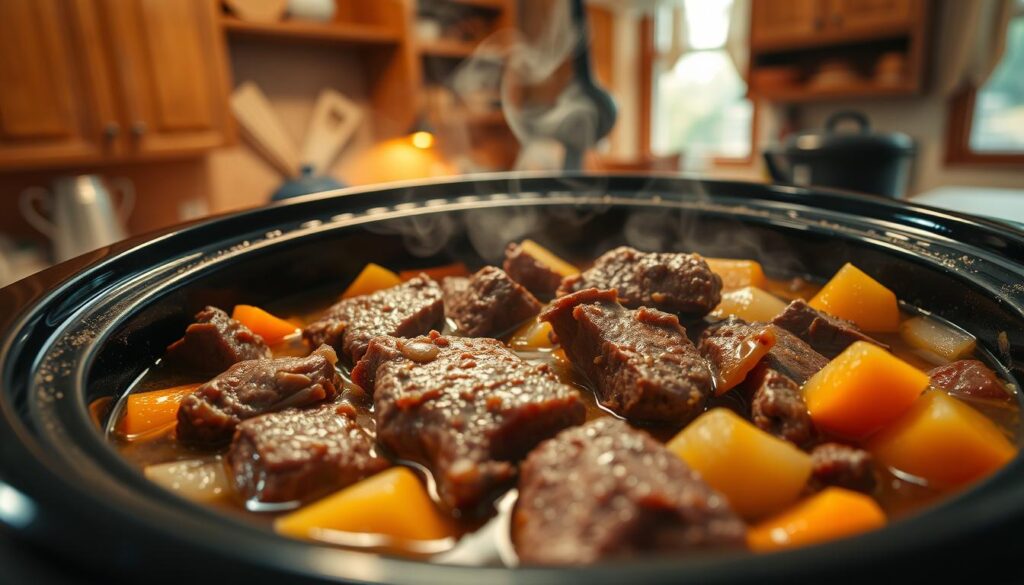
The secret to tender beef stew is simple: low heat and time. These two work together to make tough cuts delicious. When cooked right, the beef is so tender you can cut it with a spoon or shred it with two forks.
This magic happens because of the slow cooking process. It breaks down tough tissues in the meat, turning them into gelatin. This makes your stew rich and silky. Chuck roast is the best choice because it has enough fat to stay moist while the fibers soften.
Why Slow Cooking Makes Beef Incredibly Tender
Slow cookers work differently than high-heat cooking. They cook at 190 to 210 degrees Fahrenheit, breaking down collagen into gelatin. This takes 6 to 8 hours, but the results are amazing.
The meat cut you choose is key for tender stew. Lean cuts dry out, but chuck roast thrives. Its marbling and connective tissue become tender with extended cooking.
- Low heat prevents the meat from drying out
- Extended cooking time breaks down tough fibers
- Fat content in chuck roast keeps beef moist and flavorful
- Gelatin enriches your broth with body and silky texture
How to Know When Your Beef Stew Is Perfectly Done
Testing your beef for doneness is easy. If a fork pierces the meat and it falls apart, it’s ready. You should be able to shred the beef with two forks without any resistance. If it’s tough, it needs more cooking time.
Don’t worry about overcooking your stew. Slow cooker stews are forgiving. If the beef is still tough after 6 to 8 hours, just let it cook longer. With patience and the right approach, most beef becomes perfectly tender.
| Doneness Stage | What to Expect | Next Steps |
|---|---|---|
| Undercooked | Beef feels tough when pierced with a fork | Continue cooking for 1-2 more hours |
| Perfectly Tender | Beef shreds easily with two forks | Your stew is ready to serve |
| Very Tender | Beef practically dissolves in your mouth | Stew is still delicious and safe to eat |
Working hard to make tender beef stew is worth it. The right ingredients, slow cooker temperature, and cooking time make a dish that’s worth waiting for. Whether it’s for a weeknight dinner or a gathering, knowing how to get fall-apart beef ensures delicious results every time.
Tips for Achieving the Perfect Thick and Hearty Consistency
Getting the right texture for your thick beef stew is easier than you think. You want a hearty stew that coats your spoon and holds meat and veggies in a rich gravy. Avoid thin broth and gloopy or pasty textures. Your slow cooker makes it easy.
Coating your beef in seasoned flour before cooking is key. As it cooks, the flour releases starch into the broth. Potatoes and veggies also add starch, thickening the stew naturally. Your ingredients do the work for you.
Here’s a helpful tip: stews always thicken as they cool down. What seems thin when hot will thicken perfectly after 30 to 45 minutes. Taste and check your consistency after it cools a bit.
Need to adjust the thickness? Try these methods:
- Too thin? Mix 2 tablespoons of arrowroot powder or cornstarch with 2 tablespoons of cold water to make a slurry. Stir it into your slow cooker and watch it thicken within minutes.
- Too thick? Add a splash of beef stock, stir well, and let it warm through for a few minutes.
The secret to avoiding lumps is mixing your starch with cold water first. Never add dry starch to hot liquid. Whisk until smooth, then slowly add it to your stew while stirring constantly.
Your perfect hearty stew should coat a spoon and keep veggies and meat in thick gravy. When you drag your spoon through, the path should stay visible for a moment before filling back in. That’s when you know you’ve got it right.
Delicious Variations and Add-Ins for Your Beef Stew Recipe
Slow cooker beef stew is super flexible. You can make it your own by trying different variations. It’s all about what you like, what you have at home, and the season.
Beef stew add-ins let you control the flavor. You can add richness, depth, or brightness easily. The slow cooker makes it simple to try new things without extra work.
Wine or Balsamic Vinegar Options for Extra Depth
Adding liquid flavor boosters can change your stew’s taste. Use ¼ cup of dry red wine for a complex flavor. It adds sophistication and depth.
For a non-alcoholic option, try 1 tablespoon of balsamic vinegar. It brings tanginess and sweetness that brightens the stew.
Additional Vegetables You Can Include
Try these vegetables to add variety:
- Celery pieces for subtle earthiness
- Sweet potatoes for natural sweetness
- Parsnips for mild, nutty flavor
- Frozen peas for brightness and color
- Button mushrooms (8-10 ounces, halved) for umami depth
- Pearl onions for tender sweetness
Adding fresh herbs can also enhance your stew. Use 2-3 sprigs of fresh rosemary for a different aroma.
When adding extra ingredients, remember to keep your slow cooker ¾ full. This ensures even cooking and the perfect consistency.
Serving Suggestions for Your Comfort Food Beef Stew
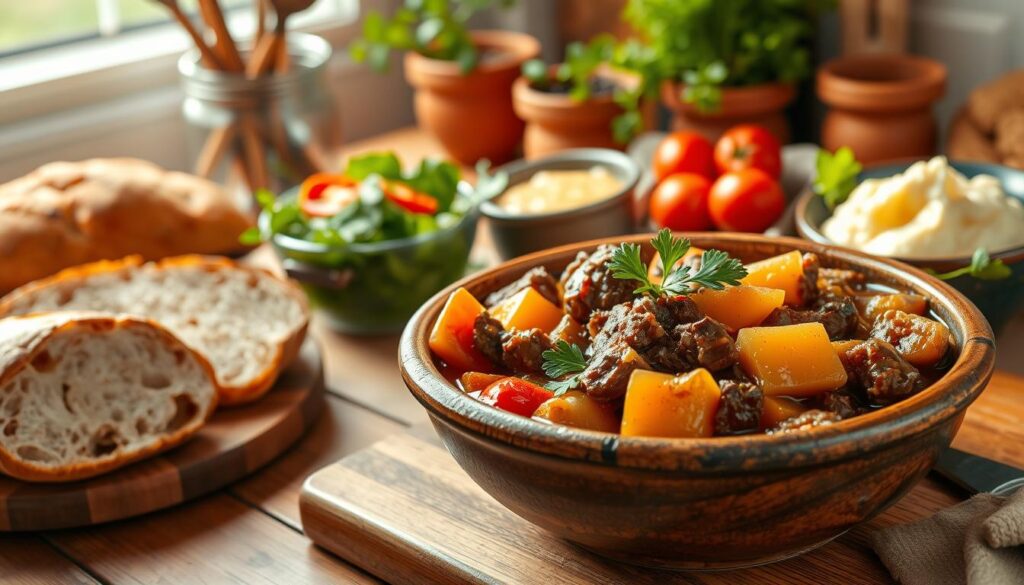
Your homemade slow cooker beef stew deserves a special presentation. The right serving ideas can turn this classic dish into a memorable meal. How you plate and serve your stew greatly enhances the dining experience.
Think about what to serve with your beef stew. You have many options that complement its rich flavor. Serving it in deep bowls highlights the flavorful broth.
Classic Base Options for Your Beef Stew
The way you serve your beef stew can completely change the experience. A good base not only complements the flavors but also turns the dish into a full, satisfying meal.
- Mashed potatoes create a comforting pairing, soaking up every drop of rich broth
- Egg noodles give a classic, hearty way to enjoy the sauce
- Mashed cauliflower offers a lighter, low-carb alternative that still feels satisfying
- Rice stretches the meal further while keeping the flavors balanced and mild
- Crusty bread is perfect for scooping and soaking up the stew
Balancing Your Meal with Fresh Sides
Since beef stew is naturally rich and filling, pairing it with fresh, lighter sides helps create balance on the plate. A crisp salad can brighten each bite and cut through the deep savory flavors.
| Side Option | Flavor Profile | Best For |
|---|---|---|
| Arugula with Lemon Vinaigrette | Peppery and acidic | Balancing rich stews |
| Pear & Pomegranate Salad | Sweet and tart | Holiday meals and special occasions |
| Simple Green Salad | Fresh and light | Everyday family dinners |
| Mixed Greens with Balsamic | Tangy and earthy | More formal dinners |
Bread Choices and Garnish Ideas
Bread isn’t just a side here—it’s part of the experience. It acts like an edible tool for soaking up the flavorful broth. You can go with crusty artisan bread, soft dinner rolls, cornbread, or buttery biscuits, depending on your mood.
To finish your dish, small garnishes make a big difference. Fresh parsley, thyme, or a touch of cracked black pepper adds color and freshness. A light drizzle of olive oil can also elevate both flavor and presentation, giving your bowl a more refined, restaurant-style look.
As many home cooks say, “the best beef stew serving ideas highlight the richness of the dish while keeping the palate refreshed and balanced.”
Whether you’re serving a casual family dinner or hosting guests, these combinations let you adapt the meal to any occasion with ease.
Storage, Freezing, and Reheating Your Slow Cooked Beef Stew
One of the best things about this dish is how well it keeps. In fact, a slow cooked beef stew often tastes even better the next day as the flavors continue to deepen and blend.
How to Store Leftover Beef Stew Properly
To keep your stew fresh and safe, allow it to cool completely before storing. This helps prevent condensation and maintains the best texture.
- Store in airtight glass or plastic containers
- Refrigerate for up to 3–4 days
- Keep containers on a fridge shelf, not in the door
- Always label with the preparation date
- Maintain fridge temperature at 40°F (4°C) or below
Freezer-Friendly Tips for Make-Ahead Meals
Freezing is a great way to turn your stew into a ready-made future meal. It holds its flavor and texture well for up to two months.
| Storage Method | Duration | Best Container |
|---|---|---|
| Refrigerator | 3–4 days | Airtight containers |
| Freezer | Up to 2 months | Freezer bags or sealed containers |
Leave a little space at the top of your container since the stew will expand when frozen. Freezer bags also help save space and make thawing faster.
Reheating is simple: thaw overnight in the fridge, then warm on the stovetop for 10–15 minutes or heat in the microwave until hot and steaming.
Common Mistakes to Avoid When Making Crock Pot Beef Stew
Even a simple stew can go wrong if a few details are overlooked. Understanding common pitfalls helps you get consistent results every time.
One frequent issue is ending up with tough meat. This usually means the beef simply hasn’t cooked long enough. The fix is easy—continue cooking in short intervals until the meat becomes fork-tender.
Liquid balance is another challenge. Too much liquid turns the stew watery, while too little makes it dry. Keep in mind that vegetables and meat naturally release moisture as they cook.
Here are some common mistakes to avoid:
- Overfilling the slow cooker beyond three-quarters full
- Cutting vegetables too small, causing them to fall apart
- Lifting the lid too often, which slows cooking significantly
- Adding salt too early instead of adjusting at the end
- Using uneven vegetable sizes, leading to inconsistent texture
For best results, keep vegetable pieces around 1½ inches for balanced cooking. Trust the slow cooker process and avoid constantly checking—it needs steady heat to work properly.
Conclusion
A slow cooker beef stew is one of the easiest ways to enjoy a deeply comforting, home-cooked meal without spending hours in the kitchen. With a homemade beef stew slow cooker approach, you get tender beef, rich broth, and perfectly cooked vegetables with minimal effort.
It’s a flexible recipe that fits busy weekdays, family dinners, or even meal prep for the week ahead. You can easily customize it, scale it up, or freeze portions for later.
In the end, it’s the kind of recipe that proves simple cooking can still deliver big flavor. Once you try it, it often becomes a regular go-to in the kitchen.
FAQ
Can I make homemade beef stew slow cooker without browning the meat first?
Yes, you can skip browning the beef. A homemade beef stew slow cooker recipe still develops rich flavor thanks to slow cooking, seasoning, and ingredients like tomato paste, Worcestershire sauce, and herbs. The meat becomes tender as it cooks low and slow.
How long does beef stew take in a slow cooker?
On low heat, it usually takes 7–8 hours. On high heat, it takes about 4–5 hours. The exact time can vary depending on your slow cooker and the size of your beef chunks, so always check that the meat is fork-tender.
Can I add vegetables at the beginning of cooking?
Yes, but keep in mind that all vegetables will become very soft. If you prefer firmer carrots or potatoes, you can add them during the last 1–2 hours of cooking instead.
Why is my beef stew watery in the slow cooker?
This usually happens when too much liquid is added or the lid is removed too often. The stew also thickens naturally as it cooks, especially if you coat the beef in flour at the start.
Can I freeze homemade beef stew slow cooker meals?
Yes, it freezes very well. Let it cool completely, then store it in airtight containers or freezer bags for up to 2–3 months. It’s a great option for meal prep.
How do I thicken beef stew in a slow cooker?
You can mix a tablespoon of cornstarch with cold water and stir it in during the last 30 minutes of cooking. Another option is letting the stew simmer uncovered to reduce excess liquid.
What herbs work best in beef stew?
Thyme, bay leaf, rosemary, and parsley are the most commonly used herbs. They add depth and balance to the rich flavors of the stew without overpowering it.
Can I make this recipe ahead of time?
Absolutely. A homemade beef stew slow cooker dish often tastes even better the next day because the flavors continue to develop after resting overnight.