Brisket in the Oven: A Chef’s No-Fail Guide for Beginners
The first time I tried cooking brisket without a smoker, I was convinced it would come out tough, dry, and nowhere near the melt-in-your-mouth texture you get at a good barbecue joint. I was wrong. Your oven, it turns out, is one of the most reliable tools you have for turning a tough, inexpensive cut of beef into something genuinely special. You just need to understand what brisket actually needs — time, gentle heat, and a little patience — and the rest takes care of itself.
If you’ve never cooked a brisket before, this guide walks you through the whole process, start to finish, using nothing but your oven, a roasting pan, and some foil.
Key Takeaways
- Low and slow is the rule: 275–300°F, not 350°F or higher
- Plan for roughly 1 to 1.5 hours per pound of brisket
- Wrapping in foil partway through (the “3:2:1” idea) keeps it moist
- A splash of liquid in the pan makes a real difference in tenderness
- The brisket is done by feel and temperature, not just the clock
What Exactly Is Brisket, and Why Does It Need Special Treatment?
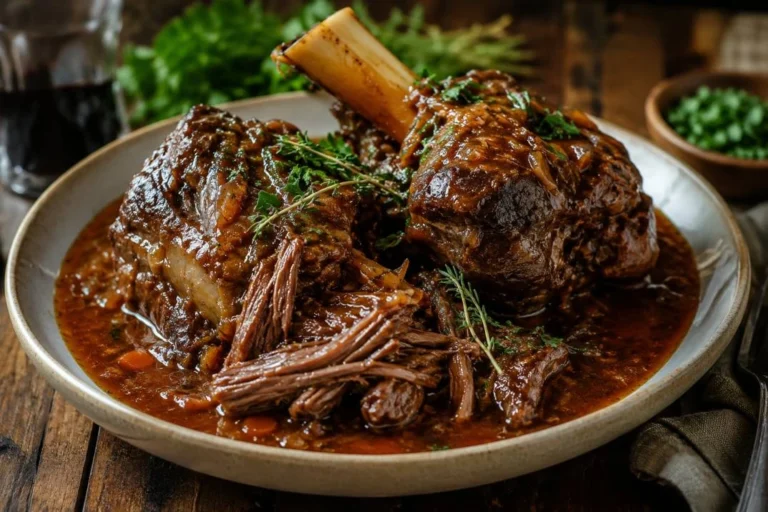
Brisket comes from the breast section of the cow — a hardworking muscle that’s full of connective tissue. That connective tissue is exactly why brisket can go two very different directions: rubbery and tough if you rush it, or tender and juicy if you give it time to break down. Low, steady heat slowly melts that collagen into gelatin, which is what gives properly cooked brisket its signature richness. Skip the low-and-slow part, and you’ll end up with something closer to shoe leather than dinner.
Choosing and Prepping Your Brisket
Look for a brisket with a decent fat cap — that layer of fat isn’t there by accident, it bastes the meat as it renders down in the oven. Before cooking, pat the brisket dry and trim the fat cap down to about a quarter inch if it’s thicker than that. Then season generously. A simple rub of coarse salt, black pepper, garlic powder, and smoked paprika goes a long way, and you can always dress it up further with a homemade blend if you’re feeling ambitious.
Step-by-Step: How to Cook Brisket in the Oven
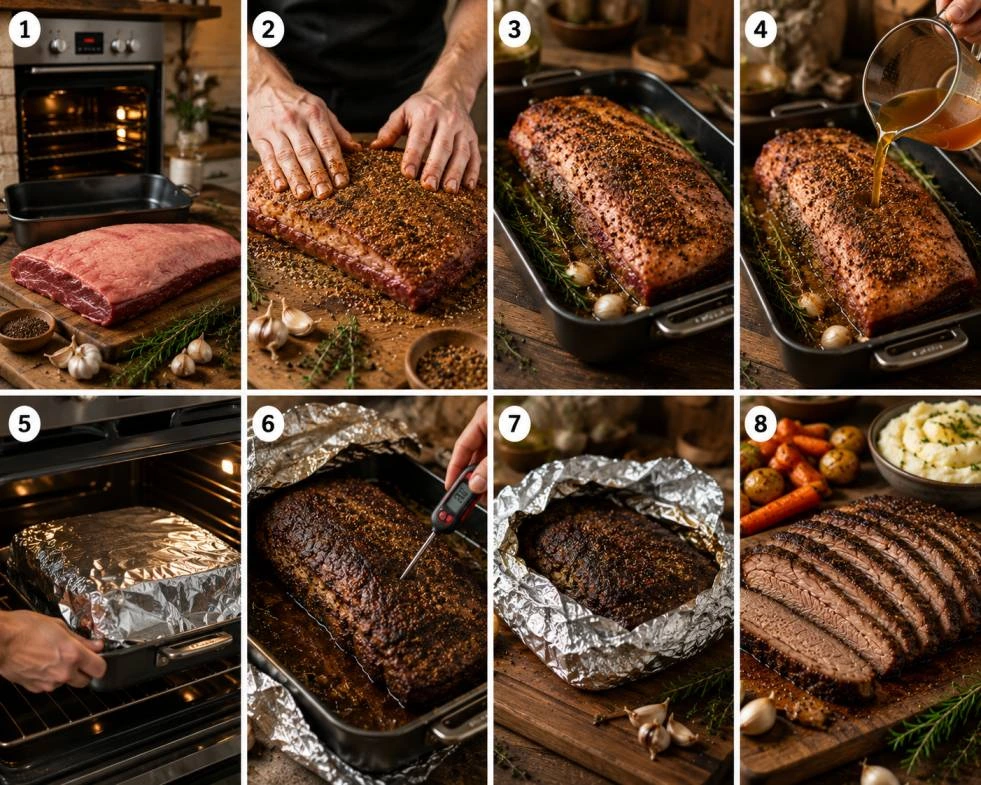
1. Preheat your oven to 300°F
This is the sweet spot for oven brisket — hot enough to cook in a reasonable timeframe, gentle enough to avoid drying it out.
2. Season the brisket generously on all sides
Don’t be shy with the rub; a lot of it will render off during cooking, so you want good coverage.
3. Place the brisket fat-side up in a roasting pan
This lets the fat baste the meat as it melts downward through the cooking process.
4. Add liquid to the pan — about 1 to 1.5 cups
Beef broth, water, or even a splash of apple cider vinegar all work well. This liquid creates steam inside the covered pan, which is one of the biggest factors in keeping brisket moist.
5. Cover tightly with foil and roast
Plan on roughly 1 to 1.5 hours per pound. A 4-pound Beef breast typically needs about 5 to 6 hours; a 7-pound brisket can take closer to 8 to 9 hours.
6. Check internal temperature, not just the clock
You’re aiming for 195–203°F internally. This is well past “done” for most cuts of beef, but Beef breast needs that extra time for the connective tissue to fully break down.
7. Rest before slicing — don’t skip this part
Let the Beef breast rest, still wrapped, for at least 30 minutes (an hour is even better). This lets the juices redistribute instead of spilling out the moment you cut into it.
8. Slice against the grain
Look closely at the direction the muscle fibers run, and cut perpendicular to them. This single step makes a bigger difference in tenderness than almost anything else you’ll do.
Covered or Uncovered? Here’s the Honest Answer
Covered, for most of the cook — that’s really the short version. Foil traps steam and moisture, which is exactly what a lean cut like brisket needs to avoid drying out over a long cook. That said, some cooks like to uncover the Beef breast for the final 30–45 minutes to firm up the exterior and get a bit of color on the bark. If you try that, keep a close eye on it so it doesn’t dry out at the finish line.
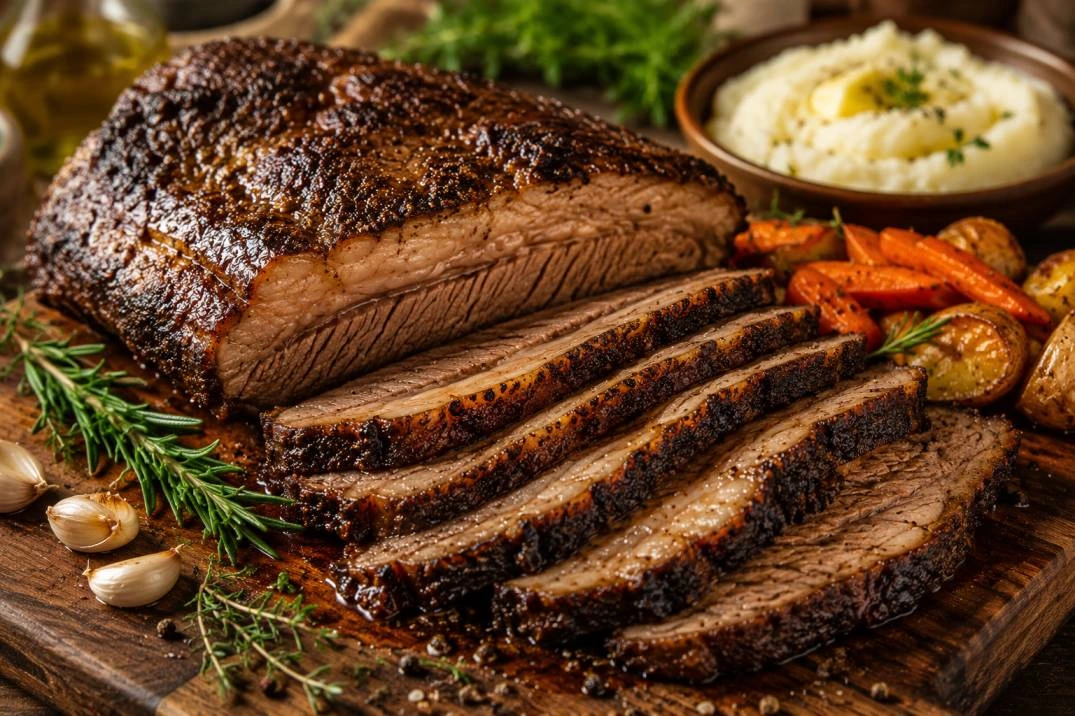
How to Cook Brisket in the Oven (Tender, Juicy & Foolproof Recipe)
Ingredients
Equipment
Notes
The 3:2:1 Approach, Simplified
You may have come across the “3:2:1 rule” for brisket. It’s a rough framework rather than a strict formula, and it breaks the cook into three phases: an initial stretch uncovered or lightly covered to build flavor, a longer middle stretch tightly wrapped to lock in moisture, and a short final stage to rest and firm up the bark. The exact hours shift depending on the size of your brisket, but the underlying idea is what matters: start open, protect the moisture in the middle, finish exposed. Think of it less as a rigid timer and more as a mindset for how brisket behaves in the oven.
Common Mistakes That Ruin a Good Brisket
- Cooking at too high a temperature. 350°F and above cooks the surface faster than the interior can catch up, leaving you with a tough result.
- Skipping the resting period. Cutting in too soon lets all those hard-earned juices run straight onto the cutting board.
- Slicing with the grain instead of against it. Even a perfectly cooked Beef breast can seem chewy if it’s cut the wrong way.
- Not enough liquid in the pan. A dry pan means a dry brisket — that steam is doing real work.
Frequently Asked Questions
How many hours does it take to cook a brisket?
As a general guide, plan on 1 to 1.5 hours per pound at 300°F. A smaller 3-pound Beef breast may be done in around 4 to 5 hours, while a larger 7-pound brisket can take 8 to 9 hours. Always confirm doneness with a meat thermometer rather than relying on time alone.
Should I bake brisket covered or uncovered?
Covered for the majority of the cook. This traps moisture and prevents the long cooking time from drying out the meat. Uncovering for the final stretch is optional, mainly for those who want a firmer, more browned exterior.
Is 350°F too hot for Beef breast?
Generally, yes. Beef breast is a tough cut that needs time for its connective tissue to break down, and 350°F cooks too quickly for that to happen evenly. Sticking to 275–300°F gives far more consistent, tender results.
Do you need to add liquid when cooking brisket in the oven?
Yes, and it makes a noticeable difference. A cup or so of broth or water in the pan creates steam under the foil, which keeps the meat moist throughout the long cook. Skipping this step is one of the most common reasons brisket turns out drier than expected.
Final Thoughts
Beef breast rewards patience more than any special equipment or technique. Keep the oven low, keep the pan covered, keep some liquid in there, and give it the time it needs — that’s really the whole formula. The first brisket you pull out of the oven, rest properly, and slice against the grain will tell you everything you need to know: this is a cut worth taking your time with.
Give it a try this weekend, and let us know how your brisket turns out — there’s nothing quite like the first time it comes out right.