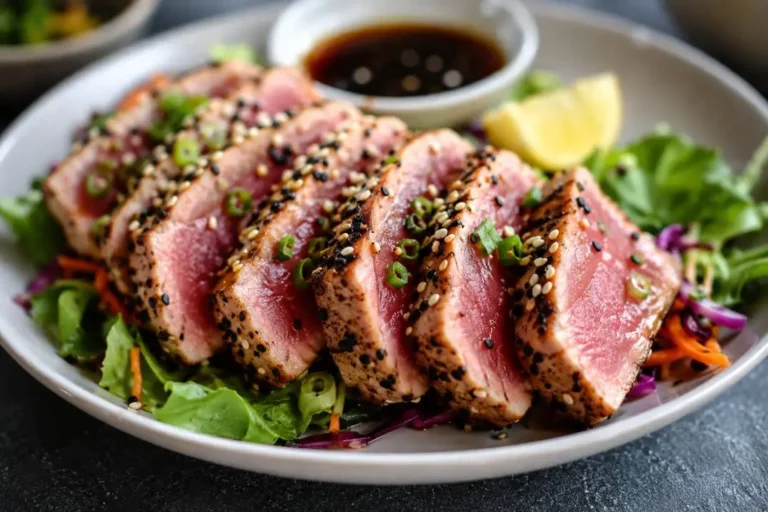
Tuna Tataki: The Beginner’s Guide to Searing Like a Pro (Without Overthinking It)
The first time I seared a block of tuna in a screaming-hot pan, I was terrified I’d ruin a $30 piece of fish in about four seconds. That’s basically what tataki is — a fast, high-heat kiss on the outside, and a cool, ruby-red center that never sees the flame. It sounds like a technique reserved for sushi chefs with decades of knife work behind them. It isn’t. It’s one of the most forgiving “fancy” dishes you can put on a plate, and once you understand the two or three things that actually matter, you’ll wonder why you ever paid restaurant prices for it.
This is the guide I wish someone had handed me before my first attempt — no jargon, no assumptions, just the method and the reasoning behind it.
What Exactly Is Tuna Tataki?
Here’s the confusion I hear most often: is tuna tataki raw, or is it cooked? The honest answer is both, at the same time. The technique sears only the outer layer of the fish — maybe a quarter-inch — while the interior stays raw and cool, the way you’d find it in sashimi. That’s the whole point. You get the char, smoke, and savoriness of a seared crust, plus the buttery, clean texture of raw tuna in every bite.
It’s easy to mix up with ahi tuna or tuna tartare, so let’s clear that up quickly. “Ahi” simply refers to the species of tuna (yellowfin or bigeye) — it’s not a preparation method. Tartare is the fish diced and dressed, entirely raw, with no cooking involved at all. Tataki is a technique that can be applied to that same ahi tuna, but always involves that brief sear.
Choosing the Right Tuna (This Is the Part That Actually Matters)
I’ll be blunt: the recipe below is simple. The quality of the tuna you purchase should not be compromised. Look for tuna specifically labeled “sushi-grade” or “sashimi-grade” at a reputable fish counter — this indicates it’s been handled and frozen according to standards meant for raw consumption. A thick, evenly shaped loin (rather than a thin steak) will give you cleaner slices and a better ratio of seared crust to raw center. Fresh Albacore should smell like the ocean, not “fishy,” and the color should be a deep, consistent red with no dull or brown patches.
Tuna Tataki, Step by Step:
The Method:
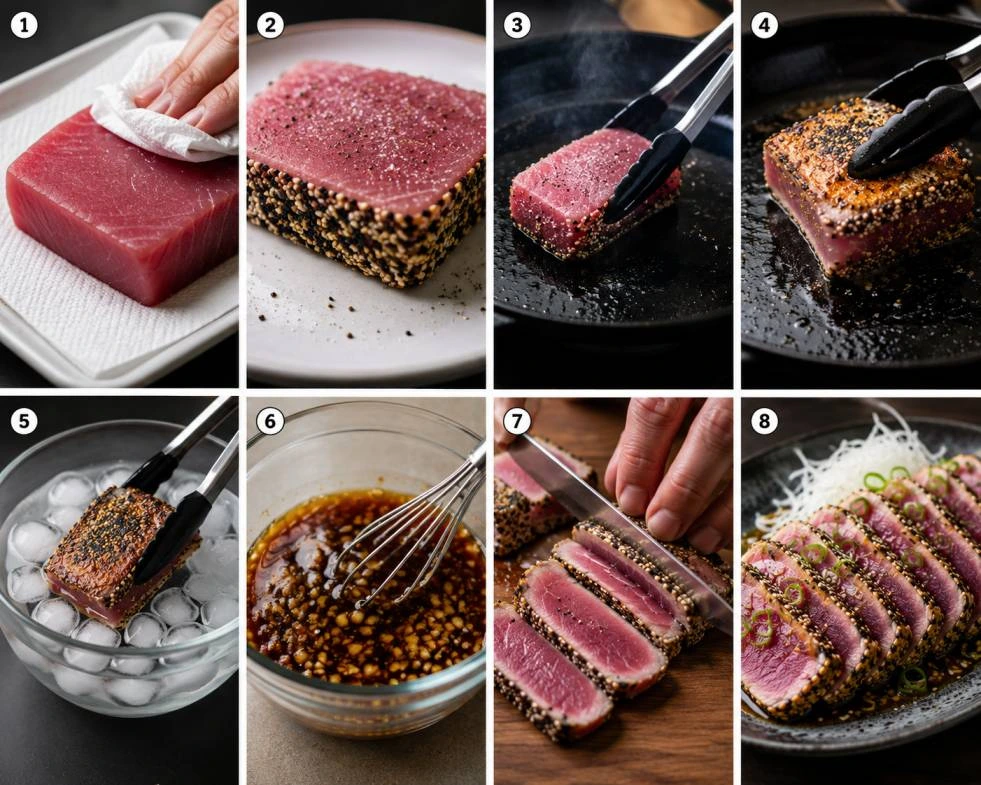
Pat the tuna completely dry
Any surface moisture will steam instead of sear, and you’ll lose that crust you’re after.
Season the outside generously
with salt and pepper, pressing the sesame seeds into the surface if you’re using them.
Get your pan properly hot
A cast-iron or stainless skillet over high heat for a full 2-3 minutes, until it’s just short of smoking. This is the step people rush, and it’s the one that decides whether you get a real sear or a sad gray ring.
Add the oil, then the tuna
Sear each of the four sides for 15-20 seconds only — you’re looking for a light golden-brown crust, not a cooked interior. Use tongs to roll it quickly from side to side.
Shock it immediately.
Pull the tuna straight into an ice bath, or onto a plate in the freezer for 2-3 minutes. This stops the carryover cooking dead in its tracks so the center stays cool and raw.
Whisk the sauce
while the Albacore rests — soy, citrus, vinegar, honey, ginger, garlic, and sesame oil, all in one bowl.
Slice thin, against the grain
about a quarter-inch thick, using a very sharp knife and long, single-direction strokes rather than a sawing motion.
Fan the slices on a plate
spoon the sauce over the top, and finish with sliced scallion, extra sesame seeds, or a few threads of julienned daikon if you want the full restaurant look.
Pro Tips from the Pass
A few things I’ve learned the hard way. First, don’t crowd the pan — if the Albacore sits in its own moisture, you’ll steam it rather than sear it. Second, resist the urge to season the sauce until the very end; citrus juice loses its brightness the longer it sits. And third, if you don’t own a blazing-hot cast-iron pan, a quick pass with a kitchen torch on all sides works just as well and gives you more control over an even crust.
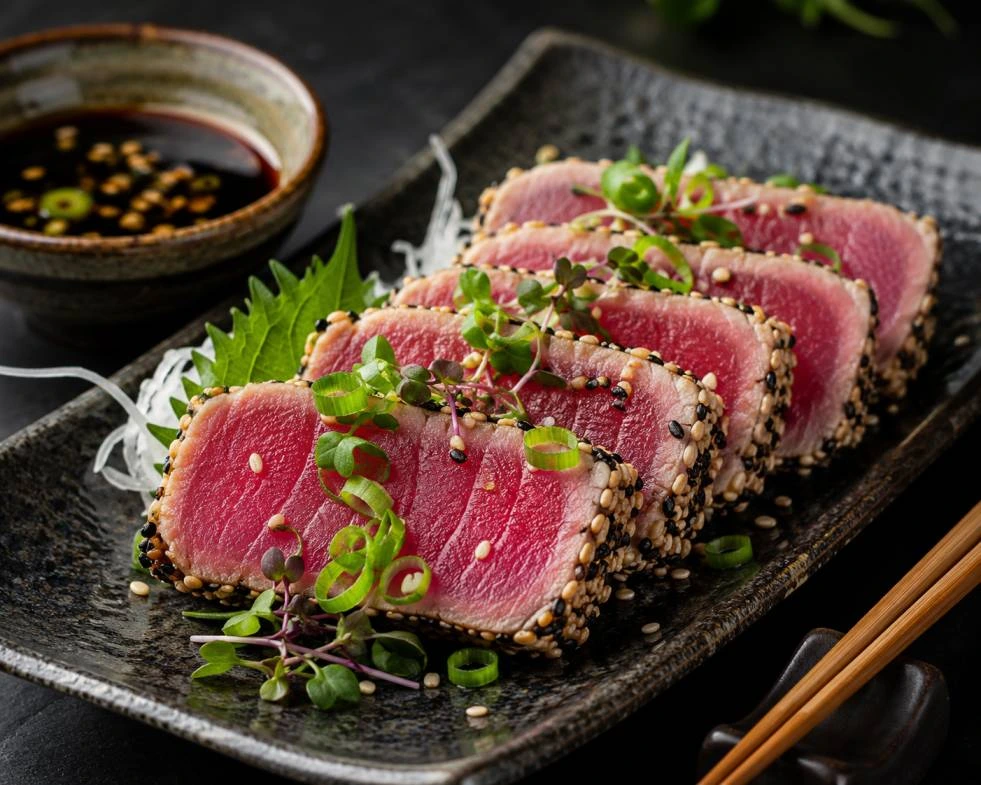
Easy Tuna Tataki (Perfectly Seared Japanese Tuna Recipe)
Ingredients
Equipment
Notes
Key Takeaways Before You Start
- Tataki means “pounded” or “seared” in Japanese — the fish is barely cooked, only on the surface.
- You need sushi-grade or sashimi-grade ahi (yellowfin or bigfin) tuna, full stop. Regular grocery-store tuna steak isn’t rated safe to eat rare.
- The whole cook takes under a minute total — the pan needs to be hotter than you think.
- A citrus-soy sauce (ponzu) does most of the flavor work, so don’t overcomplicate the marinade.
- It’s naturally high in protein and low in fat, making it a popular “healthy indulgence” order.
Is Tuna Tataki Actually Healthy?
This is one of the most common questions beginners ask, and it’s a fair one when you’re eating fish that’s mostly raw. Albacore itself is an excellent source of lean protein and omega-3 fatty acids, with very little saturated fat — which is exactly why it shows up so often on “clean eating” menus. The main consideration isn’t the tataki technique itself, it’s sourcing: because the center stays raw, that fish absolutely needs to be sushi-grade, which means it’s been previously frozen to eliminate parasites, per FDA guidance. The one group that should sit this one out is anyone who’s pregnant, immunocompromised, or has a mercury sensitivity, since tuna is a higher-mercury fish and raw preparations always carry a small residual food-safety risk that cooking would otherwise remove.
Frequently Asked Questions:
Is tuna tataki raw or cooked?
Both, technically. Only the outer surface is seared over high heat for a matter of seconds; the interior is left raw, just like sashimi. That contrast between the cooked crust and cool center is the entire appeal of the dish.
What’s the difference between tuna tataki and ahi tuna?
Ahi refers to the fish species (yellowfin or bigeye tuna), not a cooking style. Tataki is the technique — a quick sear — that’s applied to ahi tuna. So you could say “ahi tuna tataki” and be describing the species and the preparation together.
Is tuna tataki healthy?
Generally, yes — it’s high in protein and omega-3s and low in saturated fat. The main caveat is food safety rather than nutrition: because it’s mostly raw, it needs to be made with sushi-grade tuna, and it’s best avoided by pregnant or immunocompromised individuals.
How do you pronounce tuna tataki?
It’s pronounced tah-TAH-kee, with the emphasis on the second syllable. The word comes from the Japanese verb meaning “to pound” or “to strike,” a nod to the traditional method of tenderizing the fish before searing it.
Give It a Try
Tuna tataki has a reputation for being a chef’s dish, but the truth is it rewards preparation more than skill — buy the right tuna, get your pan properly hot, and don’t overthink the rest. Make it once, and you’ll have a dish that looks like it came from a restaurant menu, at a fraction of the price. If you try this recipe, I’d genuinely love to hear how your sear turned out — drop a comment and let me know what sauce twist you tried.