Chicken Bouillon 101: The Kitchen Shortcut Every Beginner Cook Should Know
If you’ve ever stood in the soup aisle staring at little cubes wrapped in foil, wondering what on earth they actually are — welcome. You’re not alone. Chicken bouillon is one of those pantry staples everyone assumes they understand, until someone asks: “Wait, is that the same as broth?” And suddenly nobody’s quite sure.
As a chef, I can tell you this little cube (or jar of paste, or packet of powder) has saved more weeknight dinners than almost anything else in my kitchen. It’s cheap, it lasts forever in the pantry, and it turns plain water into something that actually tastes like food. Today, I’m breaking down exactly what it is, how to use it, whether it’s good for you, and — because I can’t resist — I’m giving you a simple recipe to see it in action.
What Exactly Is Chicken Bouillon?
Here’s the simplest way to think about it: bouillon is stock that’s had almost all its water removed. Manufacturers simmer chicken, vegetables, and seasonings, then dehydrate that liquid down into a concentrated cube, powder, or paste. Add hot water back in, and you’ve reconstituted something that tastes remarkably close to homemade broth.
That’s the whole trick. It’s not a mysterious chemical shortcut — it’s just broth in travel-size form. Most bouillon also contains salt, MSG or yeast extract (for that deep savory flavor), and sometimes a bit of fat or oil to round things out. Better Than Bouillon, one of the most popular brands among home cooks, comes as a concentrated paste in a jar rather than a cube, and a spoonful goes a long way.
Is it “just MSG,” as some people assume? Not quite. MSG might be one ingredient in the flavor profile, but bouillon is a genuine blend of dehydrated stock and seasonings — not a single additive pretending to be soup.
Is Chicken Broth the Same as Chicken Bouillon?
Short answer: no, but they’re close cousins. Broth is the finished, ready-to-pour liquid. Bouillon is the concentrated form you rehydrate to make that liquid. Think of bouillon as broth’s dehydrated alter ego.
The conversion is simple enough to memorize: one bouillon cube or one teaspoon of bouillon granules dissolved in one cup of hot water equals roughly one cup of chicken broth. So if a recipe calls for four cups of broth and your pantry is bouillon-only, just dissolve four cubes (or four teaspoons) into four cups of hot water. Done.
Can you use bouillon instead of stock in a recipe? Absolutely, in most cases — soups, braises, rice dishes, gravies. The one place I’d pause is anywhere the broth’s flavor needs to be delicate and unmasked, like a very simple consommé, where bouillon’s saltier, more seasoned profile might overpower the dish.
Is Chicken Bouillon Good or Bad for You?
This is where I put my chef hat aside for a second and get honest: bouillon isn’t inherently “bad,” but it’s not a health food either. The biggest concern is sodium. A single cube or teaspoon can carry a significant chunk of your recommended daily salt intake, which matters if you’re managing blood pressure or just trying to eat a bit lighter.
The good news is that low-sodium and “reduced salt” bouillon versions exist and taste nearly identical once you get used to them. If you want the healthiest route, making your own bouillon or stock from scratch — simmering chicken bones, carrots, celery, and onion for a few hours — gives you full control over salt and ingredients, though it does take more time than cracking open a cube.
Can You Have Chicken Broth or Bouillon With Gout?
If you’re managing gout, this question matters more than you’d think, since gout flare-ups are tied to purine intake, and some broths (especially those simmered a long time with bones and organ meat) can be higher in purines than people expect. Canned or bouillon-based broths tend to be lower in purines than long-simmered bone broths, but they’re not automatically “safe” for everyone — sodium content is still a factor for anyone managing related conditions like high blood pressure. If gout management is a concern for you, it’s worth checking with a doctor or dietitian about how much broth, of any kind, fits into your specific diet, since individual tolerance varies quite a bit.
Let’s Put It to Work: Simple Chicken Bouillon Soup
Enough theory — let’s cook. This is the recipe I hand to anyone just starting out in the kitchen. It’s forgiving, it’s fast, and it proves exactly why bouillon earns its spot in your pantry.
Steps:
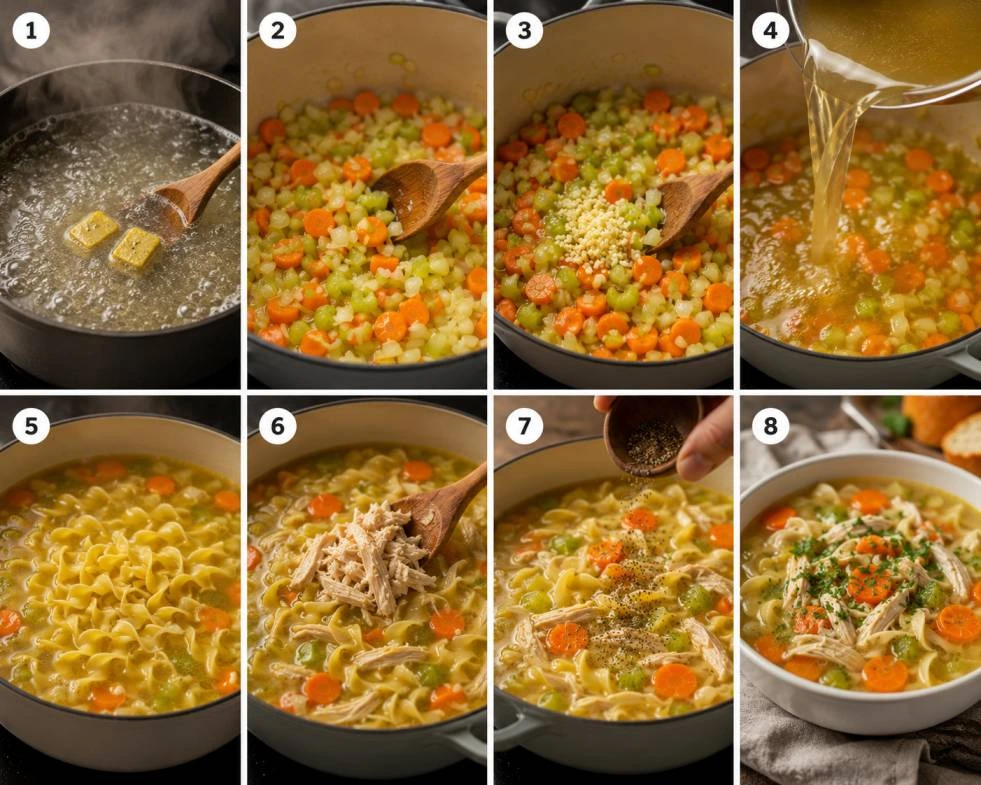
1 – Build your broth
Bring the 4 cups of water to a boil, then dissolve the bouillon cubes in it, stirring until fully melted. This is your homemade-tasting stock, ready in under five minutes.
2 – Sauté the vegetables
In a separate large pot, heat the olive oil over medium heat. Add the onion, carrots, and celery, and cook for about 5 minutes until they soften and the onion turns translucent.
3 – Add the garlic.
Stir in the minced garlic and cook for another 30 seconds, just until fragrant — don’t let it brown or it’ll turn bitter.
4 – Pour in the broth
Add your dissolved bouillon broth to the pot with the vegetables. Bring it to a gentle boil.
5 – Cook the noodles
Add the egg noodles or pasta directly into the pot and simmer for 8–10 minutes, or until tender.
6 – Add the chicken
Stir in the shredded chicken and let everything heat through for another 2–3 minutes.
7 – Season and taste
Add salt and pepper carefully — remember, bouillon already carries salt, so taste before you pour it in heavy-handed.
8 – Serve
Ladle into bowls, top with fresh parsley, and enjoy.
That’s it — a from-scratch-tasting soup, built almost entirely on a pantry shortcut.
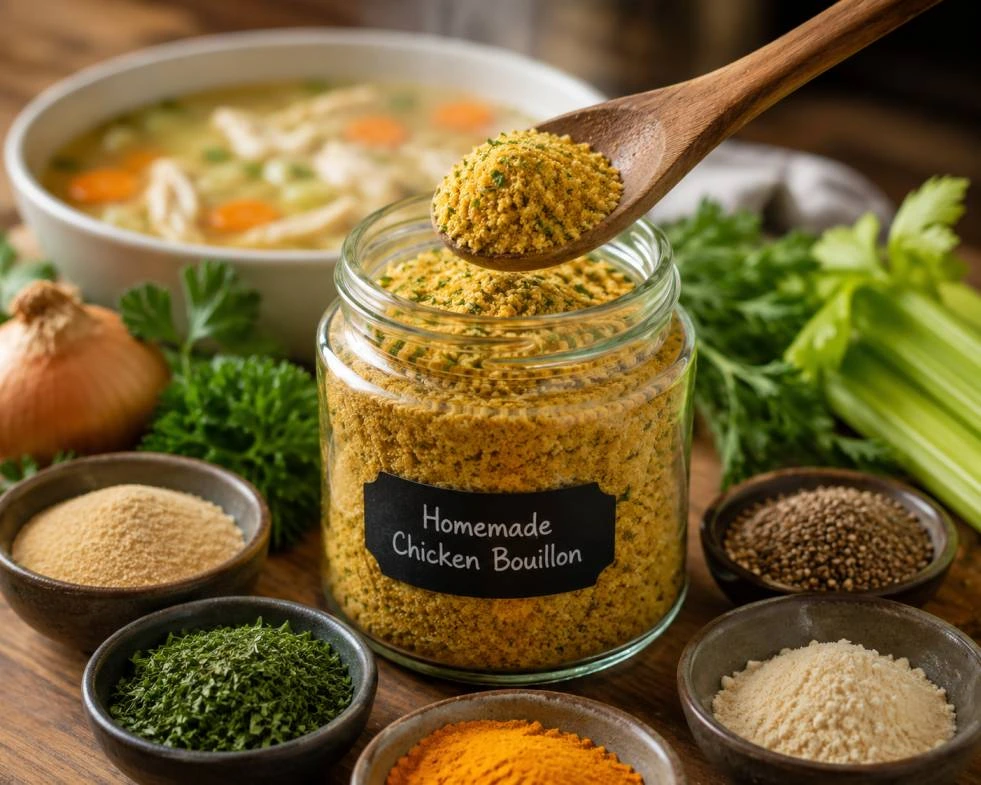
Homemade Chicken Bouillon (Easy Flavor-Packed Seasoning Recipe)
Ingredients
Equipment
Notes
Key Takeaways
- Chicken bouillon is a concentrated, dehydrated form of chicken stock — not the same thing as ready-to-use broth
- One cube or teaspoon of bouillon dissolved in hot water roughly equals one cup of broth
- It’s a fantastic flavor booster, but it’s often high in sodium, so it deserves a closer look if you’re watching your salt intake
- You can make a rich, homemade-tasting soup with bouillon in under 30 minutes
- Homemade versions exist if you want more control over ingredients
Frequently Asked Questions
What exactly is chicken bouillon?
It’s dehydrated, concentrated chicken stock — usually sold as cubes, granules, or a paste — that you reconstitute with hot water to make broth.
Is chicken broth the same as chicken bouillon?
Not exactly. Broth is the ready-to-use liquid; bouillon is its concentrated form. One cube or teaspoon dissolved in a cup of hot water typically equals one cup of broth.
Can I have chicken broth with gout?
It depends on the type and your individual sensitivity. Canned or bouillon-based broths tend to be lower in purines than long-simmered bone broths, but sodium and personal tolerance still matter — check with a doctor or dietitian for guidance specific to you.
Is chicken bouillon good or bad for you?
It’s a convenient flavor booster, but it’s often high in sodium. It’s not “bad” in moderation, though low-sodium versions or homemade stock are better choices if you’re watching salt intake.
Final Thoughts
Chicken bouillon isn’t glamorous, but it’s one of those quiet kitchen workhorses that makes cooking easier without asking much of you in return. Keep a jar or box in your pantry, learn the simple conversion ratio, and you’ll never be stuck without a base for soup, rice, or gravy again.
Give the soup recipe above a try this week — and if you experiment with a low-sodium version or a homemade bouillon, I’d love to hear how it turns out.