
Easy Chicken Curry Recipe for Beginners: A Chef’s No-Fail Method
The first curry I ever made on my own turned out grey, watery, and about as fragrant as boiled cardboard. I’d thrown every spice in my cupboard into the pan at once, panicked when it looked wrong, and added a splash of milk to “fix” it. It didn’t. If you’ve had a similar disaster, or you’re too nervous to even try, I want you to relax. Chicken curry is one of the most forgiving dishes you’ll ever cook, once you understand the handful of steps that actually matter.
I’ve cooked curries professionally for years, and honestly, the difference between a flat, watery curry and a rich, restaurant-worthy one usually comes down to three or four small habits — not a long ingredient list or hours of standing over the stove. This guide walks you through exactly that: a proper method, in order, with the reasoning behind each step so you’re not just following instructions blindly.
Key Takeaways
- You only need four core elements for a good curry base: aromatics, spices, tomato or a liquid base, and fat.
- Cooking your onions and spices properly (not rushing this stage) is where most of the flavour comes from.
- Tender chicken comes down to cut choice, marinating, and not overcooking — not a secret ingredient.
- This recipe takes about 45 minutes and uses ingredients most UK supermarkets stock as standard.
- A short rest before serving makes a noticeable difference to the final taste.
What You Actually Need for a Good Chicken Curry
Strip a curry back to its bones and you’ll find four things doing all the work: aromatics (onion, garlic, ginger), a spice blend, a liquid base (tomatoes, stock, or yoghurt), and a good fat to carry the flavour, like ghee or vegetable oil. Everything else — coconut milk, fresh coriander, chillies — is dressing. Get those four right and you genuinely cannot go far wrong.
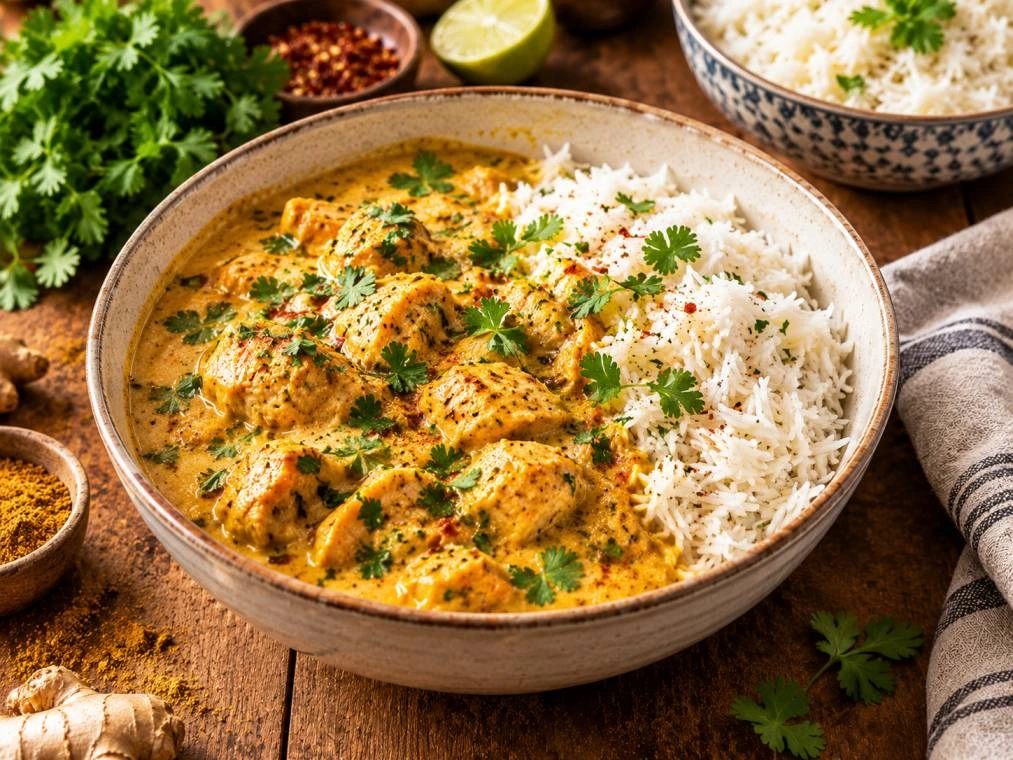
Easy Chicken Curry Recipe for Beginners
Ingredients
Equipment
Method: Step by Step:

Step 1: Soften the onions properly
Heat the oil in a large pan over medium heat and add the onion with a pinch of salt. Cook for a full 8–10 minutes, stirring now and then, until it’s soft and golden rather than just translucent. Don’t rush this — a raw or half-cooked onion is the number one reason home curries taste thin.
Step 2: Add garlic, ginger, and spices
Stir in the garlic and ginger and cook for a minute until fragrant. Add the cumin, coriander, turmeric, and chilli powder, then stir constantly for about 60 seconds. You’ll know it’s ready when the spices smell toasty rather than raw — if the pan looks dry, add a splash of water so nothing catches and burns.
Step 3: Build the sauce
Tip in the tomatoes and stock, scraping up anything stuck to the base of the pan. Bring to a gentle simmer and let it bubble for 10 minutes so the sauce reduces and thickens slightly.
Step 4: Add the chicken
Add the chicken pieces, stir to coat them in the sauce, then cover and simmer gently for 15–18 minutes, stirring occasionally, until the chicken is cooked through and tender. Keep the heat low here — a hard boil is what makes chicken go rubbery.
Step 5: Finish and rest
Stir in the yoghurt or coconut milk and the garam masala, then simmer uncovered for another 2–3 minutes. Take the pan off the heat and let it sit for 5 minutes before serving — this short rest lets the flavours settle and makes a genuine difference. Taste, adjust the salt, and scatter over fresh coriander.
The Habits That Separate a Good Curry from a Great One
Beyond the method itself, a few habits make the biggest difference. Marinating your chicken in yoghurt, salt, and a little turmeric for even 30 minutes tenderises it and helps it hold on to flavour. Layering your spices — blooming them in oil rather than adding them all at the end — is what gives a curry depth instead of a flat, one-note taste. And resist the urge to turn up the heat to “speed things up”; low and slow is what breaks down the onions and tomatoes into a proper sauce rather than a soup with lumps in it.
Frequently Asked Questions:
What are the four ingredients in chicken curry?
At its core, chicken curry relies on aromatics (onion, garlic, ginger), a spice blend, a liquid base such as tomatoes or stock, and a fat like oil or ghee to carry the flavour through the dish.
What is the secret to good Indian curry?
There’s no single secret ingredient — it’s technique. Cooking the onions until properly golden and blooming the spices in oil before adding liquid builds a depth of flavour that can’t be added in later.
What are common mistakes in chicken curry?
The usual culprits are rushing the onions, adding spices without toasting them first, boiling the chicken too hard so it turns tough, and skipping the resting time before serving.
How do you cook chicken so it’s tender for curry?
Use thigh meat rather than breast, marinate it briefly in yoghurt and salt if you have time, and simmer gently rather than boiling — a low, steady heat keeps the meat juicy.
Give It a Go
You don’t need twenty spices or a family recipe passed down for generations to make a proper chicken curry — you need patience with your onions, a bit of care with your spices, and the confidence to trust the process. Try this recipe this week, and if it doesn’t come out perfectly the first time, that’s fine too. Mine certainly didn’t. Let me know how it turns out, and if you’ve got a tweak or a family trick of your own, I’d genuinely love to hear it in the comments.