Chicken Sausages 101: A Chef’s Honest Guide (Plus a Foolproof Traybake)
Let’s be honest — the sausage aisle in a UK supermarket is a minefield. Pork, chicken, Cumberland, “reduced fat,” “97% meat,” own-brand versus Aldi versus M&S. I’ve spent more hours than I’d like to admit reading the backs of sausage packets, and chicken sausages in particular get asked about a lot in my kitchen. Are they actually healthy? Are they secretly just as processed as the pork ones? And can a total beginner cook them without turning dinner into a disaster?
Short answer: yes, chicken sausages can absolutely earn a place in your weekly shop — but only if you know what you’re looking for. Here’s everything I tell people who ask me about them, plus a recipe simple enough for your very first proper cooked dinner.
Key Takeaways
- Chicken sausages are generally lower in saturated fat than pork, but many are still classed as processed meat
- Ingredient lists matter more than the word “chicken” on the front of the pack
- Look for high meat content (80%+) and short ingredient lists to find the least processed options
- They’re a genuinely beginner-friendly protein — hard to overcook, forgiving, and cheap
- One-pan traybakes are the easiest way to cook them well without any special skills
Are Chicken Sausages Actually Healthy?
Here’s the thing nobody puts on the front of the packet: “chicken sausage” isn’t a single product, it’s a category, and the difference between the best and worst examples is enormous. A good chicken sausage might be 85% chicken breast, herbs, and a bit of seasoning. A cheaper one might be closer to 50% meat, padded out with rusk, water, and mechanically recovered chicken.
Both technically qualify as “processed” in the nutritional sense, because processing just means the meat has been altered from its raw state — minced, seasoned, and formed. That’s not automatically a bad thing. What you want to avoid is the ultra-processed end of the spectrum: long ingredient lists full of stabilisers, excessive salt, and preservatives you can’t pronounce.
My rule of thumb when I’m shopping: flip the pack over. If the ingredient list reads like a recipe (chicken, herbs, salt, pepper, a touch of rusk), you’re in good shape. If it reads like a chemistry set, put it back.
Finding the Best Chicken Sausages in UK Supermarkets
You don’t need to shop at a fancy butcher to eat well here. Most major UK supermarkets now do a “finest,” “extra special,” or similar premium range with genuinely high meat content — often 90%+. These sit right next to the standard economy lines, usually for a couple of pounds more, and the difference in both taste and ingredient quality is noticeable.
A few practical pointers:
- Check the meat percentage first — it’s usually printed clearly, and anything above 80% is a good benchmark
- Compare sodium per 100g across brands — it varies more than you’d expect
- Don’t assume “reduced fat” means healthier overall — sometimes salt or sugar is bumped up to compensate for flavour
- Own-brand premium ranges often match or beat pricier named brands on ingredient quality
If you’re eating sausages regularly rather than as an occasional treat, it’s worth rotating between a couple of trusted options rather than sticking to whatever’s cheapest every single week.
Chicken vs. Other Sausages — Where It Actually Wins
Chicken sausages typically come out ahead of standard pork sausages on saturated fat, which matters if you’re watching your heart health or just trying to eat a bit lighter without giving up sausages entirely (a noble goal, in my opinion). Compared with turkey sausages, it’s much closer — both are lean poultry options, and the real differentiator again comes down to the specific product’s meat content and additives rather than the animal itself.
If you’re managing your weight, chicken sausages can fit comfortably into a balanced meal — they’re a decent protein source — but they’re not a diet food by default. Pair them with vegetables and a sensible portion of carbs rather than treating them as a free pass.
Recipe: One-Pan Chicken Sausage & Veg Traybake
This is the recipe I hand to genuine beginners. One tray, minimal washing up, and it’s very hard to get wrong. Serves 4.
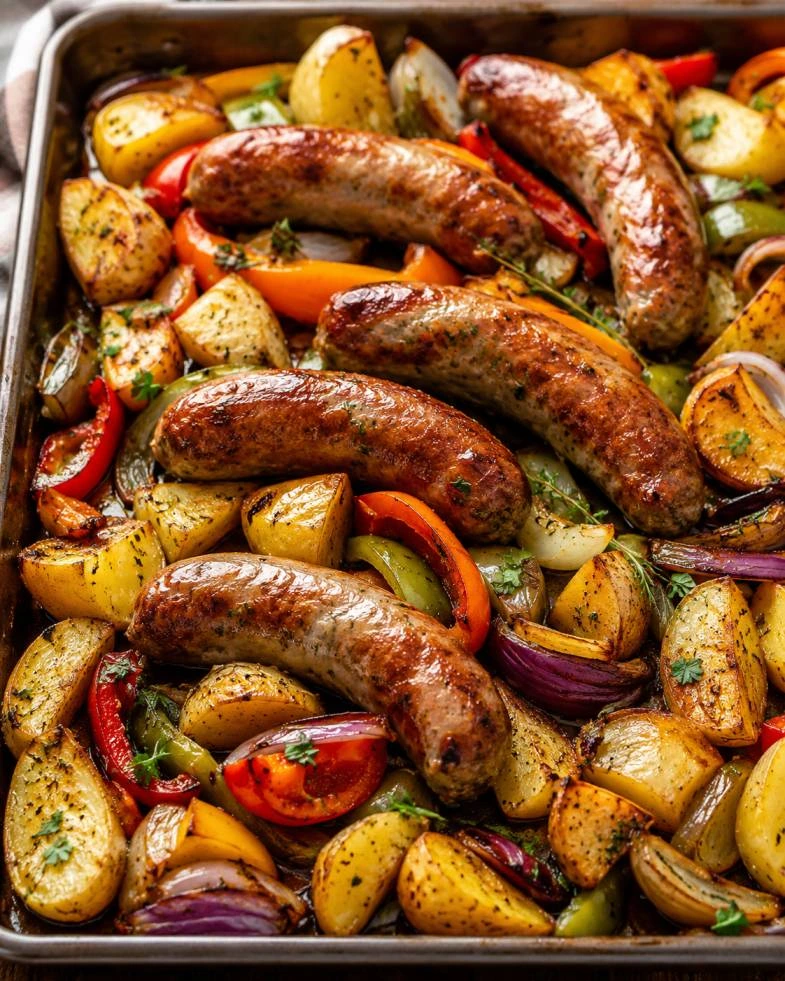
Easy Chicken Sausage Traybake
Ingredients
Notes
- Cut the vegetables into similar-sized pieces so they cook evenly.
- Arrange the sausages and vegetables in a single layer for better browning.
- Turn the sausages and vegetables halfway through cooking.
- Make sure the chicken sausages are fully cooked before serving.
- Leftovers can be refrigerated in an airtight container for up to 3 days.
Method
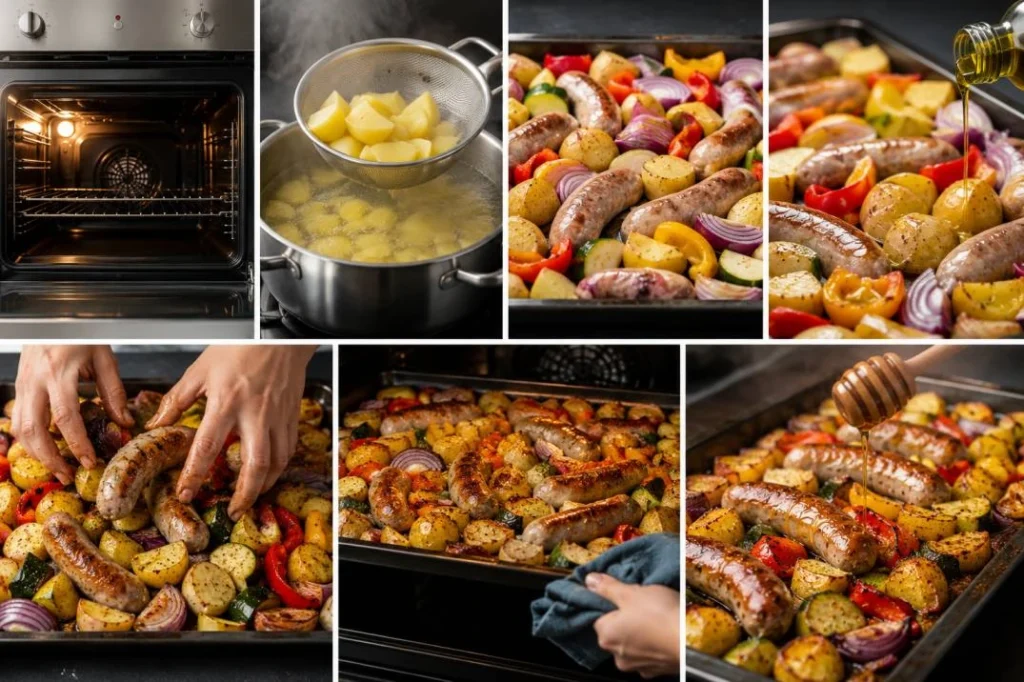
- Preheat your oven to 200°C (fan 180°C). Get a large baking tray ready — the bigger and flatter, the better, so everything roasts instead of steams.
- Parboil the potatoes for 5 minutes in salted boiling water, then drain well. This step is what stops beginners ending up with raw potato chunks 40 minutes in — don’t skip it.
- Tip everything onto the tray — potatoes, onion, peppers, courgette, and the sausages nestled in among the veg.
- Drizzle with olive oil, then scatter over the paprika, thyme, salt, and pepper. Toss it all together with your hands so everything’s coated.
- Roast for 25 minutes, then take the tray out, turn the sausages and give the veg a shuffle so nothing catches or sticks.
- Drizzle the honey over if using, then return to the oven for a further 15–20 minutes, until the sausages are golden and cooked through (no pink in the middle) and the veg is tender with slightly crisp edges.
- Rest for 2 minutes before serving straight from the tray. Job done.
That’s genuinely it. No sauces to babysit, no timing multiple pans — just one tray doing all the work while you get on with something else.
Frequently Asked Questions
Are chicken sausages a highly processed food?
It depends on the specific product. Chicken sausages sit in a spectrum — some are minimally processed with high meat content and simple seasoning, while cheaper varieties can be padded with fillers, water, and additives that push them toward the ultra-processed end. Checking the meat percentage and ingredient list is the quickest way to tell which side of that line a product falls on.
What are the healthiest chicken sausages in the UK?
Generally, the premium or “finest” ranges from major supermarkets — with meat content of 80–90%+ and short ingredient lists — are your best bet. Look for ones with no artificial preservatives, moderate salt per 100g, and chicken breast listed as the first ingredient.
Are chicken sausages healthier than turkey sausages?
They’re broadly comparable. Both are lean poultry alternatives to pork with lower saturated fat, and the real difference between any two products usually comes down to meat content and additives rather than whether the meat is chicken or turkey.
Can I eat chicken sausage for weight loss?
Yes, in moderation and as part of a balanced plate. Chicken sausages offer a decent amount of protein, but portion size and what you pair them with (plenty of vegetables, sensible carb portions) matter more for weight management than the sausage itself.
Final Thoughts
Chicken sausages don’t deserve either the health-halo they sometimes get or the total dismissal as “just processed meat” — the truth, as usual, sits in the middle and depends entirely on which pack you pick up. Read the label, favour higher meat content, and you’ve got yourself a genuinely solid, beginner-friendly protein that works in traybakes, pasta, sandwiches, and everything in between.
Give the traybake a go this week — it’s about as forgiving a first proper meal as you’ll find. And if you try it, I’d love to hear how it turned out and what veg combo you used.