The Secret to a Perfect Victoria Sponge: A Chef’s Step-by-Step Guide
I’ve watched more home bakers cry over a sunken Victoria sponge than almost any other cake. It looks so simple, doesn’t it? Four ingredients, one bowl, a bit of jam in the middle. And yet it’s one of the first cakes that separates a confident baker from someone who’s about to swear off baking forever.
Here’s the good news: a great Victoria sponge isn’t about talent. It’s about a handful of small, non-negotiable habits that most recipes never bother to explain. I’ve made this cake more times than I can count, in professional kitchens and on a wonky home oven that ran fifteen degrees hot, and the fundamentals never change. Get them right once, and you’ll get them right every time after.
Key Takeaways
- Room-temperature butter and eggs are the real “secret” — not a fancy technique
- Never rush the creaming stage; it’s where the air actually goes into your cake
- A Victoria sponge is defined by its filling and finish, not just its base
- Most sunken or dense sponges come down to oven temperature and overmixing
- This recipe makes a classic two-layer, jam-and-buttercream sponge for beginners
What Makes a Victoria Sponge Different From a Regular Sponge Cake?
This trips people up constantly, and it’s a fair question. Technically, any light, aerated cake made with flour, sugar, butter and eggs is a “sponge cake.” A Victoria sponge is a specific version of that: two shallow, buttery sponge layers sandwiched with jam and traditionally a dusting of caster sugar on top, sometimes with cream or buttercream added inside.
Named after Queen Victoria, who apparently enjoyed a slice with her afternoon tea, it’s built on what bakers call the “pound cake” ratio — equal weights of butter, sugar, flour and eggs. That balance is exactly why it works so reliably once you understand it, and exactly why it goes wrong when the ratio or the method gets thrown off.
So, What’s the Actual Secret to a Good Victoria Sponge?
Honestly? It’s not a secret ingredient. It’s temperature and patience, in that order.
Your butter and eggs need to be genuinely at room temperature before you start — not “left out for ten minutes” room temperature, but properly soft. Cold butter won’t trap air properly when you cream it, and cold eggs can make your batter split, which knocks air straight back out. If you forget to take your butter out in time, cube it and give it two minutes at low power in the microwave rather than melting it.
The second part is the creaming itself. Beat your butter and sugar for a full three to five minutes, not thirty seconds. You’re looking for a noticeably paler, fluffier mixture, almost like whipped mousse. That’s not decoration — that’s the air bubbles that will make your cake rise evenly instead of turning into a dense, chewy disc.
Step-by-Step Victoria Sponge Recipe
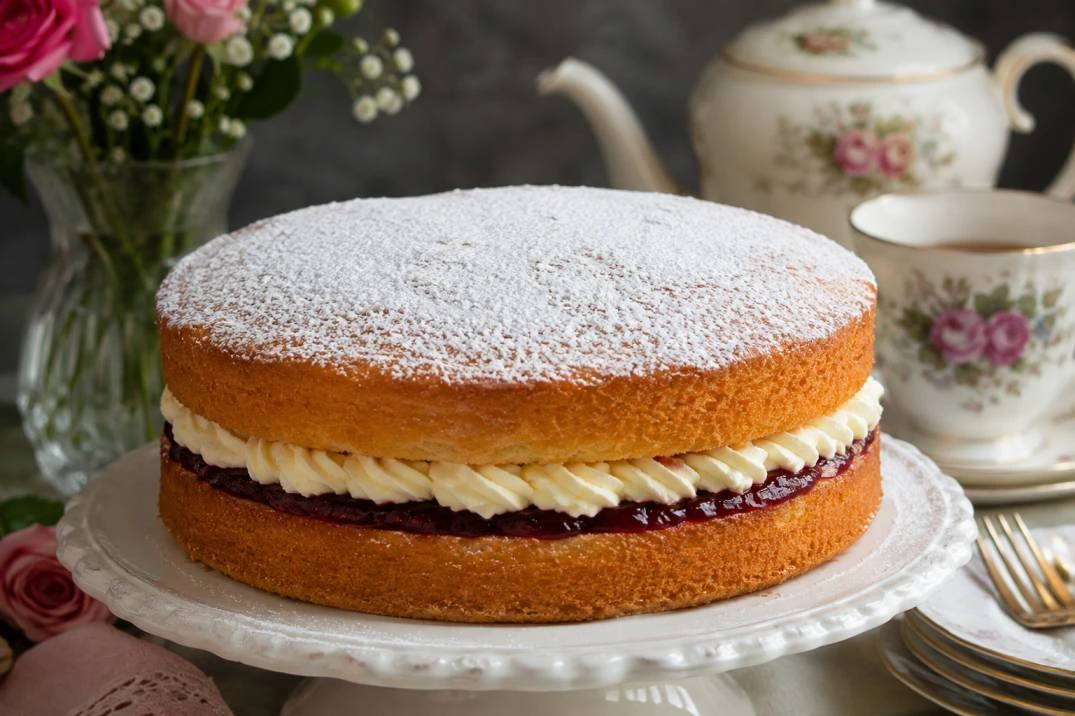
Perfect Victoria Sponge Cake
Ingredients
Method:
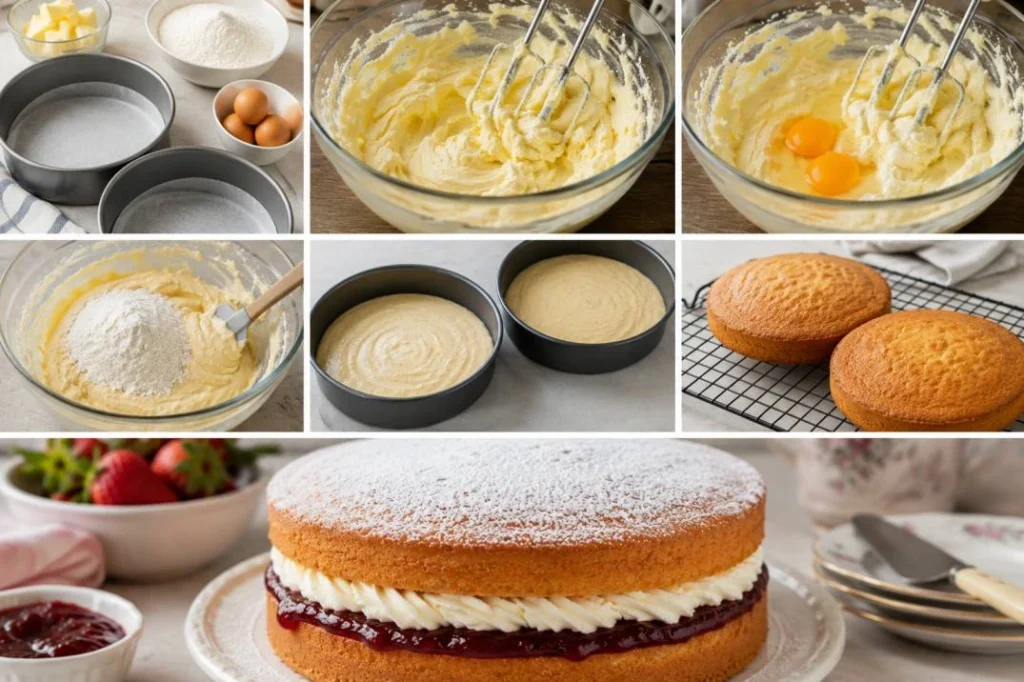
- Prep first. Heat your oven to 180°C (160°C fan). Grease two 8-inch cake tins and line the bases with baking paper. Doing this before you start mixing means your batter goes straight into the oven while it’s still full of air.
- Cream the butter and sugar. Beat together for 3–5 minutes until pale, light and fluffy. Don’t skip ahead — this stage builds the structure of your entire cake.
- Add the eggs gradually. One at a time, beating well after each. If the mixture looks like it’s curdling, add a spoonful of your flour to bring it back together.
- Fold in the dry ingredients. Sift in the flour and baking powder, then fold gently with a metal spoon or spatula. Stop as soon as you can’t see flour streaks — overmixing here is the fastest way to a tough, flat sponge.
- Divide and bake. Split the batter evenly between the tins, smooth the tops, and bake for 20–25 minutes. Resist opening the oven door before the 18-minute mark; a sudden cold draft can make the middle collapse.
- Check and cool. The cake is done when it springs back to a light touch and a skewer comes out clean. Cool in the tins for 10 minutes, then turn out onto a wire rack completely before filling.
- Fill and finish. Spread jam generously over one layer, add your buttercream or whipped cream on top, then sandwich with the second layer. Finish with a light dusting of caster sugar rather than icing, which is the traditional touch.
Common Mistakes That Sink a Victoria Sponge
Most disappointing sponges trace back to one of these:
- Cold ingredients. Butter and eggs straight from the fridge won’t emulsify properly.
- Underbeating the butter and sugar. Rushing this stage means less air, which means less rise.
- Overmixing after adding flour. This develops gluten and makes the crumb tough instead of tender.
- Guessing oven temperature. A cheap oven thermometer solves more baking disasters than any technique tip. Ovens running hot or cold is genuinely the most common issue I see.
- Opening the door too early. Give the structure time to set before you check on it.
Frequently Asked Questions:
What is the secret to a good Victoria sponge?
There isn’t one hidden trick — it comes down to using properly room-temperature butter and eggs, and creaming the butter and sugar for long enough to trap air before you add anything else.
How do you get a fluffy Victoria sponge?
Fluffiness comes from air, and air comes from patience at the creaming stage plus gentle folding once the flour goes in. Accurate oven temperature matters just as much, since an oven running cold or hot changes how the sponge sets.
What is the difference between a sponge cake and a Victoria sponge?
A sponge cake is the broad category — any light, aerated cake using roughly equal parts butter, sugar, flour and eggs. A Victoria sponge is a specific, traditional version: two such layers filled with jam and cream or buttercream, finished with a dusting of caster sugar.
What are common Victoria sponge mistakes?
The usual culprits are cold ingredients, undermixed butter and sugar, overmixed batter once flour is added, an inaccurate oven temperature, and opening the oven door too soon during baking.
Final Thoughts
A Victoria sponge rewards care, not complexity. Once you internalise the temperature and timing habits above, you’ll find this cake stops being a gamble and becomes something you can make from memory, on a random Tuesday, with confidence. Give it a go this weekend — and if it turns out better than you expected, that’s not luck. That’s technique.
Tried this recipe? I’d genuinely love to know how your sponge turned out — drop a comment below and tell me what filling combination you went with.