How to Cook a Bone-In Ribeye Steak Like a Steakhouse Chef (Beginner’s Guide)
Meta description: Learn how to cook a bone-in ribeye steak step by step, plus the truth about the 3-3-3-3 rule, seasoning tips, and whether bone-in really is better.
Key Takeaways
- A bone-in ribeye is one of the most forgiving cuts for beginners — the bone insulates the meat and helps it cook evenly.
- Searing on the stove, then finishing in the oven, gives you the best crust-to-center results at home.
- The “3-3-3-3” timing rule serves as a useful reference point rather than a fixed requirement — the actual doneness of your steak ultimately depends on its internal temperature
- Bone-in vs. boneless comes down to flavor and presentation more than tenderness.
- Ribeye isn’t the leanest cut on the menu, but eaten in moderation, it fits into a balanced diet just fine.
Why I Always Recommend Ribeye to First-Time Steak Cooks
Here’s the thing: if you’ve never cooked a steak at home and you’re nervous about ruining an expensive piece of meat, ribeye is where I tell every beginner to start. I have observed people who have never used a cast iron pan before successfully prepare a restaurant-quality steak on their first attempt, primarily because ribeye is a forgiving cut of meat that is difficult to overcook.
Why? Fat. A bone-in ribeye is heavily marbled, meaning thin streaks of fat run all the way through the meat. As it cooks, that fat melts and bastes the steak from the inside out, so even if your timing is a little off, you’re not left with a dry, chewy disappointment. Add the bone itself — which acts like a natural insulator and slows down cooking right near the center — and you’ve got a cut that’s practically designed to be beginner-friendly.
So let’s walk through exactly how to cook one, why the popular “3-3-3-3 rule” isn’t quite the full story, and how to answer the questions I get asked most often about this cut.
What Is the Best Way to Cook a Bone-In Ribeye?
For a home kitchen, the best method is a reverse sear or stovetop-to-oven sear — and honestly, once you’ve done it twice, you’ll never go back to guessing.
Here’s why this method works so well: cooking a steak is really a balancing act between two goals that fight each other. You want a deep, dark crust on the outside, but you don’t want to overcook the inside while you wait for that crust to form. Searing first on high heat, then finishing gently in the oven, lets you hit both goals without compromise.
What You’ll Need
- A heavy skillet — cast iron is ideal, but any oven-safe, heavy-bottomed pan works
- An oven preheated to 400°F (204°C)
- A meat thermometer (this one tool eliminates 90% of steak anxiety, trust me)
- Tongs, not a fork — never pierce your steak while cooking
Step-by-Step Cooking Method
- Bring the steak to room temperature. Pull it out of the fridge 30-45 minutes before cooking. A cold steak placed on a hot pan will cook unevenly.
- Pat it bone-dry. Literally — use paper towels. Moisture on the surface steams instead of sears, and steam is the enemy of a good crust.
- Season generously. Coarse salt and freshly cracked black pepper, on both sides, right before it hits the pan. Don’t be shy here.
- Heat your skillet until it’s almost smoking. Add a high smoke-point oil like avocado or grapeseed oil.
- Cook the steak for 2-3 minutes on each side without moving it.. Let it form a proper crust before you flip.
- Transfer the whole pan to the oven and roast until it reaches your target internal temperature (see chart below).
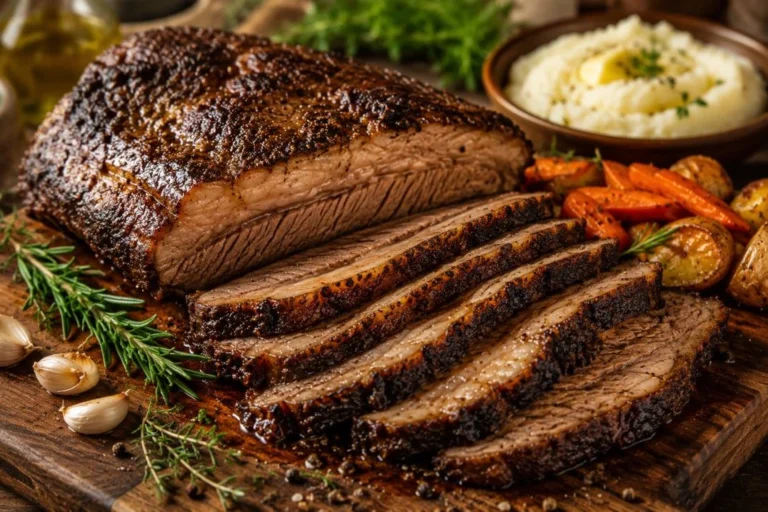
- Rest the steak for 5-10 minutes before cutting. This is non-negotiable — slicing too soon lets all those juices run out onto your cutting board instead of staying in the meat.
What Is the Best Seasoning for Ribeye?
Honestly? Keep it simple. A well-marbled ribeye doesn’t need much help. Kosher salt and coarse black pepper are the backbone of a great steak, and a pat of butter with fresh thyme and a smashed garlic clove, spooned over the steak in the pan during the last minute of cooking, takes it from good to unforgettable. If you want to get fancy later, experiment with smoked paprika or a coffee-based dry rub — but master the basics first.
Recipe Card: Pan-Seared Bone-In Ribeye
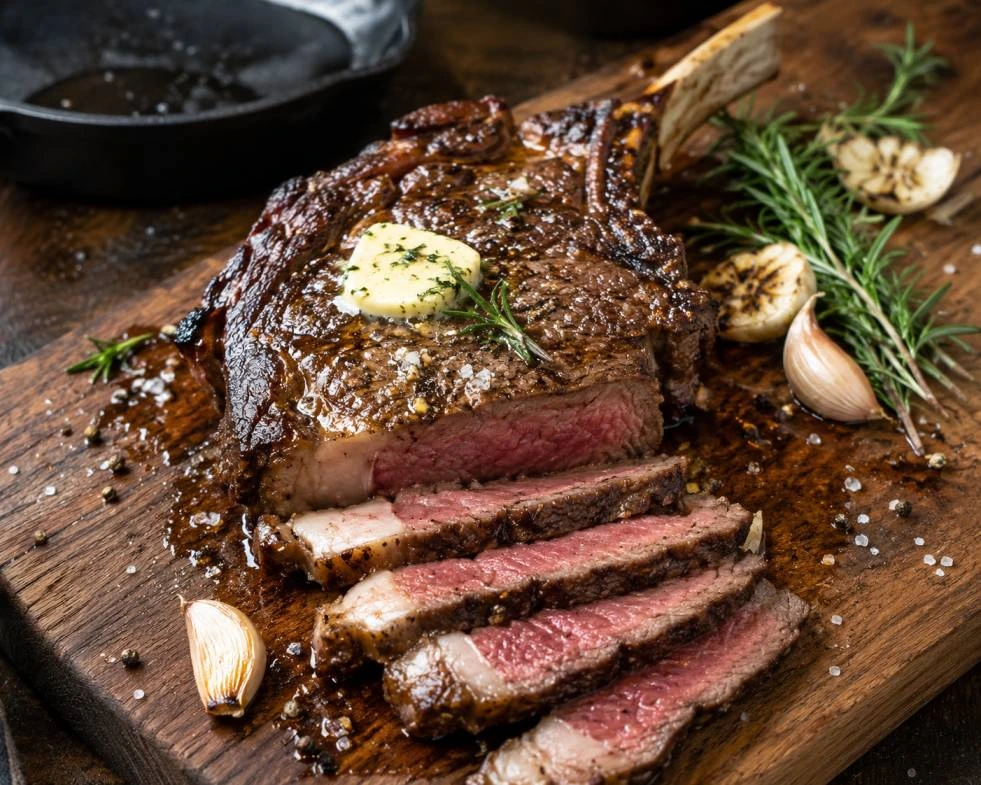
Bone-In Ribeye Steak Recipe (Steakhouse-Style Perfection)
Ingredients
Method
- Remove the steak from the fridge 30-45 minutes before cooking; pat completely dry with paper towels.
- Preheat the oven to 400°F (204°C).
- Season both sides generously with salt and pepper.
- Heat oil in an oven-safe skillet over high heat until shimmering.
- Sear the steak 2-3 minutes per side, undisturbed, until a deep brown crust forms.
- Add butter, garlic, and herbs to the pan; tilt the pan and spoon the melted butter over the steak for 1 minute.
- Transfer the skillet to the oven and cook 6-8 minutes for medium-rare (internal temp 130-135°F).
- Remove, tent loosely with foil, and rest for 5-10 minutes before slicing against the grain.
Notes
- For medium doneness, aim for 140-145°F internal temperature.
- Always pull the steak 5°F before your target temp — it continues cooking while it rests (this is called carryover cooking).
- Leftovers keep well for 3 days in the fridge; slice thin for steak sandwiches or salads.
Is a Bone-In Ribeye Actually Better?
You’ll hear steak purists argue about this endlessly, so let’s settle it. In terms of pure texture and tenderness, the bone itself doesn’t change the meat’s tenderness much — that comes down to marbling and the muscle it’s cut from. What the bone does affect is flavor and cooking behavior. Many chefs swear the bone adds richness during cooking, and it definitely helps the meat retain moisture and cook a bit more evenly near the bone.
There’s also the presentation factor — a bone-in ribeye simply looks more impressive on a plate, and that “wow factor” matters more than people admit when you’re cooking for guests.
As for the cowboy ribe-ye you might have seen on menus — that’s simply a bone-in ribeye with the bone frenched (trimmed) for a dramatic, tomahawk-style presentation. Same cut, different styling.
What Is the 3-3-3-3 Rule for Steak?
This is one of those tips that spreads fast online because it sounds simple, but I want to be straight with you: it’s a rough guideline, not a guarantee. The idea is 3 minutes per side searing, then another few minutes resting or finishing, aiming for a consistent, evenly cooked steak without constant flipping.
Here’s what I actually tell people: timing rules assume a specific steak thickness, a specific pan temperature, and a specific stove — three variables that are different in every kitchen. That’s why relying on minutes alone leads to overcooked steaks more often than it leads to perfect ones.
Use a meat thermometer instead. It’s the one piece of advice that will improve your steak game more than any rule of thumb:
| Doneness | Internal Temp |
|---|---|
| Rare | 120-125°F |
| Medium-rare | 130-135°F |
| Medium | 140-145°F |
| Medium-well | 150-155°F |
Flip your steak only once or twice total — constant flipping actually interferes with crust formation, contrary to what a lot of home cooks assume.
Frequently Asked Questions
1. What is the best way to cook a bone-in ribeye?
Sear it hard on the stovetop in a heavy skillet, then finish it in a 400°F oven until it hits your target internal temperature. This combination gives you a deep crust without overcooking the center.
2. Is a bone-in ribeye better than a boneless one?
Not necessarily more tender, but many cooks find it adds richer flavor and more even cooking near the bone, plus a more impressive presentation for the table.
3. What is the 3-3-3-3 rule for steak?
It’s a general timing guideline (roughly 3 minutes per side, then rest), but it’s better used as a starting point than a strict rule. A meat thermometer will always give you a more reliable result than counting minutes.
4. What is the unhealthiest steak cut, and does ribeye count?
Ribe-ye is one of the fattier cuts due to its marbling, so it’s higher in saturated fat than leaner options like sirloin or flank steak. Eaten occasionally as part of a balanced diet, it’s perfectly fine — it’s a treat cut, not an everyday one.
Final Thoughts
A great bone-in ribeye isn’t about fancy technique — it’s about respecting a few fundamentals: dry the meat, season boldly, sear hard, and always finish by temperature, not the clock. Once you’ve done it a couple of times, you’ll wonder why you ever felt intimidated by cooking steak at home.
Give this method a try this week, and let me know in the comments how your steak turned out — and don’t be afraid to experiment with your own butter-baste combinations once you’ve nailed the basics.