The Secret to Restaurant-Quality Crab Bisque (And Why Most Home Cooks Get It Wrong)
The first time I made crab bisque, I did what most beginners do: I dumped a can of crab meat into a pot of cream, called it “bisque,” and served it feeling pretty proud of myself. It was fine. It was also, if I’m honest, just cream of crab soup wearing a fancier name tag.
Real bisque is a different animal entirely. It’s silkier. It’s deeper. It tastes like the sea distilled into a spoonful. And the gap between “fine” and “unforgettable” comes down to a handful of techniques that almost nobody tells beginners about — because most recipes assume you already know them.
I don’t assume that. So let’s fix it, together, from the ground up.
Key Takeaways
- True bisque gets its flavor from shells, not just meat — the shells are where the deepest crab flavor actually lives.
- A roux or rice thickener is what separates bisque from soup — bisque has body; cream of crab soup is thinner and lighter.
- Sherry (or dry white wine) isn’t optional — it’s the ingredient that makes bisque taste like bisque.
- Low and slow wins every time — rushing the simmer is the single most common mistake home cooks make.
- Bisque keeps well — properly stored, it holds for 3–4 days in the fridge, so it’s a great make-ahead dish.
What’s the Secret to Great Crab Bisque?
Here’s the thing most people get wrong: they think bisque is about the crab meat. It’s not. It’s about the crab shells.
Classic French bisque was invented as a way to squeeze every last drop of flavor out of shellfish — shells, legs, bodies, all of it — by simmering them down into a stock, then building the soup on top of that foundation. The meat is almost an afterthought; the shells are the engine.
If you’ve ever had a bisque that tasted a little flat, a little one-note, I’d bet money it was made with crab meat alone and no proper shell stock. That’s the single biggest lever you can pull to transform your bisque from “nice” to “where did you learn to cook like this?”
A few other secrets worth knowing:
- A splash of sherry or brandy added near the end (not the beginning) gives bisque its signature warmth and complexity. Cooking wine won’t cut it here — use something you’d actually drink.
- Tomato paste, in small amounts, deepens the color and adds a subtle sweetness that balances the richness of the cream.
- A pinch of cayenne or Old Bay wakes the whole dish up without making it spicy. You’re looking for a warm undertone, not heat.
- Blend it smooth. Real bisque should coat the back of a spoon and have zero chunkiness in the base itself — you fold whole pieces of crab meat back in at the very end, purely for texture and presentation.
What is the difference between crab bisque and cream of crab soup?
This trips up a lot of beginners, and honestly, it should — the two dishes look almost identical in a bowl.
Cream of crab soup is a lighter dish. It’s usually built on a simple base of butter, flour, milk or cream, and crab meat, seasoned and served relatively quickly. It’s comforting, quick, and completely respectable in its own right.
Bisque is a slower, richer build. It traditionally starts with shells simmered into a stock, gets thickened with a roux or a small amount of rice (which is puréed in for body), and is finished with cream, sherry, and a smooth, uniform texture. Where cream of crab soup is casual weeknight comfort food, bisque is dinner-party food — the kind of thing that makes people put their spoon down and ask what’s in it.
Think of it this way: every bisque could pass as a cream soup, but not every cream soup has earned the right to be called a bisque.
Common Mistakes People Make With Cream-Based Crab Soups (and How to Dodge Them)
I’ve made every one of these mistakes at some point, so consider this your shortcut past the trial and error.
Boiling instead of simmering. Cream and dairy do not like high heat. Boil your bisque and you risk the cream splitting or scorching on the bottom of the pot — you’ll end up with a grainy texture that’s nearly impossible to fix. Keep it at a low, lazy simmer, especially once dairy goes in.
Adding the cream too early. Dairy should go in near the end of cooking, once your stock and roux have had time to develop flavor. Add it too soon and you’ll spend the whole cooking time babysitting it so it doesn’t curdle.
Skipping the shell stock. As mentioned above — this is the difference between good and forgettable. Even 30 minutes of simmering shells in water or stock before you start makes a noticeable difference.
Under-seasoning. Cream mutes seasoning. What tastes perfectly balanced in the pot often tastes flat once it hits the bowl and cools slightly. Season a little more assertively than feels natural, then taste again just before serving.
Not straining the base. A truly smooth bisque gets blended and then pushed through a fine mesh strainer. Skip this step and you’ll end up with tiny bits of shell or fiber that ruin an otherwise silky bowl.
How to Make Crab Bisque From Scratch
Alright — theory’s done. Let’s cook.

Restaurant-Quality Crab Bisque – Creamy, Rich & Flavorful
Ingredients
Notes
Step-by-Step
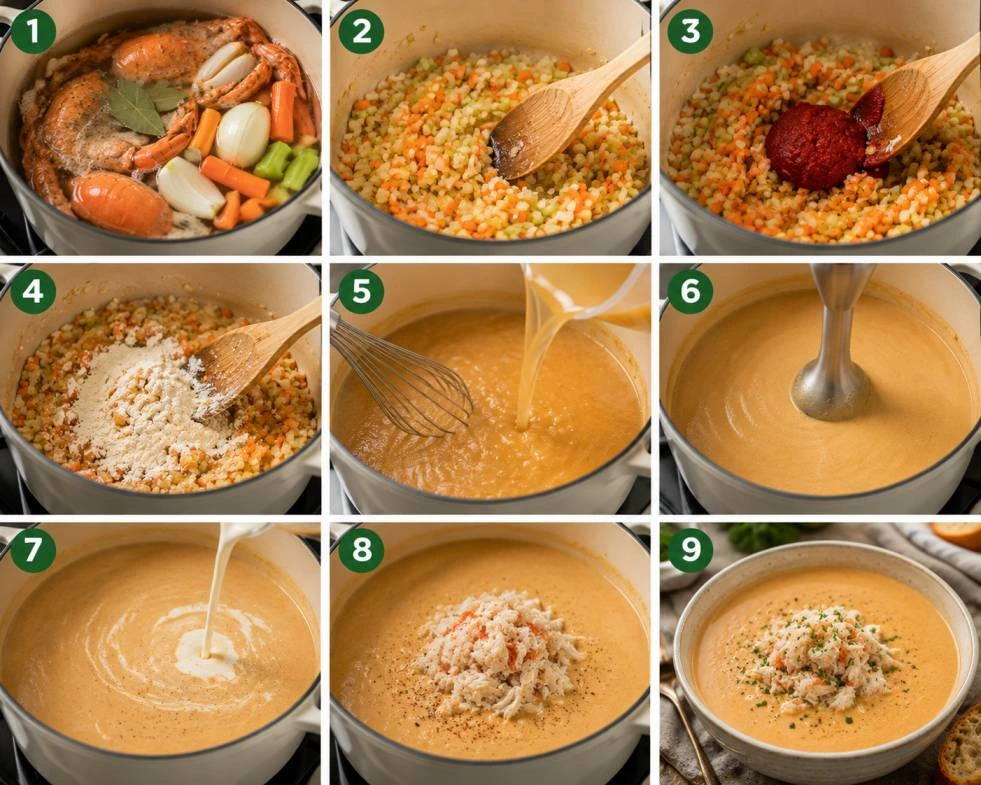
- Build the stock.Gather the shells, water, quartered onion, chopped carrot, celery, and bay leaves in a large pot. Bring to a boil, then reduce to a simmer for 30–40 minutes. Strain and discard the solids, reserving the liquid. This is your flavor foundation — don’t skip it.
- Sweat the vegetables. In a clean pot, melt the butter over medium heat. Add the finely diced onion, carrot, and celery. Cook for 5 to 7 minutes, stirring occasionally, until the ingredients are softened but not browned.
- Add the tomato paste. Stir it in and cook for 1–2 minutes — this toasts the paste slightly and deepens its flavor. The aroma in your kitchen should be becoming quite appealing at this time.
- Make the roux. Sprinkle the flour over the vegetables and stir constantly for 2 minutes, until it’s fully absorbed and lightly golden. This is what gives bisque its characteristic body.
- Whisk in the stock. Slowly pour in the strained shellfish stock, whisking constantly to avoid lumps. Bring to a gentle simmer and cook for 15–20 minutes, letting it thicken slightly.
- Blend until smooth. Working in batches if needed, purée the soup with an immersion blender or standard blender until completely smooth. For restaurant-level silkiness, push it through a fine mesh strainer afterward.
- Add the sherry and cream. Return the smooth base to low heat. Stir in the sherry and let it simmer for 2–3 minutes to cook off the raw alcohol edge. Then stir in the heavy cream. Keep the heat low — this is not the moment to walk away and check your phone.
- Fold in the crab meat. Gently stir in most of the crab meat, reserving a small handful for garnish. Season with cayenne, salt, and white pepper to taste.
- Serve. Ladle into warm bowls, top with the reserved crab meat and a scatter of fresh chives, and serve immediately.
That’s it. It’s a longer process than opening a can, but every extra step is doing real work — and you’ll taste the difference in the first spoonful.
Frequently Asked Questions:
What’s the secret to the best bisque?
It’s building your base from crab shells, not just the meat. Simmering shells into a stock unlocks a depth of flavor that meat alone simply can’t replicate, and it’s the single change that will elevate your bisque the most.
What is the difference between crab bisque and cream of crab soup?
Cream of crab soup is a lighter, quicker dish made from butter, cream, and crab meat. Bisque is richer and more involved — built on a shell stock, thickened with a roux, and finished with sherry and cream for a smoother, more complex result.
What are some typical errors to avoid when preparing cream of crab soup?
The biggest ones are boiling instead of simmering (which can curdle the cream), adding dairy too early, skipping a proper stock, and under-seasoning. Slow, gentle heat and patience fix most of these.
How long will crab bisque last in the fridge?
Stored in an airtight container, crab bisque keeps well for 3–4 days in the refrigerator. Reheat it gently over low heat, stirring often, and avoid letting it boil — the same rule that applies during cooking applies during reheating too.
Final Thought
Bisque has a reputation for being intimidating, restaurant-only territory. It isn’t. It just asks for a little more patience than a can-opener recipe — patience that pays you back tenfold in flavor.
Make this once, and I promise you’ll never look at cream of crab soup the same way again. If you try the recipe, I’d genuinely love to hear how it turns out — and if you tweak anything along the way, that’s exactly what a good bisque recipe is for.