The Ultimate Seafood Boil (Easy Backyard Seafood Boil Recipe)
Newspaper on the table, cold drinks in hand, and everyone digging in with their fingers — here’s how to pull it off.
The first time I made a seafood boil, I over-thought it. I read four different recipes, panicked about the timing, and nearly boiled the shrimp into little pink erasers. It took a few tries — and a lot of watching how the pros at boil houses actually work the pot — before I figured out that a great seafood boil isn’t about precision. It’s about order. Get the sequence right, and pretty much everything else falls into place.
That’s really what this guide is about: not just a recipe, but the logic behind it, so you’re not just following steps blindly — you’ll actually understand why the potatoes go in before the shrimp, and why your uncle’s “secret” boil sauce probably isn’t that secret at all.
The Order Matters More Than Anything Else
If you take one thing from this guide, let it be this: seafood boils go wrong not because people use the wrong seasoning, but because they add everything at once. Shrimp cooks in minutes; potatoes need much longer. Get the timing backwards and you’ll end up with raw potatoes and rubbery shrimp.
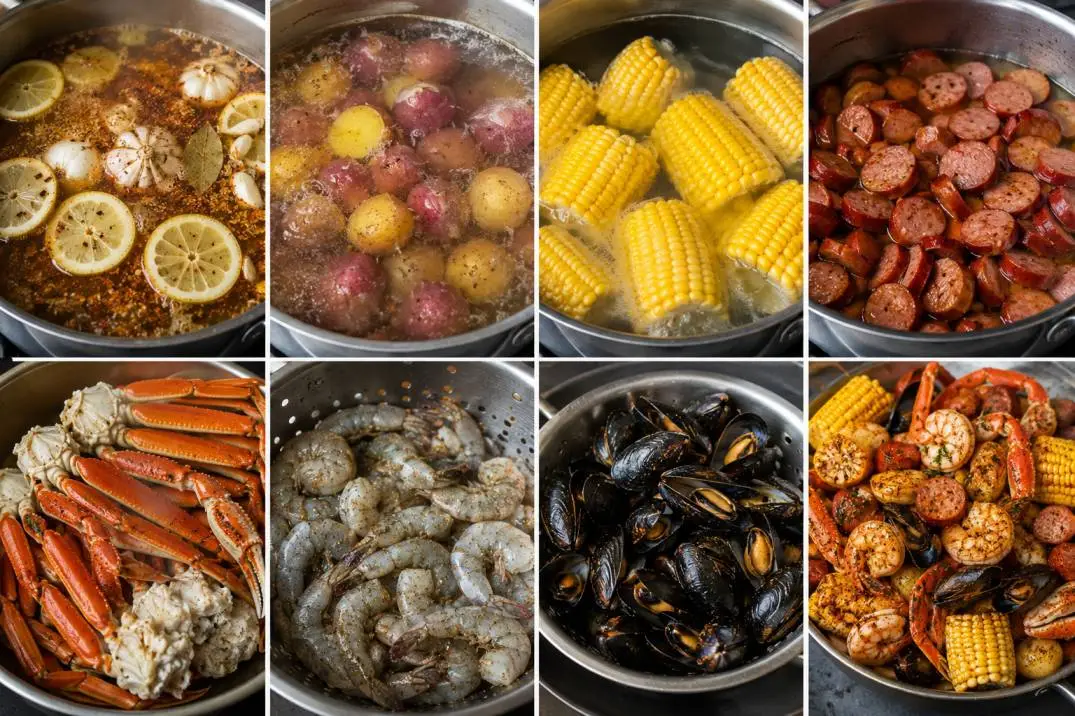
Step 1 — Build the broth.
Fill your pot two-thirds full with water. Add the seasoning, vinegar, halved lemon, garlic, and bay leaves. Bring it to a rolling boil. The vinegar isn’t just for flavor — it helps the shells release cleanly later and brightens the whole pot.
Step 2 — Potatoes first, always.
Add the potatoes and boil for 12–15 minutes, until they’re just barely fork-tender. This is the step people rush, and it’s the one that matters most.
Step 3 — Sausage and corn.
Add the sausage and corn, then cook for an additional 5 minutes.
Step 4 — Crab or crawfish (if using).
Add these next and give them about 5 minutes, since they take a bit longer than shrimp.
Step 5 — Shrimp go in last.
Add the shrimp and cook for just 2–3 minutes, until they turn pink and curl slightly. Pull the heat the moment they’re done — carryover heat will keep cooking them even after you’ve drained the pot.
Step 6 — Drain and dump.
Drain everything and pour it straight onto your newspaper-lined table, or into a large tray if you’re keeping things tidier.
What Exactly Is a Seafood Boil?
At its core, a seafood boil is shellfish, corn, and potatoes cooked together in a big pot of heavily seasoned water, then dumped straight onto a newspaper- or butcher-paper-lined tableNo plates, no utensils—just good food, messy hands, and great company.
A quick note on regional styles: You’ll hear people use “Louisiana boil,” “Cajun boil,” and “Lowcountry boil” almost interchangeably, but they’re not quite the same thing. A Louisiana or Cajun boil leans on cayenne, garlic, and a punchy, spicy seasoning base, and often centers on crawfish. A Lowcountry boil (sometimes called Frogmore stew), which comes out of coastal South Carolina and Georgia, is milder, built around shrimp, smoked sausage, corn, and potatoes, and seasoned more with Old Bay-style blends than heat. Neither one is “the” original — they developed in different places for different reasons, and both are worth trying.
This recipe splits the difference: it’s approachable for a first-timer, but you can easily dial the spice up or down depending on which camp you land in.
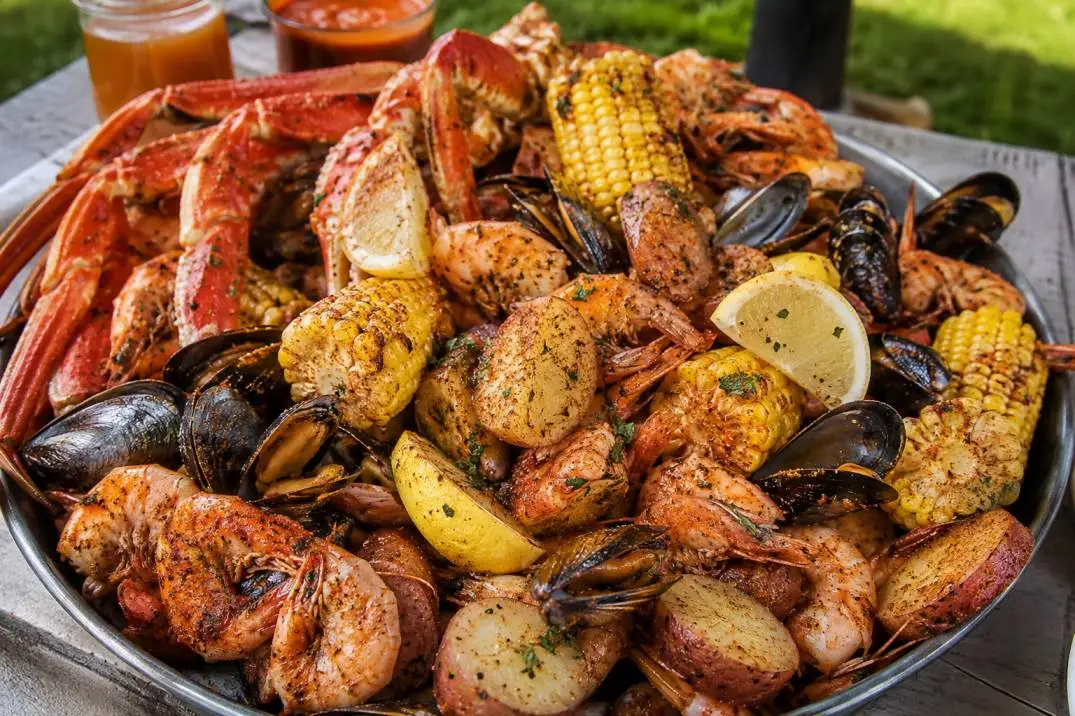
Ultimate Seafood Boil (Easy Backyard Seafood Boil Recipe)
Ingredients
Making the Sauce (and Why It’s Worth the Extra Ten Minutes)
A boil sauce is really just a garlicky, spiced butter, and it’s what turns a pile of boiled seafood into something people talk about the next day. Melt the butter in a small saucepan over medium-low heat, add the minced garlic, and let it cook gently for a minute or two — you want it fragrant, not browned. Stir in your seasoning, lemon juice, and hot sauce, then simmer for another 3–4 minutes so the flavors come together. Drizzle it directly over the boil, or serve it on the side for dipping.
If you want to switch things up, a yum yum sauce (a creamy, slightly sweet mayo-based sauce popular at hibachi spots) or a boom boom sauce (mayo, chili sauce, and a little sriracha) both work surprisingly well alongside a boil if you want something cooler and creamier to balance the spice. Neither is traditional, but plenty of home cooks serve them anyway — and honestly, once you taste it, you’ll understand why.
What to Serve Alongside It
A boil is already a full meal, but a few sides round it out nicely:
- Crusty French bread or garlic bread — for soaking up every last drop of sauce
- A simple coleslaw — the acidity cuts through the richness
- Cold beer or a citrusy cocktail — a light lager or a margarita both pair well with the spice
- Hard-boiled eggs — a Lowcountry boil tradition; they soak up the seasoning beautifully if added to the pot in the last 10 minutes
Frequently Asked Questions
What’s the difference between a Louisiana boil and a Lowcountry boil?
A Louisiana (or Cajun) boil is spicier and typically built around crawfish, with cayenne and garlic driving the flavor. A Lowcountry boil, from coastal South Carolina and Georgia, is milder and centers on shrimp, sausage, corn, and potatoes with an Old Bay-style seasoning. They share a format but come from different culinary traditions — one isn’t a version of the other.
What seasonings are used in a seafood boil?
Most boils use a blend built on paprika, cayenne, garlic powder, onion powder, black pepper, and celery salt — the kind of mix you’ll find in Old Bay or Zatarain’s. You can buy a pre-made blend or build your own, adjusting the cayenne up or down depending on how much heat you want.
What sauce is used for seafood boil?
The classic is a garlic butter sauce, seasoned with the same spice blend used in the boil itself, brightened with lemon juice and a little hot sauce. It’s simple enough to make while the pot is going and makes a noticeable difference in the final dish.
How long do shrimp take to boil?
Shrimp only need 2–3 minutes in the pot. They’re the fastest-cooking ingredient in a boil by far, which is exactly why they go in last — any longer and they turn tough.