The Beginner’s Guide to Hosting Your First Seafood Boil (Without Losing Your Mind)
The first time I ran a seafood boil for a backyard crowd, I dumped the shrimp in with the potatoes and wondered why everything came out either raw or rubbery. Turns out, a seafood boil isn’t just “throw it all in a pot” — it’s a sequence, almost like a little kitchen choreography. Once you learn the order, the timing, and the sauce, you’ll never be intimidated by this dish again.
This guide walks you through everything a beginner needs: what seafood to buy, when to add it, how to build a sauce that actually tastes like something, and what to serve alongside it. By the end, you’ll have a full step-by-step recipe you can run this weekend.
Key Takeaways
- Cooking order matters — potatoes and aromatics go in first, seafood goes in last.
- Shrimp cooks in 2–3 minutes; overcooking is the #1 rookie mistake.
- A good boil sauce is built on butter, garlic, and Cajun seasoning — not just Old Bay from a shaker.
- Louisiana boil-s and Low Country boils are cousins, not twins — the seasoning base is what sets them apart.
- Crusty bread and cold beer aren’t optional. They’re basically part of the recipe.
Understanding the Order: Why Sequence Is Everything
Here’s the thing most recipes skip over: a seafood boil is really several ingredients with completely different cook times, all sharing one pot of boiling, seasoned water. Get the order wrong, and you’ll either serve raw shrimp or mushy potatoes — sometimes both in the same bowl.
The logic is simple once you see it: start with what takes longest to cook, and end with what cooks fastest.
- Aromatics and seasoning go into the water first — onion, garlic, bay leaves, lemon, and your Cajun spice blend. Let this simmer for 10–15 minutes so the water actually tastes like something.
- Potatoes go in next. Small red or baby potatoes take about 15–20 minutes to become fork-tender.
- Corn and sausage follow about 10 minutes later — sausage (andouille is traditional) just needs to heat through and release its fat into the broth.
- Crab or crawfish, if you’re using them, go in next, since they need 5–8 minutes.
- Shrimp go in last, and this is where beginners almost always go wrong. Shrimp need only 2–3 minutes. The moment they turn pink and curl into a “C” shape, pull the whole pot off the heat.
A trick that took me years to learn: once the shrimp are in, set a timer and walk away from the stove mentally — don’t hover, don’t stir constantly. Overcooked shrimp turn from tender to rubbery in under 60 seconds, so resist the urge to “just check one more time.”
Choosing Your Seafood: What Actually Belongs in the Pot
You don’t need every type of shellfish at the fish counter. A solid beginner boil usually includes:
- Shrimp — the backbone of almost every boil, easy to find, quick to cook.
- Snow crab clusters or crab legs — pre-cooked versions just need to be reheated, which makes them beginner-friendly.
- Crawfish — a Louisiana staple, though seasonal and harder to find outside the South.
- Mussels or clams — optional, but they add briny depth and cook in just a few minutes.
If you’re wondering what other proteins can join the pot, andouille sausage is the classic answer — it holds up to the boiling liquid and adds smoky flavor that seeps into everything else.
Louisiana Boil vs. Low Country Boil: What’s the Real Difference?
These two get lumped together constantly, and honestly, they’re close relatives. The difference comes down to seasoning philosophy. A Louisiana-style boil leans hard into Cajun spice — cayenne, paprika, and a noticeable heat that builds with every bite. A Low Country bo-il (sometimes called a “Frogmore stew,” coming out of the South Carolina coast) tends to be milder, built around Old Bay-style seasoning, and almost always includes smoked sausage, corn, and potatoes as non-negotiable components.
Neither is “more correct.” Pick based on how much heat your table can handle.
The Sauce: Where the Real Flavor Lives
Here’s an insider truth: the boiling water gets your seafood cooked, but the sauce is what makes people go back for seconds. Most seafood boil sauces are butter-based, not tomato- or cream-based, which surprises a lot of beginners.
A classic homemade version combines melted butter, minced garlic, Cajun seasoning, smoked paprika, a splash of hot sauce, lemon juice, and a little brown sugar to round out the heat. You toss the drained seafood and vegetables in this sauce right before serving, so every piece gets coated.
What to Serve Alongside It
A seafood boil is a whole meal, but a few sides make it feel complete: crusty French bread for soaking up sauce, a simple coleslaw for crunch and acidity, and something cold to drink — a crisp lager or an ice-cold lemonade both work. Corn and potatoes are already baked into the boil itself, so you rarely need a separate starch.
The Full Recipe: Step-by-Step Seafood Boil
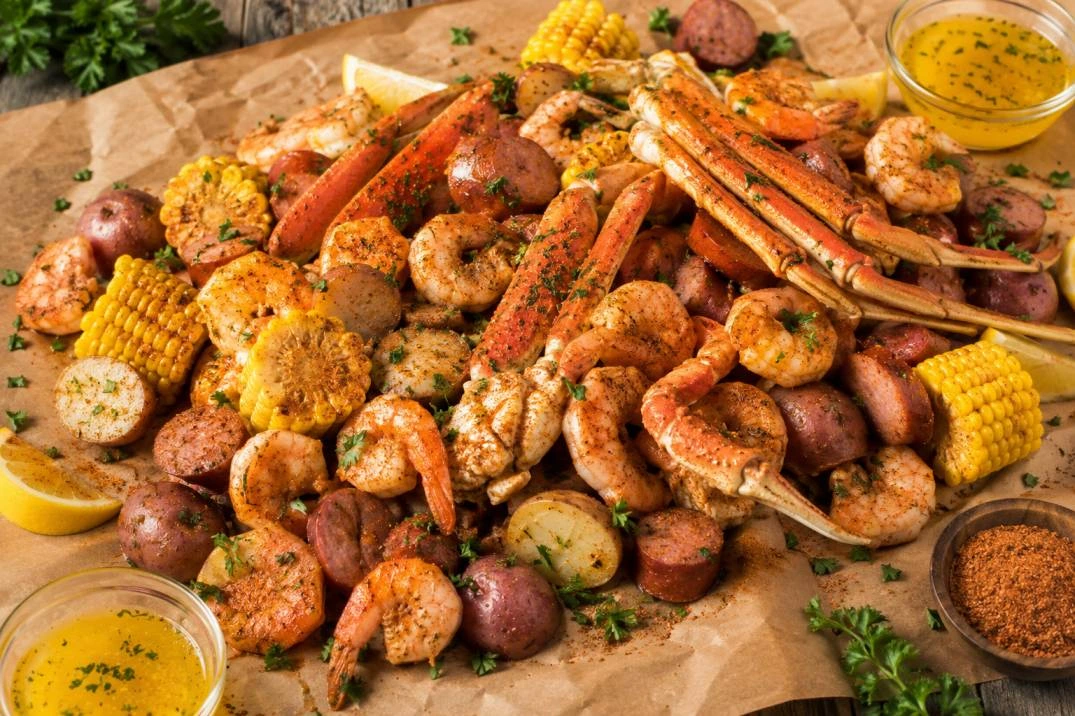
Easy Seafood Boil Recipe for Beginners
Ingredients
Step-by-Step Instructions:
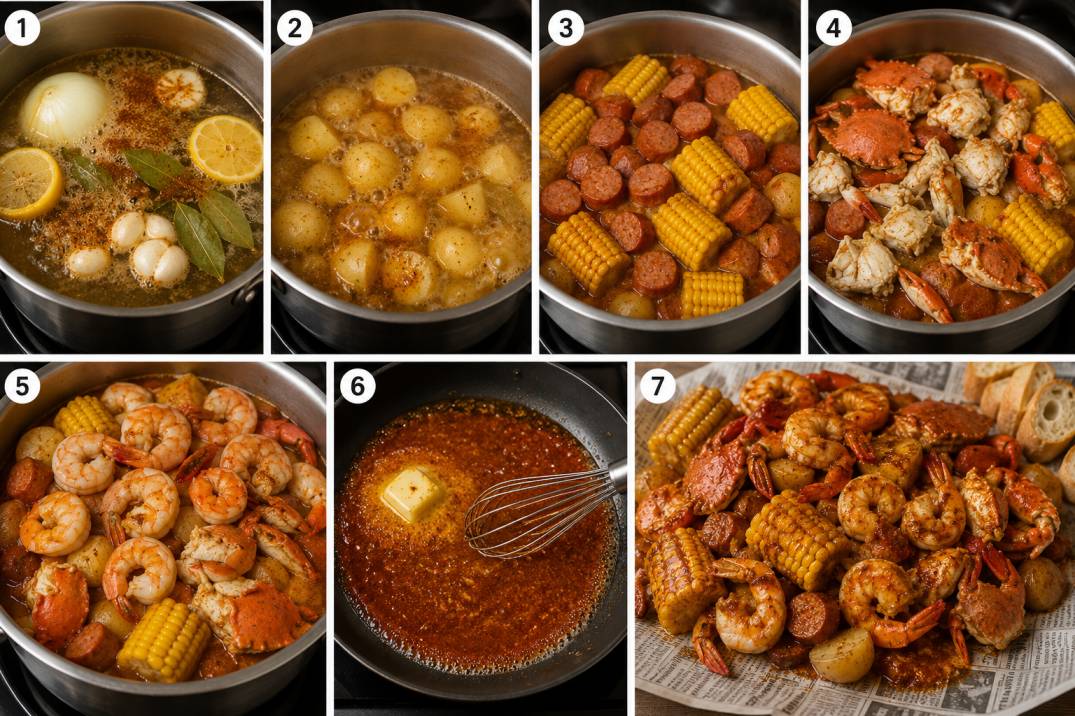
Build the broth
Fill a large stockpot with water, add the onion, garlic, lemons, bay leaves, and half the Cajun seasoning. Bring to a boil and simmer for 10–15 minutes.
Add the potatoes
Cook for 15–20 minutes, until just fork-tender.
Add the sausage and corn
Simmer for 10 minutes.
Add the crab, if using
Cook for 5–8 minutes.
Add the shrimp last
Cook only 2–3 minutes, until pink and curled. Immediately remove the pot from heat and drain everything.
Make the sauce
In a separate pan, melt the butter and whisk in the remaining Cajun seasoning, hot sauce, smoked paprika, and brown sugar.
Toss and serve
Pour the sauce over the drained seafood and vegetables, tossing gently to coat everything. Serve straight on a newspaper-lined table with bread and napkins nearby — lots of napkins
Frequently Asked Questions
What seasoning do you put in a seafood boil?
Cajun seasoning is the backbone — usually a blend of paprika, cayenne, garlic powder, onion powder, and black pepper. Old Bay is a milder, East Coast-style alternative if you want less heat.
How long do shrimp take to boil?
Just 2–3 minutes. Shrimp are done the moment they turn pink and curl into a loose “C” shape — any longer and they turn tough.
What sauce is used for seafood boil?
A butter-based sauce built with garlic, Cajun seasoning, hot sauce, and often a touch of brown sugar or lemon juice, tossed with the seafood right before serving.
What is the difference between a Louisiana boil and a Low Country boil?
Louisiana boils lean spicier with a heavier Cajun seasoning base, while Low Country boils (also called Frogmore stew) are milder, use Old Bay-style seasoning, and traditionally include smoked sausage, corn, and potatoes.
Ready to Boil?
A seafood boil looks intimidating on Pinterest but comes down to one simple idea: cook things in the right order, don’t overdo the shrimp, and let the sauce do the heavy lifting. Grab a big pot, invite a few people over, and lay out some newspaper — this is a meal built for sharing, mess and all.
Tried this recipe? Let me know how your first boil turned out — and whether you went spicy Louisiana-style or mild Low Country.