The Real Secret Behind Chipotle’s Chicken (And How to Make It at Home Tonight)
I still remember the first time I tried to recreate Chipotle’s chicken in my own kitchen. I seared it, seasoned it with whatever was in my spice rack, and… nothing. It tasted like plain grilled chicken wearing a costume. It took me a dozen batches, a lot of burnt garlic, and some genuinely nerdy research into commercial marinades before I finally cracked it.
Here’s the thing: Chipotle’s chicken isn’t complicated. It’s not secret lab chemistry. It’s a handful of pantry ingredients used in the right ratio, applied the right way. Once you know the formula, you’ll never look at a store-bought seasoning packet the same way again.
What You’ll Learn in This Guide
- The exact flavor base that makes Chipotle’s chicken taste smoky, tangy, and slightly sweet
- A step-by-step recipe you can realistically pull off on a weeknight
- The cut of chicken that actually matters (and the one that doesn’t)
- Answers to the questions people ask most about this dish
What Actually Gives Chipotle Chicken Its Flavor?
Let’s clear up the mystery first, because most copycat recipes online overcomplicate this.
The flavor comes from four things working together: chipotle peppers in adobo sauce, garlic, cumin, and citrus. That’s it. No secret spice blend, no mystery ingredient. The smokiness comes from the chipotle peppers themselves (they’re just smoked, dried jalapeños), the tang comes from lime juice and a splash of vinegar in the adobo, and the earthiness comes from cumin and a little dried oregano.
What trips people up is the ratio. Too much cumin and it tastes like taco seasoning. Too little chipotle and you lose that smoky backbone. I’ve tested this recipe enough times that I can tell you: you want the chipotle flavor to lead, with everything else supporting it quietly in the background.
Choosing the Right Chicken
You don’t need anything fancy here, and honestly, this is where most home cooks overthink it.
Chicken thighs, boneless and skinless, are the closest match to what Chipotle uses. Thighs have more fat marbled through them, which means they stay juicy even after sitting in an acidic marinade and getting seared hard on a grill or skillet. Chicken breast works too, but it dries out faster, so you’ll need to watch your cook time closely.
Step-by-Step Instructions:
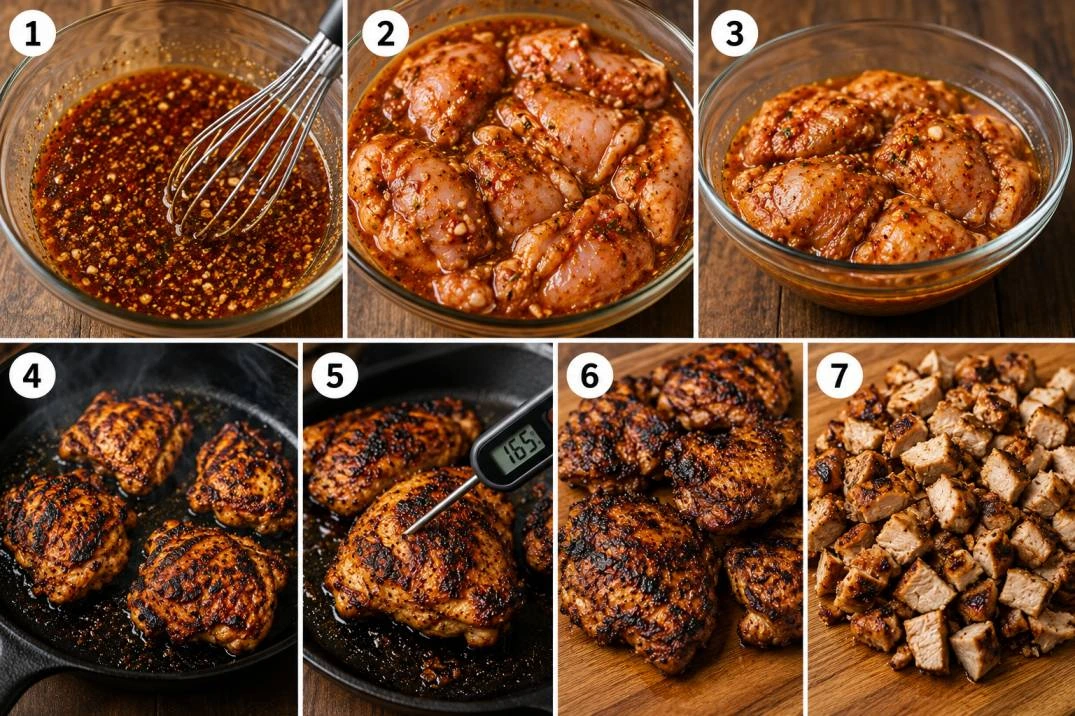
1. Build the marinade
In a bowl, whisk together the minced chipotle peppers, adobo sauce, garlic, lime juice, vinegar, oil, cumin, oregano, salt, and pepper. This takes five minutes and does 90% of the flavor work, so don’t rush it.
2. Marinate the chicken
Add the chicken thighs to the marinade, making sure each piece is well coated. Cover and refrigerate for at least 1 hour, though 4 to 8 hours gives you noticeably better flavor. Don’t go much longer than 12 hours — the acid in the lime and vinegar will start to break down the texture and make the chicken mushy.
3. Bring it to room temperature
Pull the chicken out about 20 minutes before cooking. Cold chicken hitting a hot pan cooks unevenly, and nobody wants a rubbery center with a charred edge.
4. Sear it hot
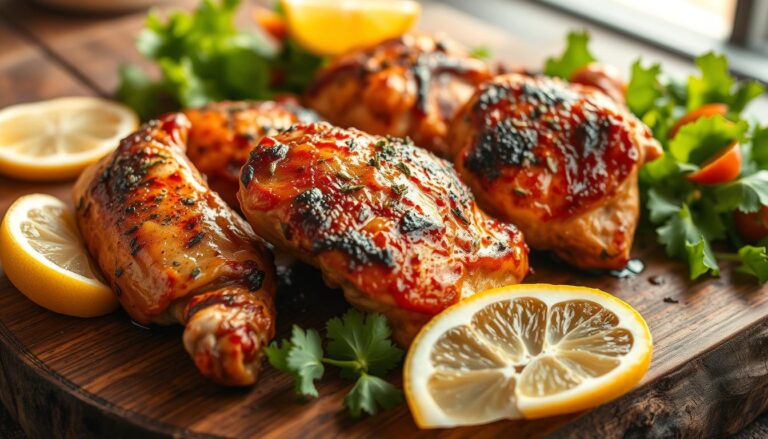
Heat a cast iron skillet or grill pan over medium-high heat with a thin layer of oil. Once it’s shimmering, add the chicken thighs. Resist the urge to move them around — let them sit for 5 to 6 minutes per side until you get real char marks, then flip once.
5. Check for doneness
Chicken thighs are done at an internal temperature of 165°F. If you don’t have a thermometer, cut into the thickest piece — the juices should run clear, no pink.
6. Rest, then chop
Let the chicken rest for 5 minutes before cutting. This keeps the juices inside instead of pooling out onto your cutting board. Then chop it into bite-sized pieces, the way you’d see it in a burrito bowl.
Serving It Up
Pile your chicken over cilantro-lime rice, black beans, corn, and a scoop of guacamole for the full burrito bowl experience. It also works beautifully in tacos, quesadillas, or straight on top of a salad if you’re keeping things lighter.
The Recipe: Copycat Chipotle Chicken:
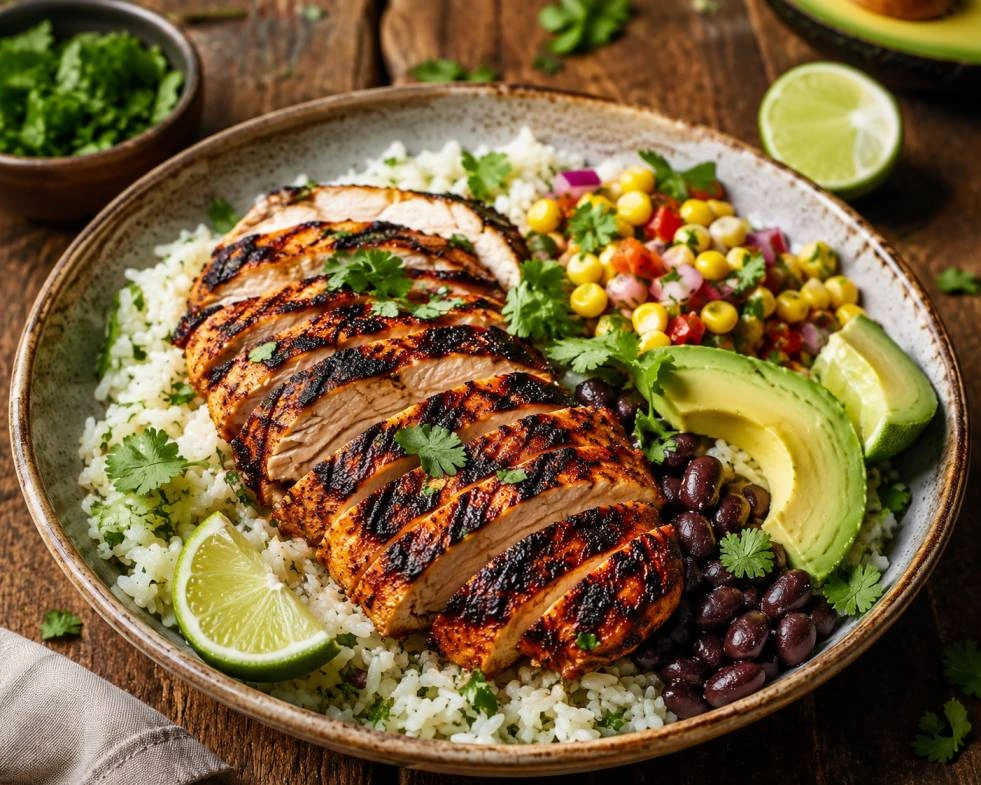
Copycat Chipotle Chicken Recipe (Better Than Takeout)
Ingredients
Frequently Asked Questions
What ingredients does Chipotle use for their chicken?
The core flavor comes from chipotle peppers in adobo sauce, garlic, cumin, citrus juice, and a touch of vinegar. Commercial versions add a few stabilizers and preservatives for shelf life, but the flavor foundation is exactly what you’d use at home.
What does Chipotle marinate their chicken in?
An adobo-based marinade built around chipotle peppers, garlic, citrus, and vinegar, which tenderizes the meat while infusing it with that smoky-tangy flavor.
What cut of meat is Chipotle chicken?
Boneless, skinless chicken thighs. The higher fat content compared to breast meat helps it stay juicy through the marinating and high-heat cooking process.
Is Chipotle chicken seasoned with garlic?
Yes, garlic is one of the core flavor components, alongside the chipotle peppers, cumin, and citrus.
Final Thoughts
The advantage of this recipe is that it is forgiving. Marinate a little longer, sear it a little hotter, adjust the chipotle-to-garlic ratio to your taste — it’s hard to go wrong once you understand what each ingredient is doing. Give it a try this week, and if you tweak it into something even better, I’d genuinely love to hear what you changed.