The Secret to Perfect Shredded Chicken (Even If You’ve Never Made It Before)
I still remember the first time I tried to shred chicken at home. I pulled two forks out of the drawer, attacked a chicken breast like I was in some kind of kitchen competition, and ended up with a cutting board full of dry, stringy meat that tasted like… nothing much, honestly. It took me a few tries — and a few overcooked chicken breasts — before I figured out what the professionals already knew: shredded chicken isn’t hard. You just need to know the two or three things that actually matter.
That’s what this guide is for. Whether you’re meal-prepping for the week, making tacos on a Tuesday, or just trying to use up chicken breasts sitting in your fridge, I’m going to walk you through exactly how to get juicy, flavorful shredded chicken every single time. No fancy equipment, no culinary school required.
Why Shredded Chicken Deserves More Credit Than It Gets
Shredded chicken is one of those unsung kitchen staples. It’s the backbone of tacos, enchiladas, chicken salad, soup, quesadillas, and about a dozen weeknight dinners you haven’t thought of yet. It reheats well, freezes beautifully, and — when done right — soaks up whatever flavor you throw at it.
The problem is that most beginners overcook it. Chicken breast has very little fat to protect it, so a few extra minutes on the heat is the difference between “juicy and tender” and “dry enough to double as cat food.” The good news? Once you understand why that happens, you’ll never make the mistake again.
The Step-by-Step Recipe
Here’s the method I come back to every time — simple, foolproof, and built for beginners.
Instructions:
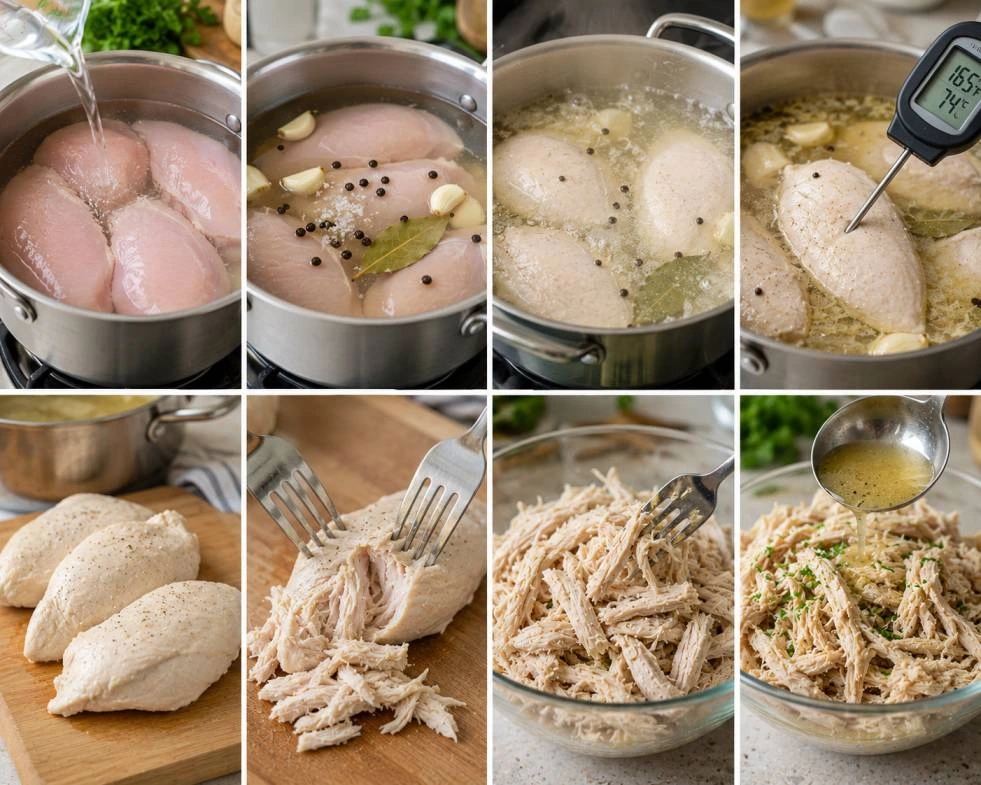
Place the chicken in a pot
Lay the breasts flat in a single layer so they cook evenly. Pour in the water or broth until the chicken is fully submerged.
Season the liquid, not just the meat
Add the salt, pepper, garlic, and bay leaf directly to the water. This is the step most recipes skip, and it’s the reason store-bought rotisserie chicken tastes better than the boiled chicken you made at home — the seasoning gets absorbed as it cooks, not sprinkled on after.
Bring it to a gentle simmer, not a rolling boil
This is the single most important tip in this entire post. A hard boil tightens the muscle fibers and squeezes out moisture, which is exactly what makes chicken chewy and dry. Keep the heat low enough that you see small, lazy bubbles, not a violent boil.
Cook for 12 to 15 minutes
depending on the thickness of your chicken breasts. Check for doneness with a meat thermometer — you’re looking for 165°F (74°C) in the thickest part.
Remove the chicken and let it rest for 5 to 10 minutes
Don’t skip this. Resting allows the juices, which have moved toward the center during cooking, to redistribute back through the meat. Shred it too soon, and all that moisture ends up on your cutting board instead of in your dinner.
Shred while it’s still warm, not hot
This is the detail almost nobody talks about, but it makes a real difference. Piping-hot chicken is harder to handle and more likely to fall apart into mush. Fully cooled chicken has tightened back up and is harder to pull apart. Warm chicken — a few minutes after resting — shreds cleanly and holds its texture.
Use two forks, or your hands
Hold the chicken steady with one fork and pull the meat apart with the other, working with the grain of the muscle fibers rather than against it. If you’re comfortable with the heat, clean hands work just as well and give you more control.
Toss the shredded chicken back into a splash of the cooking liquid
This keeps it moist while it sits, and it’s a trick most home cooks never think to do.
A Few Ways to Take It Further
Once you’ve got the base method down, the real fun is in what you do with it. Toss it in barbecue sauce for sandwiches. Mix it with lime juice, cilantro, and a little chili powder for tacos. Fold it into a creamy dressing for chicken salad. Simmer it in salsa verde for enchiladas. The shredded chicken itself is really just a blank canvas — the seasoning in step 2 gives it a head start, but everything after that is up to you.
If you’re meal-prepping, shredded chicken keeps in the fridge for about 4 days and freezes well for up to 3 months. I like to portion it into containers with a spoonful of the cooking broth so it doesn’t dry out when reheated.
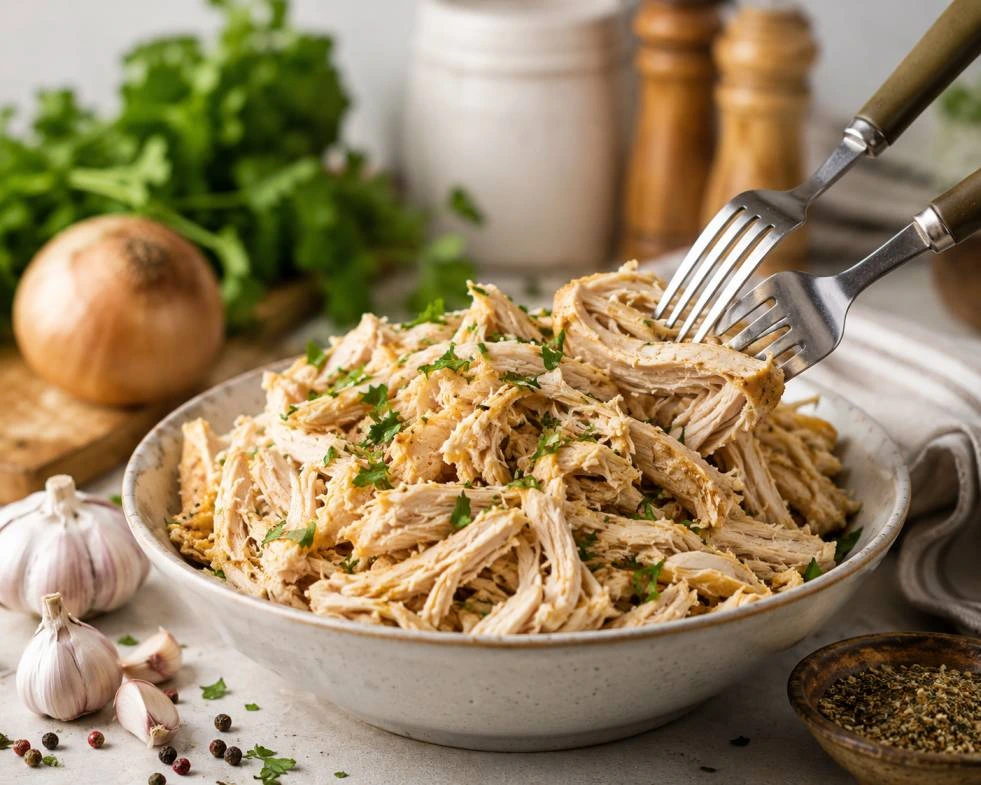
Perfect Shredded Chicken (Easy, Juicy & Foolproof Recipe)
Ingredients
Equipment
Notes
Key Takeaways Before You Start
- Don’t boil chicken aggressively — a gentle simmer keeps it tender, not tough
- Let it rest before shredding, or you’ll lose moisture and flavor
- Shred while warm, not piping hot — this is the detail most people miss
- Season the cooking liquid, not just the chicken — flavor goes in before you shred
- Two forks are all you need — no special tools required
Frequently Asked Questions:
What can I add to shredded chicken to make it taste better?
Start with the cooking liquid — broth, garlic, and herbs added before you cook do more for flavor than anything you sprinkle on after. Beyond that, sauces (barbecue, salsa, buffalo), fresh herbs, citrus juice, and a bit of the reserved cooking broth all help boost flavor without extra effort.
Is it better to shred chicken while it’s hot or cold?
Neither, really — the sweet spot is warm. Piping-hot chicken tends to fall apart into mush, while fully cooled chicken becomes firm and harder to pull apart cleanly. Let it rest for 5 to 10 minutes after cooking, then shred while it’s still warm.
What’s the difference between pulled and shredded chicken?
The terms are often used interchangeably, but “shredded” usually refers to smaller, finer strands (great for tacos or salads), while “pulled” typically describes larger, chunkier pieces pulled apart by hand (more common with slow-cooked or barbecue-style chicken).
How long should I boil chicken breasts to shred them?
For boneless, skinless chicken breasts simmered gently (not boiled hard), 12 to 15 minutes is usually enough, depending on thickness. Always confirm doneness with a meat thermometer reading 165°F (74°C) rather than relying on time alone.
Final Thoughts
Shredded chicken isn’t glamorous, but it’s one of those skills that quietly makes your whole week of cooking easier once you get it right. Gentle heat, a well-seasoned cooking liquid, a proper rest, and shredding at the right temperature — that’s really the whole secret. No special equipment, no complicated technique, just a little patience.
Try it this week with whatever protein you’ve got in the fridge, and see how much of a difference the simmer-and-rest method makes. If you come up with a favorite way to season yours, I’d genuinely love to hear about it — drop it in the comments below.