The Secret to Perfect Spritz Cookies: A Beginner’s Guide from the Kitchen
Buttery, delicate, and shaped like little works of art — here’s how to get them right on your first try.
I still remember the first time I tried to pipe a batch of spritz cookies without knowing what I was doing. The dough oozed out shapeless, half the “stars” looked like blobs, and not a single cookie held its edges after baking. It took a few ruined trays before I understood something every baker eventually learns: spritz cookies aren’t hard, but they are unforgiving of shortcuts. Get the dough temperature, the fat, and the technique right, and the cookie press does almost all the work for you.
If you’ve never made spritz cookies before, you’re in the right place. I’m going to walk you through the recipe step by step, the way I’d teach it to someone standing next to me in the kitchen, and then answer the questions beginners ask most often.
Key takeaways before you start:
- Spritz cookie dough should never be chilled before piping — it needs to stay soft enough to push through a cookie press.
- Butter is non-negotiable here; it’s what gives the dough the softness and flavor the shape depends on.
- An ungreased, unlined cookie sheet actually helps the dough grip and hold its shape while baking.
- These cookies are delicate by design — thin, buttery, and meant to be eaten within a couple of weeks, not stored indefinitely.
What Exactly Is a Spritz Cookie?
Spritz cookies are a Scandinavian classic, traditionally piped through a cookie press into shapes like wreaths, stars, and rosettes. The name comes from the German word spritzen, meaning “to squirt” or “to spray” — a nod to how the soft dough is pressed out of the mold. They’re close cousins to butter cookies, but the two aren’t quite the same thing. Butter cookies are usually rolled, cut, or scooped, and can handle a firmer, chilled dough. Spritz dough is deliberately softer and richer in butter and egg, because it has to flow smoothly through a press without tearing or crumbling. That difference in texture is what gives spritz cookies their signature light, almost sandy crumb.
Step-by-Step: How to Make Spritz Cookies
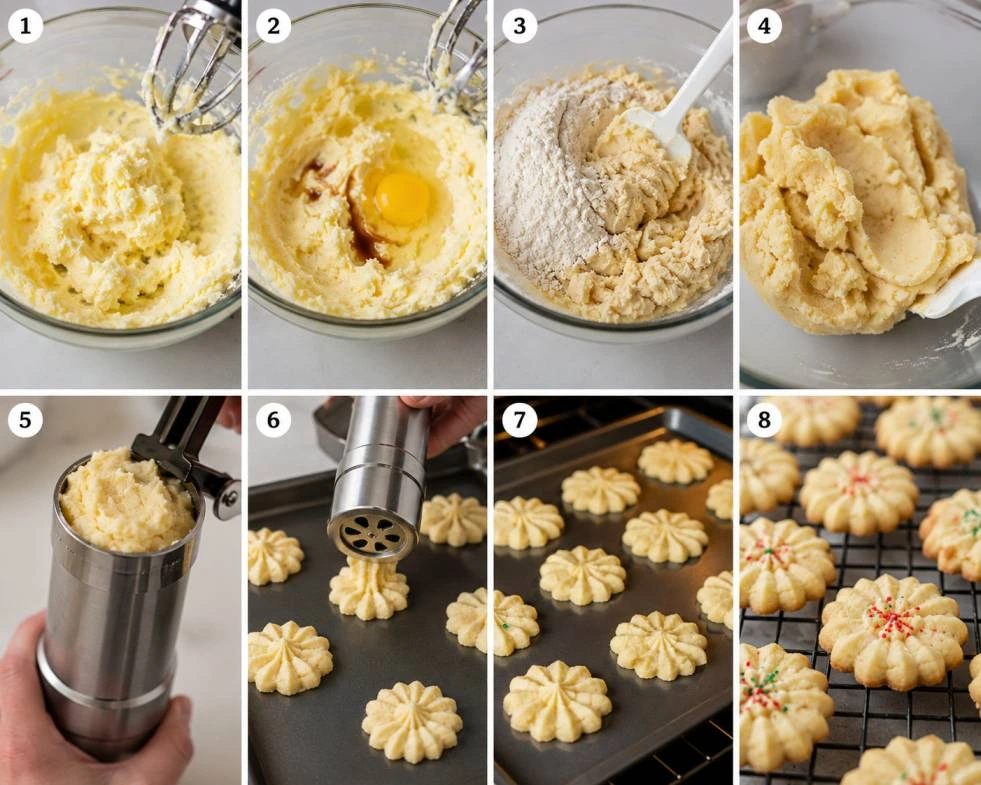
1 – Cream the butter and sugar
Beat the softened butter and sugar together until the mixture is pale and fluffy, about 2-3 minutes. This step matters more than people expect — it’s what traps the air that keeps the finished cookie light.
2 – Add the egg and extract
Beat in the egg and vanilla (or almond extract) until fully combined and smooth.
3 – Mix in the dry ingredients
Add the salt and flour, mixing on low speed just until the dough comes together. Overmixing at this stage will make the dough tough and harder to press cleanly.
4 – Skip the fridge
Unlike most cookie doughs, spritz dough should be used right away, while it’s still soft. Chilling it will make it too stiff to push through the press.
5 – Load the press
Fit your cookie press with your chosen disc and pack the dough in firmly, avoiding air pockets that cause uneven shapes.
6 – Press onto an ungreased sheet
Hold the press flush against the baking sheet and squeeze until the shape releases cleanly. The bare, ungreased surface actually helps the dough grip and hold its form as it bakes.
7 – Bake
Bake at 375°F (190°C) for 8-10 minutes, until the edges are just barely golden. Spritz cookies should stay pale in the center — don’t wait for deep color.
8 – Cool before decorating
Let the cookies cool completely on the sheet for a couple of minutes before transferring them to a rack. If you’re adding sprinkles, press them in gently before baking so they bake into the surface rather than falling off later.
Chef’s Tips for Getting It Right the First Time
Here’s the thing about spritz cookies: almost every common problem traces back to dough temperature. If your dough won’t hold a shape, it’s usually too warm — pop the whole press (dough and all) in the fridge for 10 minutes, not longer. If it won’t release from the press or sticks to the plate instead of the pan, the pan may have residual grease on it, or the dough is slightly too soft. And if your baked cookies come out soft instead of crisp, it’s often a case of underbaking by even a minute or two — that first hint of gold at the edges is your cue, not a suggestion.
One thing beginners don’t always know: you genuinely need a cookie press for this method to work as intended. You can pipe a rough approximation with a piping bag and a star tip, but you’ll lose the fine, pressed detail that makes spritz cookies recognizable. If you don’t own a press, it’s worth the modest investment before making a full batch.
What You’ll Need
Ingredients (makes about 4 dozen cookies):
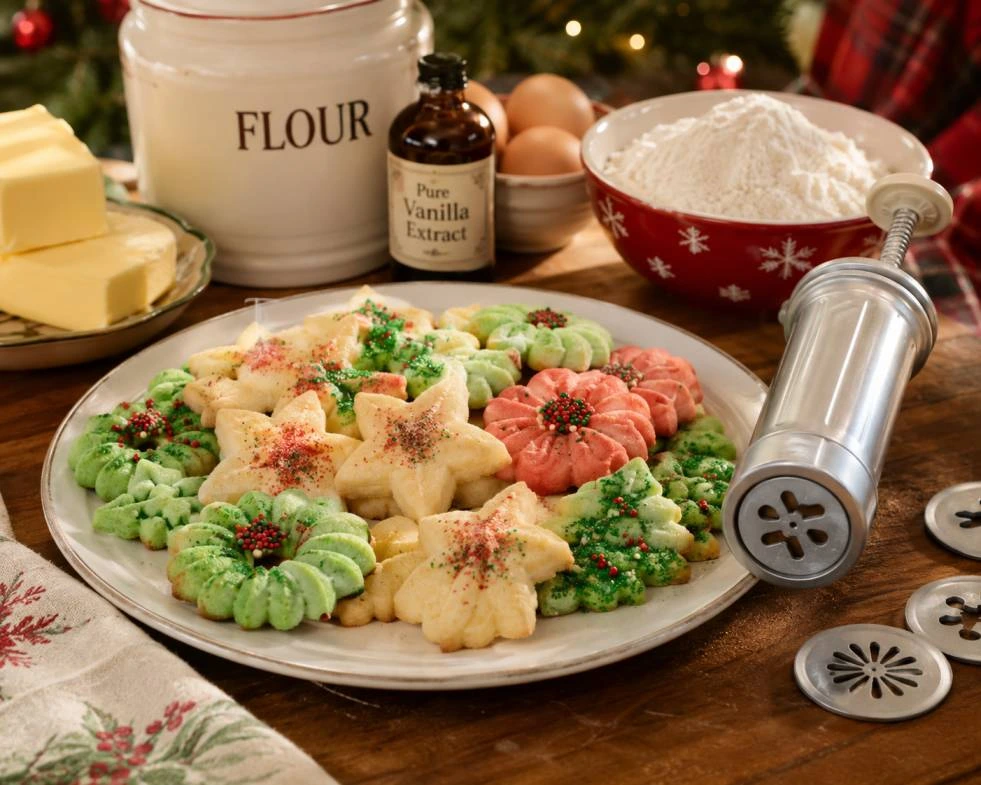
Classic Spritz Cookies (Easy Buttery Cookie Press Recipe)
Ingredients
Equipment
Frequently Asked Questions
Should you refrigerate spritz cookie dough before baking?
No — this is the one rule that trips up most beginners. Spritz dough needs to stay soft and pliable to move through the press cleanly. Chilling it firms up the butter too much, making it nearly impossible to pipe a clean shape.
Do you grease the cookie sheet for spritz cookies?
No. An ungreased sheet gives the soft dough something to grip as it’s pressed out, which helps the shape hold together during baking. A greased or lined sheet can actually cause the dough to slide before it sets.
Do I need a cookie press for spritz cookies?
Essentially, yes. The press is what creates the dense, detailed shapes spritz cookies are known for. A piping bag can produce a cookie in the same spirit, but it won’t replicate the crisp lines and classic patterns of a true spritz.
How long will homemade spritz cookies last?
Stored in an airtight container at room temperature, they’ll stay good for about 1-2 weeks. They also freeze well for up to three months, which makes them a good make-ahead option for the holidays.
Final Thoughts
Spritz cookies reward patience with technique more than patience with time. There’s no overnight chilling, no complicated proofing — just butter, a steady hand, and a little confidence with the press. Once you’ve made one batch and gotten a feel for how the dough should behave, you’ll find yourself reaching for this recipe every holiday season, and probably a few times in between.
Tried this recipe? I’d love to hear how your first batch turned out — and if you ran into any sticking or shaping issues, drop a comment below so we can troubleshoot together.