The Beginner’s Guide to Gin Cocktails: Recipes Even a First-Timer Can Nail
I’ve poured thousands of gin cocktails over my career, and here’s a secret most bartenders won’t tell you: the difference between a “meh” gin drink and a genuinely great one usually comes down to just two things — ratio and ice. That’s it. Master those, and you’re already ahead of half the people ordering at a bar.
If you’ve ever stood in front of your liquor cabinet wondering what to actually do with that bottle of gin, this guide is for you. No fancy equipment, no bartending school — just simple, foolproof recipes and the reasoning behind them.
What Is the Most Famous Gin Drink? (Start Here)
Ask any bartender this question and you’ll get the same answer nine times out of ten: the Gin and Tonic. It’s famous because it’s nearly impossible to mess up, and it lets the gin’s botanicals actually shine instead of hiding behind a wall of sugar.
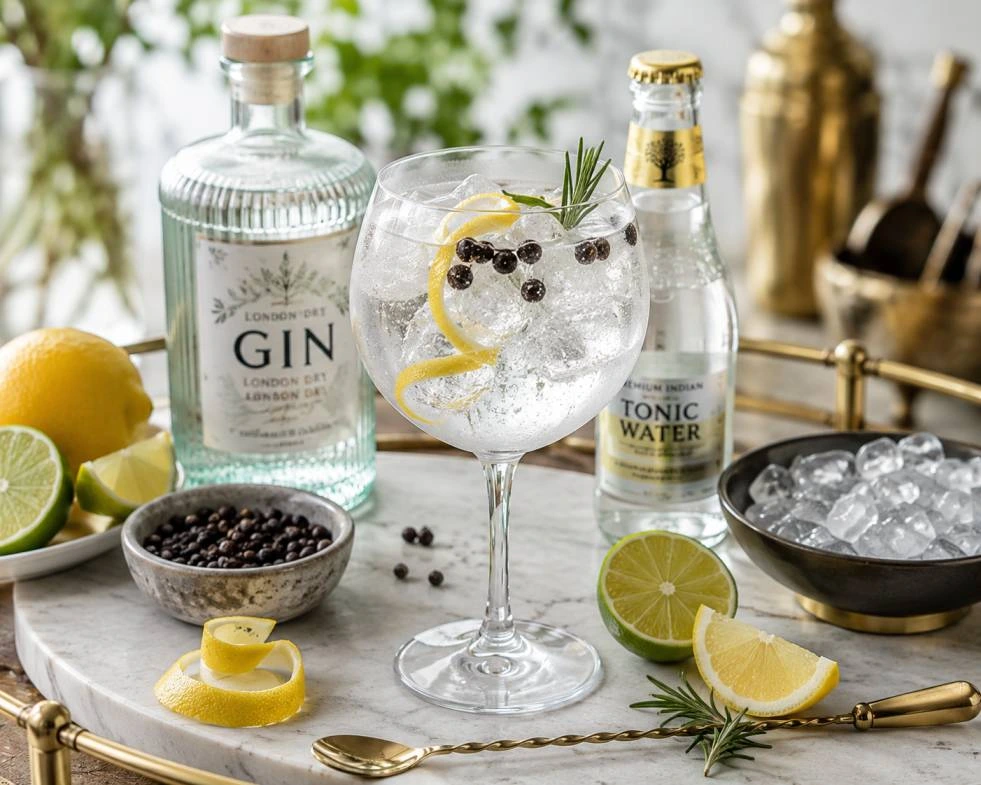
Here’s how I make mine at home:
Classic Gin & Tonic
Steps:
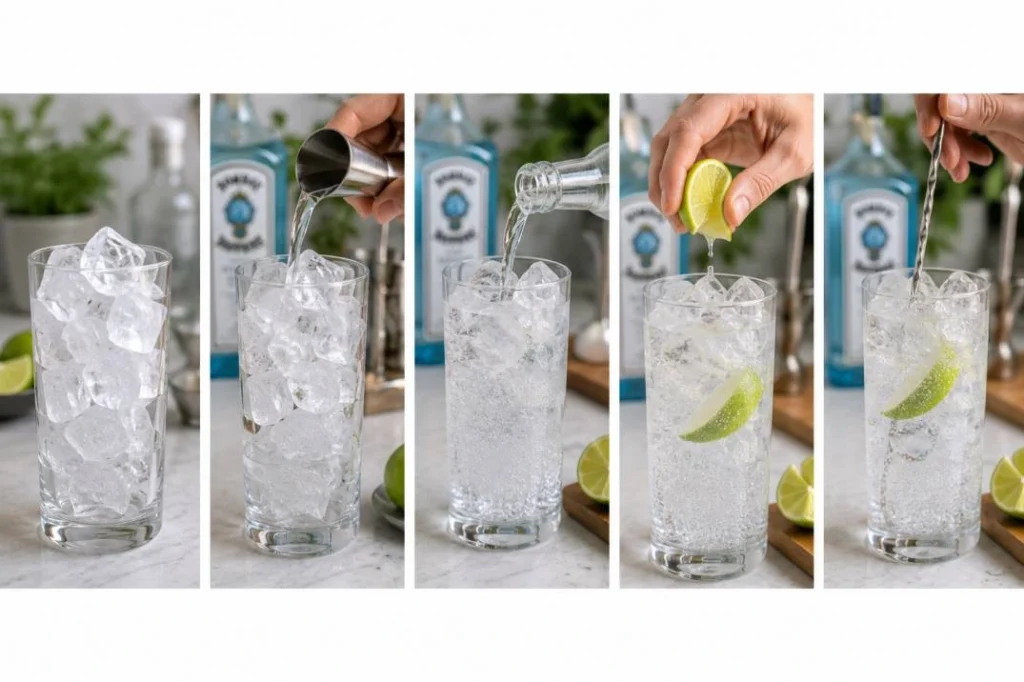
- Fill a highball glass completely with ice — don’t be shy, more ice means slower dilution and a colder drink
- Pour in 2 oz of gin
- Top with 4–5 oz of tonic water, poured gently down the side of the glass to keep the carbonation alive
- Squeeze in a wedge of lime, then drop it in
- Give it one gentle stir — just enough to combine, not enough to kill the fizz
That’s it. Five steps, and you’ve made the most ordered gin drink on the planet.
What Are Good Mixers for Gin?
Many beginners tend to overanalyze situations. You genuinely don’t need a dozen mixers in your fridge. Here’s what actually works, ranked by how often I reach for them:
- Tonic water — the classic, slightly bitter, quinine-forward pairing
- Soda water — for a drier, crisper drink that lets the gin lead
- Fresh lemon or lime juice — brightens everything and balances sweetness
- Elderflower liqueur — a splash adds floral sweetness without overpowering
- Simple syrup — for cocktails that need a touch of balance against citrus
A tip from the bar: always taste your tonic and soda brands side by side once. Some tonics are noticeably sweeter or more bitter, and that changes your whole drink even if the recipe stays the same.
Which Is the Best Gin Cocktail for a Beginner to Master?
If I were to choose one recipe to teach a beginner aside from the G&T, it would be the Gimlet. It’s simple, it’s balanced, and once you understand it, you understand the logic behind almost every sour-style cocktail out there.
Classic Gimlet:
Steps:
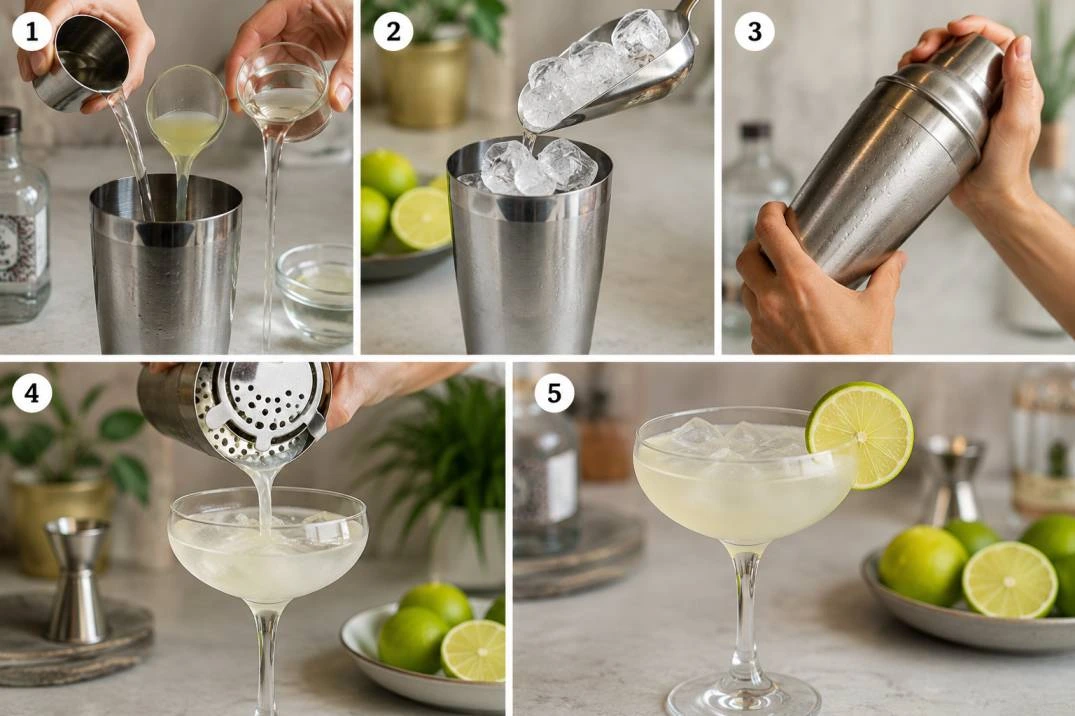
Combine 2 oz of gin, ¾ oz of fresh lime juice, and ¾ oz of simple syrup in a cocktail shaker.
Fill the shaker with ice
Shake hard for about 12–15 seconds — you want it properly cold, not just swirled around
Strain into a chilled coupe or rocks glass with fresh ice
Garnish with a lime wheel
Notice the ratio: 2 parts spirit, ¾ part sour, ¾ part sweet. Once that formula clicks, you can build dozens of cocktails from memory.
What Is a 3-Ingredient Gin Cocktail? (For When You Want Something Fast)
Some nights you don’t want to measure four different things. That’s exactly why the French 75 earns a permanent spot in my rotation — it feels fancy, but it’s genuinely just three components.
French 75
Steps:
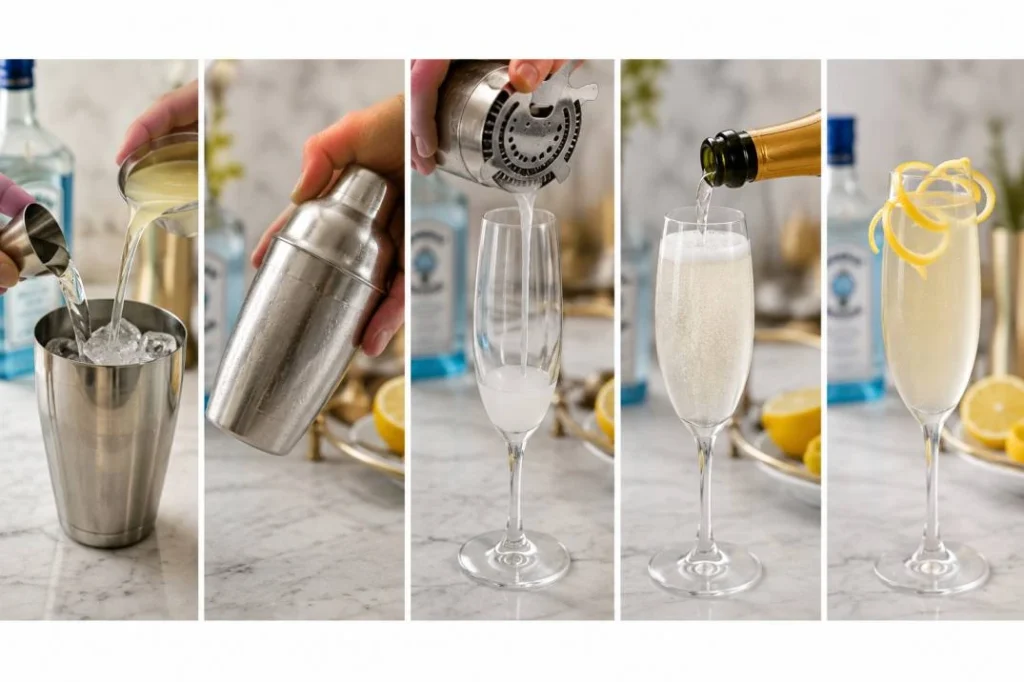
- Add 1 oz gin and ½ oz fresh lemon juice to a shaker with ice
- Shake for about 10 seconds
- Strain into a champagne flute
- Top with 3 oz chilled champagne or dry sparkling wine
- Garnish with a lemon twist, if you have one on hand
Three ingredients, minimal effort, and it looks like you hired a bartender for the night.
Common Beginner Mistakes (And How to Skip Them)
I’ve watched plenty of home bartenders make the same handful of mistakes early on, so let’s save you the trial and error:
- Skimping on ice. It feels wasteful, but under-icing is the single biggest reason home cocktails taste watered-down or too strong. More ice actually means better dilution control, not less.
- Using warm tonic or soda. Carbonation dies fast at room temperature. Keep your mixers cold, and pour them gently to preserve the fizz.
- Eyeballing measurements. A cheap jigger costs a few dollars and will improve your drinks more than any fancy glassware. Consistency is what separates a good cocktail from a great one.
- Forgetting the citrus. Even a small squeeze of lime or lemon wakes up the botanicals in gin. Skip it and the drink can taste flat.
- Not tasting as you go. Professional bartenders taste constantly. There’s no rule against dipping a straw in before you serve it to yourself.
None of this requires expensive equipment or years of practice — just a little attention to the small details that most people skip.
A Word on Choosing Your Gin
Not all gins behave the same way in a cocktail, and that matters more for beginners than you’d think. London Dry gins are juniper-forward and crisp, which makes them reliable in classic recipes like the Gimlet or Gin and Tonic. Contemporary or “New Western” style gins lean softer and more floral or citrus-driven, which can shine in something like a French 75. If a recipe tastes slightly off to you, before blaming your technique, try switching the bottle — the gin itself is often the variable doing the most work.
Easy Classic Gin Cocktail (Perfect for Beginners)
Ingredients
Equipment
Notes
- Gin’s herbal, juniper-forward flavor makes it one of the most versatile spirits behind the bar
- The best beginner cocktails use 2–3 ingredients, not 10
- A good mixer does half the work — tonic, soda, and citrus are your best friends
- You don’t need a shaker to make a great gin drink (though it helps)
-
Once you master one recipe, the others become simpler variations.
Bringing It All Together
Here’s the thing about gin cocktails: they’re forgiving once you understand the basic architecture — a strong base, something to brighten it, and something to round out the edges. Start with the Gin and Tonic to build confidence, move to the Gimlet to learn balance, and keep the French 75 in your back pocket for when you want to impress someone with almost no effort.
The bottles on your shelf are only as good as what you know to do with them. Now you know four solid, tested places to start.
Try one of these tonight and let me know which one becomes your go-to. Half the fun of learning cocktails is figuring out which ratios and garnishes feel right to you.
Frequently Asked Questions
What is the most famous gin drink?
The Gin and Tonic remains the most iconic and widely ordered gin cocktail worldwide, thanks to its simplicity and the way it lets gin’s botanical flavors stand out.
What are some simple gin cocktails?
The Gin and Tonic, the Gimlet, and the French 75 are three of the simplest, each requiring only two to four ingredients and no advanced technique.
What is the most popular gin mixer?
Tonic water is the most popular mixer by far, followed closely by soda water and fresh citrus juice for drier, brighter cocktails.
What is a 3-ingredient gin cocktail?
The French 75 is a classic example — just gin, fresh lemon juice, and champagne — proving that a great cocktail doesn’t need a long ingredient list.