Sea Bass 101: A Chef’s Beginner’s Guide to Buying, Cooking and Loving This Fish
The first time I put a whole sea bass in front of a nervous home cook, I got the same look I always get: “Is this going to be complicated?” Honestly? No. Sea bass is one of the most forgiving fish you’ll ever cook, and it happens to be one of the most confusing to buy — mostly because nobody’s ever explained it to you properly. So let’s fix that.
Key takeaways:
- “Seabass” and “sea bass” are the same fish — it’s just a spelling preference, not two different species
- Sea bass is a genuinely healthy choice: lean protein, decent omega-3s, low in saturated fat
- It’s not the cheapest fish in the shop, but it’s not out of reach for a midweek treat either
- A whole fillet, skin-on, in a hot pan is the easiest way to cook it — no fuss, no fancy kit
Wait — Is It “Seabass” or “Sea Bass”?
Let’s get this one out of the way first, because I get asked it constantly. Both spellings refer to the same fish, and you’ll see menus and fishmongers use them interchangeably. In the UK and Ireland, when someone says “sea bass,” they almost always mean the European sea bass — the same fish that Italians call spigola or branzino. Across the Atlantic, Americans tend to lump several unrelated species — black sea bass, striped bass, even the wildly different Chilean sea bass (which is actually a toothfish, not a bass at all) — under the same catch-all name. It’s a bit of a culinary free-for-all, honestly.
Head over to India and the picture shifts again. The fish most commonly marketed there as “sea bass” is Asian seabass, known locally as bhetki or bekti in Bengal, and pandugappa in parts of Andhra Pradesh — a close cousin to what’s called barramundi in Australia. Different water, different name, same idea: a firm, mild, flaky white fish that chefs love because it plays well with almost anything.
Is Sea Bass Actually Good for You?
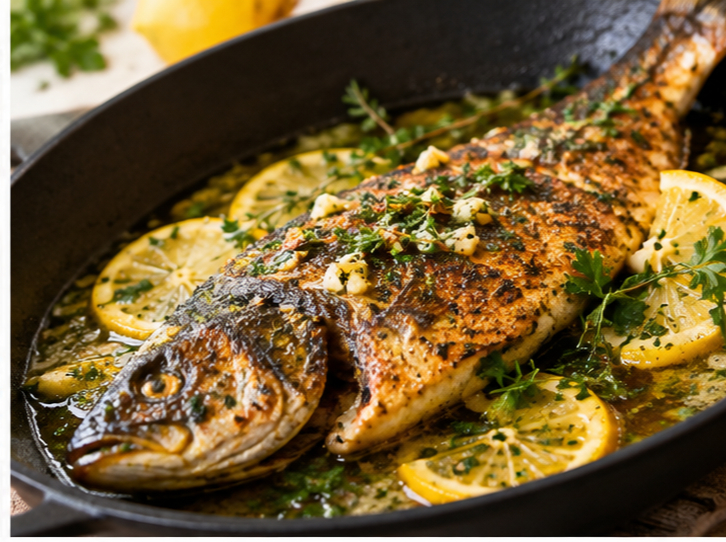
Short answer: yes, and it’s not even close. This is a lean white fish, low in saturated fat, and a solid source of complete protein — the kind your body actually needs for muscle repair and general wellbeing. It also carries a respectable dose of omega-3 fatty acids, though not quite as much as an oily fish like salmon or mackerel.
Which brings us to the question I get asked in almost every cooking class: sea bass or salmon — which wins? Here’s the thing — it depends what you’re after. Salmon has the edge on omega-3s and that rich, fatty texture. Sea bass has fewer calories per portion, a cleaner, lighter flavour, and a firmer bite that holds up beautifully to pan-searing. I wouldn’t call either “better.” I’d call them different tools for different meals. If you’re after a light, elegant midweek dinner, sea bass wins. If you want something richer and more indulgent, reach for the salmon.
Is Sea Bass a Cheap Fish?
I’ll be straight with you — sea bass sits in the mid-range. It’s not the £4-a-fillet bargain you’ll find with basa or coley, but it’s also nowhere near the price of a whole wild turbot or a decent bit of halibut. Farmed sea bass, which is what you’ll find in most UK supermarkets, is genuinely affordable for a special weeknight meal. Wild-caught will cost more, and rightly so — the flavour is noticeably more complex. My advice for beginners? Start with farmed. You’ll get consistent quality without breaking the bank, and once you’ve fallen for the fish, you can graduate to wild.
How I Cook Sea Bass at Home
Picture this: it’s a Tuesday, you’ve got fifteen minutes, and you want something that tastes like you tried harder than you did. This is the recipe I hand to every beginner, because it genuinely cannot go wrong if you follow one rule — don’t touch the fish while it’s cooking. Let it do its thing.
Simple Pan-Seared Sea Bass
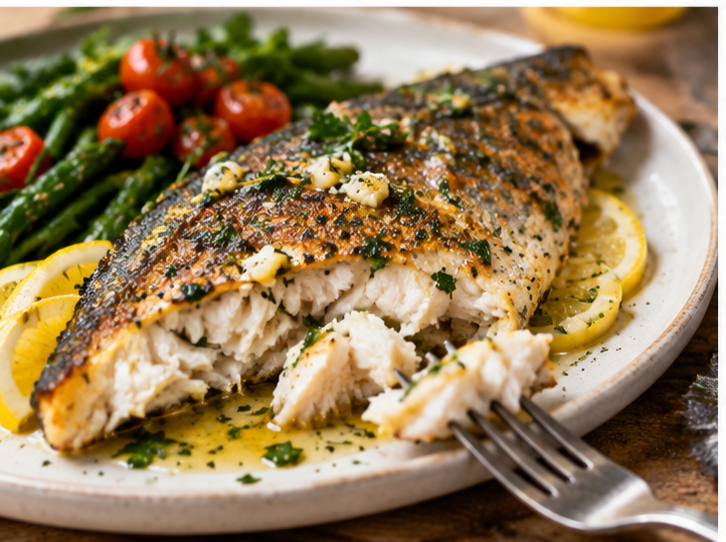
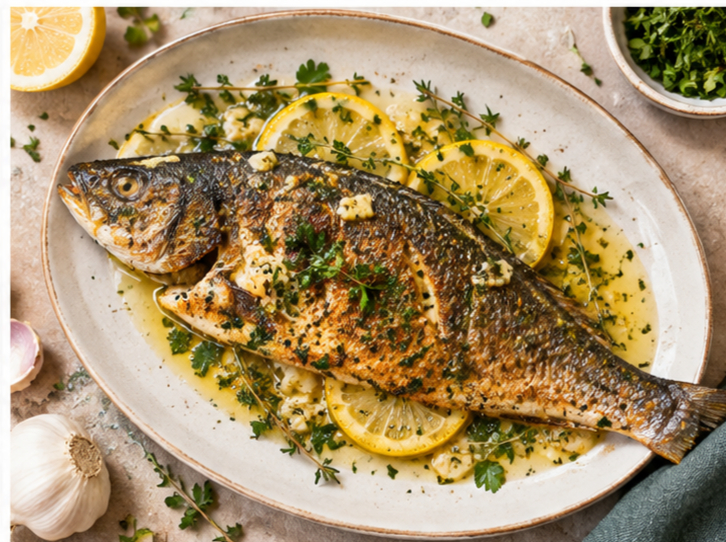
Easy Pan-Seared Sea Bass with Lemon & Garlic
Ingredients
Method:
- Dry the fish properly. This is the step everyone skips and the one that matters most. Pat the skin bone-dry with kitchen paper — a wet fillet will steam instead of crisping up.
- Score the skin. Make three shallow diagonal cuts through the skin (not the flesh) on each fillet. This stops it curling up in the pan and helps it crisp evenly.
- Season generously. Salt and pepper both sides, pressing lightly into the skin.
- Get the pan properly hot. Heat the olive oil in a non-stick frying pan over medium-high heat until it’s shimmering, not smoking.
- Skin-side down, and don’t move it. Lay the fillets in skin-side down, press gently with a fish slice for the first ten seconds so the skin stays flat, then leave it completely alone for 3–4 minutes.
- Flip and finish. Add the butter, flip the fillets, and cook flesh-side down for just 1–2 minutes more, until the fish flakes easily.
- Rest, then plate. Squeeze over the lemon juice, scatter with parsley, and serve with the lemon wedges alongside. That’s it — that’s the whole recipe.
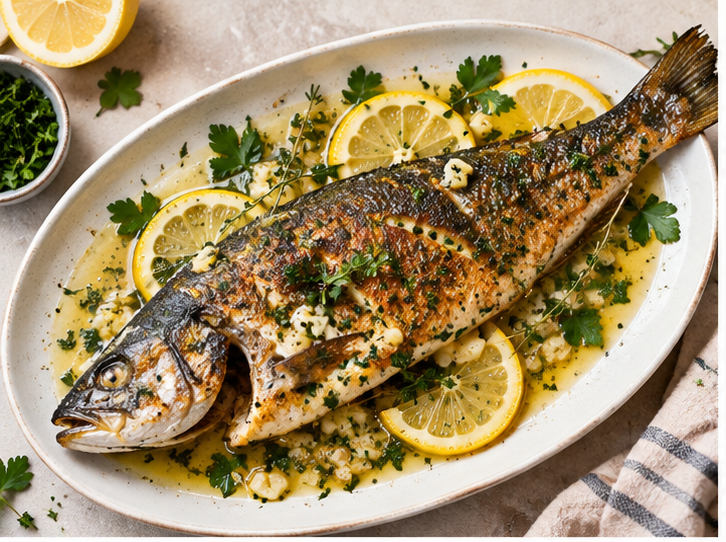
Serve it with something simple: crushed new potatoes, sautéed greens, or a bit of good bread to mop up the buttery pan juices. This isn’t a dish that needs rescuing with a complicated sauce — the fish is the star.
Frequently Asked Questions
Is sea bass healthier than salmon?
Not exactly “healthier” — just different. Sea bass is lower in calories and fat, while salmon delivers more omega-3s. Both fit comfortably into a balanced diet; it comes down to what you’re craving that day.
Which is better, cod or sea bass?
Cod is milder and flakier, great for frying and fish and chips. Sea bass has a firmer texture and a slightly sweeter flavour that holds together better on the pan or grill. Neither is objectively “better” — cod for comfort food, sea bass when you want something a touch more refined.
What is sea bass called in India?
Most commonly bhetki (Bengal) or bekti, with regional names like pandugappa in Andhra Pradesh. It’s the same broad family as Australian barramundi.
Is sea bass a good fish to eat?
Absolutely — it’s lean, protein-rich, versatile in the kitchen, and (when farmed or responsibly sourced) a sustainable choice too. It’s one of the easiest fish to get right on your first try, which is exactly why I recommend it to beginners.
Give It a Go
Sea bass has a reputation for being a “special occasion” fish, but honestly, it deserves a regular spot in your weeknight rotation. It’s quick, it’s forgiving, and it tastes like you know what you’re doing — even on the nights you really don’t. Pick up a couple of fillets this week, follow the method above, and see for yourself. And if it turns out well (it will), I’d love to hear how it went — drop a comment and let me know what you served it wit