Banana Bread with Just 2 Bananas: The Only Recipe You’ll Ever Need
Perfectly moist, never gummy, and ready in under an hour — even if those bananas weren’t quite ripe enough.
There they are — two bananas sitting on your counter, their skins just starting to spot, and you’re already thinking about it. Should I? Can I actually make a full loaf with just two bananas?
The answer is yes. Absolutely yes. And I’m going to show you exactly how.
I’ve been baking banana bread for over fifteen years, and I’ll be honest: two bananas is my preferred amount. You get enough banana flavor without the loaf turning soggy in the middle — which, as we’ll talk about later, is the number one mistake home bakers make. Two bananas is the sweet spot.
🍌 Classic Banana Bread — 2 Bananas
Prep Time : 10 min Bake Time : 55–60 min Total Time : 70 min Level : Beginner
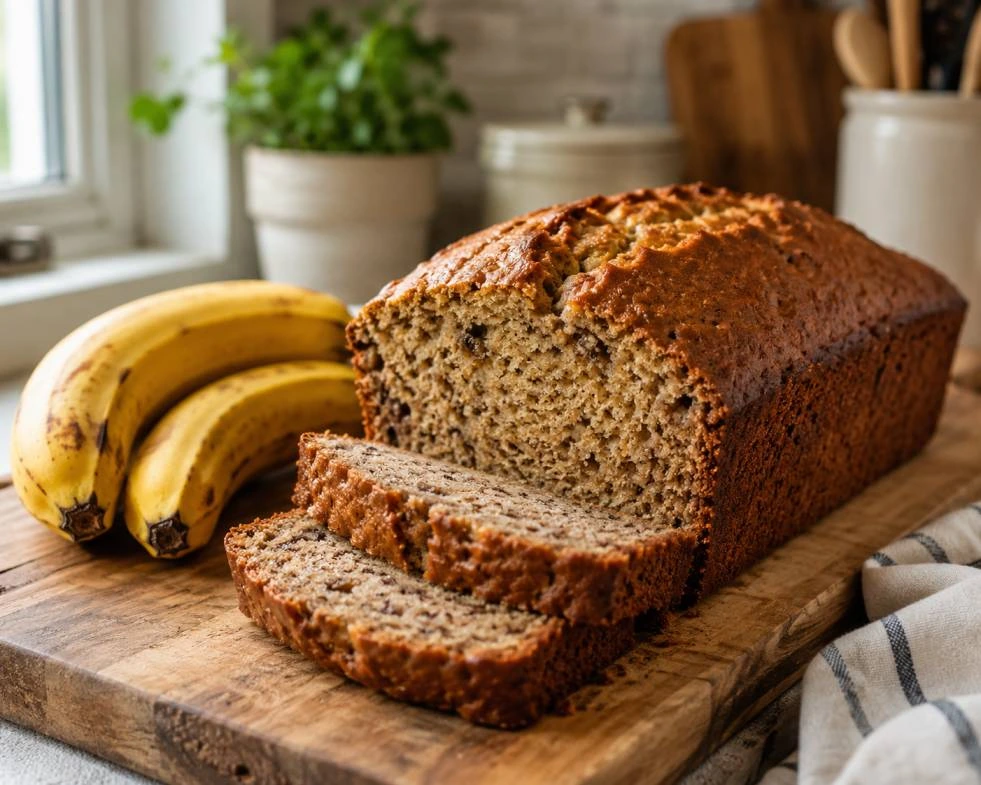
Banana Bread with Just 2 Bananas – Moist, Easy & Foolproof
Ingredients
What You’ll Learn in This Post
- The exact recipe for banana bread with 2 bananas (step by step)
- What to do if your bananas are not ripe enough
- The #1 mistake that makes banana bread dense and wet — and how to fix it
- Smart substitutions when you’re missing an ingredient
- Why your loaf comes out dark, bitter, or raw in the middle
First, Let’s Talk About Those 2 Bananas
Two medium bananas give you roughly ¾ to 1 cup of mashed banana — which is exactly what most standard recipes call for. A lot of people assume they need three or four, but that’s actually where problems begin. Too much banana adds too much moisture, and suddenly you’ve got a loaf that’s raw in the middle no matter how long you bake it.
Now, here’s something important: those bananas need to be ripe. Not just yellow. I mean brown-speckled, soft, practically begging to be used. The darker the skin, the sweeter and more flavorful your bread will be — because the starches have converted to sugar. If your bananas are still mostly yellow, don’t panic. I’ll share a quick trick below.
Chef’s Tip — Quick-Ripen Method
Place unpeeled bananas on a baking sheet and bake at 300°F (150°C) for 15–20 minutes until the skins turn black. Let them cool completely before using. They’ll be soft, sweet, and perfect for baking.
Step-by-Step Instructions
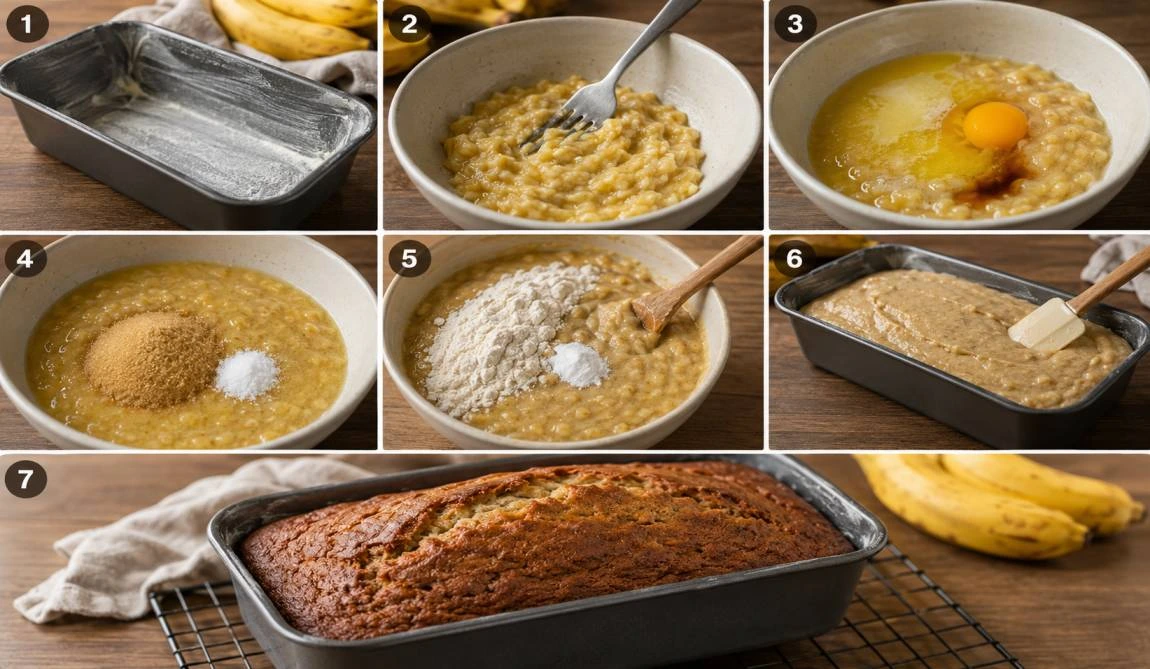
• Preheat your oven to 350°F (175°C).
Grease a 9×5-inch loaf pan with butter or non-stick spray, then dust lightly with flour. This keeps your loaf from sticking and helps form a beautiful golden crust on the sides.
• Mash the bananas.
In a large bowl, peel and mash both bananas with a fork until mostly smooth — a few small lumps are totally fine, they add texture. You’re looking for a thick, wet paste, not a puree.
• Mix in the wet ingredients.
Stir in the melted butter until it’s fully combined with the banana. Then add the egg and vanilla extract and mix well. The mixture will look a little glossy — that’s exactly right.
• Add the sugar and salt.
Stir in the sugar and salt. At this point your batter should smell amazing. Taste a tiny bit — it should be pleasantly sweet with that warm banana aroma.
• Add the baking soda, then the flour.
Sprinkle the baking soda evenly over the batter and stir it in. Now add the flour all at once. Here comes the most important rule: stir only until the flour disappears. Do not overmix. Seriously — 10 to 12 gentle stirs is enough. Overmixing develops gluten and makes your bread tough and dense.
• Pour into the pan and bake.
Transfer the batter to the prepared loaf pan and level the top using a spatula. Place it on the center rack of your oven and bake for 55–60 minutes, until a toothpick inserted into the center comes out clean (a few moist crumbs are fine; wet batter is not).
• Cool before slicing.
Allow the loaf to cool in the pan for 10 minutes, then move it to a wire rack. Wait at least 20 more minutes before slicing. I know it’s hard. But cutting into a hot banana bread causes it to collapse and get gummy inside. Patience is the secret ingredient here.
Chef’s Tip — How to Tell It’s Done
If the top is browning too fast before the center cooks through, loosely tent the loaf with aluminum foil around the 40-minute mark and continue baking. A fully baked loaf will pull slightly away from the sides of the pan.
The ✗ Mistake That Ruins Banana Bread (And How to Fix It)
Let me be direct: the most common mistake home bakers make is using too much banana and overmixing the batter. These two things together are almost guaranteed to give you a loaf that’s dense, wet in the middle, and weirdly gummy even after an hour in the oven.
Here’s what goes wrong and exactly how to correct it:
✗ – The Mistake:
Bread is dense, heavy, and wet in the center even after the timer goes off.
✓ – The Fix:
Check three things: did you overmix the flour? Did you add too much banana? And is your oven temperature accurate? An oven thermometer is a $10 investment that will save dozens of loaves.
✗ – The Mistake:
Banana bread comes out dark on top and bitter-tasting.
✓ – The Fix:
This is usually over-ripened bananas (black all the way through, not just spotted) combined with too much sugar. Reduce sugar by 2 tablespoons and tent with foil after 40 minutes. Also check your baking soda — using more than 1 teaspoon for this size loaf creates a metallic, bitter aftertaste.
✗ – The Mistake:
Bread doesn’t taste like banana at all.
✓ – The Fix:
Your bananas weren’t ripe enough. Flavor lives in ripe, spotted bananas. Yellow bananas have starch, not sugar. Always wait (or use the quick-ripen trick above).
What If You’re Missing an Ingredient?
We’ve all opened the fridge halfway through prepping a recipe and realized — no eggs. Or the butter is gone. Here are the substitutions that actually work, from one baker to another:
- No egg? Use ¼ cup unsweetened applesauce, or 3 tablespoons of plain yogurt. The bread will be somewhat denser in texture but will remain tasty.
- No butter? Swap in ⅓ cup of neutral oil (vegetable or coconut). The texture becomes slightly more tender and moist.
- Not enough bananas? Fill the gap with applesauce — use ¼ cup applesauce per missing banana. It adds moisture and mild sweetness without overpowering.
- No baking soda? Use 3 teaspoons of baking powder instead. The rise won’t be quite as dramatic, but the loaf will still be light and fluffy.
I do not recommend substituting the flour unless you use a tested gluten-free recipe. The ratios matter too much for guesswork on your first try.
Frequently Asked Questions
How many cups of banana are 2 bananas, and is that really enough for a full loaf?
Two medium bananas give you roughly ¾ to 1 cup of mashed banana — and yes, that’s exactly the right amount for a standard 9×5 loaf. Many bakers assume more banana means more flavor, but the opposite is often true: too much banana adds excess moisture that prevents the center from setting properly during baking. Two bananas is the formula that consistently delivers a moist but fully baked loaf.
What can I use if I don’t have enough bananas for banana bread?
The best substitute is unsweetened applesauce — use ¼ cup for each missing banana. It mimics the moisture and mild sweetness without dramatically changing the flavor. Mashed ripe pear or canned pumpkin puree also work in a pinch. If your bananas aren’t ripe enough rather than absent, bake them unpeeled at 300°F for 15–20 minutes to quickly develop their sweetness before mashing.
What is the number one mistake made when making banana bread?
Overmixing the batter once the flour goes in. The moment flour hits moisture, gluten starts developing — and gluten is great for chewy bread but disastrous for quick breads like banana bread. Over-developed gluten makes the loaf tough, rubbery, and dense. Stir the flour in with a spatula using no more than 12 gentle folds, stopping the moment you no longer see dry flour. Lumps in the batter are perfectly fine and will bake out.
Is baking soda or baking powder better for banana bread, and can I use both?
Baking soda is the traditional choice for banana bread because it reacts with the natural acidity in ripe bananas, creating a quick lift and a slightly golden exterior. Baking powder works too but produces a lighter, more cake-like texture. You can use both together (½ teaspoon baking soda + 1 teaspoon baking powder) if you want a taller rise with a tender crumb — just don’t use more than those amounts, or you risk a bitter, metallic aftertaste and a loaf that over-rises and collapses.
The Takeaway: Two Bananas Is Plenty
Here’s what I want you to walk away with: banana bread doesn’t need to be complicated, and it definitely doesn’t need more than two bananas. What it needs is ripe fruit, a gentle hand with the flour, and enough patience to let it cool before you cut it.
Get those three things right, and you’ll have a loaf that’s fragrant, moist, and golden — the kind that makes your kitchen smell like a bakery and disappears within a day. Which, honestly, is the whole point.
Give this recipe a try this week. Then come back and let me know how it turned out — especially if you tried one of the substitutions. I’d love to hear what worked for you.