Banana Bread for Beginners: A Chef’s No-Fail Guide to Getting It Right the First Time
There’s a particular kind of heartbreak that comes from slicing into banana bread you waited a full hour to cool, only to watch the middle collapse into a wet, gummy streak. I’ve watched this happen to home bakers more times than I can count, and almost every time, the fix is smaller than people expect. Banana bread isn’t a fussy recipe. It’s fast, forgiving, and nearly impossible to ruin once you understand the handful of details that actually matter. Let’s walk through them, and then bake a loaf that comes out right on the first try.
This is the version I come back to when I want something dependable rather than fussy. It makes one standard 9×5-inch loaf.
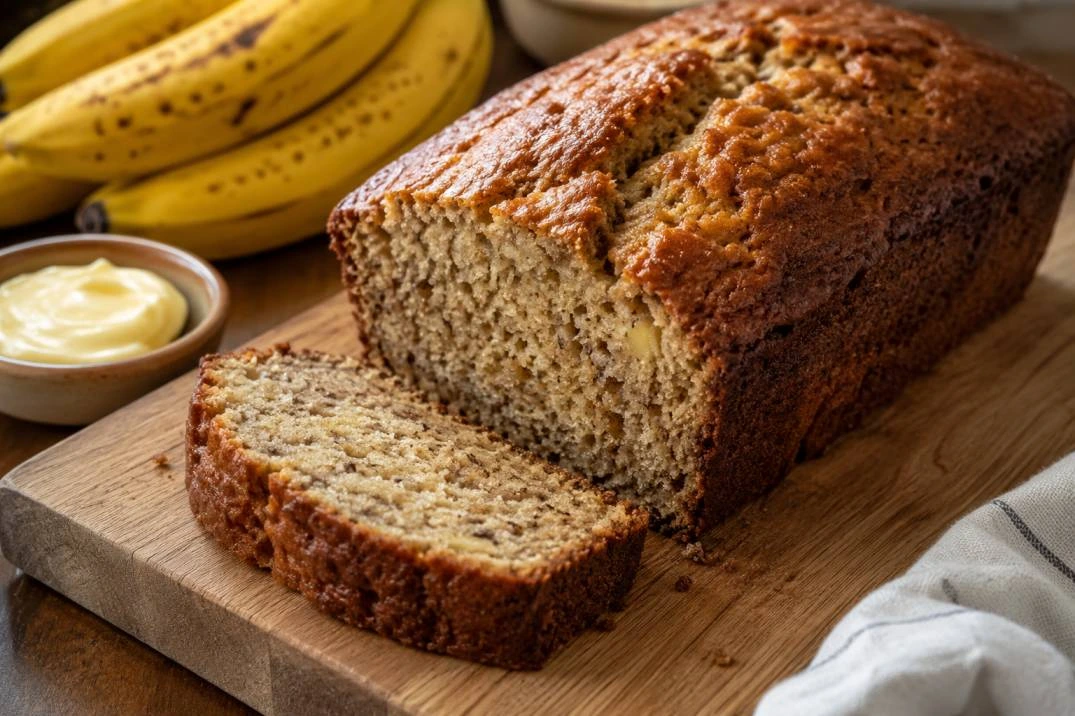
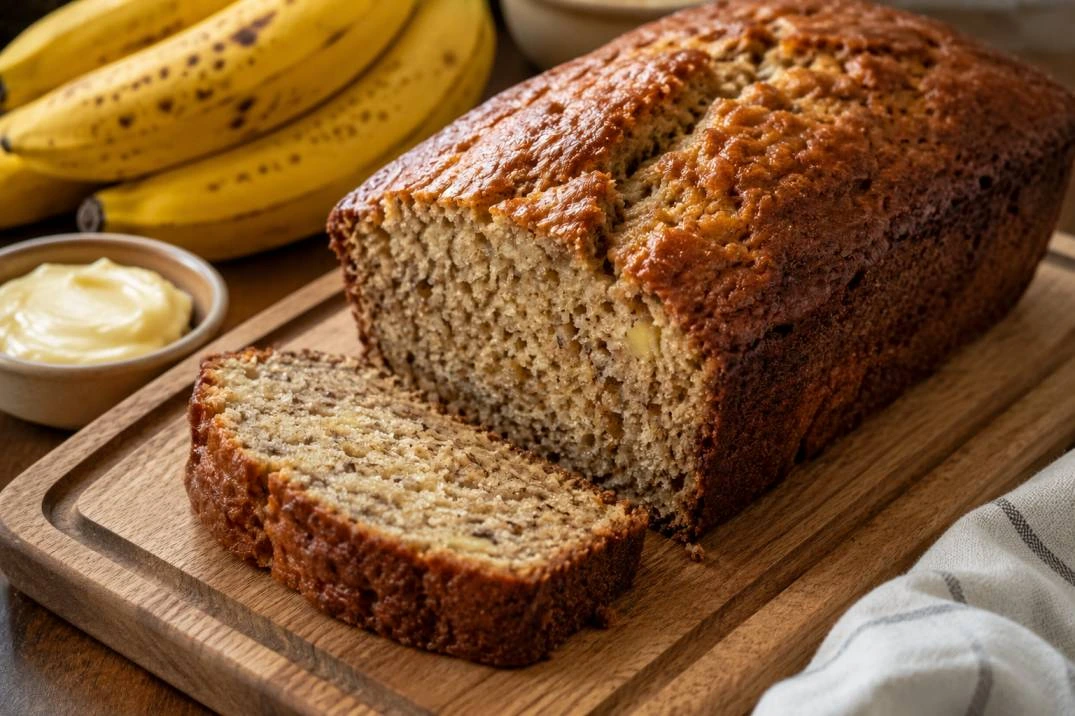
Easy Banana Bread for Beginners (No-Fail Homemade Recipe)
Method
- 3 large, very ripe bananas (about 1¼ cups mashed)
- ⅓ cup melted unsalted butter, slightly cooled
- ¾ cup sugar (½ cup if you prefer a less sweet loaf)
- 1 large egg, lightly beaten
- 1 teaspoon vanilla extract
- 1 teaspoon baking soda
- A pinch of salt
- 1½ cups all-purpose flour
Notes
- Use bananas that are deeply speckled or fully black. Underripe fruit is the single biggest reason banana bread tastes flat.
- Aim for about 1 to 1¼ cups of mashed banana per loaf. Much more than that, and you’re baking a pudding, not a bread.
- Baking soda, not baking powder, does the heavy lifting in most banana bread recipes.
- Stop mixing the moment the flour disappears. Overmixing is the real culprit behind dense, rubbery loaves.
- Let the loaf cool for a full hour before slicing. Cutting too early can make a perfectly baked loaf look raw in the middle.
How Ripe Does a Banana Really Need to Be?
This is where most first attempts go wrong, and it has nothing to do with technique. It’s the bananas themselves. A banana that’s still mostly yellow with a faint blush of green hasn’t converted enough of its starch into sugar yet, which means your bread bakes up pale and oddly bland no matter how much vanilla or cinnamon you throw at it. What you want sitting on your counter is a banana so spotted it looks almost bruised, or one that’s gone fully black and slightly soft to the touch. That’s not spoilage. That’s flavor.
If your bananas are stubbornly yellow and you don’t have days to wait, there are two shortcuts worth knowing. Sealing them in a paper bag speeds up ripening within a day or two, since the bag traps the ethylene gas they release. If you’re truly in a hurry, roasting unpeeled bananas at 300°F for about 15 minutes softens and sweetens them almost instantly, though the texture turns syrupy rather than firm. Either way, never reach for bananas that are still hard or green-tipped. They simply haven’t built the sugar and aroma that make banana bread taste like banana bread.
The Real Formula Behind Great Banana Bread
Ask ten bakers for “the” banana bread formula and you’ll get ten slightly different answers, but the ratios that actually work are narrower than people assume. Three medium bananas mash down to roughly 1 to 1¼ cups, and that’s the sweet spot for a standard loaf built on about 1½ cups of flour. Push past that, say four or five very large bananas, and you’re adding more liquid than the flour can absorb. The result is a loaf that looks done on the outside and stays raw and gluey in the center, which is exactly the complaint behind most “why won’t my banana bread cook in the middle” questions.
The other formula detail worth understanding is the soda-versus-powder question, because they aren’t interchangeable. Baking soda needs an acid to activate, and mashed banana is acidic enough to do the job, producing the lift this bread needs without any metallic aftertaste. Baking powder already contains its own acid, so it doesn’t rely on the banana the same way, and recipes built around it often taste slightly different and rise differently too. Unless a recipe specifically calls for both, soda alone is doing the work, and a teaspoon is usually plenty. Add much more than that, and you’ll taste it as bitterness, not lift.
Step-by-Step: My Go-To Banana Bread Recipe
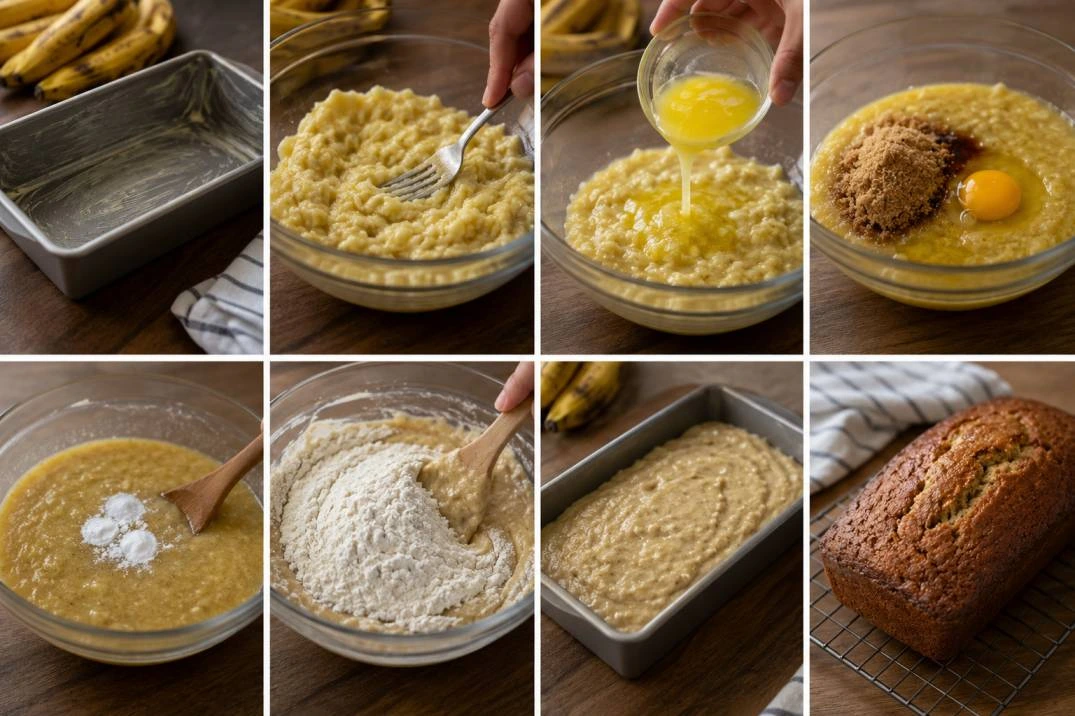
● Set your oven temperature to 350°F (175°C) and prepare a 9×5-inch loaf pan by coating it with butter.
● In a large bowl, mash the bananas with a fork until smooth, leaving just a few small lumps for texture.
● Stir in the melted butter.
● Mix in the sugar, beaten egg, and vanilla extract.
● Sprinkle the baking soda and salt evenly over the mixture and stir it in.
● Add the flour last, folding gently just until you no longer see streaks of dry flour. A few small lumps are fine, and they’re better than a smooth, overworked batter.
● Pour the batter into the prepared pan and bake for 50 to 60 minutes, until a toothpick inserted in the center comes out clean or with a few moist crumbs, not wet batter.
● Let the loaf rest in the pan for 10 minutes, then turn it out onto a wire rack and let it cool completely, ideally a full hour, before slicing.
The One Mistake That Sinks Most Banana Bread
If I had to point to a single habit responsible for more disappointing loaves than anything else, it’s overmixing once the flour goes in. Flour develops gluten the moment it gets wet, and the more you stir, the more that gluten tightens up, which is exactly what you want in a chewy loaf of sandwich bread and exactly what you don’t want here. Banana bread should feel closer to a quick, tender cake. Stir until the flour just disappears, then put the spoon down, even if the batter still looks a little lumpy.
The second habit worth breaking is measuring flour by scooping the cup straight into the bag. That technique packs in far more flour than a recipe is written for, which is why some loaves come out dense and heavy even when every other step was followed correctly. Flour should be spooned into a measuring cup and then leveled off with the back of a knife, It sounds like a small detail. It changes the texture of the loaf more than almost anything else on this list.
Frequently Asked Questions
What is the number one mistake people make when baking banana bread?
Overmixing the batter once the flour is added. It activates gluten and turns what should be a tender, cake-like crumb into something dense and rubbery. The second most common issue is packing too much flour into the measuring cup, which has the same dense, heavy effect.
What is the actual formula or ratio for banana bread?
As a rule of thumb, use about 1 to 1¼ cups of mashed banana (roughly three medium bananas) for every 1½ cups of all-purpose flour, with one egg, a third of a cup of fat, and about a teaspoon of baking soda. Using too much banana can upset the balance and result in an undercooked center.
How ripe does a banana actually need to be for banana bread?
Deeply speckled to fully black, and soft to the touch. Yellow bananas with no spots haven’t developed enough sugar or flavor, and they’re the most common reason a finished loaf tastes bland instead of rich and banana-forward.
Can I eat banana bread that’s two weeks old?
Generally, no, not safely. Properly wrapped banana bread keeps well at room temperature for about three to four days, or up to a week in the refrigerator. Two weeks is well past the point where mold and spoilage become a real risk, even if it still looks fine on the outside. If you want to hold onto a loaf longer, slice and freeze it instead. It keeps beautifully in the freezer for up to three months.
Banana bread has a way of turning a bowl of bananas nobody wanted into the thing everyone in the kitchen suddenly wants a slice of. Get the ripeness right, respect the ratio, and resist the urge to overmix, and you’ve solved the three things that trip up almost every first attempt. Try the recipe above this weekend, and if your loaf comes out exactly the way you hoped, that’s not luck. That’s the formula working the way it’s supposed to.