Crochet Gingerbread Man: A Cozy, Beginner-Friendly Holiday Amigurumi
There’s something about a crochet gingerbread man that instantly makes a room feel more festive. Part cookie, part character, this little amigurumi figure has become a holiday staple for crocheters who want a quick, cheerful project that still looks handmade and special. Whether you’re stitching one for the tree, a shelf, or as a gift, a crochet gingerbread man is one of those projects that delivers a lot of charm for a relatively small amount of yarn and time.
In this guide, you’ll find a practical breakdown of what makes this project so appealing, the materials you’ll likely need, a beginner-friendly overview of how to make it, and tips to help your finished piece look polished. We’ll also cover a few crochet trends worth knowing about if you want to put your own spin on this classic design.
What Makes This Crochet Project Special
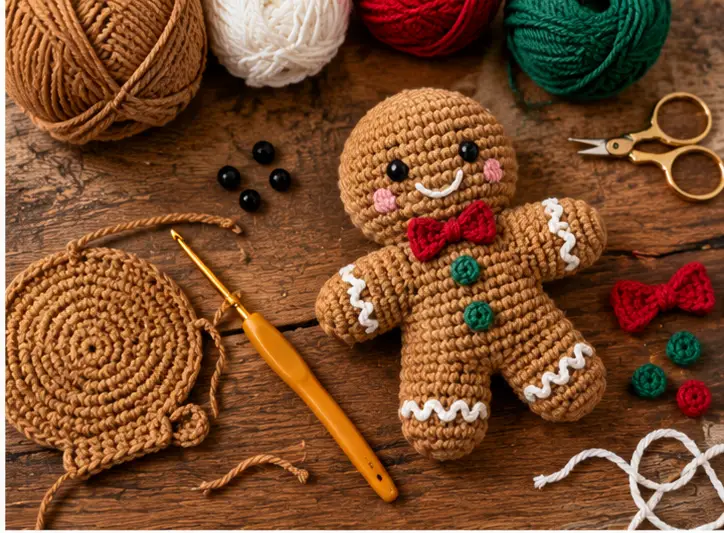
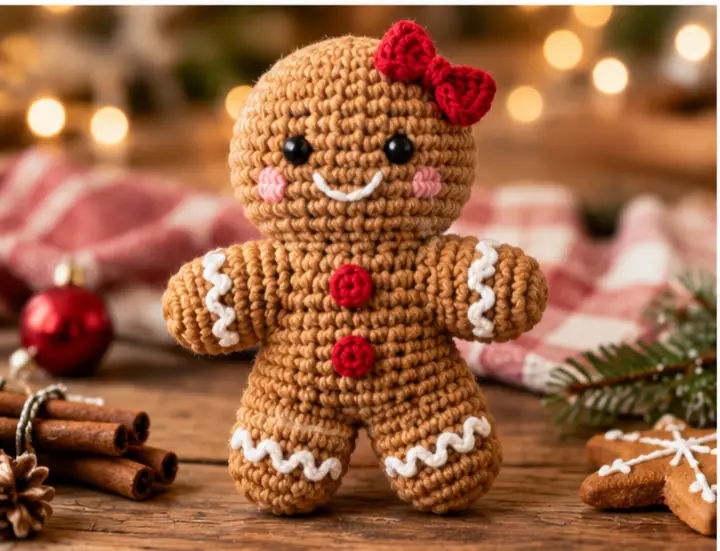
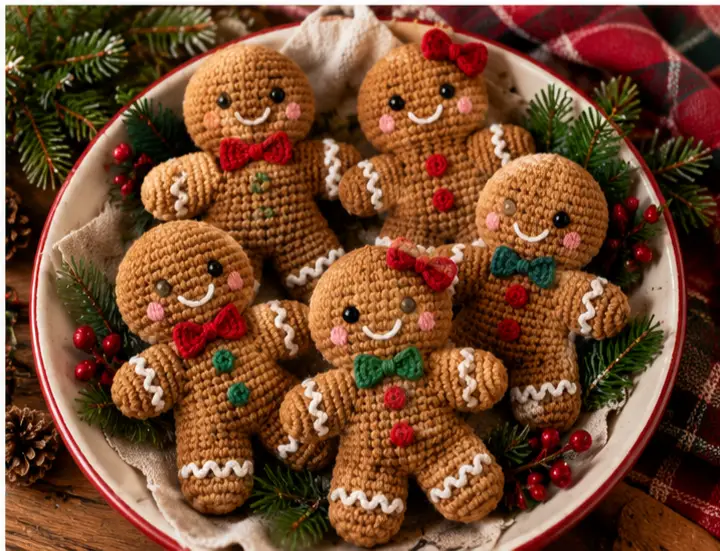
A gingerbread man amigurumi works so well as a project because the shape itself is simple and recognizable. Unlike animals or characters with lots of small, fiddly pieces, a gingerbread man is essentially one rounded body shape with short limbs, a friendly face, and a handful of “icing” style details — dots, stripes, or a simple bow. That combination makes it approachable for newer crocheters while still leaving plenty of room for more experienced makers to add personality through embroidery and color work.
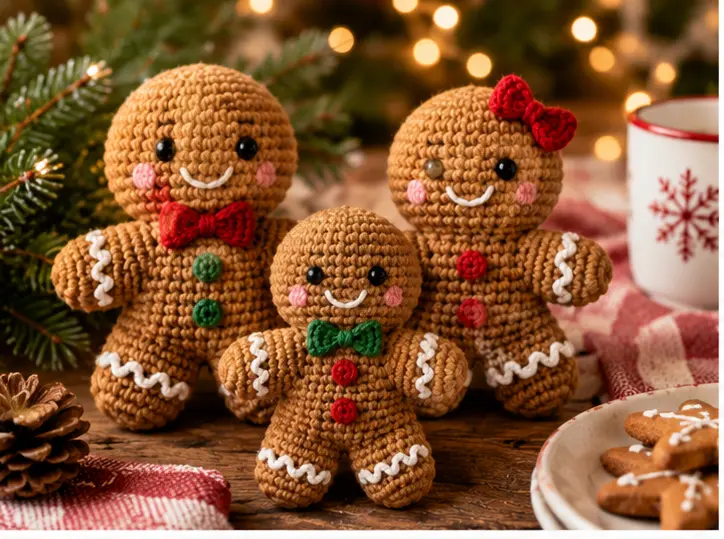
The warm brown yarn base paired with white or cream accents gives it that classic baked-cookie look, and small additions like a red bow, buttons down the front, or a candy-cane striped scarf instantly read as “holiday.” It’s also a flexible size project — many crocheters make a small ornament-sized version and a larger plush version using the same basic technique, just adjusting yarn weight and hook size.
Materials You May Need
Exact quantities will depend on the size you’re making and your personal gauge, but generally you’ll want to have on hand:
- Worsted weight yarn in a warm brown or tan shade for the body
- White or cream yarn for icing-style details (a contrasting color works well)
- A small amount of red, black, or another accent color for a bow, buttons, or facial details
- A crochet hook sized to pair with your chosen yarn (check the yarn label’s suggested hook size as a starting point)
- Polyester fiberfill for stuffing
- Safety eyes or embroidery thread/floss for the face
- A yarn needle for sewing pieces together and weaving in ends
- Stitch markers to keep track of your rounds
- Scissors
If you’re not working from a specific written pattern, it’s worth swatching a few stitches first to see how your yarn and hook combination behaves before committing to a full body piece.
How to Make It
Because gingerbread man amigurumi patterns vary in their exact stitch counts and shaping, the outline below is meant as a general roadmap for how these projects typically come together, not an exact pattern. If you’re following a specific written pattern, always defer to its stitch counts and instructions.
Getting Started with the Body
Most gingerbread man designs begin with a magic ring to form a small, tight center, then build outward in continuous rounds (not joined) using single crochet stitches. The body is usually worked as one continuous piece from the bottom up, or from the head down, with increases used to widen the shape into the head and body and decreases used to taper it back in at the neck or waist.
Shaping the Head and Body
If the head and body are worked as separate rounded sections, you’ll typically increase stitches evenly around each round until you reach your desired width, work several rounds even (without increasing or decreasing) to build height, and then decrease back down before closing. Stuffing is added gradually as you go, a little at a time, so the shape stays even rather than lumpy.
Arms and Legs
The arms and legs are usually made as small, short tubes, worked flat or in the round, then lightly stuffed and sewn onto the body. Because gingerbread men have a stubby, rounded limb shape, these pieces are typically worked with only minimal shaping — a magic ring start, a few rounds worked even, and then a fastened-off end that gets sewn directly to the body.
Face and Icing Details
The face is where a lot of the character comes through. Simple black dot eyes (either safety eyes or embroidered French knots) along with a smiling embroidered mouth give the classic gingerbread man expression. White yarn or embroidery thread is then used to add icing-style details — a scalloped line along the edges of the body, dots down the front like buttons, or small accents at the wrists and ankles.
Finishing Touches
Once all the pieces are stitched and stuffed, they are sewn together, yarn ends are woven in securely, and any final decorative touches — a bow at the neck, a scarf, or a hanging loop if it’s meant to be an ornament — are added last.
Tips for a Better Result
A few small habits make a noticeable difference in how professional your finished gingerbread man looks:
- Keep your tension consistent. Amigurumi relies on a tight, even stitch to keep stuffing from showing through, so try to crochet a bit more snugly than you might for a garment.
- Choose a hook slightly smaller than recommended for your yarn weight. This helps close up gaps between stitches for a firmer, cleaner fabric.
- Stuff a little at a time. Adding fiberfill in small amounts and shaping as you go prevents lumps and keeps the silhouette smooth.
- Use stitch markers religiously. Continuous rounds are easy to lose track of, and a marker saves you from having to frog and recount.
- Block your icing details if they look uneven. A light steam or gentle press on embroidered details can help lines lay flatter and look more intentional.
- Weave in ends along seam lines rather than across visible sections of the body, so they stay hidden.
Top 4 Crochet Trends
If you’d like to give your crochet gingerbread man a more current feel, here are four trends worth considering.
1. Textured Stitch Details
Rather than relying solely on smooth single crochet, many crocheters are incorporating small pops of texture — bobble stitches, popcorn stitches, or simple surface crochet — into amigurumi designs. You could add a few bobble stitches as “icing dots” on the body instead of embroidering them, giving a slightly more dimensional, tactile finish.
2. Warm, Muted Color Palettes
Amigurumi color trends have shifted toward softer, more muted tones rather than bright primary colors. Instead of a classic red-and-white color scheme, you might try a dusty rose bow, a warm cream instead of stark white, or a deeper cocoa brown for the body to give your gingerbread man a more contemporary, cozy look.
3. Personalized and Character-Based Amigurumi
There’s a growing interest in customizing amigurumi to reflect specific people, pets, or inside jokes rather than making a generic version of a design. For a gingerbread man, this could mean adding a small accessory that reflects the recipient — glasses, a tiny scarf in their favorite color, or an embroidered initial on the front.
4. Multi-Use, Convertible Designs
Many makers are designing amigurumi that can serve more than one purpose, such as adding a loop so an ornament can also double as a keychain or bag charm. Adding a simple chain loop at the top of your gingerbread man’s head means it can hang on the tree one season and clip to a bag the rest of the year.
Styling and Gift Ideas
A finished crochet gingerbread man is versatile beyond just tree decor. Consider:
- Attaching a small loop to hang it as a Christmas ornament
- Making a slightly larger, more stuffed version as a soft holiday plush for kids
- Lining up a few in different sizes for a mantel or shelf display
- Turning it into a garland by stitching several together with ribbon
- Adding a keychain clip for a stocking stuffer or teacher gift
- Gifting it alongside a small tag that says who it’s from, since handmade amigurumi make especially personal presents
Frequently Asked Questions
Is crocheting a gingerbread man beginner-friendly? Yes, generally speaking. Because the shape relies mainly on basic single crochet stitches, simple increases and decreases, and straightforward assembly, it’s a reasonable project for someone comfortable with the fundamentals of amigurumi, even if they’re still fairly new to crochet.
What yarn works best for a crochet gingerbread man? A worsted weight acrylic or cotton-blend yarn in a warm brown shade is a common, practical choice, since it’s widely available, affordable, and holds up well with the tight stitching amigurumi requires. The exact yarn used for any specific pattern can vary, so it’s worth checking the details of the pattern you’re following.
Can I make a smaller or larger version? Yes, though sizing up or down usually means adjusting your yarn weight and hook size together, rather than just changing the stitch count. A finer yarn with a smaller hook will naturally produce a smaller finished piece, while a bulkier yarn and larger hook will scale it up, but proportions may shift slightly, so some experimentation is often needed.
How do I keep the stuffing from showing through the stitches? The most reliable fix is tightening your tension or dropping down a hook size, since a denser fabric hides fiberfill much better than a looser one. Stuffing gradually, rather than cramming filling in all at once at the end, also helps keep the surface smooth.
Final Thoughts
A crochet gingerbread man is a genuinely satisfying project to have in your holiday crochet lineup. It’s small enough to finish in a reasonable amount of time, forgiving enough for less-than-perfect stitches to still look charming, and flexible enough to customize with color, texture, and small personal touches. Whether you’re making one as a quick ornament or a whole batch as gifts, a crochet gingerbread man is an easy way to bring a little handmade warmth into the season.