Crochet Christmas Ornaments: A Cozy, Handmade Way to Trim the Tree
There’s something about crochet Christmas ornaments that store-bought decorations just can’t match. Maybe it’s the texture of the yarn catching the light, or maybe it’s knowing that every stitch was made by hand. Whatever the reason, these small holiday projects have become a favorite for crocheters who want quick, satisfying makes that double as gifts, tree décor, or the start of a handmade holiday tradition.
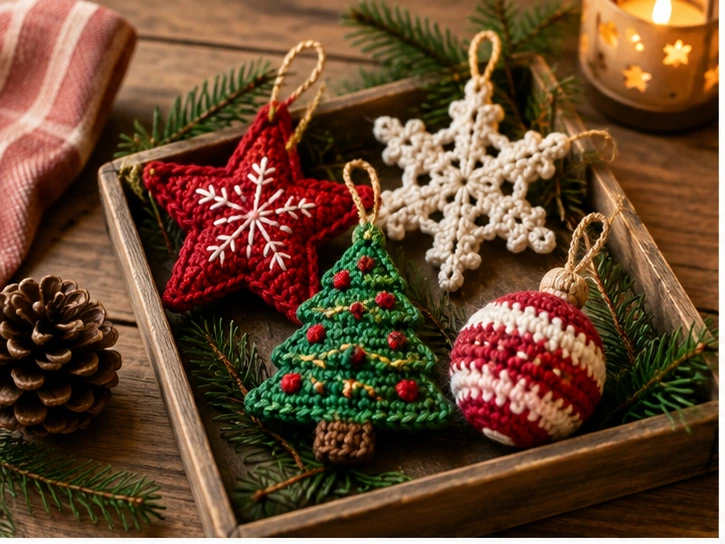
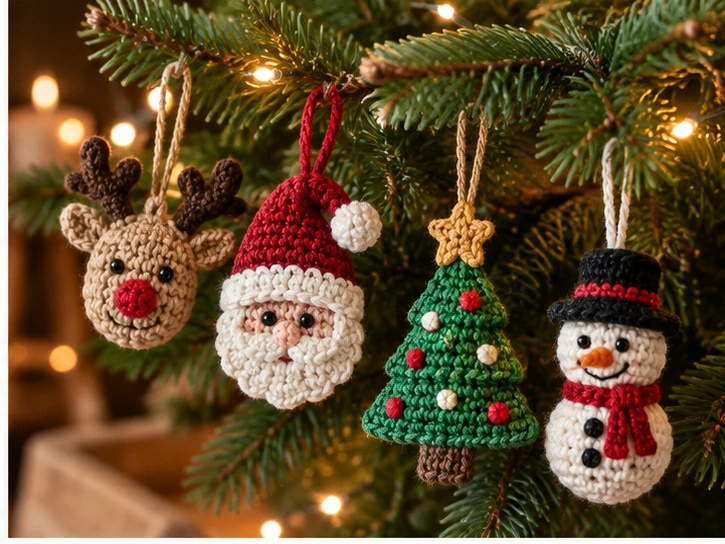
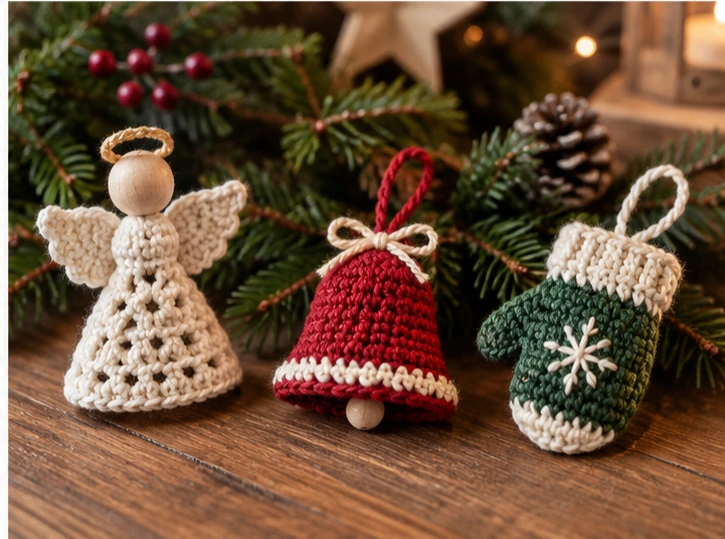
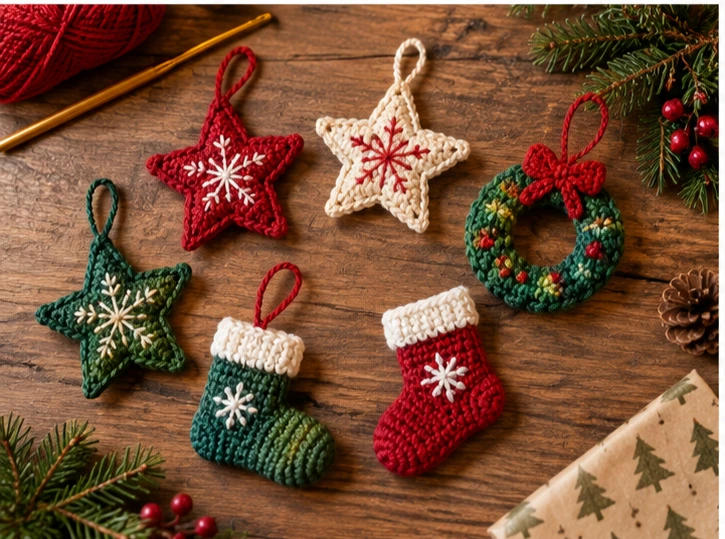
Crochet Christmas ornaments are popular for a simple reason: they’re small enough to finish in an evening, forgiving enough for beginners to practice new stitches, and versatile enough that no two versions ever look quite the same. Whether you’re crocheting a simple round bauble, a snowflake, a mini stocking, or a cute amigurumi shape like a gingerbread man or a tiny Christmas tree, the process is approachable and the payoff is a decoration that feels genuinely special.
What Makes This Crochet Project Special
Ornaments sit in a sweet spot in the crochet world. They’re small, so they don’t demand a big time commitment or a large yarn stash, but they still let you practice techniques you’ll use in bigger projects — color changes, shaping with increases and decreases, working in the round, and finishing details like embroidery or blanket stitch edging.
They’re also endlessly customizable. A basic round ornament can become a snowman, an ornament ball with a striped pattern, a star, or a tiny wreath just by changing the shape, colors, or embellishments. That flexibility makes crochet Christmas ornaments a great project for using up leftover yarn from bigger projects, since most ornaments only need small amounts of each color.
Because they’re worked flat or in the round with basic stitches, this is also one of the friendliest holiday projects for someone who’s newer to crochet. There’s low pressure, quick results, and plenty of room to experiment without wasting a lot of materials if something doesn’t turn out exactly as planned.
Materials You May Need
The exact materials will depend on the specific ornament shape you’re making, but most crochet Christmas ornament patterns call for a similar core kit:
- Yarn – Worsted weight (medium, category 4) cotton or acrylic yarn is common for amigurumi-style ornaments because it holds its shape well. Fingering or sport weight yarn is often used for lacier, snowflake-style ornaments.
- Crochet hook – Sized to match your yarn weight, typically somewhere in the small-to-medium range; check the label on your yarn for a suggested hook size if you’re improvising.
- Stuffing – Polyester fiberfill for any three-dimensional ornaments (balls, gingerbread shapes, stockings).
- Stitch marker – Helpful for keeping track of rounds when working continuously in the round.
- Yarn needle – For weaving in ends and sewing pieces together.
- Scissors
- Optional embellishments – Small buttons, ribbon or bakers twine for hanging loops, embroidery floss for faces or details, sequins or beads, and a bit of stiff starch or fabric stiffener if you’re making flat, lacy snowflakes that need to hold their shape.
If you’re not sure exactly what a pattern calls for, a general rule of thumb works well: worsted weight yarn with a hook one size smaller than recommended on the yarn label gives you a firm, tight fabric — ideal for amigurumi ornaments that need to hold stuffing without gaps.
How to Make It
Every ornament shape has its own instructions, but most crochet Christmas ornaments follow a similar general process. Here’s a beginner-friendly overview.
Start With a Magic Ring or Foundation Chain
Round ornaments (baubles, gingerbread cookies, snowmen) typically start with a magic ring, which lets you crochet a tight, adjustable center with no visible hole. Flat ornaments, like stars or simple snowflakes, often begin with a foundation chain instead.
Build the Shape With Increases
Working in continuous rounds (without joining or turning), you’ll increase stitches evenly around the first few rounds to create a flat circle or the beginning of a sphere. This is where a stitch marker becomes useful, since it’s easy to lose track of where a round starts when you’re not joining with a slip stitch.
Shape and Stuff as You Go
For three-dimensional ornaments, you’ll typically work several rounds even (without increasing or decreasing) once you reach your desired width, then begin decreasing to close the shape. Add stuffing a little at a time as the piece closes, rather than waiting until the very end, so you get an even, lump-free fill.
Add a Hanging Loop
Before fully closing your ornament, attach a loop of yarn, ribbon, or twine so it’s securely anchored into the stitching rather than just tacked onto the surface afterward. This keeps it from pulling loose once the ornament is on the tree.
Finish With Details
This is where each ornament gets its personality — embroidered faces, contrast-color stripes, small appliqué pieces, or a simple blanket-stitch edge on flat shapes. Weave in all loose ends securely so nothing unravels with handling.
Tips for a Better Result
- Choose yarn with good stitch definition. Cotton or a cotton-acrylic blend tends to show off stitch texture better than fuzzy or highly textured yarns, which matters on small projects where detail is visible up close.
- Pick a cohesive color palette. A handful of ornaments in coordinating colors (classic red and green, or a modern neutral palette with metallic thread accents) look more polished on the tree than a completely random mix.
- Keep your tension consistent. Small projects show tension inconsistencies more obviously than large ones, so try to crochet at a steady pace and avoid switching grip mid-project.
- Stuff firmly but not tightly. Overstuffing can distort the stitches and make the ornament look lumpy instead of smooth and round.
- Block flat ornaments. Lacy or filet-style ornaments, like snowflakes, benefit from light steam blocking or a fabric stiffener to help them lie flat and hold their shape on the tree.
- Weave in ends thoroughly. Ornaments get handled a lot during decorating and storage, so loose ends should be woven in multiple directions to prevent unraveling over time.
Top 4 Crochet Trends
1. Nostalgic, Retro-Inspired Colors
Warm, slightly muted color palettes — think mustard yellow, burnt orange, sage green, and cream — have been showing up across crochet projects as an alternative to bright, primary holiday colors. For ornaments, this trend translates easily: swap traditional red and green for a cozy, vintage-inspired palette to give your tree a warmer, more personal look.
2. Amigurumi-Style Holiday Characters
Cute, rounded amigurumi shapes continue to be popular beyond toys, showing up as ornaments, keychains, and small gifts. Instead of a plain round bauble, consider shaping your ornament into a simple character — a snowman, a gnome, or a gingerbread figure — using basic amigurumi shaping techniques.
3. Textured Stitches Over Plain Fabric
Rather than sticking to basic single crochet, many crocheters are incorporating textured stitches like bobbles, puff stitches, or simple cable-like details to add dimension to small projects. A round ornament worked with a scattering of puff stitches, or a star with a textured border, stands out more than a flat, single-stitch surface.
4. Sustainable, Scrap-Yarn Projects
Using up leftover yarn from other projects instead of buying new skeins has become a popular, practical approach to crochet. Ornaments are a natural fit for this, since most only need small amounts of yarn. Sorting through your stash for coordinating scraps is an easy way to make a full set of ornaments without buying anything new.
Styling and Gifting Ideas
- Bundle a set of 3–5 coordinating ornaments in a small gift box or mesh bag for an easy handmade present.
- Personalize with initials or names using embroidery thread for a keepsake-style gift.
- Use them as gift tags by attaching a small ornament to the ribbon on a wrapped present instead of a paper tag.
- Mix with a garland by stringing several smaller ornaments together for a handmade mantel or staircase garland.
- Create a “first ornament” keepsake for a baby’s first Christmas, a new home, or a new pet using a simple date or initial detail.
- Display year-round as a small bowl filler or attached to a wreath for a subtle nod to the season even outside December.
FAQs
Are crochet Christmas ornaments good for beginners? Yes. Most patterns rely on basic stitches like single crochet, along with simple increases and decreases, which makes ornaments a great low-pressure way to practice working in the round before tackling a larger project.
What yarn weight works best for crochet ornaments? Worsted weight (medium) yarn is the most common choice because it’s easy to work with and holds its shape well once stuffed. Thinner yarns, like fingering or sport weight, are often used for delicate, lacy designs such as snowflakes.
How do I keep my crochet ornaments from losing their shape? Firm, even stuffing and consistent tension both help three-dimensional ornaments hold a round shape. For flat, lacy ornaments, blocking with steam or a fabric stiffener helps them stay crisp instead of curling.
Can I make crochet ornaments without stuffing? Yes, flat ornaments like stars, snowflakes, or filet crochet shapes don’t require stuffing at all. Blocking is usually what gives these pieces their finished shape instead.
Final Thoughts
Crochet Christmas ornaments are a small project with a big payoff: quick to finish, easy to customize, and genuinely meaningful when they end up hanging on your tree year after year. Whether you stick to a classic red-and-white bauble or experiment with a textured amigurumi character, each ornament you make becomes part of a growing, handmade holiday collection that’s entirely your own.