The Story Behind Olive Garden’s Salad Dressing (And How to Make It at Home)
If you’ve ever caught yourself dunking breadsticks in the leftover pool of dressing on your plate, you already know the truth: at Olive Garden, the salad might just be the best part of the meal. I have spent years testing imitation versions of restaurant classics in my own kitchen, and this particular recipe comes up more frequently than almost any other request. People want more than just the recipe. They seek to understand how it works so they can reproduce that specific combination of tangy and creamy flavors in their own kitchen.
So let’s break it down properly. By the end of this guide, you’ll know what’s actually in the dressing, how to make your own version step by step, and how it stacks up against the bottled stuff on grocery store shelves.
Quick takeaways before we dive in:
- Olive Garden’s dressing is a creamy Italian-style vinaigrette, not a plain oil-and-vinegar mix.
- The signature texture comes from a small amount of mayonnaise emulsifying the oil and vinegar together.
- You can make a very close copycat at home in about 10 minutes, using pantry staples.
- Yes, you can buy something close to it in stores — but it’s not quite the same as the real thing.
- It’s tasty, but it’s not exactly a health food — I’ll explain why, and how to lighten it up if that matters to you.
What Makes Olive Garden’s Salad Dressing So Good?
Here’s the thing most home cooks get wrong when they try to recreate this dressing: they treat it like a basic vinaigrette. Whisk some oil and vinegar together, maybe add a pinch of herbs, and call it a day. That’s not what’s happening here.
What actually makes this dressing so craveable is the balance of four things working at once — fat, acid, sweetness, and salt — plus a texture trick that most people miss entirely.
The tang comes from vinegar (Olive Garden reportedly leans on a light vinegar rather than something harsh like balsamic). The richness comes from oil. But the creaminess — that silky coating that clings to every piece of lettuce — comes from a small amount of mayonnaise. It’s not enough to make the dressing taste “creamy” in an obvious way, but it’s enough to emulsify everything into something smoother and more stable than a shaken vinaigrette. A touch of sugar rounds off the sharpness, and a proper Italian herb blend (oregano, basil, garlic, a whisper of black pepper) gives it that unmistakable restaurant flavor.
In short: it’s not one clever ingredient. It’s the ratio.
What Is Olive Garden Dressing Actually Made Of?
Let’s get specific, because “Italian dressing” can mean a dozen different things depending on who’s making it. Based on how the dressing tastes, behaves, and holds together, the core building blocks are:
- Oil (a neutral vegetable oil, sometimes blended with a little olive oil for flavor)
- Vinegar (white vinegar or white wine vinegar for brightness)
- Mayonnaise (the emulsifier — this is the part most homemade versions skip, and it’s a mistake)
- Sugar (just enough to soften the acidity)
- Italian herbs and garlic (oregano, basil, garlic powder or fresh garlic)
- Parmesan cheese (adds a salty, savory backbone)
- Salt and black pepper to finish
That’s it. No exotic ingredients, no obscure techniques. The whole thing comes together in a blender or a jar with a tight lid.
How to Make Copycat Olive Garden Salad Dressing at Home
Alright, let’s actually make it. This recipe scales easily, keeps well in the fridge, and honestly tastes better fresh than most bottled versions on the shelf.
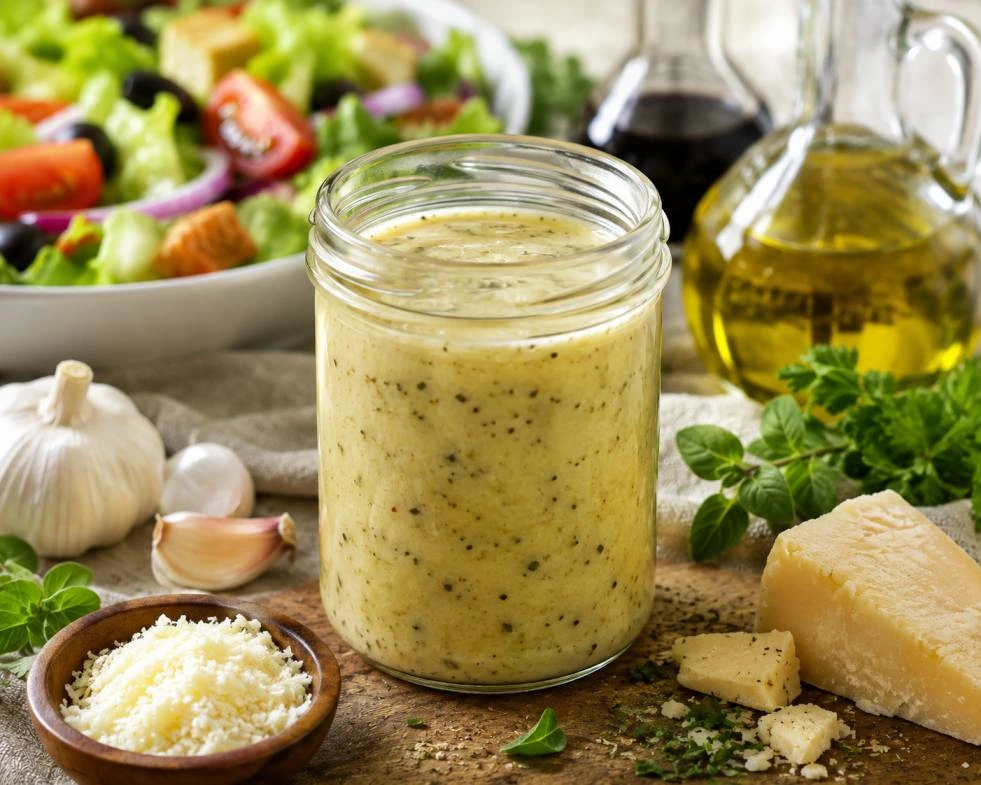
Olive Garden Salad Dressing Copycat Recipe
Ingredients
Steps:
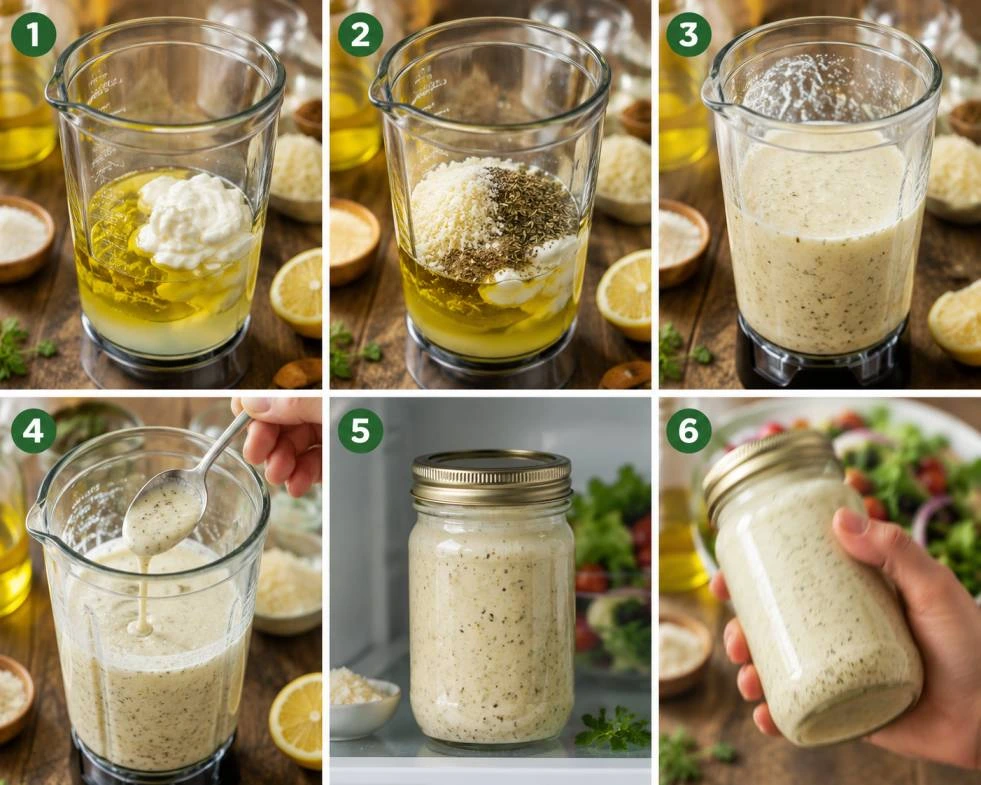
- Combine the wet ingredients first. In a blender, food processor, or a jar with a tight-fitting lid, add the vegetable oil, olive oil, vinegar, water, mayonnaise, and lemon juice.
- Add the flavor builders. Toss in the Parmesan, sugar, oregano, Italian seasoning, garlic powder, salt, and pepper.
- Blend or shake until fully emulsified. If you are using a blender, pulse for about 30 seconds until the mixture becomes pale and slightly thickened, which indicates that the mayonnaise is developing properly. If you’re using a jar, seal it tightly and shake hard for a solid minute. You want it smooth, not separated.
- Taste and adjust. This is the step most people skip, and it’s the one that actually makes the difference between “fine” and “wow, this tastes just like the restaurant.” Too sharp? Add a touch more sugar. Too flat? A splash more vinegar or lemon juice wakes it right up.
- Chill before serving. Give it at least 30 minutes to an hour in the fridge. The flavors need time to meld, and the dressing thickens slightly as it chills, which improves how it clings to lettuce.
- Shake before each use. Like most homemade dressings, it will separate a little in storage. A quick shake brings it right back.
Store it in a sealed jar in the fridge for up to a week. Toss it with iceberg or romaine lettuce, black olives, pepperoncini, thin-sliced red onion, and a few Roma tomato wedges, and you’ve basically rebuilt the entire Olive Garden salad on your own countertop — breadsticks optional, though I wouldn’t skip them.
A few notes from experience:
- If you don’t have a blender, whisking by hand works, but the texture won’t be quite as smooth. A food processor gives the best emulsion.
- Swap the mayonnaise for a vegan alternative if you want a dairy-adjacent, egg-free version — the texture holds up surprisingly well.
- If you’re watching sodium, cut the salt in half and skip the Parmesan; you’ll lose a bit of the savory depth, but it’s still a solid dressing.
Can You Just Buy Olive Garden Salad Dressing Instead?
Fair question, and the honest answer is: sort of. Olive Garden doesn’t sell its dressing directly to the public in most locations, but there are bottled “Italian dressing” products at grocery stores — including some private-label options at Walmart and similar chains — that are marketed as tasting close to it. They’re a fine backup for a busy weeknight, but in my experience, none of them nail the texture quite the way a fresh, homemade batch does. Once you’ve made your own and tasted the difference, going back to a bottle feels like a downgrade.
FAQs About Olive Garden Salad Dressing:
Is Olive Garden salad dressing healthy?
Not particularly — and that’s okay. It’s a flavorful dressing built on oil and mayonnaise, so it’s calorie-dense and higher in fat than a plain vinaigrette. Used in moderation on a salad loaded with vegetables, it fits fine into a balanced diet; just don’t treat it as a health food.
What kind of salad dressing does Olive Garden actually use?
It’s best described as a creamy Italian-style dressing — a vinaigrette base (oil, vinegar, herbs) with a small amount of mayonnaise and Parmesan added for creaminess and depth, rather than a classic oil-and-vinegar Italian dressing.
Can you buy Olive Garden salad dressing in stores?
Not the exact restaurant product, but several grocery brands sell “Italian dressing” formulated to taste similar. For the closest match, homemade is still your best bet.
What can you substitute if you don’t have all the ingredients for Olive Garden Italian dressing?
A store-bought Italian dressing mix packet whisked with oil, vinegar, and a spoonful of mayonnaise gets you most of the way there in a pinch. It won’t be identical, but it captures the same creamy-tangy profile.
Final Thoughts
There’s a reason this dressing has such a cult following — it hits every flavor note at once, and it’s genuinely simple to recreate once you understand what’s actually in it. Skip the bottled stuff, grab a jar, and give this recipe a try this week. Once you taste how close it gets to the real thing, I promise you won’t be reaching for store-bought again.
Tried it? I’d love to hear how yours turned out — and what you paired it with.