McDonald’s Double Cheeseburger Calories: What a Chef Really Wants You to Know
The honest breakdown — plus a step-by-step homemade recipe that beats the drive-thru.
📋 Key Takeaways
- A McDonald’s Double Cheeseburger contains 440 calories— less than most people assume.
- It packs 25g of protein, but also 1,050mg of sodium — nearly half your daily limit.
- The Quarter Pounder with Cheese has 80 more calories (520 total) than the Double Cheeseburger.
- You can make a homemade version that’s just as satisfying and far lower in sodium.
- Eaten occasionally, the Double Cheeseburger fits into a balanced diet without guilt.
To be straightforward with you.I’ve cooked in professional kitchens for over a decade, and yes — I’ve eaten a McDonald’s Double Cheeseburger at midnight after a long shift. No shame. It’s a genuinely well-made fast food sandwich, and understanding exactly what’s inside it doesn’t have to feel like a lecture.
Whether you’re counting calories, curious about how it compares to other menu items, or just want to recreate that iconic bite at home — this guide covers all of it. By the end, you’ll know this burger better than most of McDonald’s employees do.
What’s Actually in a McDonald’s Double Cheeseburger?
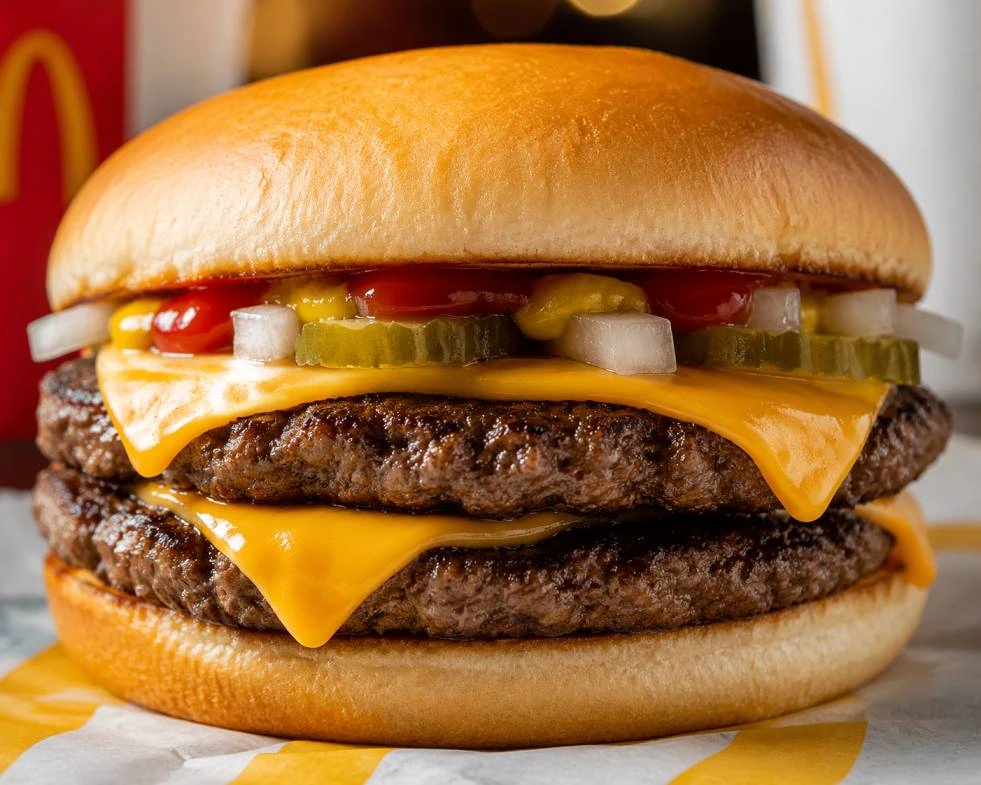
Before we talk numbers, let’s talk about what you’re actually eating. The Double Cheeseburger is two thin beef patties — each about 1.6 oz — seasoned with just salt and pepper, topped with two slices of American cheese, pickles, chopped onions, ketchup, mustard, and served on a regular white bun. That’s it. No special sauce, no lettuce, no tomato. It’s beautifully simple.
And here’s something that surprises people: McDonald’s beef is 100% pure beef with no fillers or extenders. The patties are just beef, salt, and pepper. A lot of the calorie anxiety around this burger comes from assumptions — not facts.
The Full Calorie and Nutrition Breakdown
Here’s the complete picture, straight from official McDonald’s nutrition data:
| Nutrient | Amount | % Daily Value |
|---|---|---|
| Calories | 440 kcal | 22% |
| Total Fat | 24g | 31% |
| Saturated Fat | 11g | 55% |
| Protein | 25g | 50% |
| Total Carbohydrates | 34g | 12% |
| Sodium | 1,050mg | 46% |
| Calcium | — | 20% |
| Iron | — | 15% |
The protein number is genuinely impressive for 440 calories. That 25g makes the Double Cheeseburger one of the more filling options on the McDonald’s menu. The thing to watch? The sodium. Nearly half your recommended daily intake in one sandwich is significant — especially if you’re adding fries and a soda to the order.
How Does It Compare to Other McDonald’s Burgers?
This is one of the most Googled questions about this burger, and the answer is actually reassuring. The Double Cheeseburger at 440 calories is more moderate than you’d expect:
- McDouble 390 cal
- Double Cheeseburger 440 cal ← you are here
- Quarter Pounder with Cheese 520 cal
- Big Mac 540 cal
- Double Quarter Pounder with Cheese 740 cal
What is the difference between a McDouble and a Double Cheeseburger? Just one extra slice of American cheese — 50 calories. Not a big deal. The real jump comes if you move up to the Quarter Pounder, which adds 80 more calories through a much thicker single patty that absorbs more cooking fat.
From a chef’s standpoint, I’d say the Double Cheeseburger actually punches above its calorie weight. Two patties give you better beef-to-bun ratio, more even cheese coverage, and more satisfying bites than the single-patty options.
Is McDonald’s Beef Really Real Beef?
Yes — and this question comes up constantly, which tells you how much trust has eroded around fast food. McDonald’s beef patties in the U.S. are 100% USDA-inspected beef with no fillers or extenders. The patties for the Double Cheeseburger are made from a blend of beef trimmings (mostly chuck and round), formed into thin patties, and cooked on a flat-top grill with just a pinch of salt and pepper. That’s it.
What gives it that distinctive flavor isn’t additives — it’s the Maillard reaction from the hot flat-top grill, plus the steaming effect from the onions placed on top while the meat finishes cooking. It’s actually quite clever cooking for a fast food environment. When you make the recipe below, you’ll recreate that same effect at home.
Homemade McDonald’s-Style Double Cheeseburger
A chef-tested recipe for beginners — same satisfaction, way less sodium.
⏱ Prep: 10 mins🔥 Cook: 8 mins🍔 Makes: 2 burgers⭐ Beginner-friendly
McDonald’s Double Cheeseburger Calories Guide
Ingredients
Equipment
Step-by-Step Instructions:
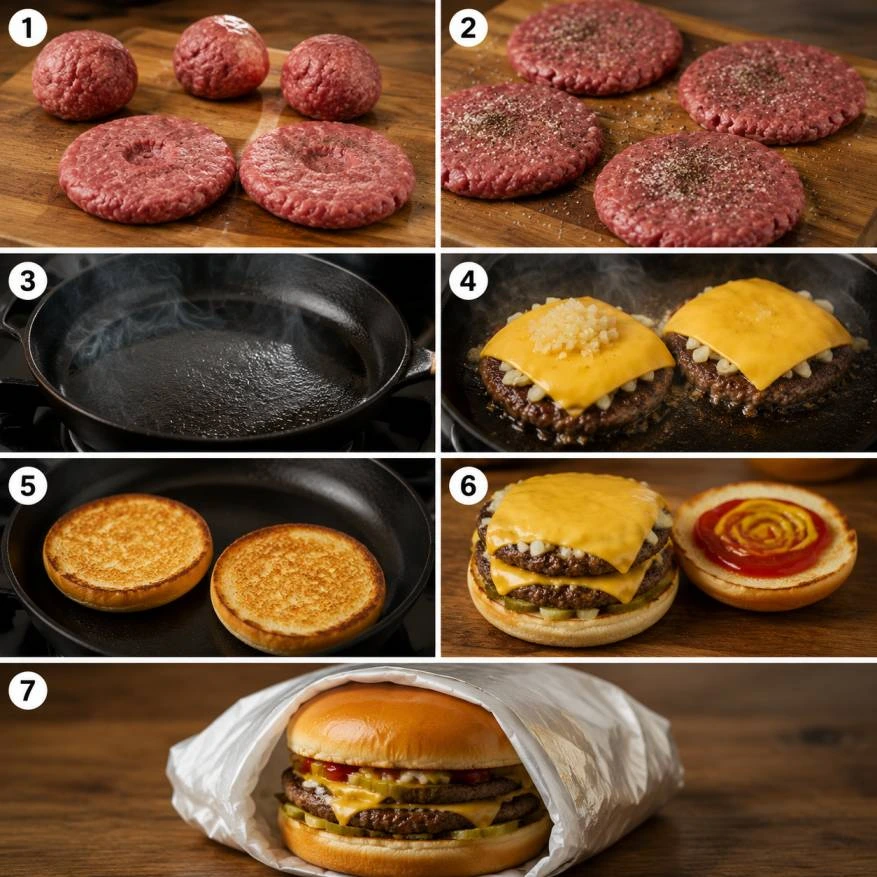
Shape the patties
Divide the ground beef into 4 equal portions (about 100g each). Roll each into a ball, then flatten between your palms into a thin patty roughly 10cm (4 inches) wide. The patties should be thinner than you think — about the thickness of your phone. Press a small dimple in the center with your thumb to prevent them from puffing up.
Chef’s tip: Don’t overwork the meat. Mix as little as possible — that keeps the texture loose and juicy, not dense and rubbery.
Season generously
Season both sides of each patty with salt and black pepper right before cooking — not ahead of time. Pre-salting draws out moisture and can make thin patties dry out quickly. Season, then cook immediately.
Get your pan smoking hot
Place a heavy skillet or cast-iron pan over high heat for 2–3 minutes until very hot. Add a tiny drizzle of oil and swirl to coat. You want the pan as hot as possible — this is what creates the golden crust that makes fast food burgers taste so good.
Chef’s tip:A cast-iron skillet is your best friend here. It holds heat evenly and gives you that flat-top grill effect McDonald’s uses.
Cook the patties — and add the onions
Place two patties in the pan. Immediately add a small pinch of chopped onion on top of each patty. Press gently with a spatula. Cook for 90 seconds without moving — you want a deep brown crust on the bottom. Flip once, then lay a slice of American cheese on top of each patty. The steam from the onions will melt the cheese perfectly.
Toast the buns
While the patties finish (about 60 more seconds after flipping), place the bun halves cut-side down in a separate dry pan over medium heat for 30–45 seconds until lightly golden. This step is optional, but it makes a huge difference — a toasted bun holds up to the sauces and keeps everything from getting soggy.
Chef’s tip: McDonald’s toasts their buns on a dedicated flat-top. At home, a dry pan works just as well — no butter needed.
Build the burger (in the right order)
Spread mustard and ketchup on the crown (top bun). Add pickles on the heel (bottom bun). Stack the two cheese-covered patties on the heel. Place the crown on top. That’s it — same build order McDonald’s uses, which distributes the condiments evenly into every bite.
Rest, wrap, and serve
Here’s the secret step most people skip: wrap the burger loosely in foil or parchment paper for 60 seconds before eating. This lets the steam redistribute through the bun and cheese, giving you that soft, cohesive fast food texture. Unwrap and eat immediately.
Chef’s tip: McDonald’s wraps their burgers for exactly this reason. It’s not just for transport — it’s part of the cooking process.
Should You Feel Guilty About Eating One?
Honestly? No. The Double Cheeseburger is 440 calories — that’s about 22% of a standard 2,000-calorie daily diet. If you eat it as a standalone meal (no fries, drink some water), it fits comfortably into a balanced day for most people. The protein content (25g) is actually excellent for appetite control.
Where it gets trickier is the sodium. At 1,050mg, nearly half your daily recommended limit arrives in one sandwich. If you’re eating this as a regular lunch several times a week — especially with fries (another 400+ mg of sodium) — that adds up. Occasional? Totally fine. Daily habit? Worth being aware of.
The homemade version above uses fresh ingredients and no added sodium beyond what you season yourself, so it’s naturally a more balanced choice while still delivering everything you love about the original.
Frequently Asked Questions:
How unhealthy is a Double Cheeseburger from McDonald’s?
The Double Cheeseburger isn’t as bad as its reputation suggests — but it’s not a health food either. At 440 calories, 25g of protein, and 24g of fat, it’s a reasonably balanced fast food option by calorie count. The real concern is sodium: 1,050mg per sandwich is close to half your recommended daily intake (2,300mg). The saturated fat content (11g) is also high at about 55% of the daily value. Eaten occasionally as part of a varied diet, it won’t derail your health. Eaten daily with fries and a sugary drink, the sodium and saturated fat accumulation becomes a genuine concern over time.
What is the healthiest burger to order at McDonald’s?
If you’re purely looking at calories, the regular Hamburger (250 cal) or Cheeseburger (300 cal) are the lightest options. But if you want the best balance of protein to calories — which keeps you fuller for longer — the McDouble (390 cal, ~22g protein) is arguably the smartest choice on the menu. The Double Cheeseburger (440 cal, 25g protein) is also excellent for protein-to-calorie ratio. The worst burgers from a nutritional standpoint are the Double Quarter Pounder with Cheese (740 cal) and anything from the “Deluxe” range, which add calorie-dense toppings without meaningfully improving nutrition.
What has more calories — a Double Cheeseburger or a Quarter Pounder?
The Quarter Pounder with Cheese has more calories: 520, compared to the Double Cheeseburger’s 440 — an 80-calorie difference. This comes primarily from the larger beef patty (4 oz vs. roughly 3.2 oz total across two patties), which is thicker and absorbs more cooking fat. The Quarter Pounder also has a slightly larger bun. However, the Quarter Pounder does offer more protein per serving and its single thick patty has a different texture profile that some people find more satisfying. If you’re choosing purely on calories, the Double Cheeseburger wins. If you want more beef per bite, the Quarter Pounder is worth the extra 80 calories.
What is the difference between a McDouble and a Double Cheeseburger?
The only difference is one slice of cheese. Both burgers have two beef patties, the same condiments (mustard, ketchup, pickles, onions), and the same bun. The McDouble has one slice of American cheese; the Double Cheeseburger has two. That one extra slice adds approximately 50 calories and a small amount of sodium. It also changes the texture slightly — the extra cheese creates more meltiness and binds the two patties together more cohesively. Pricewise, the McDouble is usually $0.50–$1 cheaper. Which is better? That depends on your cheese preference, but from a chef’s perspective, the two-cheese version gives you better flavor coverage across every bite.
Ready to Make Your Own?
Try the homemade recipe above — it takes less than 20 minutes, costs less than the drive-thru, and you control every ingredient.