Double Cheeseburger Calories:Is It Really That Bad?
A calorie counter’s honest breakdown — plus a chef-crafted homemade version that actually lets you control what goes in.
By Chef Expert · Beginner Friendly
Homemade Double Cheeseburger
Chef-crafted · Calorie-conscious · Beginner friendly
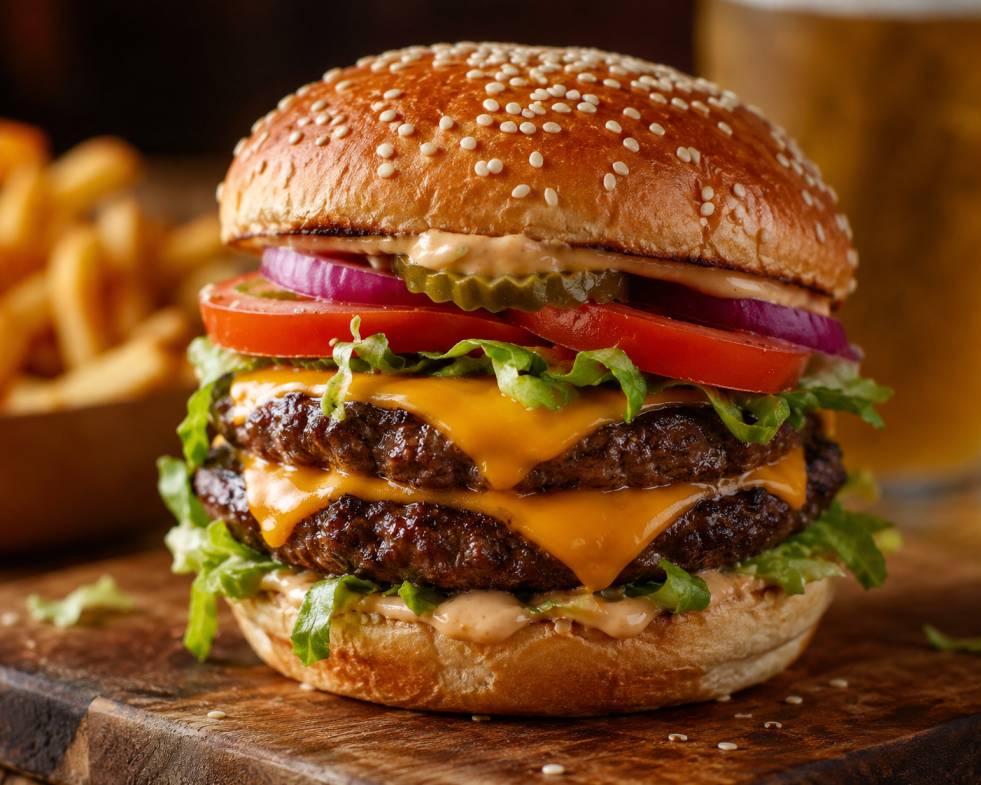
Double Cheeseburger Calories: Is It Really That Bad?
Ingredients
Key Takeaways
- A McDonald’s double cheeseburger contains around 450 calories — less than most people assume.
- The bigger concern isn’t just calories — it’s sodium, saturated fat, and portion creep.
- A Big Mac has significantly more calories than a double cheeseburger, making the latter a smarter fast food pick.
- Beef burgers do contain potassium — which matters if you’re on a kidney-friendly or low-potassium diet.
- Making a homemade version gives you full control over calories, sodium, and ingredients.
Let’s be honest — we’ve all stood in line at McDonald’s, stared at the menu, and thought, “How bad is it, really?” If you are monitoring your calorie intake, the double cheeseburger has likely been a consideration for you on multiple occasions. It’s cheap, it’s satisfying, and yes — it’s delicious. But what’s actually in it?
As someone who has spent years in professional kitchens, I want to give you a real, balanced answer. Not the scary “never eat fast food” lecture, and not the “it’s totally fine, eat whatever you want” pass either. Just the facts, a practical homemade recipe, and the context you need to make your own smart decision.
How Many Calories Are in a Double Cheeseburger?
Here’s the number people are always surprised by: a standard McDonald’s double cheeseburger clocks in at approximately 450 calories. For a burger with two beef patties and two slices of cheese, that’s actually on the lower end of the fast food spectrum.
But calories alone don’t tell the full story. Let’s look at the complete nutrition picture, because that’s where things get more interesting for a calorie counter.
| Nutrient | Amount (per serving) |
|---|---|
| Total Calories | ~450 kcal |
| Total Fat | ~23g |
| Saturated Fat | ~11g |
| Protein | ~25g |
| Total Carbohydrates | ~34g |
| Sodium | ~1050mg |
| Potassium | ~310mg |
Notice that sodium number — over 1,000mg. That’s nearly half the recommended daily intake for most adults in a single sandwich. For calorie counters, this is the real hidden cost, not just the calories. High sodium drives water retention, which can mess with the number on your scale even if you’re eating at a calorie deficit.
Is a Double Cheeseburger Actually Unhealthy?
The honest answer? It depends on the context.
On its own, 450 calories is a perfectly reasonable lunch for most adults. The protein content — around 25 grams — is genuinely decent, and it will keep you fuller than a salad with croutons. The problem isn’t usually the burger itself. A large order of fries contains approximately 490 calories, while a medium soft drink adds about 210 calories to the meal. Suddenly your “modest” burger meal has crossed 1,100 calories before you’ve even noticed.
Quick Comparison
A McDonald’s Big Mac contains approximately 550 calories — about 100 more than a double cheeseburger. If you’re watching your intake, the double cheeseburger is actually the smarter choice between the two.
The saturated fat is worth paying attention to — 11 grams is a significant chunk of the recommended daily limit. Over time, consistently high saturated fat intake is linked to cardiovascular health concerns. But one burger, eaten mindfully within a balanced day? That’s not the crisis some headlines make it out to be.
What About Potassium — Should You Be Concerned?
This question comes up a lot, and it’s especially important for people managing kidney disease or following a low-potassium diet. Yes, beef burgers do contain potassium — roughly 310mg per double cheeseburger — which is a moderate amount.
For the average, healthy person, this is a non-issue. Potassium is actually a nutrient most people don’t get enough of. However, if you’ve been advised by a doctor to follow a kidney-friendly, low-potassium eating plan, a double cheeseburger is not a free pass. You’d want to factor that 310mg into your daily total carefully, and potentially skip the bun (which adds additional minerals) or opt for a lighter preparation at home.
Step-by-Step Instructions
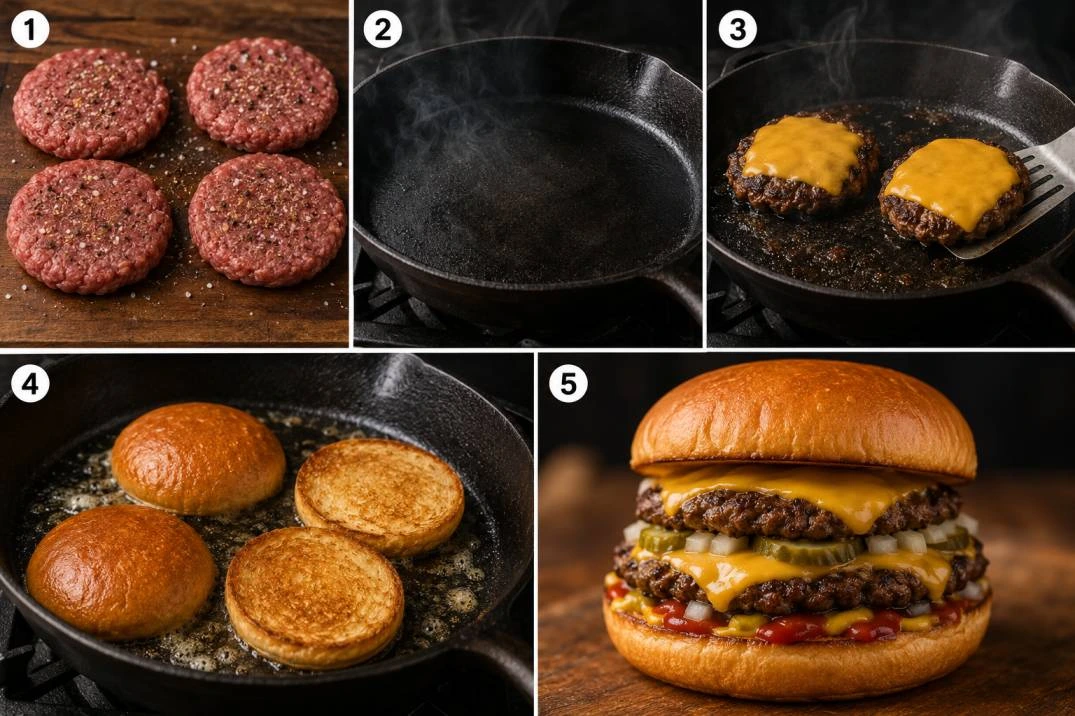
1 – Divide & Shape the Patties
Divide your ground beef into 4 equal portions — about 75g each. Roll each into a ball, then flatten into a thin patty, roughly 10cm (4 inches) wide. Don’t overwork the meat; a light touch keeps the burger tender. Season both sides generously with salt, pepper, and garlic powder.Thin patties = more surface area = more crust = more flavor. This is the secret behind that classic smash-style texture.
2 – Heat Your Pan
Place a cast-iron skillet or heavy-bottomed pan over high heat. Let it get very hot — about 2 minutes. You want it nearly smoking. No oil needed; the beef’s natural fat will handle it. A properly hot pan is what gives you that golden-brown sear rather than a grey, steamed patty.
3 – Cook the Patties
Place two patties in the pan. Press them down firmly with a spatula for 10 seconds — this maximizes contact with the hot surface. Cook for 1 minute 30 seconds, then flip. Place a slice of cheese on each patty. Cook another 60 seconds. Remove and rest on a plate. Repeat with the remaining two patties.Don’t move the patties around. Let them sit and build that crust. Taking time in the cooking process is what separates an average burger from an excellent one.
4 – Toast the Buns
Reduce heat to medium. Add butter to the same pan (don’t clean it — those beef drippings are flavor). Place buns cut-side down and toast for about 60–90 seconds until golden. This step is non-negotiable. A toasted bun adds texture and prevents sogginess.
5 – Build Your Burger
Spread mustard and ketchup on the bottom bun. Add the diced onion and pickle slices. Stack your two cheesy patties. Cap with the top bun. That’s it — no unnecessary fuss. Serve immediately while the cheese is still melted.Sauce goes on the bottom bun, not the top. This keeps the structure stable and stops it all sliding when you take that first bite.
Why Make It at Home?
Here’s the practical upside for calorie counters: when you make this at home, you control everything. You can swap to a 95/5 beef blend and shave off about 40 calories. You can use a thin bun instead of a standard one and drop another 50. You can skip the extra cheese on one patty and reduce saturated fat by nearly half.
The homemade version above comes in at roughly 380 calories — about 70 less than the fast food version — with significantly less sodium (around 600mg vs. 1,050mg). Over a week of lunches, that difference adds up to real, meaningful progress for someone watching their numbers.
Frequently Asked Questions
Which is healthier — a Big Mac or a Double Cheeseburger?
The double cheeseburger wins by a clear margin. A Big Mac contains roughly 550 calories compared to the double cheeseburger’s 450, plus more total fat and a more complex sauce that adds extra sodium and sugar. If you’re going to McDonald’s and want the lower-calorie option, the double cheeseburger is the smarter pick — you still get double the beef and cheese without the extra caloric load of the Big Mac’s triple-decker structure and special sauce.
Are beef burgers high in potassium?
Yes, beef naturally contains potassium — a double cheeseburger provides around 310mg. For most people, this is a helpful contribution to your daily intake (the recommended amount is around 2,600–3,400mg per day). However, if you’re managing kidney disease or have been placed on a low-potassium diet by your doctor, you’ll want to account for this carefully. In that case, a smaller single patty at home with a controlled bun is a better approach, and always check with your healthcare provider about safe limits for your situation.
What’s the lowest calorie burger at McDonald’s?
Among burgers with beef, the plain hamburger is the lightest option at around 250–260 calories. The double cheeseburger, while higher, offers considerably more protein per calorie — making it more satisfying and better value nutritionally for people focused on staying full. If calorie-per-satiety is your metric, the double cheeseburger is often the more strategic choice over a plain hamburger, which may leave you reaching for fries sooner.
What burger has 1,000 calories?
Several fast food items breach the 1,000-calorie mark, though they typically involve upgraded patties, extra cheese layers, bacon, and calorie-dense sauces. Some notable examples include certain Burger King “Triple Whopper” configurations and specialty burgers at casual dining chains. At McDonald’s, you’d need to combine a large meal (burger + large fries + large soda) to approach 1,000 calories — the double cheeseburger alone won’t get you there. This is actually a useful reminder that sides and drinks are often where calorie budgets silently collapse.
The Bottom Line
A double cheeseburger isn’t the dietary villain it’s sometimes made out to be. At 450 calories with 25g of protein, it’s a reasonable choice — especially when you skip the large fries and soda. And when you make it at home using the recipe above, you get all the satisfaction with meaningfully better numbers. Knowledge is your best tool. Use it.