The Ultimate Chicken Meatball Recipe (And How to Stop Them Falling Apart)
I’ve made a lot of meatballs in my career, and I’ve thrown away just as many. Chicken meatballs, in particular, have a reputation — they’re lighter and healthier than beef, sure, but they’re also notorious for turning into crumbly little disasters the second they hit a hot pan. If you’ve ever watched a perfectly good meatball disintegrate into your sauce, you know exactly what I mean.
Here’s the good news: it’s not you. It’s chicken. Ground chicken has less fat and less structural “glue” than beef or pork, so it needs a bit more technique to hold together. Once you understand that, the whole recipe clicks into place. That’s what this guide is for — a properly tested, beginner-proof chicken meatball recipe, plus the exact fixes for the questions I get asked most.
Key Takeaways
- Ground chicken thighs (not just breast) give you flavor and moisture insurance.
- A panade — bread or breadcrumbs soaked in milk — is your best defense against dry, crumbly meatballs.
- Don’t overwork the mixture; treat it like a delicate friend, not bread dough.
- Baking first, then finishing in sauce, gives you the best texture and the least mess.
- These meatballs are far more versatile than spaghetti night — we’ll cover that below.
Why Chicken Meatballs Fall Apart (And How This Recipe Fixes It)
Let’s be honest — the number one complaint about chicken meatballs is that they fall apart. It happens for one of three reasons: too little binder, too much handling, or cooking them at too high a heat too fast. This recipe solves all three by using a proper panade (bread soaked in milk, not just dry breadcrumbs), a gentle folding technique instead of aggressive mixing, and a bake-then-simmer method that sets the exterior before the sauce ever touches it.
Chef’s note: If you take away one thing from this whole article, let it be this — a wet hand and a light touch make a better meatball than brute force ever will.
What You’ll Need: Ingredients for Real Good Chicken Meatballs
You don’t need anything exotic here. Ground chicken (thigh meat, or a thigh-breast blend), an egg to bind, garlic and onion for flavor, Parmesan for savory depth, fresh herbs, and that all-important panade. If you’re out of breadcrumbs, don’t panic — crushed crackers, panko, oats, or even a slice of white bread torn up and soaked in milk all work beautifully as substitutes.
Step-by-Step: How to Make Chicken Meatballs
This method is deliberately simple. If you can mix a bowl of ingredients and use an oven, you can make these.
Step 1 — Build the panade
Soak your breadcrumbs (or torn bread) in milk for five minutes until it forms a soft paste. This is the single most important step for moisture — skip it and you’ll end up with dense, dry meatballs no matter what else you do right.
Step 2 — Combine gently
In a large bowl, combine the ground chicken, panade, egg, grated Parmesan, minced garlic, finely diced onion, herbs, salt, and pepper. Use your hands, but mix like you’re folding laundry, not kneading dough. Overworking the mixture activates the proteins and makes the meatballs tough and rubbery.
Step 3 — Shape with wet hands
Wet your palms slightly and roll the mixture into balls roughly the size of a golf ball. Wet hands stop the mixture sticking to you and help you shape them without compressing the meat too much.
Step 4 — Bake first
Arrange the meatballs on a lined baking sheet and bake at 400°F (200°C) for about 18–20 minutes, until lightly golden and just cooked through. Baking first — rather than pan-frying or dropping raw into sauce — is the trick that keeps them intact. It sets a firm crust before anything else can break them down.
Step 5 — Finish in sauce
Once baked, transfer the meatballs into your simmering sauce of choice for the final 10 minutes. This lets them soak up flavor without falling apart, since the structure is already set.
The Recipe Card:
Chef’s Chicken Meatballs
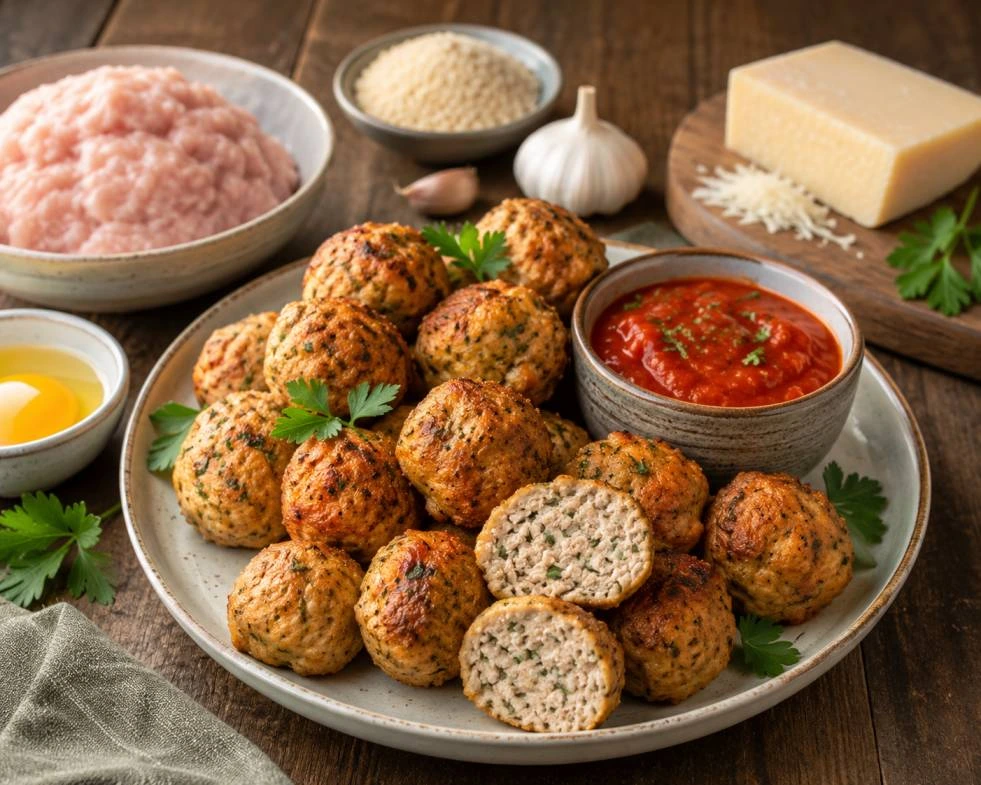
The Ultimate Chicken Meatball Recipe (Juicy, Tender & Easy Every Time)
Ingredients
Method
- Preheat oven to 400°F (200°C) and line a baking sheet with parchment paper.
- Soak breadcrumbs in milk for 5 minutes to form a soft panade.
- In a large bowl, gently combine ground chicken, panade, egg, Parmesan, garlic, onion, parsley, salt, pepper, and red pepper flakes. Mix just until combined — do not overwork.
- With slightly wet hands, roll mixture into 1.5-inch (golf ball-sized) meatballs. You should get about 20.
- Arrange the meatballs on the prepared baking sheet, ensuring there is space between each one.. Bake for 18–20 minutes, until lightly golden and cooked through (internal temp of 165°F/74°C).
- Warm your sauce in a large skillet or pot. Add the baked meatballs and simmer gently for 10 minutes, spooning sauce over them occasionally.
- Serve hot, garnished with extra Parmesan and parsley.
Notes
What to Serve With Chicken Meatballs (Beyond Spaghetti)
Here’s the thing — spaghetti and meatballs is a classic for a reason, but it’s not the only option, and honestly, it’s not even the best way to show these off. Try them over creamy polenta, tucked into a crusty sub roll with melted provolone for a meatball sandwich, piled on top of garlicky mashed potatoes, or served solo with a side of roasted vegetables and crusty bread for mopping up the sauce. If you’ve got premade or leftover meatballs, they’re also fantastic sliced into a rice bowl or tossed through a simple soup.
Frequently Asked Questions:
How do you keep chicken meatballs from falling apart?
Use a proper panade (bread or breadcrumbs soaked in milk), don’t overmix the meat, and bake the meatballs first before adding them to sauce. Baking sets a firm exterior that survives simmering, which is the biggest single fix for meatballs that collapse.
What can you use instead of breadcrumbs to bind meatballs?
Panko, crushed crackers, rolled oats, torn fresh bread soaked in milk, or even crushed cornflakes all work as breadcrumb substitutes. The key isn’t the specific ingredient — it’s soaking whatever starch you use in liquid so it turns into a moisture-holding paste rather than a dry filler.
Is it preferable to cook meatballs in the sauce or in the oven?
For chicken meatballs specifically, baking first and finishing in sauce gives the best results. Cooking raw meatballs directly in sauce risks them breaking apart before they’ve had a chance to set, while baking locks in their shape first.
What can I make with premade chicken meatballs besides spaghetti?
Premade or leftover chicken meatballs work well in sub sandwiches, over polenta or mashed potatoes, in soups, in rice or grain bowls, or simmered in a curry or teriyaki-style sauce for a quick weeknight dinner.
Tried this recipe? I’d genuinely love to hear how your meatballs turned out — drop a comment below or tag your batch on social. And if you’re still hunting for the perfect sauce to go with them, that’s next on the list.