Crochet Cardigan Pattern Guide: Yarn, Stitches, and Steps for a Cardigan You’ll Wear
If you’ve been looking for a crochet cardigan pattern, you’ve probably noticed how different they can be. Some are built from simple rectangles, others from granny squares, and some are worked in one piece from the neckline down. Each approach changes the difficulty, the yarn you need, and how the finished cardigan drapes.
This guide covers what to look for in a crochet cardigan pattern, which materials and stitches work best, and how a typical cardigan comes together, so you can choose a design with confidence.
What Makes a Crochet Cardigan Special
A cardigan is one of the most wearable things you can crochet. It layers over almost anything, works in every season with the right yarn, and forgives small sizing differences better than a fitted sweater.
Crochet also gives cardigans a look knitting doesn’t. The fabric is a little more structured, and stitch textures like shells, ribs, and squares stand out clearly. Many makers choose a crochet cardigan pattern because it’s mostly straight lines. Rectangles and simple shaping are easy to adjust as you go.
Materials You May Need
Exact requirements depend on the pattern and size you choose, so treat this as a starting list:
- Yarn: A smooth, medium-weight yarn (worsted or DK) is the easiest choice, and the stitches are easy to see. Cotton blends, wool blends, and soft acrylics are all common. Wearable garments need drape, so avoid stiff or scratchy fibers.
- Crochet hook: Follow the pattern’s recommendation, then adjust after swatching. Going up a hook size often gives a softer, more flowing fabric.
- Stitch markers: Handy for marking armholes, seams, and the start of rounds.
- Yarn needle: For joining pieces and weaving in ends.
- Measuring tape and scissors.
- Blocking supplies: Pins and a towel or blocking mats, if your yarn responds to blocking.
Yardage varies widely with size, yarn weight, and stitch pattern. Adult cardigans commonly take well over a thousand yards, and dense or textured stitches use more. Always follow the pattern’s yardage and buy an extra skein, since dye lots can vary.
Choosing and Making a Crochet Cardigan Pattern
Pick the construction method
The method you choose affects how the project feels while you work on it.
- Rectangles or panels: Two or three panels are seamed together, with sleeves added or worked separately. This is the most beginner-friendly route, since you’re mostly making rectangles.
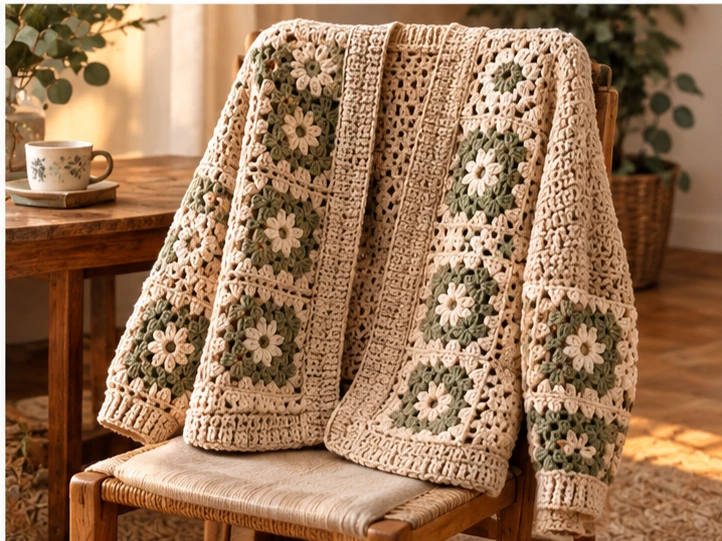
- Granny squares or motifs: Small, portable units you join together. It’s easy to work in pieces, but it involves more joining and finishing.
- One-piece or top-down: Worked from the neckline or in a single piece with shaping. Yes, a cardigan can be crocheted in one piece, though these patterns need more attention to stitch counts.
Make a gauge swatch
Don’t skip this. A swatch of about 5 to 6 inches lets you check that your stitches per inch match the pattern. If your swatch is too small, try a larger hook. If it’s too big, go down. A cardigan that’s off by a few stitches per inch can end up a full size too small or too large.
Work the body and sleeves
For a panel-style cardigan, you’ll typically:
- Make a foundation chain to the width of the back panel.
- Work in your chosen stitch pattern until the panel reaches the desired length.
- Make the front panels the same way, either as two narrower pieces or as one wide piece with a center opening.
- Crochet the sleeves as rectangles or tapered pieces.
Measure often against a cardigan you already own and like. Length, sleeve width, and depth of the armhole matter as much as the stitch counts.
Seam and finish
Lay the pieces flat and pin the shoulder seams first, then attach sleeves, then close the side seams. A crocheted seam with slip stitches is sturdy, while a whipstitch with a yarn needle is flatter and less bulky. Finish with a border or edging along the front opening and hem so the cardigan lies neatly.
Tips for a Better Result
Choose stitches with the right balance. Dense stitches like single crochet or moss stitch are warm but can feel heavy. Open or lacy stitches drape better and use less yarn but are cooler. Stitches with a knit-like look, such as the waistcoat stitch, tend to be the most compact and look the same on both sides. A simple half double crochet or double crochet fabric is a good middle ground for a first cardigan.
Keep your tension steady. Uneven tension shows more in a large piece than in a small toy. If yours changes when you’re tired or distracted, work a few rows at a time and check your measurements often.
Weigh the weight. A crochet cardigan can get heavy, especially in wool or cotton with a dense stitch. Lighter yarn, a bigger hook, and open stitches all reduce weight.
Block your pieces. Blocking evens out stitches and helps seams line up. Check the yarn label first, since acrylic and natural fibers respond differently.
Decide on fit before you start. Cardigans can be worn tight or loose, and many crochet cardigans are meant to be roomy. Choose your ease (how much larger the garment is than your body) before you pick a size.
Top 4 Crochet Trends
Granny Square Cardigans
Colorful squares joined into a patchwork cardigan remain a favorite, and this style became especially recognizable in pop culture. To use it, make squares in a limited palette of three to five colors, so the finished cardigan looks intentional rather than chaotic.
Textured Stitches
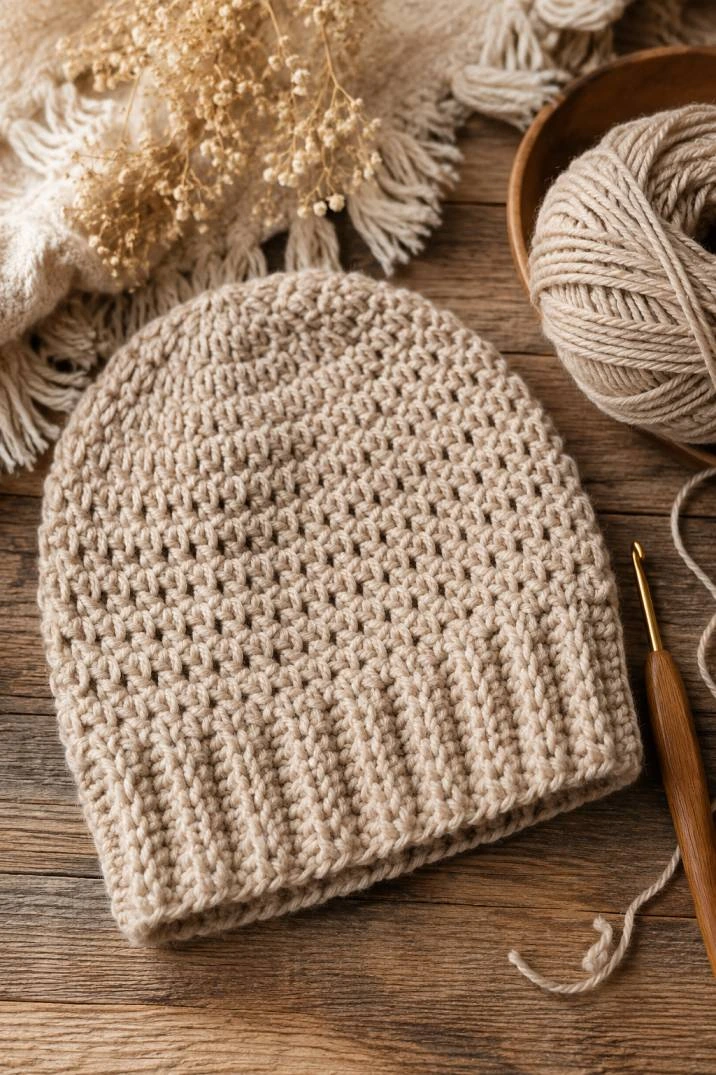
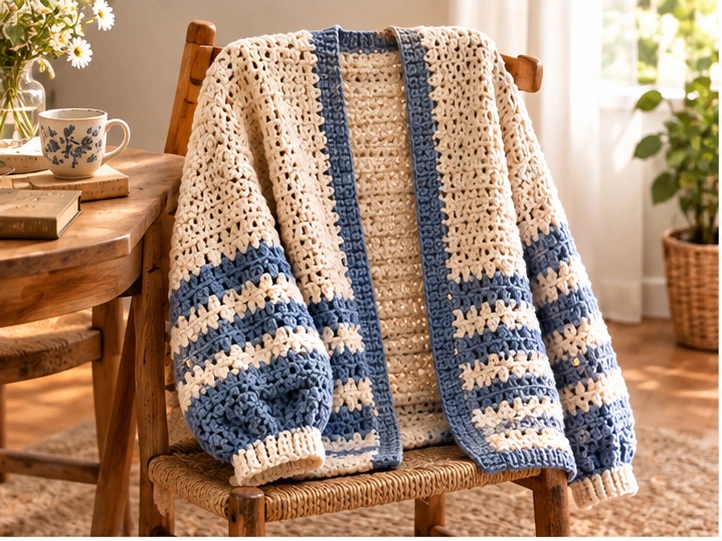
Waffle, moss, and ribbed textures give crochet garments a richer, more tailored look. Choose one textured stitch for the whole body, or use it only on the cuffs and hem to add interest without extra bulk.
Oversized and Relaxed Fits
Loose, slouchy cardigans are comfortable to wear and easier to size. Add extra width to the body and sleeves, and consider a longer hem for a relaxed silhouette.
Natural and Earth-Toned Yarns
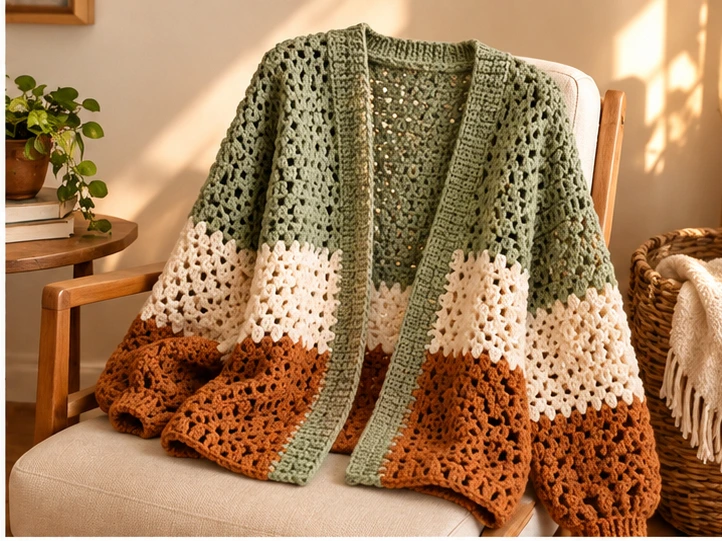
Cream, oatmeal, sage, and terracotta remain popular because they pair with nearly everything. Choose a soft natural-fiber blend in a neutral shade, then add a contrasting border for a subtle pop.
Styling and Customization Ideas
- Pair with basics: A crochet cardigan looks great over a plain tee, a dress, or a collared shirt.
- Add buttons or a tie: Front closures can turn an open cardigan into a more polished layer.
- Try a cropped version: Shortening the body uses less yarn and works well with high-waisted pieces.
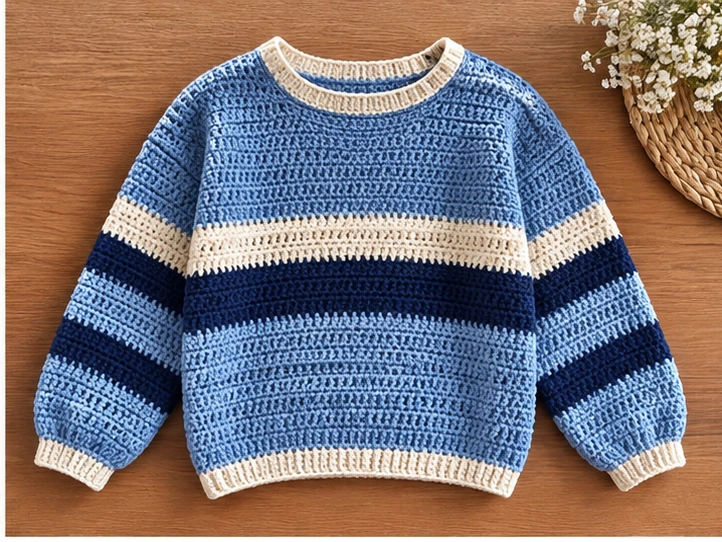
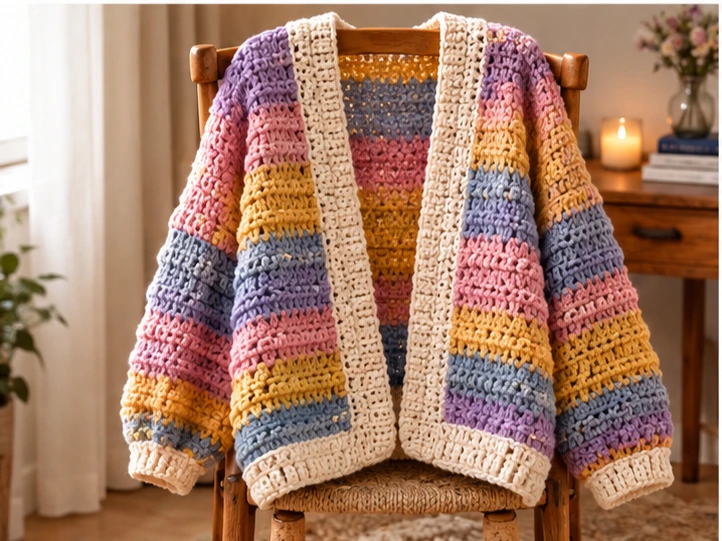
- Play with color blocking: Use two or three shades in wide horizontal bands.
- Gift it: A cardigan in a neutral color and easy-care yarn makes a thoughtful handmade gift. Ask for measurements first.
FAQs
Can a beginner crochet a cardigan?
Yes, if the pattern uses simple rectangles and basic stitches like single, half double, and double crochet. Start with a beginner-labeled pattern and a smooth, light-colored yarn, so it’s easier to see your stitches.
What is the best crochet stitch for a cardigan?
There isn’t one best stitch. Half double and double crochet are popular for drape and speed, while moss and waistcoat stitches give a denser, more knit-like fabric. Pick based on the warmth and drape you want.
How much yarn do I need for a crochet cardigan?
It depends on size, yarn weight, and stitch pattern, so use the yardage in your pattern. As a rough guide, adult sizes commonly need over a thousand yards, and larger sizes or dense stitches need more.
How long does it take to crochet a cardigan?
Most makers spend from a few weeks to a couple of months, depending on stitch complexity, size, and how much time they crochet each day. Simple panels with taller stitches go faster, while granny squares and textured stitches take longer.
Conclusion
The best crochet cardigan pattern is the one that matches your skill level, your yarn, and how you actually want to wear it. Start with a simple construction, swatch carefully, and choose a stitch you enjoy working, and you’ll end up with a cardigan you reach for again and again.