Beef Shank Recipe: The Ultimate Beginner’s Guide to Fall-Off-the-Bone Perfection
Let me guess. You picked up a beef shank at the butcher counter — maybe because it was cheap, maybe because a recipe called for it — and now it’s sitting in your fridge while you wonder if you made a mistake. I promise you didn’t. Beef shank has a reputation for being tough, and honestly, it deserves that reputation right up until the moment you cook it correctly. Then it becomes one of the most rewarding cuts in the entire kitchen.
I’ve cooked more shanks than I can count, for dinner parties and for lazy Sunday afternoons, and I still get a small thrill watching the meat go from stubborn and sinewy to something that falls apart at the touch of a fork. That transformation isn’t luck. It’s chemistry, patience, and a handful of techniques I’m about to walk you through.
Key Takeaways
- Beef shank is a tough, collagen-rich cut that needs low, slow, moist heat — there’s no shortcut.
- Braising at 300–325°F for 2.5 to 3.5 hours is the sweet spot for most home ovens.
- Browning the meat first isn’t optional if you want real depth of flavor.
- You’re looking for an internal temperature around 195–200°F, not the 130–140°F you’d use for a steak.
- Shank is one of the most affordable cuts at the butcher counter, so this is fine dining on a budget.
Why Beef Shank Fights Back (And Why That’s a Good Thing)
Here’s the thing about beef shank: it comes from the leg of the animal, a muscle that works constantly to support the cow’s weight. Muscles that work hard build up dense networks of collagen, the connective tissue that makes meat chewy and stubborn when it’s cooked quickly. Cook a shank like you would a ribeye — hot and fast — and you’ll end up with something closer to shoe leather than dinner.
But here’s the beautiful part. That same collagen, given time and gentle heat, breaks down into gelatin. Gelatin is what gives braised shank its silky, almost luxurious texture and turns the cooking liquid into a sauce so rich it barely needs thickening. This is the exact same magic behind osso buco, short ribs, and oxtail. You’re not fighting the cut. You’re just giving it what it wants: time.
What You’ll Need
This recipe serves 4 and leans on ingredients you probably already keep on hand.
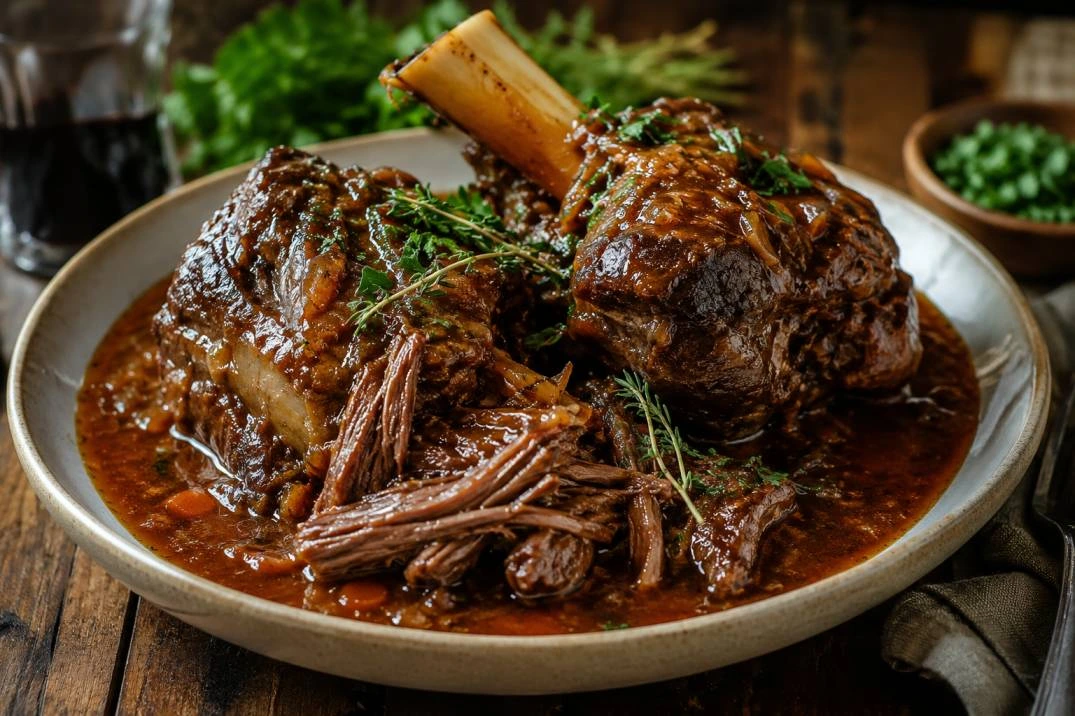
Beef Shank Recipe – Fall-Off-the-Bone Tender
Ingredients
Notes
Step-by-Step: How to Cook Beef Shank:
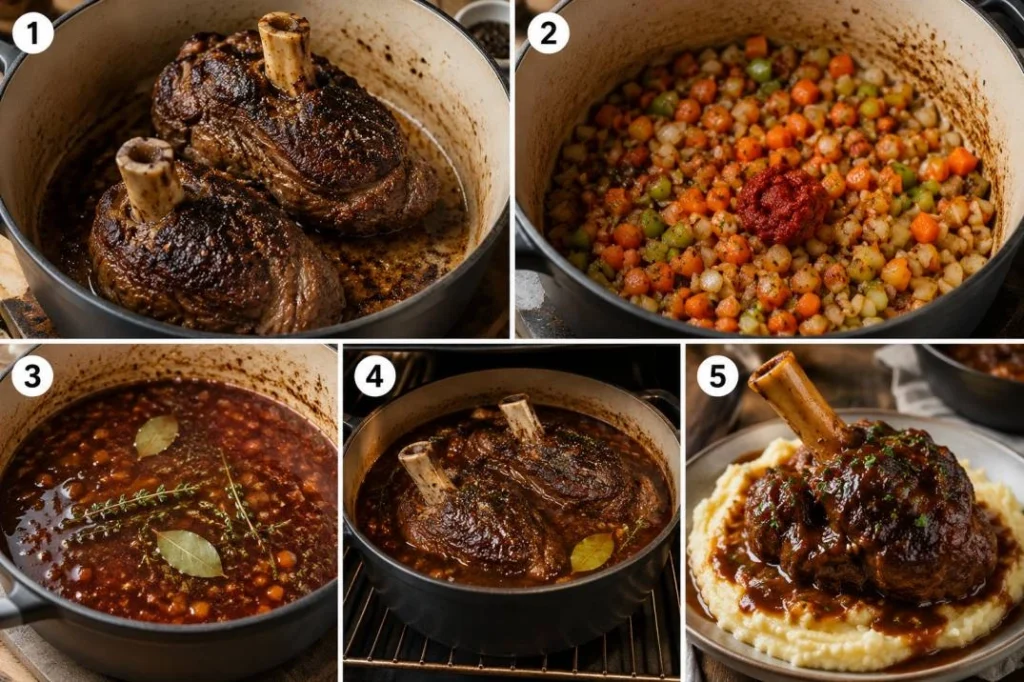
Step 1: Season and Sear
Pat the shanks completely dry with paper towels — this matters more than you’d think, since a wet surface steams instead of browns. Season generously with salt and pepper on both sides. Heat the olive oil in a heavy Dutch oven over medium-high heat until it shimmers, then sear the shanks for about 3–4 minutes per side, until you get a deep, dark crust. Don’t rush this step or crowd the pan; work in batches if you need to. That crust is where most of your flavor comes from. Set the shanks aside on a plate.
Step 2: Build Your Base
In the same pot, add the onion, carrots, and celery. Let them cook for about 5 minutes, stirring occasionally and scraping up the browned bits stuck to the bottom of the pot — that’s flavor, not mess. Stir in the garlic and tomato paste and cook for another minute until fragrant and slightly darkened.
Step 3: Deglaze and Add Liquid
Pour in the red wine and let it simmer for a couple of minutes so the alcohol cooks off, continuing to scrape the pot as you go. Add the broth along with the bay leaves and herbs. You want the liquid to come about halfway up the sides of the shanks once you return them to the pot — not fully submerged.
Step 4: Braise, Low and Slow
Preheat your oven to 325°F. Nestle the shanks back into the pot, cover tightly with a lid, and transfer to the oven. Let them braise undisturbed for 2.5 to 3.5 hours. You’ll know they’re ready when the meat pulls apart easily with a fork and a thermometer reads somewhere around 195–200°F internally. This is a case where an early check just wastes heat — resist the urge to peek constantly.
Step 5: Rest, Reduce, and Serve
Once the shanks are tender, lift them onto a platter and tent with foil to keep warm. Skim excess fat off the braising liquid, then set the pot on the stovetop and simmer to reduce the sauce until it thickens slightly. Spoon that sauce generously over the shanks. Serve over polenta, mashed potatoes, or egg noodles — anything that can soak up the sauce is the right call.
Some Things I Wish I Had Been Informed About Sooner
Don’t crank the oven temperature to save time. Anything above 325°F risks cooking the outside of the meat faster than the collagen can break down, leaving you with dry, stringy shank instead of tender shank — the opposite of what you’re after. Low and slow really is the whole trick here.
Also, resist the temptation to drown the meat in liquid. If the shanks are fully submerged, you’re closer to boiling than braising, and boiled beef turns tough rather than tender. Halfway up the sides is the rule of thumb, and it works.
Frequently Asked Questions:
Why is beef shank so tough?
Shank comes from a heavily worked leg muscle, which means it’s dense with collagen and connective tissue. Cooked quickly, that collagen stays intact and chewy. Cooked low and slow, it melts into gelatin and becomes tender — which is exactly why braising, not grilling or pan-searing alone, is the right method for this cut.
How long does it take to cook a beef shank in the oven?
Plan on 2.5 to 3.5 hours at 325°F for most shank pieces. Thicker cuts may need closer to 4 hours. The clock is really just a guideline — the real test is whether the meat is fork-tender and reaches an internal temperature around 195–200°F.
Is beef shank a cheap cut of meat?
You don’t strictly have to, but you should. Searing the meat first creates a deep, caramelized crust through the Maillard reaction, and that crust adds a layer of savory depth to both the meat and the braising liquid that you simply can’t get by skipping straight to the slow cooker or oven.
Do you need to brown shanks before slow cooking?
You don’t strictly have to, but you should. Searing the meat first creates a deep, caramelized crust through the Maillard reaction, and that crust adds a layer of savory depth to both the meat and the braising liquid that you simply can’t get by skipping straight to the slow cooker or oven.
Final Thoughts
Beef shank isn’t a difficult cut to cook — it’s a patient one. Give it low heat, a good sear, and a few hours of undisturbed time in the oven, and it rewards you with a dish that tastes like it took far more skill than it actually did. That’s the quiet magic of braising: the oven does the hard work while you get the credit.
If you try this recipe, I’d genuinely love to hear how it turns out — what you served it over, what herbs you swapped in, whether your kitchen smelled as good as mine does every time I make this. Drop a comment below, and if you’re new to braising, this shank recipe is about as forgiving a place to start as any.