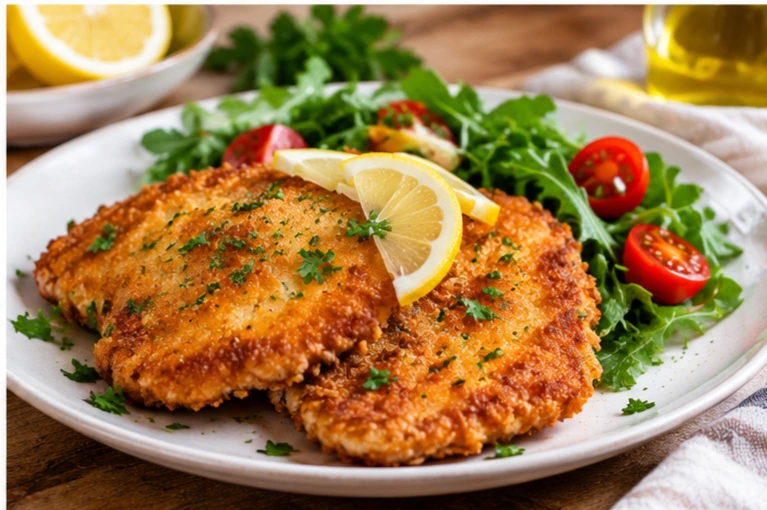
Chicken Milanese: The Crispy, Golden Classic Every Beginner Cook Should Master
There’s a particular sound that tells you dinner is going to be good. It’s the sizzle of butter and oil meeting a hot pan, followed by that satisfying crackle as a breaded chicken cutlet hits the surface. That’s chicken Milanese for you — simple, loud, and impossible to ignore.
If you’ve never made it before, don’t worry. This is one of those dishes that looks far more impressive than it actually is to cook. Give me twenty minutes of your evening and I’ll walk you through exactly how to get that golden, shatteringly crisp crust every single time.
Key Takeaways
- Chicken Milanese is a thin, breaded chicken cutlet, pan-fried until golden and crisp
- It originates from Milan, Italy, and shares DNA with Austrian schnitzel
- The technique relies on three simple steps: flour, egg, breadcrumbs
- Chicken breast is the classic cut, pounded thin for even, fast cooking
- A squeeze of lemon and simple side salad is all it really needs
What Exactly Is Chicken Milanese?
At its heart, chicken Milanese (cotoletta alla Milanese, if you want to sound properly Italian about it) is a thin cut of chicken breast, coated in seasoned breadcrumbs, and shallow-fried until the outside turns a deep golden brown while the inside stays juicy and tender.
It’s not complicated. It’s not fussy. And that’s precisely the point. This is honest, straightforward cooking — the kind of dish that rewards good technique over expensive ingredients. What you’re aiming for is contrast: a crust with real crunch against chicken that’s soft and moist underneath. Get that balance right, and you’ve nailed it.
Chicken Milanese vs Schnitzel: What’s the Difference?
I get asked this constantly, and it’s a fair question, because the two dishes really do look like siblings.
Both are breaded, pan-fried cutlets. Both share the same basic breading method. The difference comes down to origin and, often, the meat used. Schnitzel is the Austrian and German cousin, traditionally made with veal (as in the classic Wiener Schnitzel), though chicken and pork versions are common too. Milanese, meanwhile, hails from Italy and traditionally uses veal or chicken, often finished with a squeeze of lemon and sometimes topped with a simple dressed salad piled on top while the cutlet is still warm.
Honestly, in a home kitchen, the line blurs. What really sets a good Milanese apart is the seasoning of the crumb and that final bright hit of lemon.
The Best Cut of Chicken for Milanese
Chicken breast is your best friend here. You want boneless, skinless breasts, which you’ll then butterfly and pound out to an even thickness — roughly 1cm, or about the thickness of a pound coin.
Why bother pounding it? Two reasons. First, an even thickness means even cooking, so you won’t end up with a dry, overcooked edge and an undercooked centre. Second, thinner meat cooks faster, which means less time in the pan and a better chance of keeping that crumb crisp rather than soggy.
How to Make Chicken Milanese: Step by Step
Serves 2 | Prep: 15 minutes | Cook: 10 minutes
Chicken Milanese
Ingredients
Method
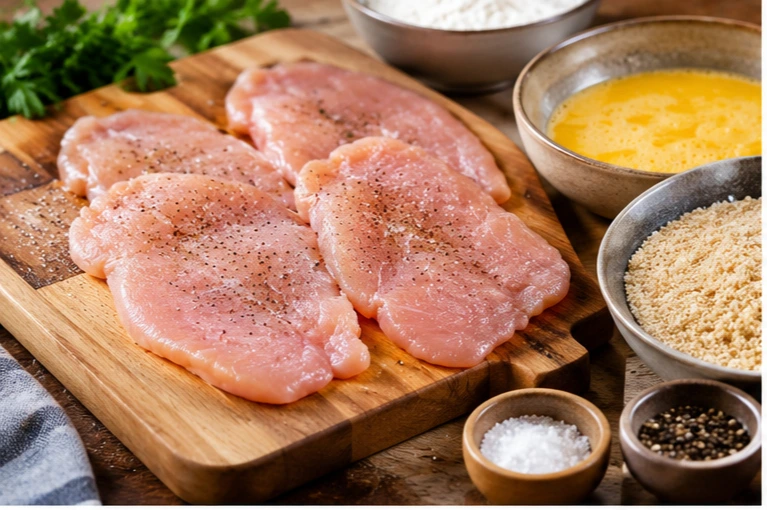
1. Prepare the chicken. Place each chicken breast between two sheets of cling film. Using a rolling pin or meat mallet, pound firmly until the meat is an even 1cm thickness throughout. Season both sides generously with salt and pepper.
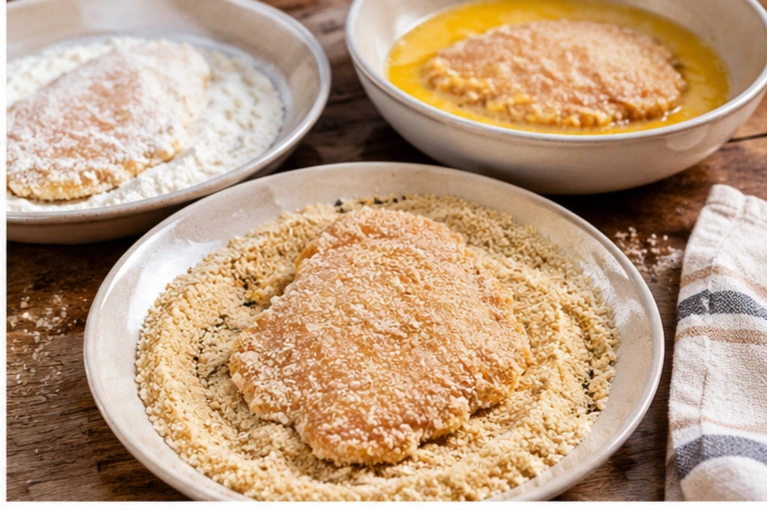
2. Set up your breading station. You’ll need three shallow dishes. Put the flour in the first, the beaten eggs in the second, and combine the breadcrumbs with the grated Parmesan in the third.
3. Coat the chicken. Working with one piece at a time, dip the chicken first into the flour, shaking off any excess. Next, dip it into the beaten egg, letting the excess drip away. Finally, press it firmly into the breadcrumb mixture, making sure the coating sticks evenly on both sides.
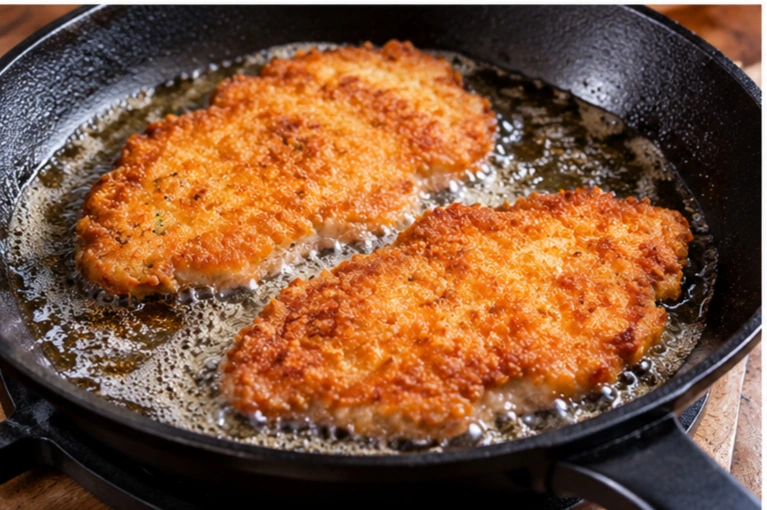
4. Heat the pan. Add a generous layer of oil (around 5mm deep) to a large frying pan over medium-high heat. Add the butter once the oil is shimmering — the butter adds flavour and helps the crust turn a beautiful golden colour.
5. Fry until golden. Lay the chicken carefully into the hot pan. Cook for 3–4 minutes on the first side without moving it, until deeply golden and crisp. Flip once, and cook for a further 3–4 minutes on the second side.
6. Check it’s cooked through. The chicken is ready when it’s golden on both sides and reaches an internal temperature of 74°C, or when the juices run completely clear.
7. Rest and serve. Transfer to a plate lined with kitchen paper to drain any excess oil. Rest for a minute, then serve immediately with a wedge of lemon and a small pile of dressed rocket on top.
What Kind of Sauce Goes Well With Chicken Milanese?
While a purist will tell you Milanese needs nothing more than lemon, there are a few sauces worth having in your back pocket:
- Lemon butter sauce — melt butter in the empty pan, add a squeeze of lemon juice and a splash of stock, and spoon over the chicken
- Creamy Milanese sauce — a light cream sauce with garlic and a touch of Parmesan, poured over just before serving
- Simple salsa verde — parsley, capers, anchovy and olive oil, blitzed together, cuts through the richness beautifully
Whichever you choose, keep it light. The whole appeal of the dish is that crisp crust, and a heavy sauce will only soften it.
Frequently Asked Questions
What does chicken Milanese taste like? Expect a crunchy, savoury, golden crust giving way to tender, juicy chicken underneath. The flavour is mild and comforting on its own, which is exactly why a squeeze of lemon or a peppery handful of rocket makes such a difference — it adds brightness that cuts through the richness of the fried crumb.
What is the difference between chicken Milanese and chicken parmigiana? They start the same way, breaded and fried, but chicken parmigiana takes things further by topping the cutlet with tomato sauce and melted mozzarella or Parmesan, then often baking it. Milanese stays lighter and simpler, usually finished with nothing more than lemon and salad.
What is the best oil to use for chicken Milanese? A neutral oil with a high smoke point, such as vegetable or sunflower oil, is ideal for frying. Adding a knob of butter towards the end of cooking brings extra flavour and helps the crust achieve that rich golden colour, without the risk of the butter burning on its own.
What cut of chicken is best for chicken Milanese? Boneless, skinless chicken breast is the standard choice. Butterflying and pounding it to an even thickness is essential — it ensures the chicken cooks quickly and evenly, so the outside doesn’t overcook before the inside is done.
Final Thoughts
Chicken Milanese is proof that you don’t need a long ingredient list or advanced technique to cook something genuinely impressive. Master the pound, the three-step coating, and the confidence to leave the chicken alone while it fries, and you’ve got a dish you’ll return to again and again.
Give it a go this week — and once you’ve nailed the classic version, experiment with the sauces above. I’d love to hear how yours turns out.