The Secret to a Proper Fish Pie: A Beginner’s Guide
Everything you need to know to get it right the first time, from someone who’s made more than a few disappointing ones along the way.
I’ll be honest with you: the first fish pie I ever made was a disaster. Watery. Bland. The mash slid straight off the top the moment I dug the spoon in. I’d followed a recipe to the letter and still ended up with something that looked more like soup with a hat on than the golden, bubbling, comforting dish I’d been picturing.
It took a few more goes — and a fair bit of stubbornness — to work out where I was going wrong. Turns out, fish pie isn’t difficult. It’s just unforgiving of a handful of small mistakes that nobody warns you about. Get those right, and you’ve got one of the easiest, most crowd-pleasing dinners in the British repertoire. Get them wrong, and, well, soup with a hat on.
This guide is for anyone making fish pie for the first time, or anyone who’s made it before and knows something wasn’t quite right. We’ll go through what actually matters, then walk through the whole thing step by step.
Quick takeaways before you start:
- Always cook your fish (and prawns) briefly before it goes in the pie — raw fish releases water and turns the filling watery
- A proper white sauce, not just cream, is what holds everything together
- Undercook the fish very slightly, since it finishes cooking in the oven
- Let your mashed potato cool a touch before topping the pie, so it sits rather than sinks
- Fresh herbs and a squeeze of lemon do more for flavour than extra fish ever will
What Actually Makes a Good Fish Pie
Ask ten cooks what the “secret” to fish pie is and you’ll get ten different answers — some swear by a splash of white wine in the sauce, others by a layer of hard-boiled egg (more on that below). But underneath all the personal touches, three things separate a good fish pie from a mediocre one.
First, the sauce needs body. A thin, milky sauce will separate and turn watery under the heat of the oven. You want a proper béchamel — butter, flour, milk, cooked out slowly until it coats the back of a spoon. Second, don’t overcrowd the dish with too many types of fish; two or three, well chosen, beats five fighting for attention. And third — the one nobody tells you — season generously. Fish and potato are both fairly mild, and a pie seasoned “to taste” halfway through cooking almost always ends up bland by the time it reaches the table.
Should You Cook the Fish Before It Goes In?
Yes — always. This is the single most common mistake I see, and it’s an easy one to make if you’re used to recipes where everything goes in raw and cooks together. With fish pie, that approach lets the fish release its liquid straight into your sauce, thinning it out and leaving you with a puddle under the mash.
The fix is simple: poach your fish gently in milk for just a few minutes until barely cooked through, then use that same milk to build your sauce. You get flavour and moisture control in one step, and the fish only finishes cooking gently in the oven — which keeps it tender rather than rubbery.
The Recipe: Step by Step:
This makes a generous pie for four people, and comes together in well under an hour of active work.

Step 1 — Cook the potatoes. Put the potato chunks in a pan of salted cold water, bring to the boil, and simmer for about 15–18 minutes until a knife slides through easily. Drain well and leave to steam-dry for a few minutes before mashing with butter, a splash of milk, and salt to taste.
Step 2 — Poach the fish. While the potatoes cook, put the white fish, smoked haddock, milk, and bay leaf into a wide pan. Bring to a gentle simmer, then cook for about 4 minutes — the fish should be just barely cooked, still slightly translucent in the centre. Lift the fish out onto a plate and keep the milk; discard the bay leaf. Flake the fish into large chunks, checking carefully for any stray bones.
Step 3 — Make the sauce. In a clean pan, melt the 50g butter, stir in the flour, and cook for a minute over low heat. Gradually whisk in the reserved poaching milk, a little at a time, until you have a smooth, thick sauce with no lumps. Simmer gently for 3–4 minutes, then stir in half the cheddar, the mustard, and season with salt, pepper, and a squeeze of lemon.
Step 4 — Assemble. Preheat the oven to 200°C (180°C fan). Gently fold the flaked fish, raw prawns, hard-boiled egg (if using), and parsley into the sauce — be gentle so the fish doesn’t break apart. Pour into a baking dish.
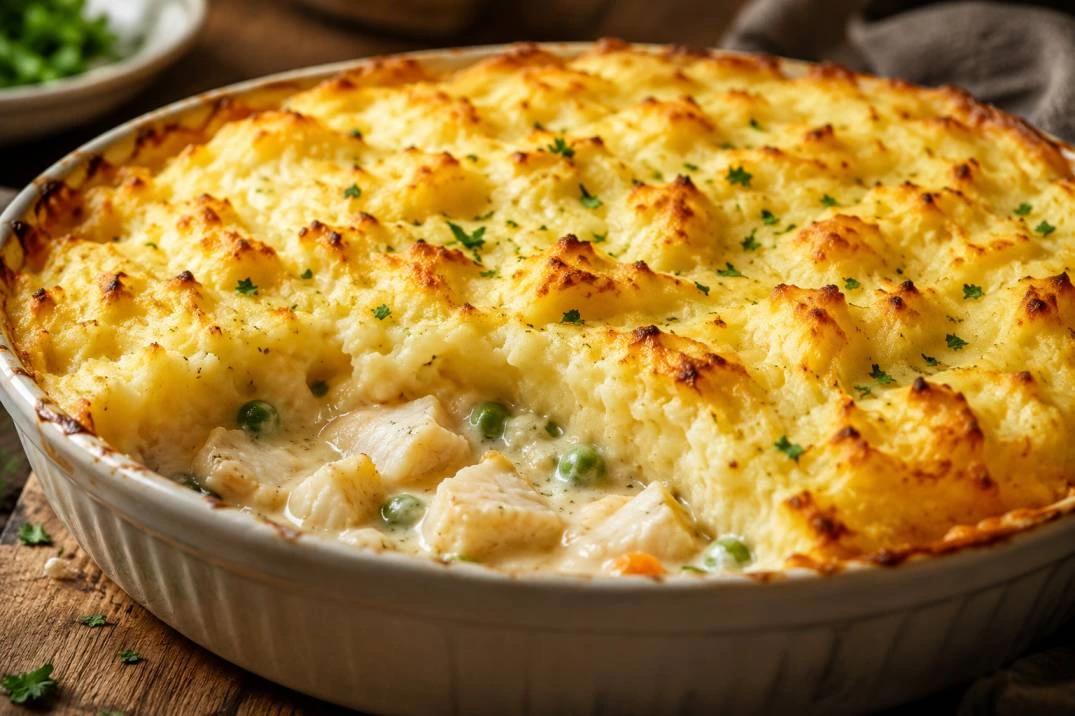
Step 5 — Top and bake. Spoon or pipe the mashed potato over the top, right to the edges to seal in the filling. Rough it up with a fork for extra crunch, scatter over the remaining cheddar, and bake for 25–30 minutes until golden on top and bubbling at the edges.
Step 6 — Rest, then serve. Let it sit for 5 minutes before serving — this gives the sauce a chance to settle rather than run everywhere the second you dig in. A side of peas or buttered greens is really all it needs.
Common Mistakes Worth Avoiding
- Overcooking the fish beforehand — it will finish cooking in the oven, so slightly underdone at the poaching stage is exactly right.
- A sauce that’s too thin — if it doesn’t coat the back of a spoon before you add the fish, cook it a little longer.
- Skipping the seasoning — taste the sauce before assembling, not after baking.
- Mash straight from the pan — very hot, wet mash can sink into the filling instead of sitting on top.
Proper Fish Pie
Ingredients
Notes
Frequently Asked Questions:
Should I cook fish before putting it in fish pie?
Yes. Poaching the fish briefly first — just until barely cooked — stops it releasing water into the sauce during baking, which is what causes a watery, split filling. It also lets you use the poaching milk to build a well-flavoured sauce.
What are the ingredients for a classic fish pie?
A classic fish pie centres on white fish (cod or haddock), smoked haddock for depth of flavour, and prawns, bound together in a butter-and-flour white sauce made with milk, then topped with buttery mashed potato and a scattering of cheddar. Hard-boiled egg and fresh parsley are traditional additions in many British households.
Should fish pie have eggs in it?
It’s optional, but a longstanding tradition in classic British versions. Quartered hard-boiled eggs add a gentle richness and a bit of visual contrast when the pie is cut into. If you’re not keen, it’s just as good without — the pie won’t lose any structural integrity either way.
What sauce would you use in a fish pie?
A béchamel-style white sauce is the standard choice: butter and flour cooked together, then loosened with milk (ideally the milk used to poach the fish, for extra flavour) until thick enough to coat a spoon. Some cooks stir through a little mustard, cheese, or a splash of white wine for extra depth.
Made this fish pie? I’d genuinely love to hear how it turned out — whether you stuck to the recipe or made it your own with a different mix of fish. Drop a comment below, and if you’re after more comfort-food classics done properly, have a browse of the rest of the site.