Handmade Cotton Crochet Dish Cloths: Reusable Kitchen Washcloths With Farmhouse Charm
There’s a stack of dishcloths hanging on my oven handle right now, and every single one was made with a hook and a ball of cotton yarn. They’ve outlasted every sponge I’ve ever bought, they look like they belong in the kitchen instead of hiding under the sink, and honestly, they’ve turned dish duty into something I don’t mind doing anymore.
That’s the quiet appeal of a handmade cotton crochet dish cloth. It’s a small project, but it earns its keep in a way few crafts do — durable, washable, plastic-free, and pretty enough to hang out in the open. If you’ve been eyeing that farmhouse-kitchen look with its stacks of neatly folded cotton washcloths and wondering how to get there, this is where to start.
Why Crochet Dish Cloths Belong in a Farmhouse Kitchen
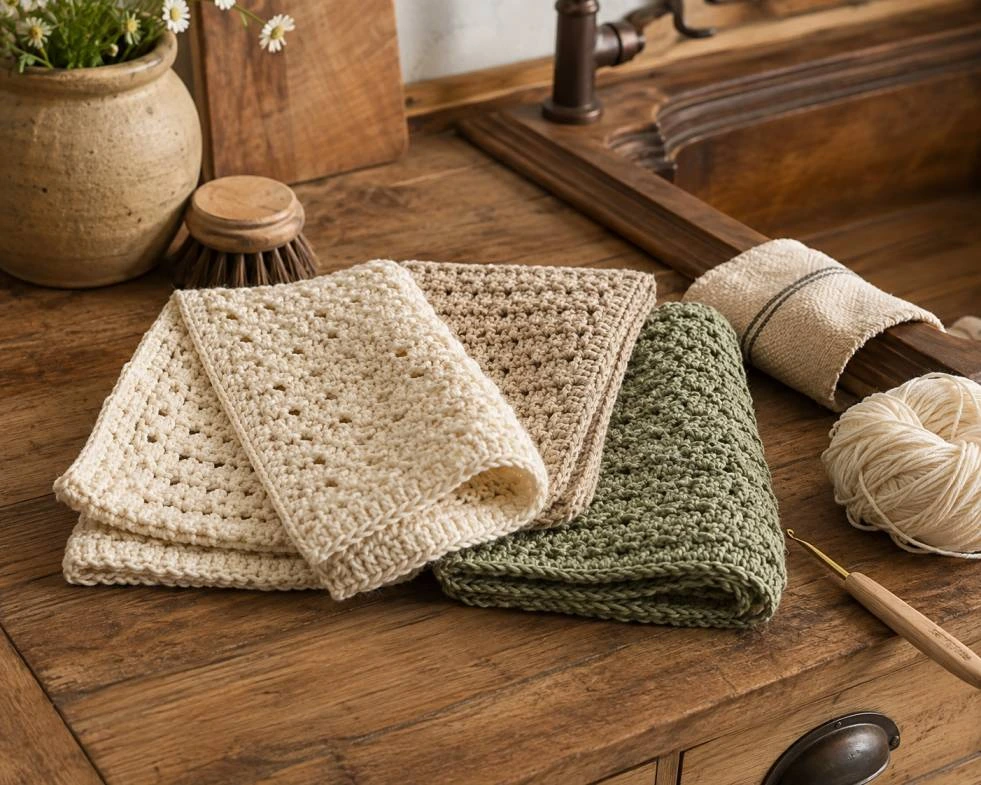
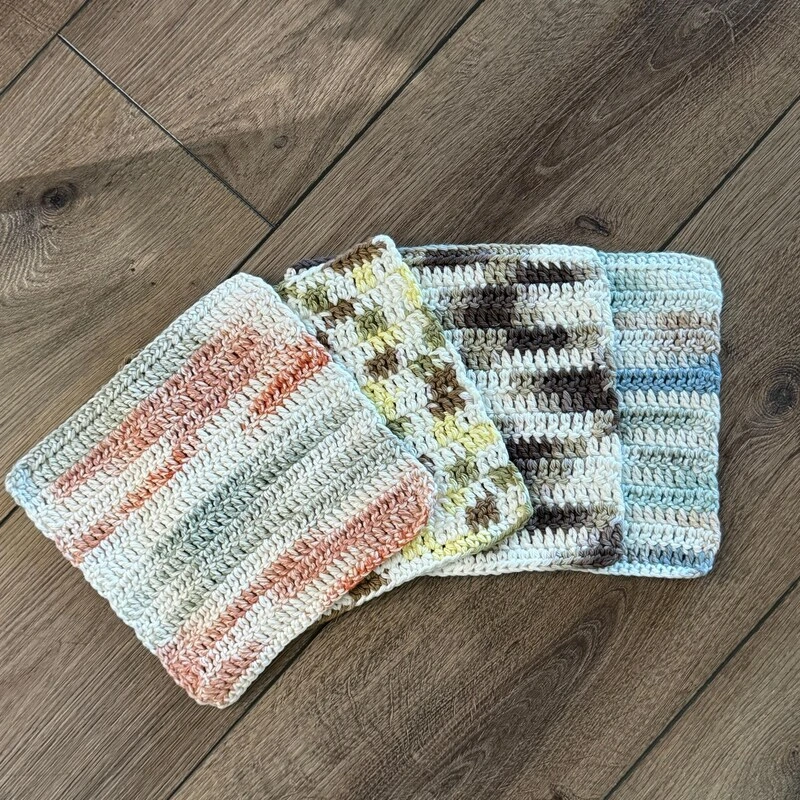
Farmhouse kitchen style leans on texture, warmth, and things that look handmade because they are. A crocheted dish cloth fits that aesthetic naturally — the visible stitch pattern, the slightly rustic edge, the soft neutral or gingham-inspired color palette. Unlike a synthetic sponge, it looks intentional sitting on a windowsill or draped over an oven door handle.
It’s also genuinely functional decor. Cotton dish cloths scrub effectively, dry quickly between uses, and hold up to hot water and repeated washing far better than foam sponges, which tend to break down and harbor odor within weeks. A well-made cotton cloth can last years with basic care.
Why Reusable Cotton Washcloths Are Worth Making
Swapping disposable sponges for reusable cotton washcloths is one of the easiest low-waste changes to make in a kitchen. A single crocheted dishcloth can replace dozens of sponges over its lifespan, since it holds up to machine washing and doesn’t disintegrate the way foam does. Cotton is also biodegradable, breathable, and gentle enough not to scratch nonstick cookware, which is part of why so many home cooks prefer it over synthetic alternatives.
Quick Project Overview
- Project type: Kitchen dish cloth / washcloth
- Difficulty: Beginner-friendly
- Approximate finished size: 8 x 8 inches (easy to size up or down)
- Estimated time: 1 to 2 hours for a beginner
- Yarn weight: Worsted weight (4), 100% cotton
- Hook size: H/8 (5.0mm), adjust based on your tension
- Main technique: Single crochet worked in rows
- Construction: Flat, worked back and forth
Materials and Tools
- 100% cotton yarn — worsted weight cotton is the standard choice for dish cloths because it’s absorbent, sturdy, and holds up to hot water. Mercerized cotton gives a smoother stitch if you want a slightly more polished, farmhouse-store look.
- Crochet hook — H/8 (5.0mm) is a reliable starting point; size up slightly if your stitches feel tight.
- Yarn needle — for weaving in ends neatly.
- Scissors
- Optional: a wooden button or fabric loop — a small farmhouse-style touch for hanging the cloth on an oven handle.
Crochet Abbreviations Used
- ch — chain
- sc — single crochet
- sl st — slip stitch
- st(s) — stitch(es)
Gauge
Exact gauge isn’t critical for a dish cloth the way it is for a garment — a little variation just changes the finished size slightly. That said, keeping your tension even matters, since cotton shows uneven stitches more clearly than softer yarns. Aim for a fabric that feels snug but not stiff.
Simple Cotton Dish Cloth Pattern
This is a classic, beginner-friendly single crochet dish cloth. It’s worked flat in rows and makes an approximately 8 x 8 inch square using worsted weight cotton and an H/8 hook. Feel free to adjust the starting chain to size the cloth up or down — just keep the chain count and check that your fabric stays square as you go.
Instructions:
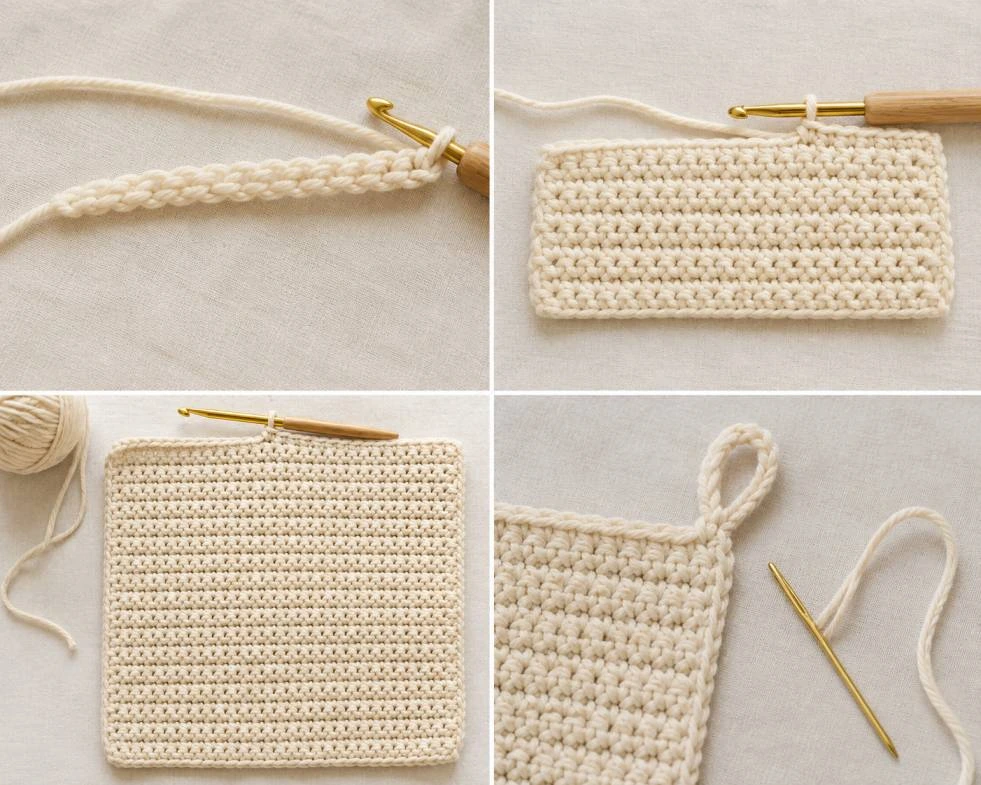
Row 1: Chain 31. Make a single crochet in the second chain from the hook and continue to do so in each chain across. (30 sc)
Rows 2 to 30: Chain 1, turn. Single crochet in each stitch across. (30 sc per row)
Repeat Row 2 until your cloth is square, checking periodically by folding the bottom corner up to meet the top edge. Most crocheters land somewhere between 28 and 32 rows depending on tension.
Finishing: Fasten off, leaving a 6 inch tail. Weave the tail in securely using your yarn needle. If you’d like a hanging loop, chain 8 to 10 stitches from one corner before fastening off, then slip stitch back down into the corner to form a loop, and weave in the end.
Farmhouse Styling Tips
- Stick to a warm, muted palette. Cream, sage, dusty blue, and soft terracotta all read as farmhouse rather than bright primary colors.
- Add texture with a simple border. A single round of slip stitch or a picot edge around the finished square adds a handmade, boutique-style finish.
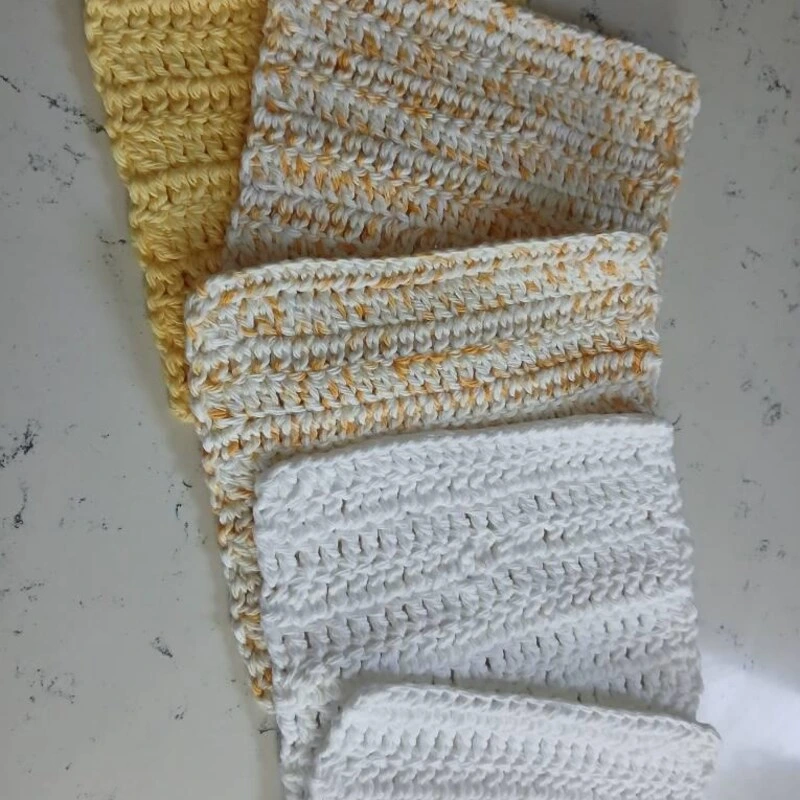
- Make a matching set. A stack of two or three cloths in coordinating colors, tied with jute twine, makes a charming hostess or housewarming gift.
- Use stripes sparingly. A single contrast stripe near one edge gives a classic farmhouse ticking-stripe look without overwhelming the simple stitch pattern.
Caring for Your Cotton Dish Cloths
Machine wash on a warm or hot cycle to keep them sanitary between uses, and tumble dry on low or lay flat to preserve their shape. Cotton can shrink slightly the first time it’s washed, so don’t be surprised if your finished cloth tightens up a touch after its first trip through the laundry — this is normal and actually helps the stitches firm up nicely.
Common Mistakes to Avoid
- Skipping the turning chain. Forgetting to chain 1 at the start of each row will throw off your stitch count and pull the edges in.
- Working too tightly. Cotton doesn’t stretch, so overly tight stitches make the cloth stiff and harder to work with. Aim for even, relaxed tension.
- Losing stitches at the edges. Count your stitches every few rows to catch accidental increases or decreases at the turn before they compound.
Frequently Asked Questions
Are crochet dish cloths better than store-bought sponges?
For most kitchen tasks, yes. Cotton crochet cloths are more durable, machine washable, and don’t hold onto odor the way foam sponges do over time, which makes them a popular reusable swap.
What’s the best cotton yarn for crochet dish cloths?
Worsted weight 100% cotton is the standard choice. Mercerized cotton is a popular upgrade for a smoother, slightly glossier finish that also holds farmhouse-style colors beautifully.
How do you wash and care for crochet dish cloths?
Machine wash on warm or hot and either lay flat or tumble dry on low. Expect a small amount of shrinkage on the first wash, which is normal for 100% cotton.
How big should a crochet dish cloth be?
Around 8 x 8 inches is the standard, comfortable size for everyday kitchen use, though many crocheters adjust slightly larger or smaller based on preference.
Start Your First Cloth Today
A simple stack of handmade cotton dish cloths does more for a kitchen than most people expect — practical, plastic-free, and quietly beautiful in that lived-in farmhouse way. Grab a skein of cotton, chain 31, and see how quickly this small project becomes one of your favorites.