Tom Yum Soup for Beginners: A Chef’s No-Fuss Guide to Thailand’s Favourite Soup
Everything you need to know before your first spoonful — and your first attempt in the kitchen.
The first time I made tom yum for someone who’d never tried it, I watched their face go through four stages in about six seconds: surprise, a little panic, delight, then the unmistakable look of someone reaching for a second spoonful before they’d finished the first. That’s tom yum in a nutshell. It doesn’t ease you in. It announces itself — sour, salty, spicy, fragrant, all at once — and somehow the combination just works.
If you’ve only ever had it at a restaurant, or you’ve seen the name on a menu and wondered what you were signing up for, this guide is for you. I’ll walk you through what’s actually in the bowl, why it tastes the way it does, how spicy you should really expect it to be, and then we’ll make a batch together, step by step, no experience required.
Key takeaways
- Tom yum is a hot and sour Thai soup built on lemongrass, galangal, kaffir lime leaves, chilli, lime juice and fish sauce — no single “secret” ingredient, just balance.
- It’s naturally low in carbs and calories, and can be a genuinely healthy meal, especially the clear (non-creamy) version.
- The spice level is fully adjustable — you control the heat, not the other way around.
- Traditional recipes don’t include pork, and the core ingredients are seafood- and plant-based, though “halal” isn’t automatic unless the ingredients and kitchen are certified.
- You can make an excellent version at home in under 30 minutes with ingredients from any well-stocked Asian grocer.
What Is Tom Yum, Really?
Tom yum comes from central Thailand, and the name is almost embarrassingly literal once you know it: “tom” means to boil, and “yum” means mixed or tossed together. That’s genuinely most of the technique — you boil aromatics into a stock, then toss in the rest.
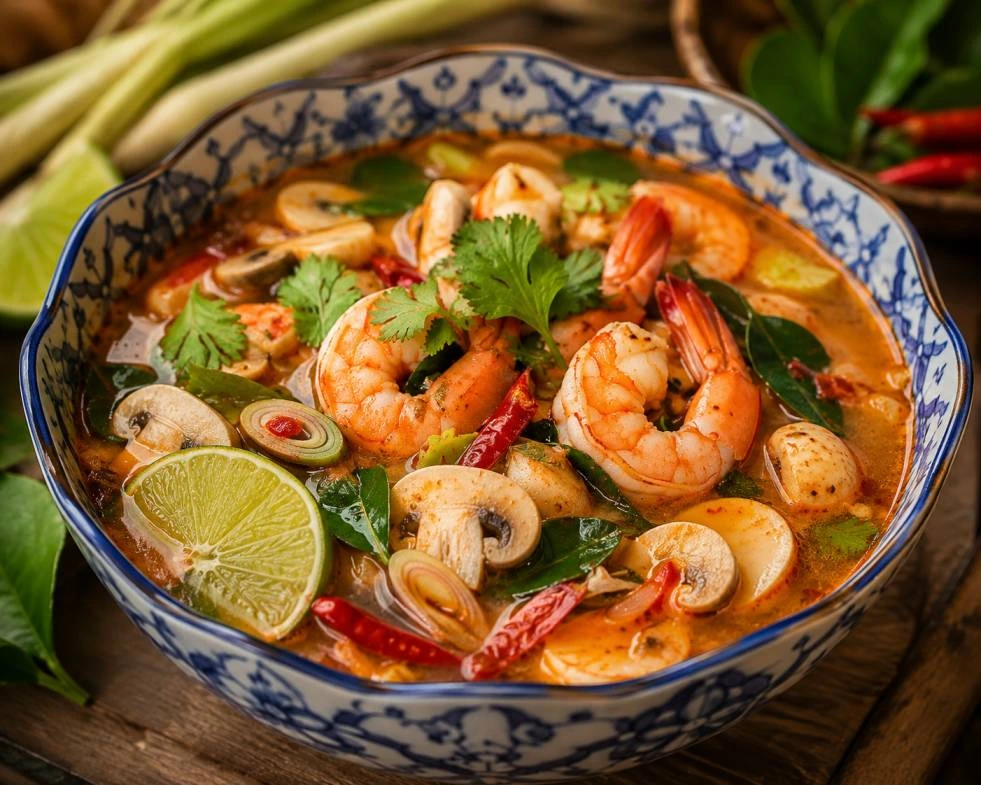
What makes it unmistakably tom yum is a trio of fresh herbs: lemongrass, galangal (a peppery, citrusy cousin of ginger), and kaffir lime leaves, sometimes called makrut lime leaves. Bruise or slice these and simmer them in water or stock, and you’ve got the backbone of the dish before anything else goes in. From there, you build out the flavour with bird’s eye chillies for heat, fish sauce for salt and savouriness, lime juice for sharpness, a touch of sugar to round the edges, and usually mushrooms, tomatoes, and a protein — shrimp is the classic choice, though chicken and mixed seafood are just as common. Some versions add a spoonful of nam prik pao, a roasted chilli paste, for a deeper, slightly smoky richness and a creamier body.
There’s no single “correct” tom yum, either. You’ll find a clear broth version, a creamier version enriched with that chilli paste or evaporated milk, and regional variations that swap in dried fish or different herbs entirely. What stays constant is the balance of sour, salty, spicy and aromatic — that’s the real signature, not any one ingredient.
Why Does Tom Yum Taste So Good?
Here’s the thing that makes tom yum so addictive: it’s hitting almost every taste receptor you have in a single spoonful. Sour from the lime juice, salty and umami-rich from the fish sauce, a background sweetness from the sugar, heat from the chillies, and a wave of citrusy, herbal fragrance from the lemongrass and lime leaves. Your palate doesn’t get a chance to get bored, because the flavour keeps shifting slightly with every bite depending on what you scoop up.
There’s also a textural contrast worth mentioning — the tender shrimp or chicken against the slippery mushrooms, the occasional bite of tomato, all suspended in a broth that’s thin enough to sip but packed with flavour. It reads as “light” even though it’s deeply savoury, which is part of why people crave it, especially when they’re feeling under the weather or just want something that feels both comforting and bright.
Is Tom Yum Very Spicy?
This is the question I get asked most, and the honest answer is: it depends entirely on who’s making it. Restaurant versions can run genuinely hot, since Thai bird’s eye chillies are small but fierce. That said, spice in tom yum isn’t baked in the way it is in, say, a curry paste — it’s added directly, which means you’re in full control when you cook it yourself.
If you’re new to Thai food, start with two chillies instead of the four or five a traditional recipe might call for, and taste as you go. You can always add more heat at the end, but you can’t take it out once it’s in. A squeeze of extra lime juice or a bit more sugar can also help round off any spice that gets away from you. Compared to a red or green curry, tom yum’s heat tends to feel sharper and more immediate rather than lingering, because it’s not cushioned by coconut milk — unless you’re making the creamy version, which mellows things out considerably.
Is Tom Yum Soup Healthy?
Generally, yes — particularly the clear broth version. It’s built on lean protein, herbs, mushrooms and a light stock rather than cream or oil, so it tends to be low in calories and carbohydrates while being high in flavour. The fresh herbs — lemongrass, galangal, lime leaves, chilli — are also staples of traditional cooking associated with digestive and anti-inflammatory benefits, which is part of why tom yum has a long-standing reputation in Thailand as a good soup to eat when you’re feeling run down.
The main things to watch are sodium, since fish sauce is salty, and the creamy version, which adds calories and fat if you’re watching your intake. If health is a priority, stick to the clear broth, go easy on the fish sauce, and load up on mushrooms and vegetables.
Let’s Make It: Tom Yum Goong, Step by Step
This is the shrimp version — tom yum goong — which is the most widely eaten style both in Thailand and abroad. It serves two as a main, or four as a starter, and takes about 25–30 minutes start to finish.
Recipe Title: Easy Tom Yum Soup Recipe
Ingredients
Method:
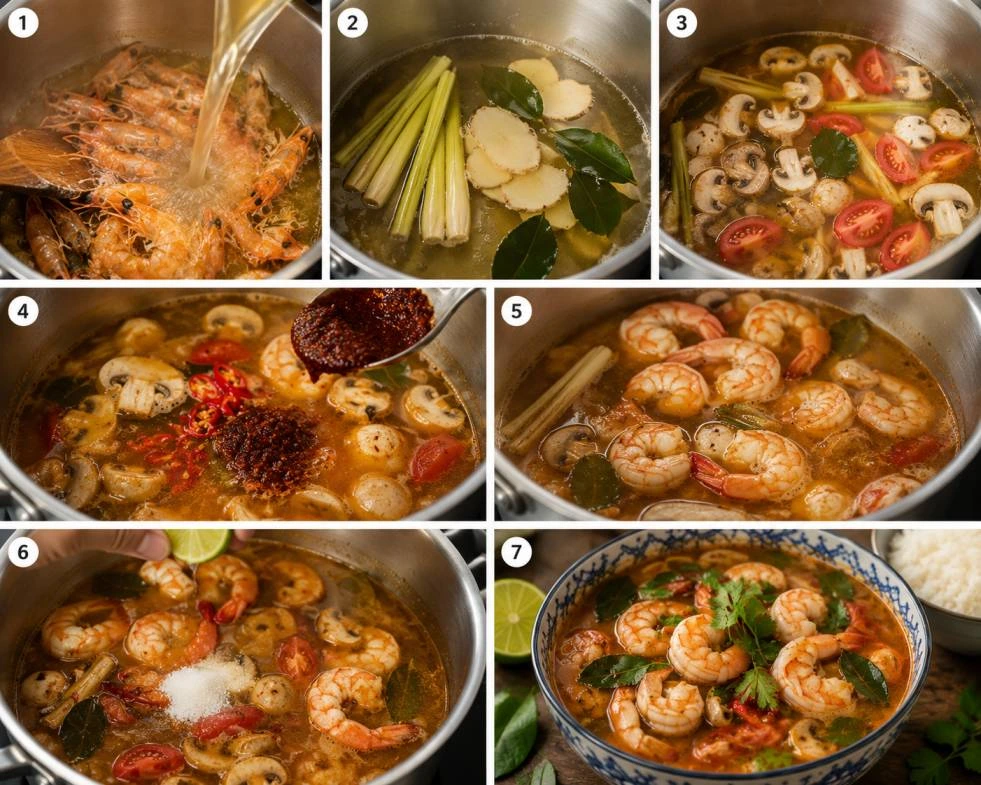
- Build the stock. If you’re using shrimp shells, sauté them briefly in a little oil until pink and fragrant, then add your water or stock and simmer for 10 minutes before straining. If you’re skipping this, just start with the stock as your base.
- Infuse the aromatics. Bring the stock to a boil and add the lemongrass, galangal, and half the kaffir lime leaves. Simmer for 5 minutes to let the flavours release.
- Add the vegetables. Stir in the mushrooms and tomato, and simmer for another 2–3 minutes until the mushrooms soften slightly.
- Season the broth. Stir in the fish sauce, chillies, and nam prik pao if using. Taste as you go — you’re aiming for a balance of sour, salty and spicy, not one flavour dominating.
- Cook the shrimp. Add the shrimp and let them cook for 1–2 minutes, just until pink and opaque. Don’t overcook — they’ll turn rubbery fast.
- Finish off the heat. Remove the pot from the heat before stirring in the lime juice and sugar. Adding lime juice off the heat keeps its brightness from cooking away.
- Serve immediately. Ladle into bowls, scatter over the coriander and remaining lime leaves, and serve hot with steamed jasmine rice on the side.
A few notes from experience
Don’t eat the lemongrass, galangal, or lime leaves directly — they’re there for flavour, not for chewing, and they’re tough as anything. Push them to the side of your bowl as you go. If you can’t find galangal, fresh ginger is an acceptable substitute in a pinch, though the flavour profile will shift slightly sweeter and less peppery. And if raw shrimp isn’t available, chicken thigh, sliced thin, works beautifully — just simmer it a couple of minutes longer to make sure it’s cooked through.
Frequently Asked Questions:
What is tom yum made of?
At its core, tom yum is built on a stock infused with lemongrass, galangal and kaffir lime leaves, then seasoned with fish sauce, lime juice, sugar and chilli. Mushrooms, tomatoes and a protein — most often shrimp, sometimes chicken or mixed seafood — round out the bowl. Some versions add roasted chilli paste for a creamier, richer finish.
Is tom yum very spicy?
It can be, but it doesn’t have to be. Heat comes from bird’s eye chillies added directly to the broth, so when you’re cooking it yourself, you decide how many go in. Restaurant versions vary widely in spice level, so it’s always worth asking before you order if you’re heat-sensitive.
Is tom yum soup halal?
Traditional tom yum doesn’t call for pork or alcohol, and its main ingredients — shrimp, fish sauce, herbs and vegetables — are generally considered halal. That said, “halal” as a certification depends on how the ingredients were sourced and prepared, not just the recipe itself, so if that matters to you, it’s worth checking with the specific restaurant or brand rather than assuming based on the dish name alone.
Is tom yum soup healthy?
Yes, particularly the clear broth version — it’s light, low in carbohydrates, and built around lean protein, herbs and vegetables rather than cream or oil. The main thing to watch is sodium from the fish sauce, and the creamier variations will naturally be higher in calories than the classic clear broth.
Give it a try this week
Tom yum has a reputation for sounding more intimidating than it is. Once you’ve got the aromatics simmering and you taste that first balance of sour and spicy hit you, you’ll understand exactly why it’s one of Thailand’s most-loved dishes. Make a batch, adjust the chilli to your own taste, and don’t be afraid to tinker — that’s exactly how every good home cook finds their own version of this soup.
Made it? I’d love to hear how it turned out and what you tweaked — drop a comment below or share a photo of your bowl.