The Secret to Restaurant-Quality Seafood Bisque (Even If You’ve Never Made One Before)
I still remember the first time I tried to make bisque at home. I’d eaten it a dozen times in restaurants — that velvety, deep-orange soup that tastes like the ocean decided to become silk — and I figured, how hard can it be? It’s just soup, right?
Three hours, one scorched pot, and a kitchen that smelled like a dockside bonfire later, I had my answer: bisque is not “just soup.” But here’s the good news. Once you understand the handful of techniques that actually matter, it stops being intimidating and starts being one of the most satisfying things you’ll ever cook. That’s what I want to walk you through today — not just a recipe, but the “why” behind it, so you can make this dish with confidence the very first time.
Key Takeaways Before You Start
- Bisque gets its signature richness from a shellfish stock built on shells and aromatics — not from the meat itself.
- Cream and a small amount of rice or roux are what give bisque its silky, spoon-coating texture.
- Low, slow simmering extracts flavor from shells; boiling hard actually ruins it.
- A traditional bisque is always strained to a smooth, lump-free finish — that’s non-negotiable.
- You can make an excellent bisque with shrimp shells alone, so don’t let “lobster” in the name scare you off.
What Actually Makes a Bisque a Bisque?
Here’s the thing most beginner cooks get wrong: they think bisque is just a fancy word for creamy seafood soup. It isn’t. A true bisque is a specific technique passed down from classic French cooking. It’s built on a stock made from crustacean shells — shrimp, crab, lobster, or a mix — simmered with vegetables and wine until every bit of flavor has been coaxed out. That stock is then thickened, usually with a touch of rice or a light roux, and finished with cream, then strained until it’s completely smooth.
That straining step is what separates bisque from chowder. Chowder is chunky and rustic on purpose, with pieces of potato, seafood, and vegetables left in the bowl. Bisque, by contrast, is pureed and passed through a sieve until there’s not a single lump left. Think of chowder as a hearty sweater and bisque as a silk scarf — both keep you warm, but they’re doing very different jobs.
The Ingredients You’ll Actually Need
You don’t need a dozen exotic ingredients to make great bisque. What you need is quality shellfish shells, because that’s where the flavor lives. Here’s what I use for a classic seafood bisque that serves four to six people
Notice there’s no flour in this list. That surprises a lot of home cooks. Rice, simmered right into the stock and blended smooth, gives bisque its body without the pasty texture flour can leave behind. It’s an old technique, and honestly, it’s the one that took my bisque from “good” to “restaurant-good.”
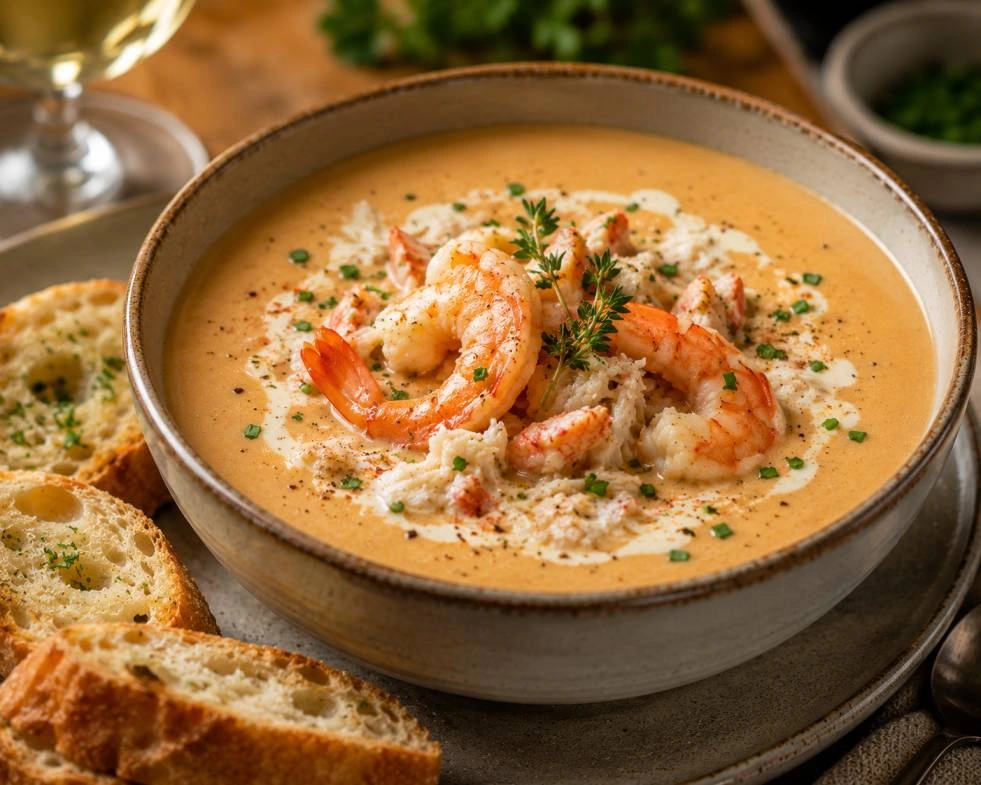
Restaurant-Quality Seafood Bisque – Easy & Creamy
Ingredients
Notes
Let’s Make It: Step-by-Step Seafood Bisque:
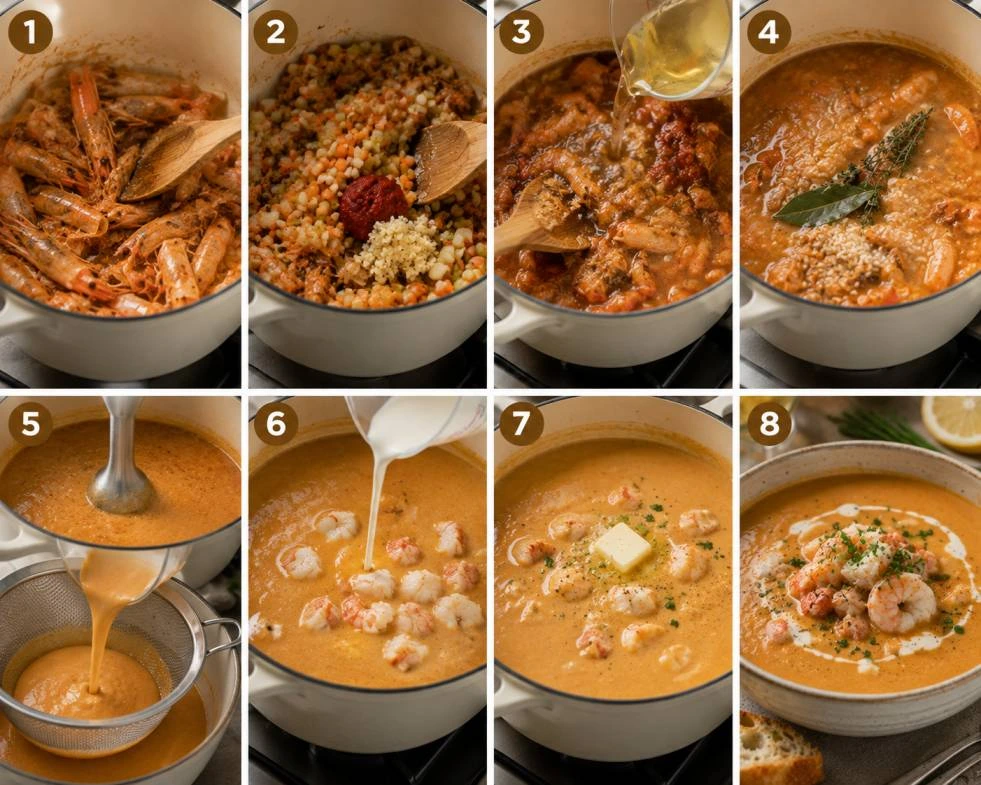
- Build the shellfish stock. Melt 2 tbsp butter in a large pot over medium heat. Add the shrimp shells and cook, stirring often, for 4-5 minutes until they turn pink and smell toasty. This step is where the flavor foundation gets laid, so don’t rush it.
- Sauté the aromatics. Add the onion, carrot, and celery to the pot. Cook for 6-8 minutes until softened. Stir in the garlic and tomato paste, and cook for another minute until the paste darkens slightly — this deepens the flavor considerably.
- Deglaze. Pour in the brandy (if using) and let it bubble for about 30 seconds, scraping up any browned bits from the bottom of the pot. Add the white wine and allow it to reduce by half, which should take approximately 3 minutes.
- Simmer the stock. Include the seafood stock, rice, bay leaf, and thyme.. Bring to a gentle simmer — not a rolling boil — and let it cook uncovered for 25-30 minutes, until the rice is very soft and the shells have released their flavor.
- Strain and blend. Remove the bay leaf and thyme sprig. Working in batches if needed, blend the stock (shells and all) until completely smooth, then pass it through a fine-mesh sieve into a clean pot, pressing down to extract every drop of flavor. Discard what’s left in the sieve.
- Add the cream and seafood. Return the strained bisque to low heat. Stir in the heavy cream and bring to a gentle simmer. Add your seafood meat and cook for 3-5 minutes, just until opaque and tender — overcooking here is the most common beginner mistake.
- Finish and season. Stir in the remaining 2 tbsp of butter for shine and richness. Season with salt and white pepper to taste. White pepper matters more than you’d think — it seasons without leaving black flecks in that gorgeous orange soup.
- Serve immediately. Ladle into warm bowls, and finish with a drizzle of cream, a few chives, or a splash more sherry if you’re feeling fancy. Bisque doesn’t reheat beautifully, so this is a dish best enjoyed fresh from the stove.
A Few Things I Wish Someone Had Told Me
Don’t boil your stock hard — a hard boil emulsifies fat into the liquid in a way that makes the final bisque taste greasy instead of silky. Keep it at a lazy simmer, the kind where you see a few bubbles breaking the surface, not a churn.
Also, don’t skip the straining step even if you’re tempted to save time. It’s tedious, sure, but it’s the difference between a soup that coats the spoon like velvet and one that just tastes like tomato-y seafood water. Trust the process here.
And if lobster is out of your budget this week, don’t sweat it. Shrimp shells alone make a fantastic bisque. The “lobster bisque” you’ve had at a nice restaurant is really about technique, not the specific shellfish — so feel free to work with whatever’s fresh and reasonably priced at your fish counter.
Frequently Asked Questions About Seafood Bisque:
What’s the secret to the best bisque?
It really comes down to two things: a stock built from real shellfish shells simmered low and slow, and a final straining step that removes every trace of texture. Skip either one, and you’ll end up with a soup that’s tasty but not true bisque.
What are the ingredients for seafood bisque?
At its core, bisque needs shellfish shells for stock, aromatics like onion and celery, a small amount of rice or roux for thickening, wine for depth, and cream to finish. The seafood meat itself — shrimp, crab, or lobster — is really the final touch, not the foundation.
What is the difference between a seafood chowder and a seafood bisque?
Chowder is chunky, rustic, and left unstrained, with visible pieces of seafood, potato, and vegetables. Bisque is pureed and passed through a sieve until it’s completely smooth, giving it that signature silky texture chowder doesn’t have.
What makes a traditional bisque a bisque?
Three things define a classic bisque: a stock made from crustacean shells (not just meat), a thickener like rice or a light roux rather than heavy starch, and a final straining that leaves the soup perfectly smooth. Miss any of these, and it’s more of a creamy seafood soup than a true bisque.
Give It a Try This Weekend
Bisque has a reputation for being a “special occasion, leave it to the professionals” dish, and I get why — but it really isn’t out of reach. Once you recognize that the shells are carrying the main load and that the effort is essential, everything else becomes clear.. Pick a weekend afternoon, put on some music, and give this a shot. When you have the first spoonful of your homemade bisque, the allure of it being a ‘fancy restaurant dish’ fades away, and you may find yourself questioning why you didn’t try making it earlier.
Made it? I’d love to hear how it turned out and what you paired it with — drop a comment below or share a photo. Nothing beats hearing that someone’s first bisque turned out exactly the way they hoped.