How to Cook Chicken Gravy From Scratch (No Lumps, No Stress)
A step-by-step guide for first-timers, from a working chef’s kitchen notes.
I’ve watched more home cooks panic over gravy than over the chicken itself. It’s almost funny — you can roast a bird to perfection and then completely tense up the moment someone hands you a saucepan and says “just make the gravy.” Here’s the truth: gravy is one of the most forgiving things you’ll ever cook. It just has a reputation problem.
The whole process comes down to two ingredients doing a little dance — fat and flour — followed by liquid and patience. That’s it. No whisking marathon, no secret culinary degree required. Once you understand why gravy lumps or thins out, you stop fighting it and start controlling it. So let’s get you there.
What You’ll Need
This makes about 2 cups of gravy — enough to cover a weeknight roast chicken or a full Sunday dinner spread, with a little extra for seconds.
The Method, Step by Step
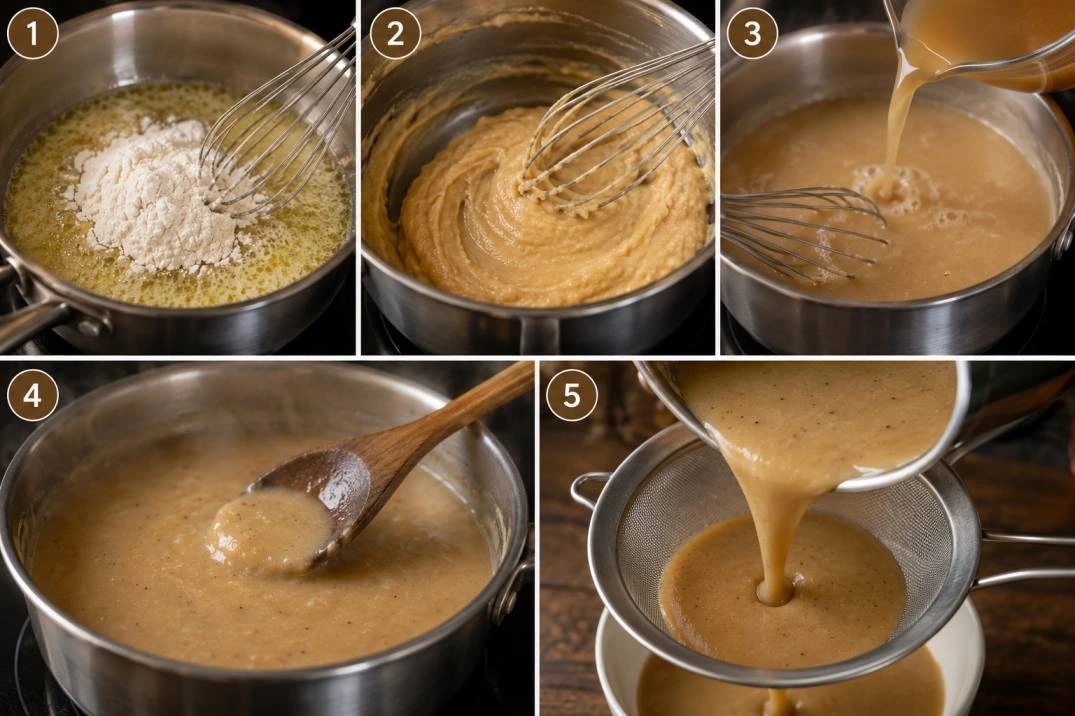
1 – Build your roux.
Melt the butter in a saucepan over medium heat. Once it’s fully melted and just starting to bubble, whisk in the flour all at once. Whisk the mixture for approximately 2 minutes. During this time, the raw flour flavor will cook off, and the color will change from pale yellow to a light biscuit color. Don’t walk away here; this is the one step that actually needs your attention.
2 – Add the stock slowly.
Lower the heat slightly and pour in the warm stock in small splashes, whisking constantly between each pour. This is the step everyone rushes, and rushing it is exactly how lumps happen. Adding it gradually lets the roux absorb the liquid smoothly instead of clumping up in protest.
3 – Let it simmer and thicken.
.Once all the stock is in, bring the gravy to a gentle simmer — small bubbles, not a rolling boil. Let it cook for 6 to 8 minutes, stirring every minute or so. You’ll feel it thicken against the spoon; that’s the flour fully activating.
4 – Season as you go.
Stir in the salt, pepper, thyme, and soy sauce or Worcestershire. Taste it. Gravy is one of those rare dishes where you genuinely get to keep adjusting until it’s right — there’s no point of no return.
5 – Finish and strain
For an ultra-smooth, restaurant-style texture, stir in the milk or cream and pass the gravy through a fine mesh strainer before serving. This step is optional, but if you’ve ever wondered how restaurant gravy feels so much silkier than homemade, this is usually the answer.
Chef’s note: If your gravy turns out too thick, whisk in warm stock a tablespoon at a time until it loosens. Too thin? Simmer it a few minutes longer uncovered — the water will cook off and it’ll tighten right up. Never fix consistency with cold liquid; it shocks the starch and you’ll end up with a grainy texture instead of a smooth one.
Why This Method Actually Works
Most gravy disasters trace back to one of two mistakes: adding cold liquid to a hot roux, or adding it too fast. Cold liquid causes the fat to seize up before it can blend properly, and that’s your lump right there. Pouring everything in at once overwhelms the roux before it has a chance to absorb the liquid evenly. Slow down at that one step, and the rest of the process basically takes care of itself.
As for that splash of soy sauce or Worcestershire — that’s not a traditional gravy ingredient, and you won’t taste it directly. What it does is add depth, the kind you’d otherwise only get from hours of slow-roasted drippings. It’s the difference between gravy that tastes “fine” and gravy people ask you about at dinner.
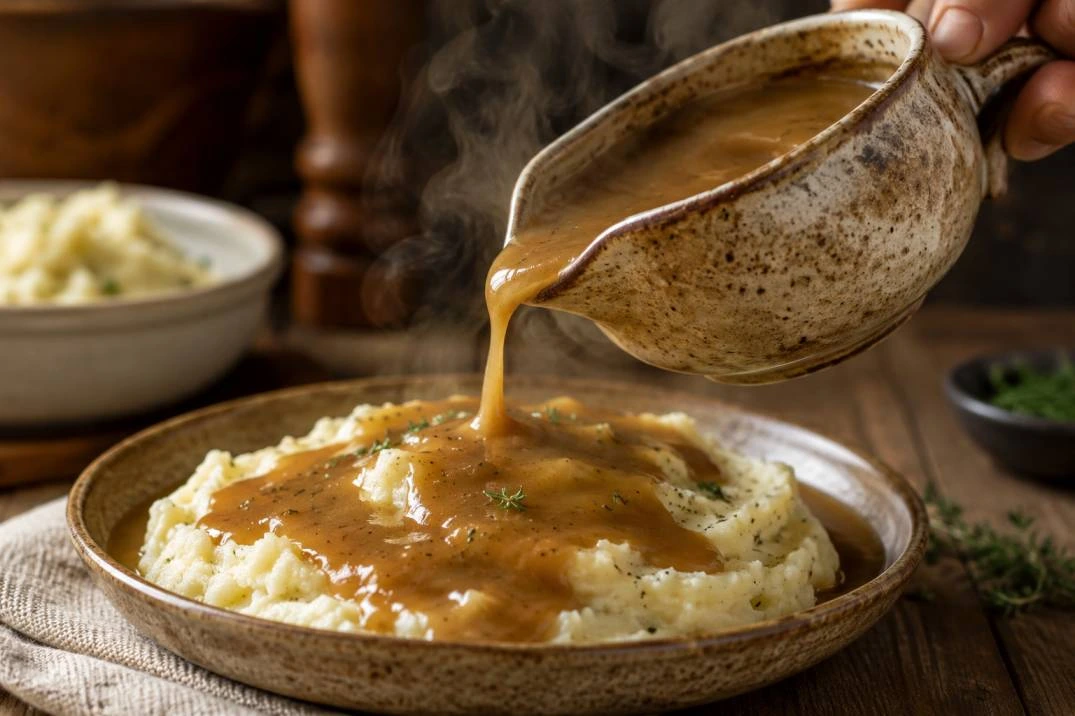
Chicken Gravy From Scratch (No Lumps, No Stress)
Ingredients
Frequently Asked Questions
What are the most common mistakes people make with chicken gravy?
The biggest one is adding cold stock straight from the fridge — it causes the roux to clump instead of blend. A close second is impatience: pulling the gravy off the heat before it’s had time to simmer and thicken, which leaves it watery. Skipping the initial roux-cooking step is another common one; an undercooked roux leaves a raw, pasty flavor behind that no amount of seasoning fixes.
Is there a real “secret ingredient” for good gravy?
If there’s one, it’s umami depth, not a single magic item. A small amount of soy sauce, Worcestershire, or even a spoonful of miso adds savoriness without making the gravy taste like anything other than chicken gravy. Some cooks swear by a splash of dry sherry or a pat of cold butter whisked in right at the end for shine — both work, but they’re refinements, not requirements.
Can you eat gravy if you have acid reflux or GERD?
It depends on how it’s made. Gravy built on butter, heavy cream, or a lot of black pepper can be a trigger for some people with GERD, since fatty and spicy foods are common culprits. A lighter version — using a modest amount of olive oil instead of butter, skipping the cream, and going easy on pepper — is generally easier on the stomach. As always, individual triggers vary, so it’s worth paying attention to your own response rather than following a blanket rule.
How do you make a diabetic-friendly gravy?
The good news is that a basic flour-and-stock gravy is naturally low in sugar, so the main thing to watch is portion size and what it’s served over. To make it lighter, you can cut the butter back and use a low-sodium stock, or substitute a portion of the flour with a cornstarch slurry, which thickens with less of it. Pairing it with a high-fiber side, like roasted vegetables instead of mashed potatoes, helps keep the overall meal more blood-sugar-friendly.