Panda Pixel Art Crochet: A Fun, Modern Way to Make a Panda in Yarn
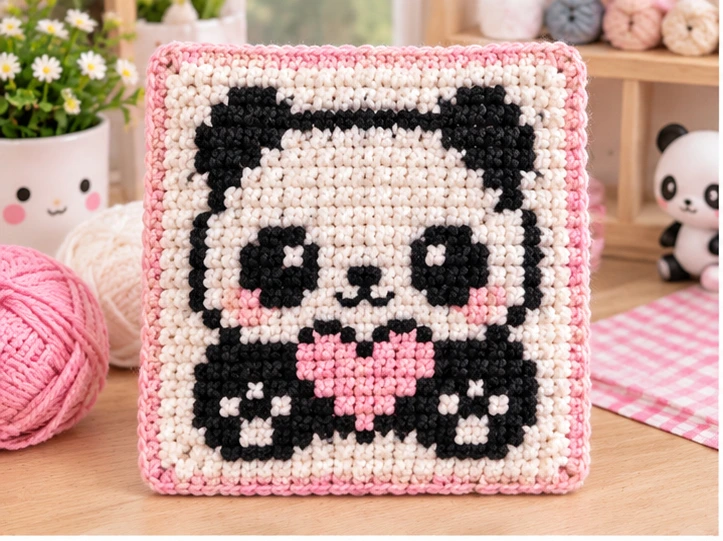
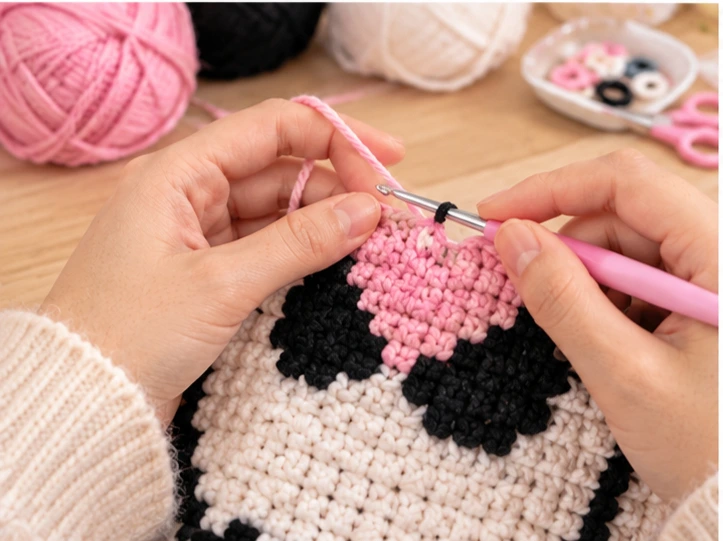
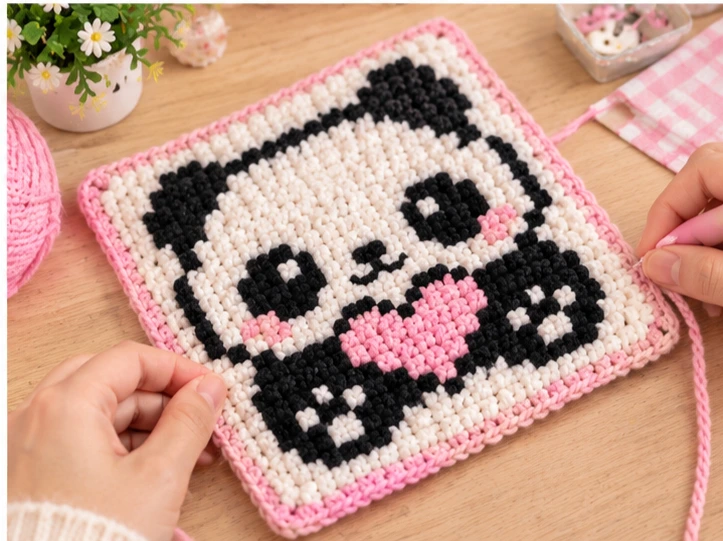
If you’ve been scrolling through crochet inspiration lately, you’ve probably noticed a growing trend of colorful, blocky, retro-style designs. Panda pixel art crochet is one of the most charming versions of this style — a panda face or figure built entirely from small, uniform stitches that come together like a mosaic. Instead of shaping a panda through rounds of increases and decreases the way you would with amigurumi, pixel art crochet treats each stitch like a tiny pixel on a screen, letting you “draw” the panda’s black-and-white markings row by row.
This project is popular for a reason. It’s approachable for beginners who already know a few basic stitches, it’s endlessly customizable, and it produces a piece that looks just as good hanging on a wall as it does stitched onto a bag or turned into a coaster.
What Makes This Crochet Project Special
Pixel art crochet works a lot like cross-stitch or graph-paper drawing. You follow a grid pattern, where each square represents one stitch in a specific color, and the stitches are worked in straight rows or columns using either the single crochet or corner-to-corner (C2C) technique. Because pandas have such a recognizable black-and-white pattern — round ears, dark eye patches, and a mostly white face and body — they translate beautifully into this blocky style.
Part of the appeal is how forgiving it is. Unlike shaping a rounded amigurumi panda, where every increase and decrease has to line up perfectly to keep the head symmetrical, pixel crochet is really just following a chart. If you can single crochet in straight rows and change colors cleanly, you can make a recognizable panda design.
Materials You May Need
Because exact specifications depend on the size and format of the panda design you’re working from (a small coaster-sized piece versus a larger wall hanging, for example), here’s a general list of what most pixel art crochet projects call for:
- Worsted weight cotton or acrylic yarn in black, white, and a small amount of an accent color if desired
- A crochet hook sized appropriately for your yarn weight (commonly a size that gives you a nice firm, even fabric — check your yarn label for a suggested hook size)
- A yarn needle for weaving in ends and joining color sections
- Scissors
- Stitch markers, especially useful for keeping track of rows in C2C
- A pixel grid or graph pattern of the panda design you want to make
- Optional: a small amount of stuffing and felt or safety eyes if you’re turning the design into a stuffed piece rather than a flat one
If you’re working from a specific pattern, always double-check the recommended yarn and hook size listed there, since pixel art gauge can shift the finished size quite a bit.
How to Make It
Choose or Create Your Panda Grid
Start with a pixel chart of the panda design, either from a pattern you’ve purchased, a free graph you’ve found, or one you’ve mapped out yourself on graph paper. Each square on the grid corresponds to one stitch in your project.
Pick Your Technique
Most panda pixel art crochet pieces are made using one of two methods:
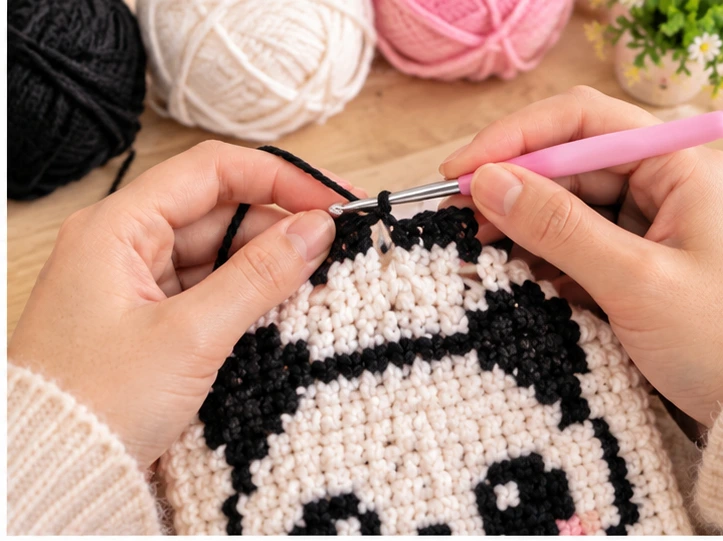
- Single crochet in rows, working back and forth and changing colors as the chart dictates
- Corner-to-corner (C2C), which builds the design diagonally using clusters of double crochet stitches
Choose whichever method you’re more comfortable with — both can produce a clean pixelated look.
Work Row by Row
Follow the chart from the bottom up (or corner to corner, if using C2C), switching yarn colors exactly where the pattern indicates. Keep your stitch count consistent in every row so the grid stays aligned and the panda’s shape doesn’t distort.
Manage Your Color Changes
Carry unused colors loosely along the back of your work if they’ll be needed again soon, or cut and rejoin yarn for larger color blocks. Clean color changes are what make the pixel effect look sharp instead of blurry.
Finish the Edges
Once you’ve completed the chart, work a border round if your pattern calls for one, then weave in all your ends securely on the wrong side of the fabric.
Optional: Turn It Into a 3D Piece
If you’d like a plush panda rather than a flat design, you can crochet two matching pixel panels, stitch them together around the edges, and stuff before closing — turning your pixel art into a soft pillow-style panda.
Tips for a Better Result
- Use a smooth, consistent yarn weight throughout so your stitches stay uniform and the pixels line up cleanly.
- Keep your tension even, especially when switching colors, since tight or loose stitches will distort the grid.
- Stick to high-contrast colors (true black and white work best) so the panda’s markings read clearly from a distance.
- Block your finished piece if it’s flat, gently steaming or pinning it into shape to square off the edges.
- Count your stitches at the end of every row while you’re learning the technique — it’s much easier to catch a mistake early than to unravel several rows later.
Top 4 Crochet Trends
Pixel Art and Graphic Crochet
Blocky, pixelated designs inspired by retro video games and cross-stitch charts have become a popular way to combine crochet with graphic, illustrative imagery. You can lean further into this trend by adding a pixelated background pattern or border around your panda instead of leaving it on a plain background.
Nostalgic Animal Motifs
Cute, recognizable animals like pandas continue to be a favorite subject in handmade crafts because they appeal to a wide range of makers and gift recipients. Consider pairing your panda with a simple bamboo motif nearby for extra charm.
Functional Fiber Art
Crocheters are increasingly turning decorative pieces into everyday functional items — coasters, tote bag patches, pillow covers, and wall hangings. Your panda pixel design works well mounted in a hoop frame or sewn onto a plain canvas bag.
Mini and Miniature Makes
Small-scale crochet projects that can be finished in a sitting or two remain popular for quick, satisfying makes. A smaller panda pixel grid makes an easy keychain or patch version of this design.
Styling and Ideas
A finished panda pixel art crochet piece has a lot of practical uses. Frame it in an embroidery hoop as wall art, sew it onto the front of a tote bag or pillow, turn it into a coaster set, or stitch a smaller version into a keychain or bag charm. It also makes a thoughtful handmade gift for panda lovers, kids’ rooms, or nursery decor when made with soft, washable yarn.
FAQs
Is panda pixel art crochet good for beginners?
Yes. As long as you’re comfortable with basic single crochet or double crochet stitches and can follow a chart, pixel art crochet is one of the more beginner-friendly styles because it doesn’t require complex shaping.
What’s the difference between pixel art crochet and amigurumi?
Amigurumi is typically worked in the round with increases and decreases to create a 3D, rounded shape. Pixel art crochet is usually worked flat, in straight rows or diagonally, to recreate a graphic image using colored “pixels” of stitches.
Can I design my own panda pixel pattern?
Yes. You can sketch a panda on graph paper, use pixel-art design software, or adapt an existing image into a simple black-and-white grid, then translate each square into a stitch.
What yarn works best for this type of project?
A smooth worsted weight cotton or acrylic yarn tends to show pixel definition more clearly than fuzzy or textured yarns, which can blur the edges between colors.
Conclusion
Panda pixel art crochet is a satisfying blend of graphic design and traditional stitchwork, giving you a way to “draw” a beloved animal one stitch at a time. Whether you turn your finished piece into wall art, a bag patch, or a soft plush panda, it’s a project that rewards patience and careful color changes with a genuinely eye-catching result.