The Grape Salad Recipe That Converts Skeptics Into Believers
The first time someone told me grapes belong in a creamy, sugary salad, I laughed. Grapes are a lunchbox fruit. A snack. Something you eat standing over the sink. They are not, I thought, dessert. I was wrong, and I’ve been making up for that mistake ever since.
Grape salad is one of those dishes that sounds strange on paper and makes complete sense in your mouth. It’s part fruit salad, part cheesecake filling, part candied nut bowl — and somehow it all works. If you’ve never made one, or you tried a version once that came out watery or bland, this guide will walk you through exactly how to get it right, step by step, plus answer the questions people ask most often about it.
Key Takeaways
- Grape salad is built on four elements: fresh grapes, a cream cheese base, a sweetener, and a crunchy topping.
- Whole grapes, not halved ones, give the best texture — cutting them turns the salad watery.
- The “secret” most recipes leave out is toasting the nuts before you add them.
- This is a make-ahead dish, but the topping should go on within a few hours of serving.
- It pairs best with grilled or smoked foods, which is why it shows up so often at cookouts.
What Are the Ingredients for Grape Salad?
At its core, grape salad has four working parts, and understanding what each one does makes you a better cook, not just a recipe-follower.
- Grapes — a mix of red and green seedless grapes, washed and completely dried. The contrast in color and sweetness matters more than people expect.
- The cream base — cream cheese, sour cream, and a touch of vanilla. This is what turns loose fruit into an actual salad, with a texture closer to a light cheesecake filling than a dressing.
- Sweetener — granulated sugar in the base, brown sugar on top. The brown sugar does double duty: it sweetens and it helps the topping caramelize slightly against the cold cream.
- Crunch — chopped pecans or walnuts, toasted. This is the ingredient most home cooks skip, and it’s the one that separates a forgettable grape salad from one people ask you to bring every year.
Here’s the full ingredient list for one large bowl, serving 8 to 10 people:
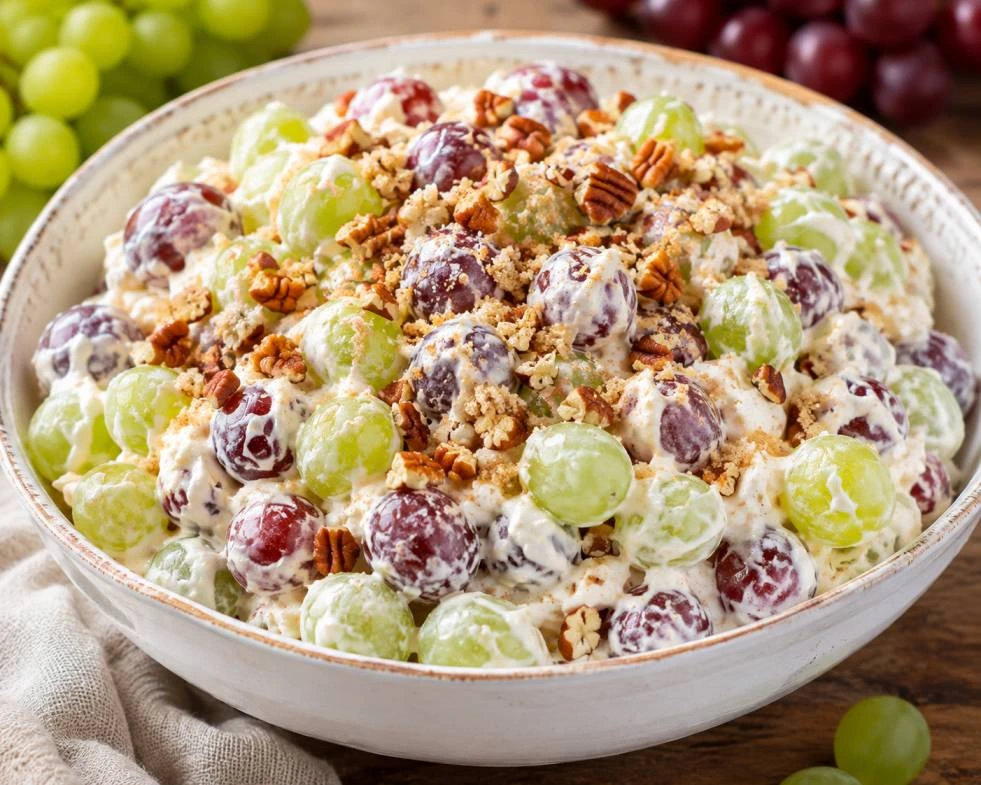
Creamy Grape Salad Recipe
Ingredients
How to Make Grape Salad: Step by Step
This recipe has two phases — the base, and the finish — and they should not happen at the same time. That’s the mistake most people make.
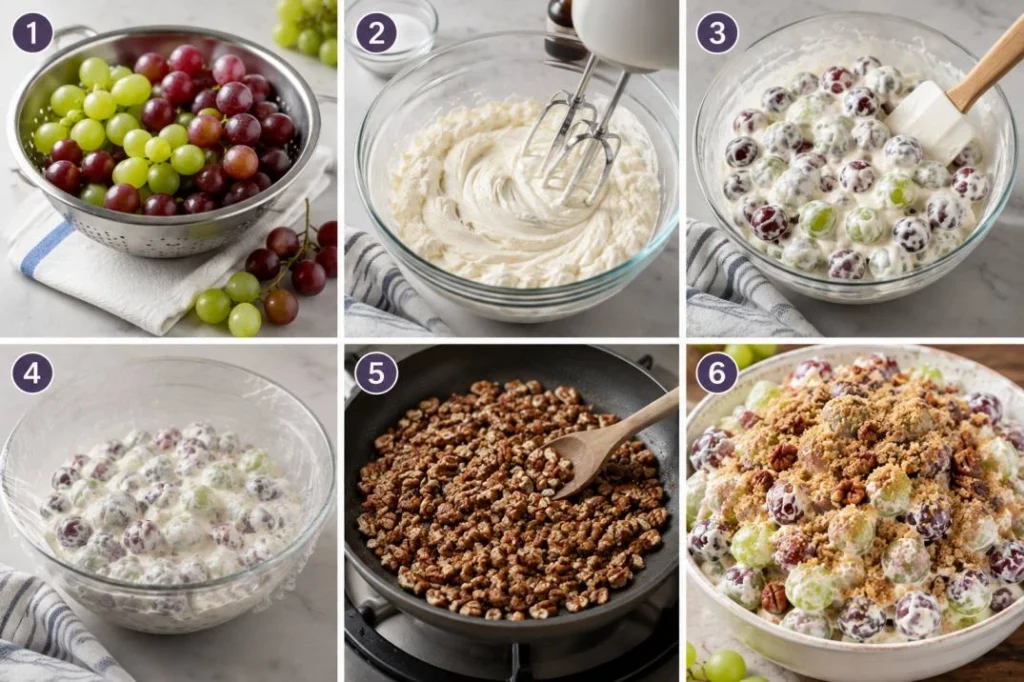
Step 1: Prep the grapes
Wash both varieties of grapes thoroughly, then dry them completely. This step gets skipped constantly, and it’s the single biggest reason grape salads turn watery. Any moisture left on the skin dilutes the cream base as it sits. Pull the grapes off their stems and pat them dry with a clean towel, or let them air dry on paper towels for 15–20 minutes.
Step 2: Build the cream base
In a large mixing bowl, beat the softened cream cheese until it’s smooth with no lumps — a hand mixer makes quick work of this. Add the sour cream, granulated sugar, and vanilla extract. Beat again until the mixture is silky and uniform, scraping down the sides of the bowl as needed.
Step 3: Fold in the grapes
Add the dried grapes to the cream mixture and fold gently with a rubber spatula. Don’t stir aggressively — you’re coating the grapes, not crushing them. Every grape should be lightly covered in the cream base.
Step 4: Chill
Cover the bowl and refrigerate for at least 2 hours, ideally overnight. This gives the flavors time to settle and the base time to firm up slightly. This is also the point where you can pause, as grape salad can be stored in the fridge for up to two days at this stage.
Step 5: Toast the nuts
Immediately before serving, toast the chopped pecans or walnuts in a dry skillet over medium heat for 3 to 4 minutes, stirring frequently, until they become fragrant and darken in color. Let them cool for a few minutes. This step takes five minutes and changes the entire dish — raw nuts taste flat next to the sweetness of the salad, while toasted ones bring a roasted, almost caramel depth.
Step 6: Top and serve
Just before serving, sprinkle the brown sugar evenly over the top of the salad, followed by the toasted nuts. Do this within an hour or two of serving, not the night before — brown sugar left sitting on the cream base will dissolve into a syrupy layer instead of staying textured.
What Makes a Grape Salad So Delicious?
It comes down to contrast. You’ve got cold, sweet-tart fruit against a rich, slightly tangy cream layer, finished with warm brown sugar crystals and toasted nuts. That’s four distinct textures and temperatures in a single bite — snap, cream, crunch, and a faint burn of caramelized sugar. Most fruit salads are one-note. This one isn’t, and that’s exactly why it disappears fast at potlucks.
The sour cream is also doing quiet, important work. Without it, the cream cheese base would taste flat and overly sweet. The slight tang cuts through the sugar and keeps the whole dish from feeling like frosting.
Should You Cut Grapes in Half for Grape Salad?
No — and this is worth being direct about, because it’s the most common mistake in home versions of this recipe. Whole grapes hold their shape, keep their snap, and don’t leak juice into the cream base. Halved grapes release liquid almost immediately, which waters down the texture and turns a clean, creamy salad into something closer to soup by the second day.
The only reason to halve grapes is if you’re serving very young children who might choke on whole ones — a legitimate safety consideration, and a fair trade-off for that audience. For everyone else, leave them whole.
What Is the Best Combination With Grapes?
Grape salad earns its keep at the table alongside smoky, savory food — that’s really its natural habitat. Think barbecue ribs, grilled chicken, pulled pork, or a smoked brisket. The cool sweetness of the salad works as a counterweight to salty, fatty, charred flavors, the same way a fruit chutney does next to a rich meat dish.
It also holds its own on a holiday table next to other make-ahead sides, since it doesn’t compete with heavier, savory dishes — it acts more like a palate cleanser that happens to taste like dessert.
Frequently Asked Questions:
What are the ingredients for grape salad?
Red and green seedless grapes, cream cheese, sour cream, sugar, vanilla, brown sugar, and toasted pecans or walnuts. The grapes and cream base are non-negotiable; the nut variety and sweetener ratios are where you can adjust to taste.
Should you cut grapes in half for grape salad?
No, whole grapes maintain their texture and stop the salad from becoming watery.. Halving is recommended as a precaution to prevent choking in young children.
What makes a grape salad so delicious?
The mixture of textures — fresh fruit, a smooth base, and a crunchy, caramelized topping — all presented at different temperatures. It is the combination of elements, rather than any individual ingredient, that contributes to its effectiveness.
What is the best combination with grapes?
Smoky, savory, grilled foods. Grape salad is most at home next to barbecue, grilled meats, or smoked dishes, where its sweetness offsets the richness of the main course.
Final Thoughts
Grape salad rewards a little bit of patience — dry your grapes properly, chill the base fully, and toast the nuts at the last minute — and in return it gives you a dish that consistently outperforms its reputation. It’s not trying to be a health food or a light side. It’s closer to a fruit-based dessert wearing a salad’s name, and once you’ve made it correctly once, you’ll understand exactly why it shows up at the same potluck table every summer.
Give this version a try at your next cookout or holiday gathering, and don’t skip the toasting step — it’s the difference between a good grape salad and the one people ask you to bring again next year.