How to Cook Beef Shank: A Beginner’s Guide to Fork-Tender Perfection
The first time a cook hands you a beef shank, it looks like a mistake. There’s a big bone running through the middle, the meat is laced with tough connective tissue, and it feels dense enough to double as a doorstop. I remember staring at one on a cutting board years ago, wondering what on earth I was supposed to do with it. Turns out, that “mistake” is one of the most rewarding cuts in the entire butcher case — you just have to know its secret.
Beef shank isn’t trying to be a steak. It’s a low-and-slow cut, built for patience, and when you treat it right, it turns into some of the most silky, gelatin-rich meat you’ll ever eat. This guide walks you through exactly how to cook it, step by step, plus the mistakes that trip up almost every beginner.
Key takeaways:
- Beef shank needs low, slow, moist heat — never a quick sear-and-serve approach
- Braising (stovetop, oven, or slow cooker) is the only method that reliably works
- Give it 2.5–3.5 hours; rushing it is the #1 reason it turns out tough
- It’s an inexpensive cut that rewards technique over price
What is beef shank, and what are the reasons for cooking it?
Beef shank comes from the leg of the animal — a muscle that works hard every single day. That constant use is exactly why it’s so tough raw, and exactly why it becomes so tender once you cook it properly. All that connective tissue is loaded with collagen, and collagen has one job when it hits moist heat for long enough: it melts into gelatin, basting the meat from the inside out.
It’s also one of the more budget-friendly cuts you’ll find, which makes it a favorite for anyone learning to cook on a budget without sacrificing flavor. Think of it as the cut that rewards technique over price tag.
The Only Cooking Method That Actually Works: Braising
Here’s the thing beginners get wrong most often: they treat shank like a steak. It isn’t. Searing it hot and fast, or roasting it briefly, will leave you with meat you can barely cut with a knife, let alone a fork.
What shank wants is braising — a combination of a quick sear for flavor, followed by a long, slow simmer in liquid, either on the stovetop, in the oven, or in a slow cooker. The liquid keeps things moist while the low temperature gives the collagen time to break down. Rush this process, and you’ll end up with chewy, dry meat no matter how good your ingredients are.
Step-by-Step: How to Cook Beef Shank
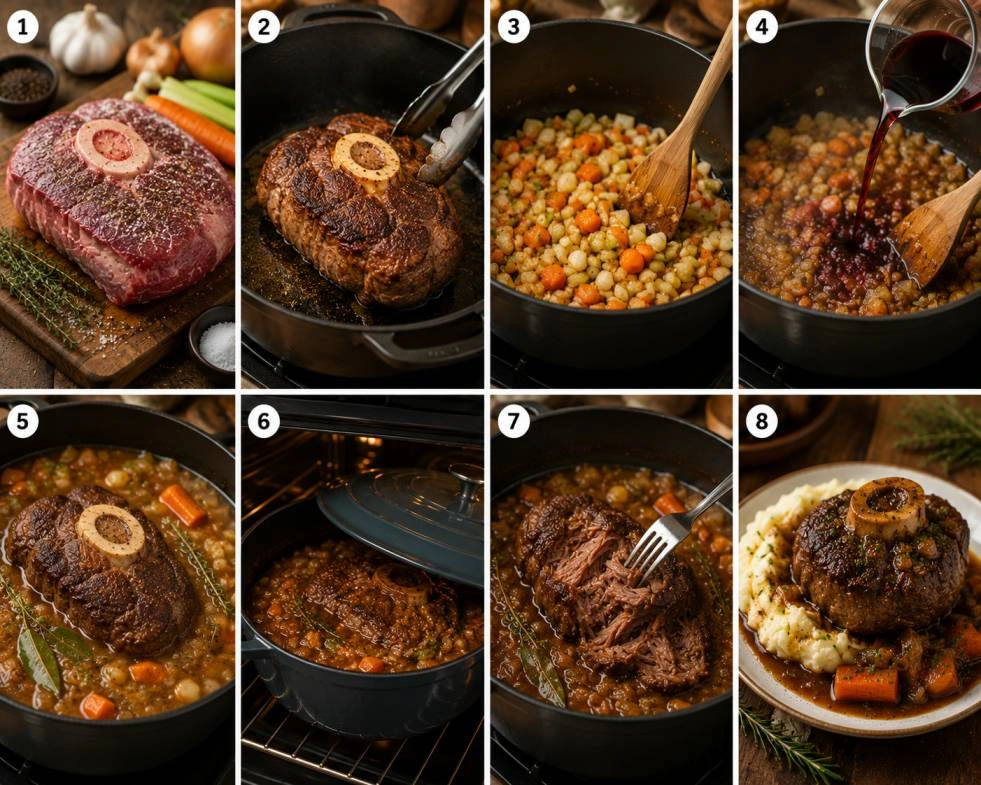
1 – Pat the shank dry
Season generously with salt and pepper on all sides.. A dry surface is what gives you a proper sear.
2 – Sear it first.
Heat a heavy pot or Dutch oven with a tablespoon of oil over medium-high heat. Brown the shank on all sides, about 3–4 minutes per side, until deep golden-brown. Don’t skip this — it builds the flavor base for everything that follows.
3 – Remove the shank and sauté your aromatics
in the same pot: chopped onion, carrot, celery, and garlic work beautifully. Cook until softened, about 5 minutes.
4 – Deglaze the pot
with a splash of wine or stock, scraping up the browned bits from the bottom — that’s pure flavor you don’t want to leave behind.
5 – Return the shank to the pot
and add enough beef stock (or a mix of stock and wine) to come about two-thirds up the sides of the meat. Add herbs like thyme or a bay leaf.
6 – Bring to a gentle simmer
then cover and cook low and slow — either in a 300°F (150°C) oven, on the stovetop over low heat, or in a slow cooker on low. Plan on 2.5 to 3.5 hours.
7 – Check for doneness
by testing with a fork. It’s ready when the meat pulls apart with almost no resistance.
8 – Rest for 10 minutes,
then serve the shank with its own braising liquid spooned over the top, reduced slightly if you like a thicker sauce.
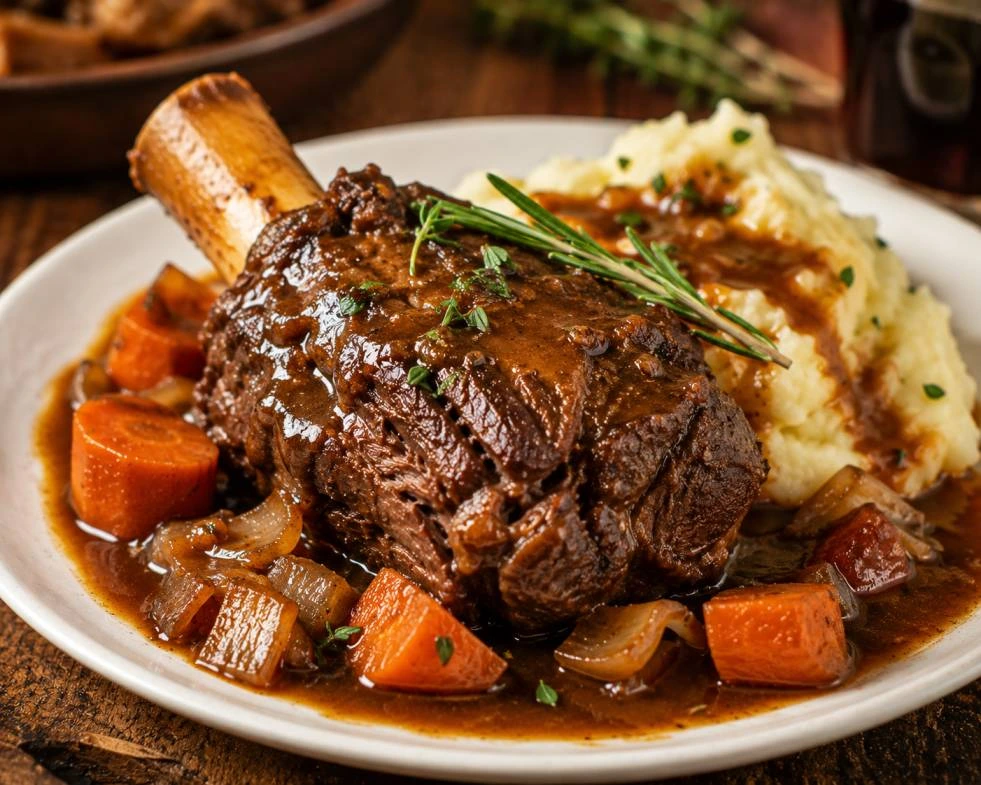
How to Cook Beef Shank (Tender, Flavorful & Fall-Off-the-Bone Easy)
Ingredients
Equipment
Common Mistakes to Avoid
Even good cooks trip up on a few predictable things with this cut:
- Cooking it too fast. This is the single biggest reason beef shank turns out tough. Collagen needs time, not just heat.
- Skipping the sear.It may seem like an additional step, but it is where a significant amount of flavor is derived.
- Not enough liquid. Let the pot run dry partway through and you risk scorching and uneven cooking.
- Pulling it too early. Shank doesn’t follow steak’s “medium-rare” rules — it’s done when it’s fall-apart tender, full stop.
Frequently Asked Questions
What is the best cooking method for beef shank?
Braising, hands down. A hot sear followed by a long, slow simmer in liquid is what breaks down the connective tissue and turns a tough cut into something silky and rich.
Why is my beef shank so tough?
Almost always, it’s undercooked, not overcooked. Shank needs enough time at a gentle simmer for the collagen to fully render into gelatin. If it’s chewy, it usually needs more time in the pot, not less.
Does beef shank get more tender the longer you cook it?
Up to a point, yes — that’s the beauty of this cut. Extended, gentle cooking (roughly 2.5 to 3.5 hours) keeps improving texture as collagen converts to gelatin. Beyond that window, returns diminish and you’re just holding it at temperature.
Is beef shank a good cut of meat?
Absolutely, especially for the price. It is not a cut suited for a quick weeknight sear, but for those willing to let it simmer, it provides rich flavor and a luxurious texture that is often found in more expensive cuts. can’t match.
Give It a Try
Beef shank rewards exactly the kind of cooking most of us don’t get to do often enough these days: slow, unhurried, and a little bit forgiving. Put it in the pot, let it simmer while you do something else entirely, and come back to a meal that tastes like it took far more skill than it actually did.
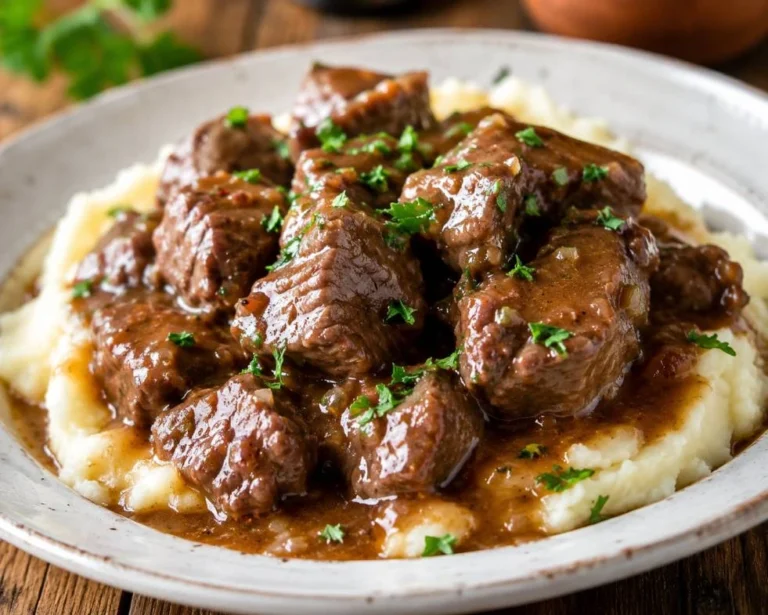
Tried this recipe? Let us know in the comments how your shank turned out, or share your favorite way to serve the braising liquid — over polenta, egg noodles, or mashed potatoes are all excellent choices.