
Shrimp Creole: The Cozy, Spicy Louisiana Classic You Can Absolutely Make Tonight
The first time I made shrimp creole, I burned the roux, undersalted the sauce, and still ended up scraping the pot clean. That’s the thing about this dish — even a slightly imperfect version tastes like something worth coming home to. If you’ve ever stood in your kitchen wondering what actually separates “creole” from “cajun,” or whether that jar of seasoning in your pantry is doing the dish justice, you’re in the right place. I’m going to walk you through exactly what shrimp creole is, how it differs from its cousins, and how to build one, step by step, from a home kitchen.
What Exactly Is Shrimp Creole?
Shrimp creole is a New Orleans dish built around a tomato-based sauce — not a roux-based one, which is where a lot of the confusion starts. Plump shrimp simmer in a mixture of tomatoes, the “holy trinity” of onion, celery, and bell pepper, garlic, and a warm blend of spices, then get spooned over a bed of white rice. It’s saucy, a little sweet from the tomatoes, and carries just enough heat to make you reach for a second helping anyway.
What makes something “Creole” in the culinary sense comes down to history. Creole cooking grew out of New Orleans’ city kitchens, blending French, Spanish, African, and Caribbean influences, with tomatoes as a signature ingredient. That’s the detail most people miss: if a dish is red and tomato-forward, it’s leaning Creole. If it’s brown and built on a dark roux, it’s likely Cajun.
Cajun vs. Creole: The Question Everyone Asks
Here’s the thing — Cajun and Creole are not the same, even though they’re constantly used interchangeably. Cajun cooking comes from rural Acadian communities in Louisiana’s countryside and tends to favor a dark roux, smoked meats, and a rustic, one-pot approach. Creole cooking is the more “city” cousin, born in New Orleans, and it leans on tomatoes, butter, and a slightly more refined technique. Shrimp creole itself is the tomato-based dish; if you swapped that base for a deep roux and dropped the tomatoes, you’d basically be looking at something closer to an étouffée, which is a Cajun-leaning preparation built on a roux and cream or stock rather than tomato sauce.
As for heat — Cajun food tends to run spicier overall, thanks to a heavier hand with cayenne and black pepper, while Creole dishes often balance heat with the sweetness of tomatoes and a touch of butter. That said, shrimp creole is not a mild dish by any stretch. You control the cayenne, so you control the fire.
The Ingredients That Actually Matter
You don’t need anything exotic here. The dish leans on pantry staples plus one non-negotiable: good shrimp. Here’s what you’ll need for four generous servings.
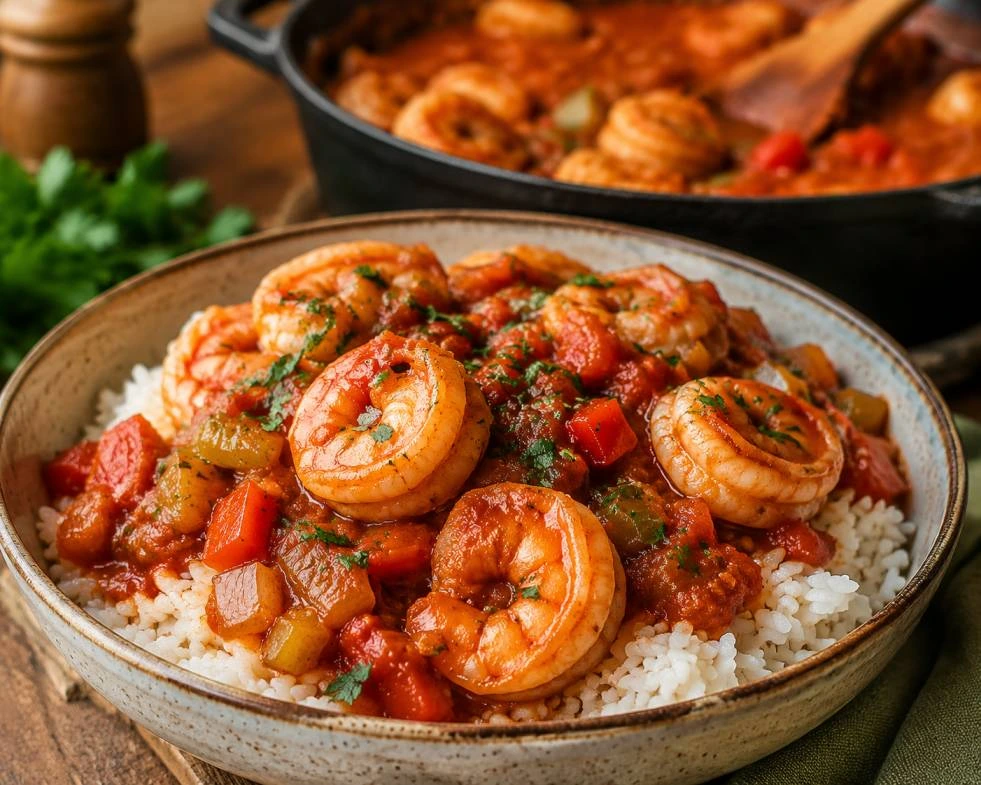
Easy Shrimp Creole (Classic Louisiana Shrimp Recipe)
Ingredients
Notes
- Use large or jumbo shrimp for the best texture, and avoid overcooking—they only need 2–3 minutes until pink and opaque.
- For extra heat, add more cayenne pepper or a few dashes of your favorite hot sauce.
- Fresh shrimp work best, but frozen shrimp are a great option if fully thawed and patted dry.
- Serve over steamed white rice, brown rice, or cauliflower rice for a lighter meal.
- Leftovers keep well in an airtight container in the refrigerator for up to 3 days. Reheat gently to prevent the shrimp from becoming rubbery.
- Garnish with fresh parsley and sliced green onions for added freshness and color.
- A splash of fresh lemon juice just before serving brightens the flavors.
A quick note on that trinity of onion, celery, and bell pepper: don’t skip it, and don’t rush it. It’s the flavor backbone of the entire dish, the same way mirepoix is to French cooking.
How to Make Shrimp Creole, Step by Step
This isn’t a complicated dish — it just wants a little patience while the sauce comes together. Here’s how I build it.
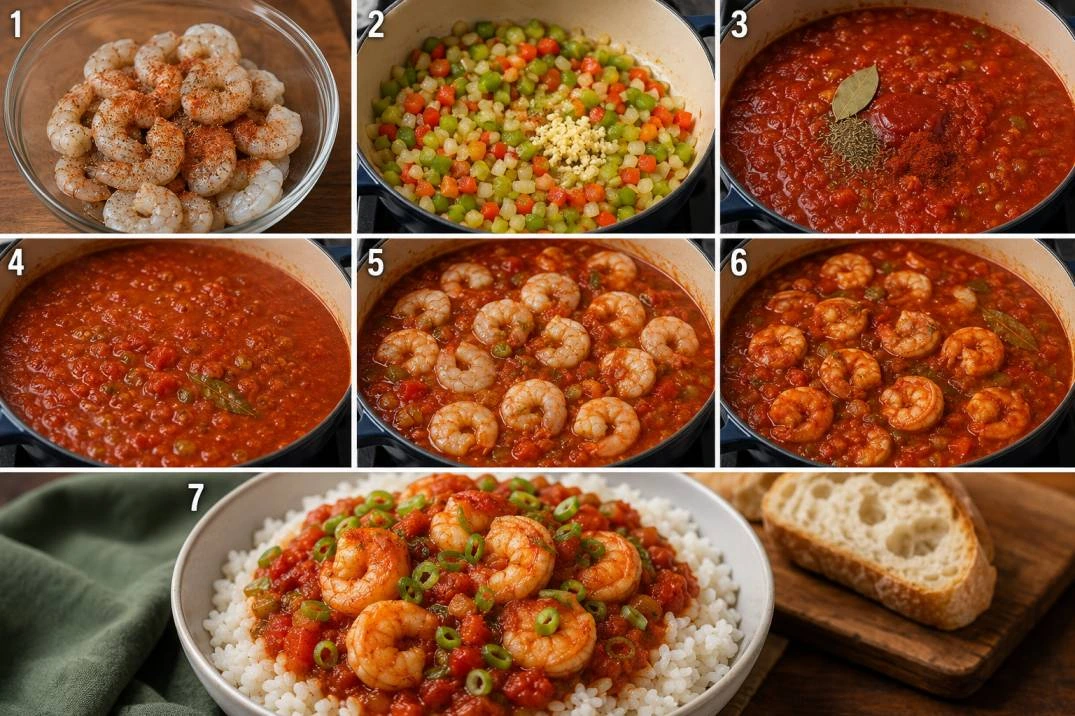
Step 1: Season the shrimp.
Toss your peeled shrimp with a pinch of salt, black pepper, and a light dusting of smoked paprika. Set aside while you build the sauce. Letting them sit for even 10 minutes helps the seasoning stick.
Step 2: Build your base.
Melt the butter in a large, heavy skillet or Dutch oven over medium heat. Add the onion, bell pepper, and celery, and cook for 5 to 7 minutes, until softened and just starting to turn golden at the edges. Add the garlic and cook for another minute, until fragrant — don’t let it brown, or it turns bitter fast.
Step 3: Add the tomatoes and stock.
Stir in the tomato paste and let it cook for a minute to deepen its flavor, then add the crushed tomatoes and stock. Toss in the bay leaf, thyme, cayenne, and remaining smoked paprika.
Step 4: Simmer, low and slow
Bring the sauce to a gentle simmer, then reduce the heat and let it cook uncovered for 20 to 25 minutes, stirring occasionally. This is where the magic happens — the sauce thickens naturally and the flavors marry. If it’s too thin at the end, let it reduce a bit longer rather than reaching for flour; the tomatoes and vegetables do most of the thickening on their own.
Step 5: Add the shrimp.
This is the step people rush, and it’s the one that matters most. Slide the shrimp into the simmering sauce and cook for just 3 to 5 minutes, until they turn pink and curl slightly. Overcooked shrimp turn rubbery fast, so pull the pan off the heat the moment they’re done
Step 6: Taste and adjust.
Take out the bay leaf, sample the sauce, and modify the salt, pepper, or cayenne according to your preference. This is your dish now — make it as fiery or mellow as you want.
Step 7: Serve.
Spoon the shrimp and sauce generously over hot white rice, and finish with sliced green onions. A side of crusty bread for mopping up the extra sauce is never a bad idea.
A Few Tips From Experience
Fresh shrimp will always beat frozen if you can get it, but good-quality frozen shrimp, properly thawed, works just fine — most home cooks use it, and nobody at the table will know the difference. Resist the urge to rush the vegetable sauté; that early stage is where the flavor foundation gets built. And if you’re making this ahead of time, the sauce actually improves overnight in the fridge — just add the shrimp fresh when you reheat, so they don’t overcook.
Frequently Asked Questions
Are Cajun and Creole the same thing?
No. Cajun cooking originates from rural Acadian Louisiana and favors dark roux and rustic, smoky flavors, while Creole cooking developed in New Orleans and leans on tomatoes, butter, and French and Spanish influences. Shrimp creole falls firmly on the Creole side of that line.
Is shrimp creole the same as shrimp étouffée?
Not quite. Shrimp creole is built on a tomato-based sauce, while étouffée is built on a roux, typically without tomatoes, giving it a richer, more velvety texture. Both are delicious, but they’re distinctly different dishes with different bases.
Is shrimp creole the same as gumbo?
No, and the difference comes down to texture and technique. Gumbo is usually built on a roux and often includes okra or filé powder as a thickener, giving it a heartier, stew-like consistency, while shrimp creole relies on tomatoes for its body and has a lighter, saucier finish.
Which is hotter, Cajun or Creole food?
Generally, Cajun food carries more heat, thanks to a heavier use of cayenne and black pepper in its rustic, countryside roots. Creole dishes like shrimp creole tend to balance spice with the natural sweetness of tomatoes, though you can always turn up the cayenne to suit your own taste.
Give It a Try
Shrimp creole rewards patience more than skill — anyone who can dice an onion and watch a pot simmer can pull this off. Once you’ve made it once, you’ll understand why it’s stuck around in Louisiana kitchens for generations. Try it this week, tweak the heat to your taste, and let me know how yours turns out.
One Comment