Chicago Italian Beef: The Sandwich That Ruined All Other Sandwiches For Me
I still remember the first time I bit into a real Chicago Italian beef. Juice ran down my wrist before I even got the sandwich to my mouth, the bread had gone soft and almost translucent from soaking up hours of garlicky broth, and somewhere in there was beef so tender it barely needed chewing. I stood over the sink to eat it. That’s not an accident of bad manners — that’s just how you’re supposed to eat one.
If you’ve never made Italian beef at home, I get why it feels intimidating. It looks like restaurant food, the kind of thing that requires a deli slicer and twenty years of experience. Here’s the truth, though: it’s one of the most forgiving beginner recipes in the beef-cookery world. You’re not searing a delicate steak to a precise temperature. You’re braising a tough cut low and slow until it falls apart, then letting it swim in its own jus. The oven does almost all the work.
What You’ll Walk Away Knowing
- Which cut of beef actually makes the best Italian beef (it’s not what most people guess)
- The seasoning blend that gives it that unmistakable garlicky, herby depth
- How to slice it paper-thin without a fancy slicer
- The bread question everyone gets wrong
- How to build the sandwich the Chicago way — dipped, with giardiniera
Let’s Talk About the Cut of Meat First
Here’s the thing — if you walked into a Chicago Italian beef stand and asked what cut they use, you’d probably expect something fancy. It’s not. The classic choice is chuck roast, sometimes bottom round or rump roast. These are working cuts, full of connective tissue that would make them tough and chewy if you grilled them. But give that same tissue three or four hours at a low, steady temperature, and it melts into gelatin, basting the meat from the inside out.
This is actually good news for your wallet. Chuck roast is one of the more affordable cuts in the beef case, and for this recipe, cheaper genuinely works better than a pricier, leaner roast. A tenderloin would just dry out and turn stringy under this method. Save that one for a different night.
The Seasoning: Simple, But Non-Negotiable
What surprises a lot of home cooks is how few ingredients go into that deep, savory flavor. There’s no secret spice blend flown in from Sicily. It comes down to garlic, dried oregano, dried basil, a little crushed red pepper for warmth, salt, and black pepper, all simmered into a beef broth along with the roast itself. Some cooks add a splash of pepperoncini brine for tang — I’d encourage you to try it once you’ve made the base version, because it adds a brightness that cuts through the richness beautifully.
Don’t overthink this part. The magic isn’t in complexity; it’s in giving those simple flavors enough time to actually get to know each other.
Chicago Italian Beef: Step-By-Step
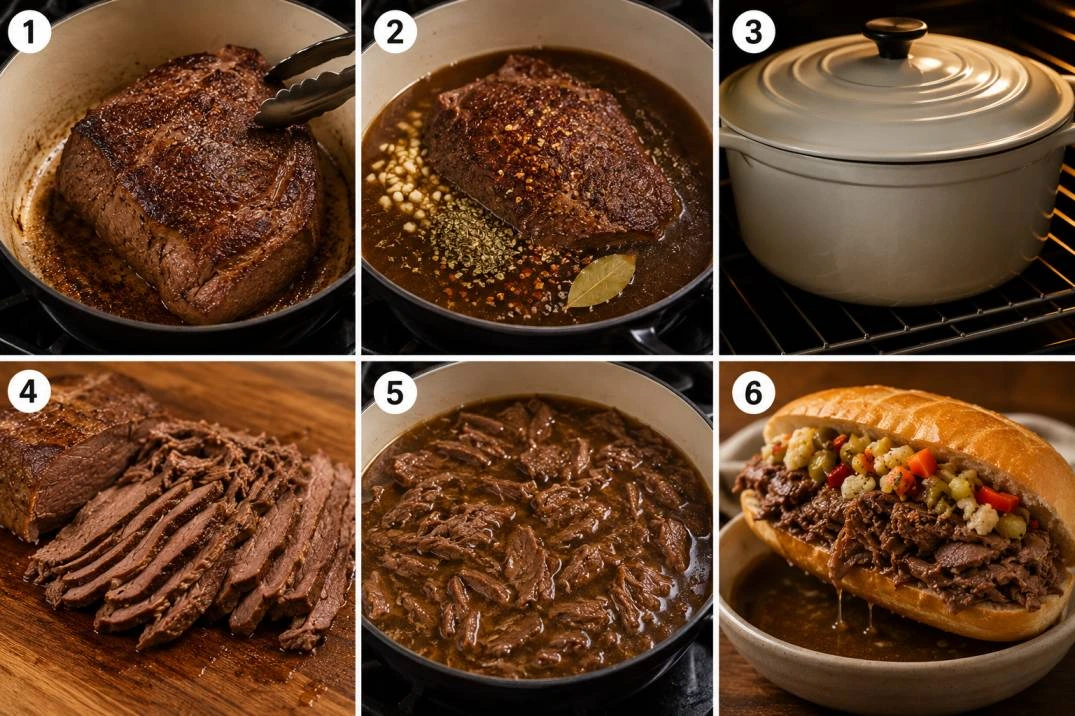
Step 1: Sear the Roast
Pat the chuck roast dry and season it generously with salt and pepper. Heat the olive oil in a heavy pot or Dutch oven over medium-high heat, then sear the roast on all sides until it’s deeply browned — about 3–4 minutes per side. This step isn’t optional. It’s where a huge percentage of your flavor comes from.
Step 2: Build the Broth
Add the minced garlic to the pot and let it cook for about 30 seconds, just until fragrant — don’t let it burn. Pour in the beef broth and water, then stir in the oregano, basil, red pepper flakes, and bay leaf. Nestle the roast back into the liquid.
Step 3: Low and Slow
Cover the pot and either simmer it gently on the stovetop or transfer it to a 300°F oven. Either way, plan on 3 to 4 hours. You’ll know it’s ready when a fork slides into the meat with almost no resistance and it wants to fall apart on its own.
Step 4: Rest, Then Slice Thin
Here’s a step people skip, and it costs them: let the roast rest in the broth for at least 20 minutes before slicing. This lets the juices redistribute instead of running straight out onto your cutting board. Once rested, slice it as thin as you possibly can, against the grain. No deli slicer? A very sharp knife and a little patience will get you there. Thin is the whole point — it’s what lets the meat soak up the broth without turning mushy.
Step 5: Reunite Meat and Broth
Return the sliced beef to the hot broth and let it sit for a few minutes to soak up even more flavor before serving.
Step 6: Build the Sandwich, Chicago-Style
Pile the thin-sliced beef onto a sturdy roll — this matters more than people expect. A soft hamburger bun will disintegrate. You want an Italian or French-style roll with enough structure to survive a dunk. Speaking of which: the “dipped” method is the traditional way to eat this. Quickly submerge the whole sandwich in the hot broth for a few seconds before serving, so the bread absorbs it without collapsing. Top with giardiniera for heat and acidity, or sautéed sweet peppers if you prefer something milder.
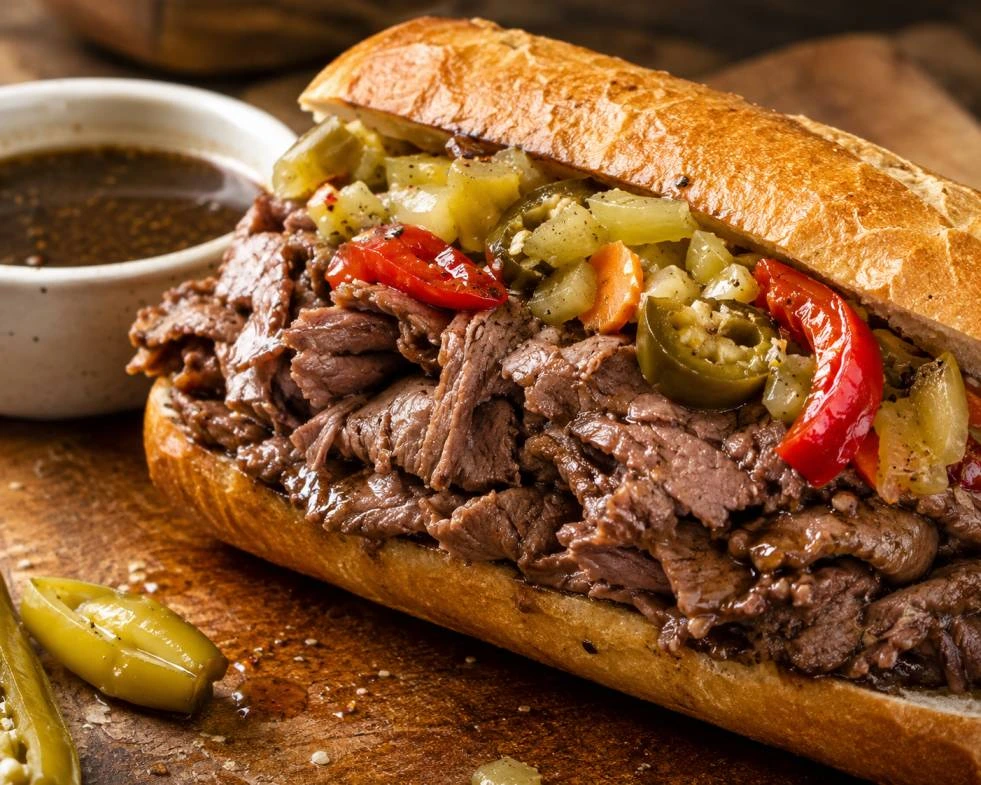
Chicago Italian Beef Sandwich (Authentic Homemade Recipe)
Ingredients
Frequently Asked Questions
What is the seasoning in Italian beef?
The base seasoning is garlic, dried oregano, dried basil, crushed red pepper flakes, salt, and black pepper, simmered right into the beef broth as the roast cooks. It’s a simple blend, but the long cooking time lets it fully infuse the meat.
What cut of meat is used for Italian beef?
Chuck roast is the classic choice, with bottom round or rump roast as common alternatives. These tougher, well-marbled cuts break down beautifully during a long braise, becoming tender while staying flavorful — something a leaner cut can’t do as well.
What kind of bread is best for Italian beef?
You want a sturdy Italian or French-style sub roll, not soft sandwich bread. Because the sandwich gets dipped in hot broth before serving, the bread needs enough structure to hold up without falling apart.
What is the Chicago way for Italian beef?
The Chicago way means thin-sliced beef piled on a sturdy roll, dipped briefly in the hot broth (called “wet” or “dipped”), and topped with giardiniera — a tangy, spicy Italian pickled vegetable relish. Some people add sweet peppers instead, or both, depending on preference.
Final Thoughts
Italian beef isn’t a recipe you need to rush, and honestly, you shouldn’t try to. The whole appeal is in that long, unhurried braise that turns an inexpensive cut into something that tastes like it took real effort — because it did, just not the kind that requires you to hover over the stove. Set it, let it go, and check back in a few hours.
Once you’ve made it once, you’ll understand why Chicagoans get so protective of this sandwich. Try it this weekend, and if you do, I’d genuinely love to hear how your first dip-and-bite moment went. Did you eat it over the sink too?