Jasmine Tea: Everything You Need to Know (And Were Too Afraid to Ask)
Benefits, caffeine, sleep, brewing — an expert walks you through it all, cup by cup.
What You’ll Learn
- Jasmine tea’s biggest health benefits — and one surprising myth
- How much caffeine is actually in your cup
- Whether you can (and should) drink it before bed
- What jasmine tea really is — and how it differs from plain green tea
- A step-by-step brewing recipe so your first cup tastes incredible
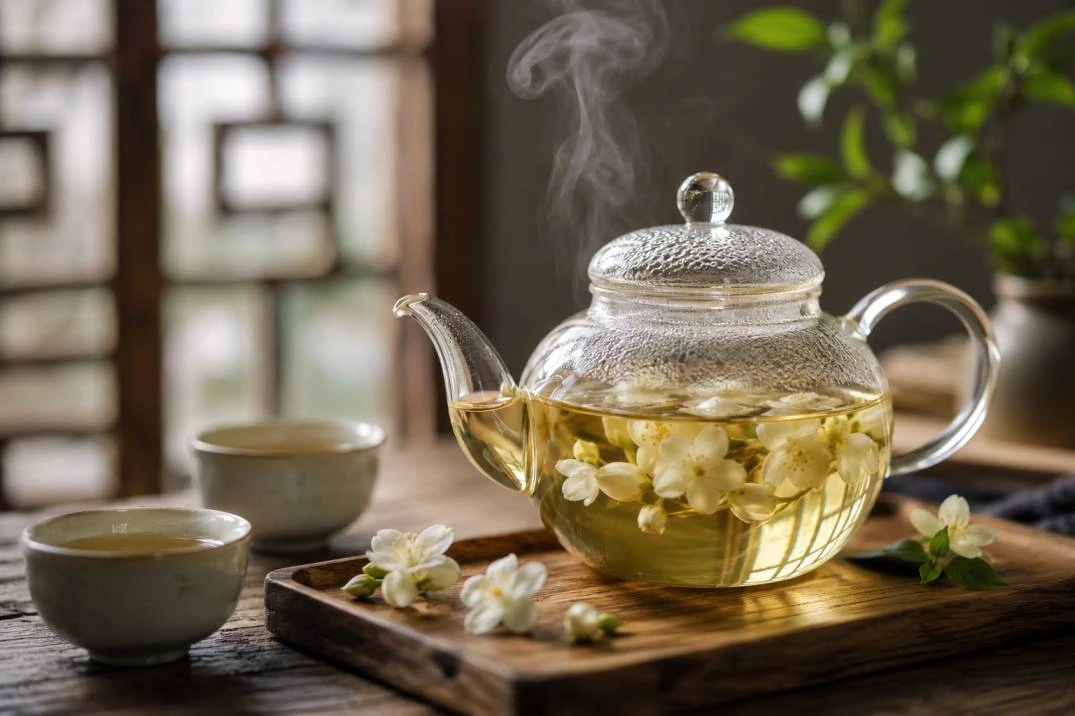
I remember the first time I walked into a traditional tea house and ordered jasmine tea. I was expecting something complicated. What arrived was a pale, golden cup that smelled like a garden after rain. I took one sip and thought — why didn’t anyone tell me about this sooner?
If you’re new to jasmine tea, you’re in the right place. There’s a lot of noise online — some people swear it cures everything, others say the caffeine will keep you up all night. Let’s cut through that and get to what actually matters: the facts, told simply, with a little bit of the joy that comes with discovering a great cup of tea.
What Are the Benefits of Jasmine Tea?
Here’s the honest answer: jasmine tea isn’t magic. But it is genuinely good for you, and the science behind it is pretty interesting.
Most jasmine teas use green tea as a base, which means you’re getting a solid dose of antioxidants called catechins with every sip. These compounds help fight oxidative stress in your body — the kind of cellular wear and tear that accumulates over time. Some studies suggest regular green tea consumption is linked to better heart health, improved metabolism, and even support for gut health and inflammation.
Now, is jasmine tea specifically good for belly fat? The honest answer is: it’s not a miracle fat-burner. But if you’re replacing sugary drinks with jasmine tea, you’ll likely feel better, consume fewer calories, and yes — the gentle metabolism boost from the catechins and caffeine combo can support your goals over time.
What about your kidneys? Good news here. For most healthy adults, moderate jasmine tea consumption is perfectly fine for kidney health. The caveat is if you already have kidney issues — in that case, check with your doctor, since the oxalates in tea can be a consideration.
One benefit that often gets overlooked is the mental one. The scent of jasmine alone has been shown in research to reduce anxiety and promote calm. Drinking a warm cup of jasmine tea is, in many ways, a ritual of mindfulness — and that matters more than any antioxidant chart.
Is Jasmine Tea Full of Caffeine? The Truth Might Surprise You
This is one of the most common questions I get from beginners, and the answer is: it depends on the base tea.
Jasmine tea isn’t a single ingredient — it’s a scented tea. The jasmine flowers are layered with the tea leaves during processing to infuse the aroma, then removed. Most commercial jasmine tea uses green tea as the base, which contains moderate caffeine — roughly 25 to 40 mg per cup, compared to coffee’s 80 to 100 mg.
So it’s not “full” of caffeine, but it’s not caffeine-free either. Here’s a quick mental map:
Less caffeine than coffee. Way less. If coffee makes you jittery, jasmine tea is often a comfortable middle ground — awake without the anxiety.
More caffeine than herbal teas. Chamomile or peppermint? Those are naturally caffeine-free. Jasmine tea sits firmly above them.
Variable by steeping time and water temperature. The longer you steep and the hotter your water, the more caffeine you extract.
If you’re caffeine-sensitive, look for jasmine tea made with a white tea or rooibos base — you get the floral flavor with almost zero caffeine.
Expert Recipe
Perfect Jasmine Green Tea
Simple, fragrant, and ready in under 5 minutes — the way it’s meant to taste.
Prep Time2 minSteep Time2–3 minServings1 cupLevelBeginner
Jasmine Tea: Everything You Need to Know (And Were Too Afraid to Ask)
Ingredients
Equipment
Notes
- Over-steeping can make jasmine tea bitter—keep timing precise.
- High-quality jasmine tea is naturally scented, not artificially flavored.
- Best enjoyed without milk to preserve floral notes.
- Can be re-steeped 1–2 times depending on quality
What You’ll Need
- 1 teaspoon (2–3 g) loose-leaf jasmine green tea — or 1 tea bag
- 8 oz (240 ml) filtered water
- Optional: a small slice of fresh ginger
- Optional: a thin slice of lemon or a drop of raw honey
Step by Step
Heat your water — but don’t boil it
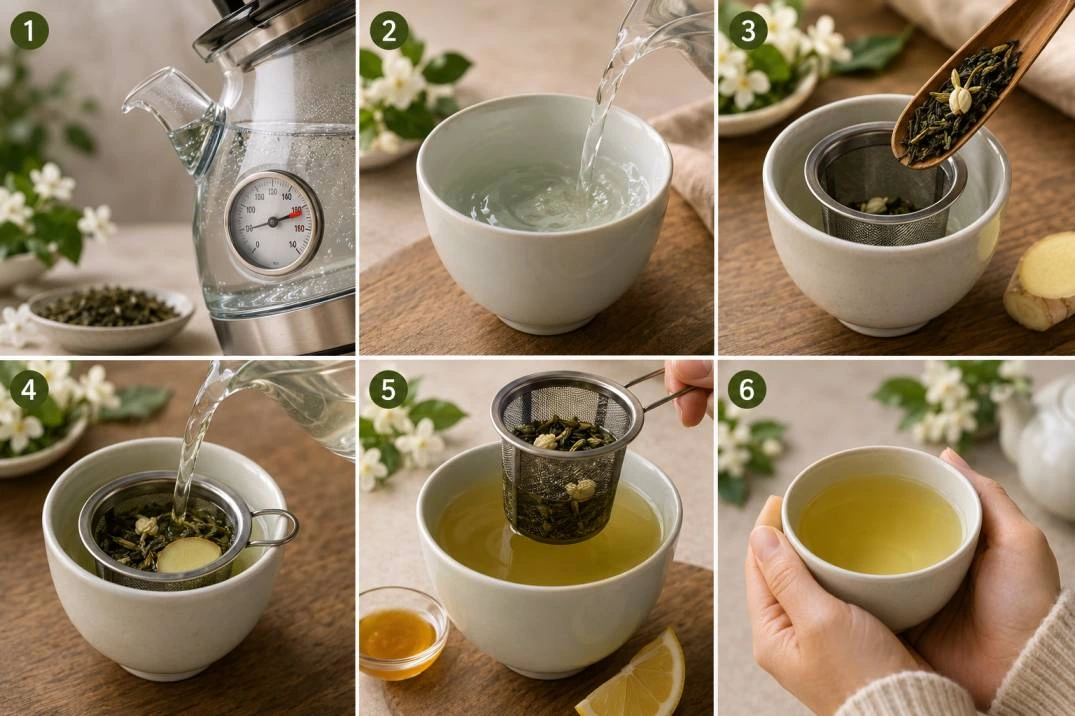
Bring water to around 175°F (80°C). If you don’t have a thermometer, boil the kettle then let it sit for 2 minutes. This is the single most important step. Green tea scorches at full boil, turning bitter and harsh.Chef’s tip: Never pour boiling water directly onto jasmine green tea — you’ll destroy the delicate floral notes instantly.
Warm your cup first
Pour a small splash of hot water into your cup, swirl it around for a few seconds, then discard. This keeps your tea at the right temperature longer — a small step that makes a real difference in flavor.
Add your tea
Place your loose-leaf tea into an infuser basket or drop in your tea bag. If using a ginger slice, add it now.
Pour and steep
Pour your 175°F water over the tea. Steep for 2 to 3 minutes — set a timer. Under 2 minutes and you’ll miss the depth; over 3 minutes and bitterness creeps in. This is the sweet spot.Chef’s tip: Jasmine tea is forgiving the first steep. For a second steep (yes, good loose-leaf can be re-steeped!), add 30 seconds to your timer.
Remove and taste
Lift out the infuser or tea bag. Take a moment — smell it before you drink it. That fragrance is part of the experience. Taste it plain first. Then, if you like, add a tiny drop of honey or a squeeze of lemon.Chef’s tip: Avoid milk with jasmine green tea — the proteins bind to the catechins and mute both the flavor and the health benefits.
Enjoy — slowly
Jasmine tea is best sipped without rushing. Hold the cup, feel the warmth, and let the aroma do its thing. This is a mindful drink, not a fast one.
Can You Drink Jasmine Tea Before Bed?
Honestly? It depends on you — and what kind of jasmine tea you’re drinking.
A lot of people find jasmine tea genuinely soothing in the evening. The floral scent has a mild anxiolytic effect (fancy word for “it calms you down”), and the warmth of a hot drink before bed is a well-established sleep cue for the body. This is likely why jasmine tea is so deeply embedded in Chinese bedtime traditions.
But here’s where beginners get tripped up: that same cup still has caffeine in it. For most people, 25–40 mg a few hours before bed won’t cause much trouble. But if you’re particularly caffeine-sensitive or a light sleeper, drinking a strong cup of jasmine green tea at 10 PM might be exactly why you’re staring at the ceiling.
My recommendation? If you want jasmine tea before bed, brew it lighter — use less tea, steep for only 90 seconds, and stick to one cup. Or look for a jasmine tea blended with chamomile or made from a rooibos base. You can still experience the pleasant floral qualities without the stimulant effects.
Wait — Is Jasmine Tea Just Green Tea?
Sort of — but that’s like saying a croissant is just butter and flour. Technically true, completely misses the point.
Jasmine tea is almost always built on a green tea base, yes. But the magic is in the scenting process. Fresh jasmine blossoms are harvested at night (when their scent is strongest), then layered with tea leaves in alternating stacks. Tea gradually absorbs fragrance through a natural process that takes several hours to complete. High-quality jasmine teas go through this process three to five times to build depth. The flowers are then removed — what’s left is a green tea that tastes and smells nothing like ordinary green tea.
So while you do get all the health benefits of green tea, you’re also getting something that has been genuinely transformed by the jasmine flowers. That’s why jasmine tea tastes floral but not flowery, fragrant but not perfumed. It’s subtle, layered, and quite beautiful when brewed correctly.
As for which is “healthier” — jasmine or plain green tea? They’re extremely close in nutritional profile. If anything, research suggests the jasmine aromatherapy effect adds a wellness dimension that plain green tea can’t match. But you don’t need to choose: just enjoy whichever you prefer.
Frequently Asked Questions
Can I drink jasmine tea every day?
Yes, for most healthy adults, drinking 2 to 3 cups of jasmine tea daily is considered perfectly safe and even beneficial. The antioxidants and moderate caffeine are a good combination for everyday wellness. The one thing to watch: if you’re pregnant, sensitive to caffeine, or have iron-deficiency anemia (tea can interfere with iron absorption), it’s worth limiting your intake or timing it away from meals. Otherwise, daily jasmine tea is a genuinely healthy habit.
Is jasmine tea better for you than coffee?
They serve different purposes, so “better” is relative — but here’s the honest comparison. Jasmine tea gives you a gentler, more sustained energy lift with a fraction of the caffeine, plus the added bonus of antioxidants and the calming jasmine aroma. Coffee gives you a stronger, faster hit but can trigger anxiety, digestive upset, and energy crashes in some people. If you’re looking to cut back on coffee without giving up a morning ritual, jasmine tea is a genuinely excellent transition drink.
Who should not drink jasmine green tea?
Jasmine tea isn’t for everyone in every situation. People who are pregnant should limit consumption due to caffeine. Those with severe anxiety disorders may want to avoid it in the evenings due to the stimulant effect. If you have iron-deficiency anemia, avoid drinking it with meals since tannins in tea can reduce iron absorption. And if you have chronic kidney disease, check with your doctor — the oxalates in tea are worth discussing. For the average healthy adult, though, none of these are concerns.
What does jasmine tea actually taste like?
This one’s my favorite question to answer, because the reality is almost always better than people expect. Jasmine tea tastes lightly floral — not like eating flowers, more like the idea of a garden on a warm evening. The green tea base gives it a gentle grassiness and a soft, slightly sweet finish. There’s no bitterness when brewed correctly. First-timers often describe it as clean, calming, and surprisingly easy to drink. There is no need to worry if you have been hesitant to attempt it. It’s one of the most approachable teas in the world.
Ready to Brew Your First Cup?
The recipe above is all you need to get started. Grab a tin of loose-leaf jasmine green tea, heat your water to 175°F, and give yourself three quiet minutes. You might be surprised what a good cup of tea can do.