The Ultimate Peach Cobbler Guide: Secrets, Mistakes & the Perfect Recipe
Everything you’ve ever wondered about peach cobbler — answered by someone who’s burnt, gummied, and finally perfected it.
By Chef Marcus Lane · June 2026 · 8 min read
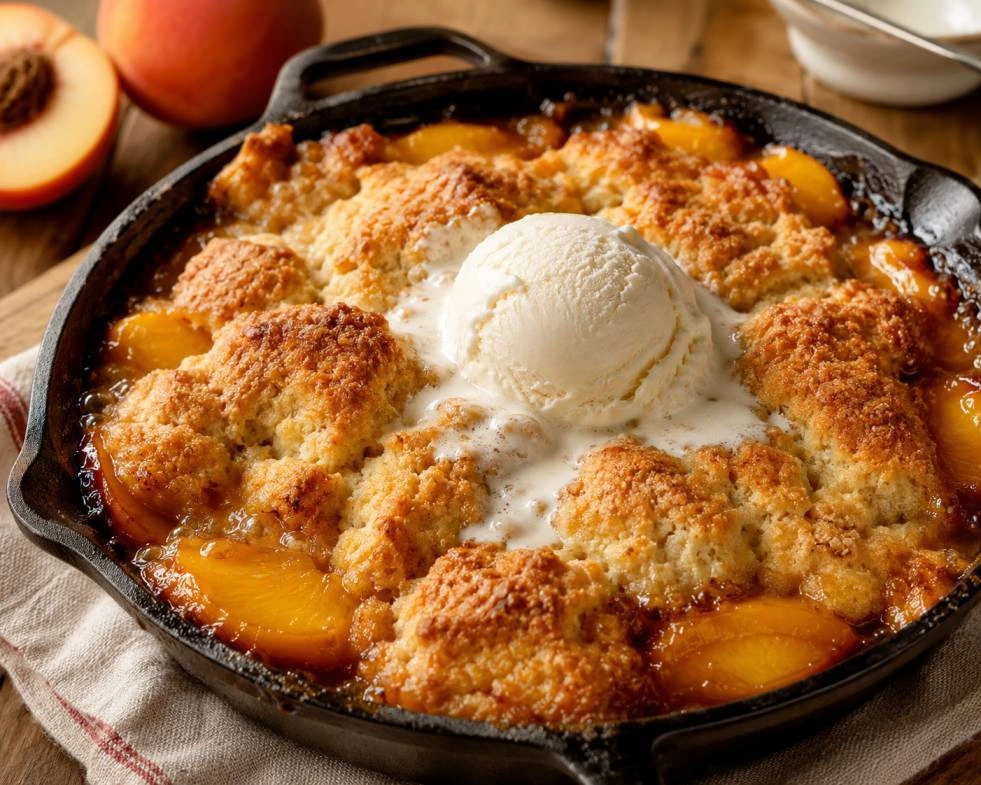
Classic Southern Peach Cobbler:
The Ultimate Peach Cobbler Guide – Secrets, Mistakes & the Perfect Recipe
Ingredients
What You’ll Learn in This Guide
- The single biggest secret to a truly great peach cobbler (it’s not what you think)
- The most common mistakes beginners make — and exactly how to avoid them
- Fresh peaches vs. canned: the honest, no-fuss answer
- A foolproof step-by-step recipe that actually works the first time
- Answers to the 4 most-asked peach cobbler questions
There’s something almost unfair about peach cobbler. It smells like August, tastes like someone’s grandmother loves you, and somehow manages to be both rustic and deeply impressive at the dinner table. I’ve been making it professionally for over twelve years, and I still get asked the same questions every single time I serve it.
So let’s settle everything right here. This guide covers every question — from whether to peel your peaches (yes, mostly) to the butter argument that divides home bakers everywhere. If you’ve never made peach cobbler before, you’re in exactly the right place. Let’s get into it.
What’s the Real Secret to the Best Peach Cobbler?
Honestly? It’s not a secret ingredient. It’s restraint. The biggest mistake beginners make isn’t using the wrong flour or the wrong butter — it’s overcomplicating a dessert that was designed to be simple.
There are several essential details that distinguish a skilled cobbler from an exceptional one.
Use unsalted butter — and melt it in the pan
This is the trick most recipes don’t explain clearly. You melt the butter directly in your baking dish while the oven preheats. When the batter goes in, it doesn’t mix with the butter — it floats on top of it. That butter crisps the bottom and edges into something golden and slightly caramelized. Use unsalted butter so that you can control the amount of salt in your recipe.
Don’t stir the batter into the peaches
Pour the batter in first. Then add the peaches and their juices on top. Do not stir. The batter will rise up around the peaches during baking, and that’s exactly what you want. This is the “cobblestone” effect that gives cobbler its name.
A little flour goes a long way
All-purpose flour is your best friend here. Self-rising flour works too and gives you a slightly fluffier topping. Avoid cake flour — it can make the batter too delicate and prone to sogginess.
The Most Common Peach Cobbler Mistakes (And How to Fix Them)
We’ve all pulled a cobbler out of the oven and thought: why is it gummy? Or: why is there a pool of liquid at the bottom? Here’s what went wrong and how to fix it next time.
1. The cobbler came out gummy
This usually means one of two things: you underbaked it, or your peaches released too much liquid. The fix is simple — bake it uncovered the entire time. Covering a cobbler traps steam, which turns your beautiful batter into a gluey mess. Bake it open, let the heat do its job, and you’ll get a golden crust every time.
2. You put the batter on top — or underneath?
The batter always goes in first, at the bottom of the pan (over the melted butter). The peaches go on top. As the cobbler bakes, the batter rises around the fruit. If you pour the batter on top of the peaches, you’ll get a different (also valid!) texture, but it won’t have that classic cobbler feel.
3. Peaches that are too ripe — or not ripe enough
Very overripe peaches break down completely and turn the filling into mush. Under-ripe peaches stay firm and taste sour. You want peaches that are just soft to the touch — they should yield when you press them gently. If you’re using fresh peaches out of season, canned is genuinely the better call (more on that below).
4. Forgetting to thicken the filling
Peaches are juicy. Gloriously, messily juicy. But too much liquid means a soupy cobbler. A tablespoon of cornstarch tossed with your peaches before baking absorbs the excess juice and turns it into a glossy, lightly thickened sauce. Some people use a spoon of flour instead — both work.
Canned or Fresh Peaches: The Honest Answer
Fresh peaches in peak summer? Absolutely use them. But here’s something I tell every beginner: a good can of peaches will beat a bad fresh peach every single time.
In-season fresh peaches — the ones that smell like actual peaches, not cardboard — make an incredible cobbler. But outside of July and August, most grocery store peaches are picked hard and never fully ripen. The result is a bland, firm filling that no amount of sugar can fix.
If you’re using canned peaches:
Drain them — but not completely. Keep about two tablespoons of that liquid and toss it in with your peaches. It adds flavor and a little extra sweetness. Look for peaches packed in juice rather than heavy syrup. The syrup versions work, but they can make your cobbler overly sweet. And yes — leave the skin off. Canned peaches are already peeled, which is one less step for you.
If you’re using fresh peaches:
Peel them. I know it feels like extra work, but peach skin toughens as it bakes and creates a slightly unpleasant texture in the finished dish. The easiest way: score an X at the bottom of each peach, drop them in boiling water for 30 seconds, then transfer to ice water. The skins slip right off.
Step-by-Step Recipe:
Instructions
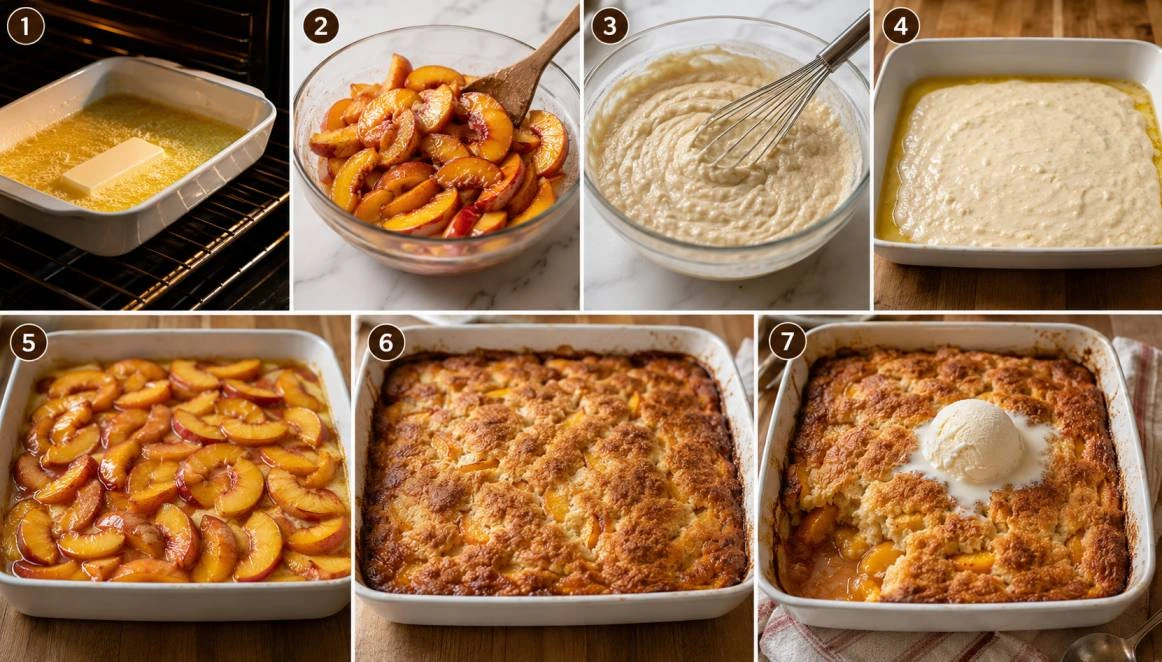
1 – Preheat your oven to 375°F (190°C)
Place the stick of butter in a 9×13-inch (or similar) baking dish and slide it into the oven while it preheats. Watch it — you want it melted and just starting to bubble, not brown.
2 – Prepare the peaches.
In a bowl, toss your peach slices with ¼ cup of the sugar, the cornstarch, cinnamon, and lemon juice. Set aside. The cornstarch will dissolve and thicken the juices as it bakes.
3 – Make the batter.
In a separate bowl, whisk together the flour, remaining ¾ cup sugar, baking powder, and salt. Add the milk and vanilla extract. Stir until just combined — a few lumps are completely fine. Do not overmix.
4 – Build the cobbler.
Carefully remove the hot baking dish from the oven. Pour the batter directly over the melted butter. Do not stir. The butter will pool around the edges — that’s perfect.
5 – Add the peaches.
Spoon the peaches and any collected juices evenly over the batter. Again — do not stir. Trust the process. The batter will rise up around the peaches as it bakes.
6 – Bake uncovered
for 45 to 50 minutes, until the top is deep golden brown and the edges are bubbling. If your oven runs hot, check at 40 minutes.
7 – Rest before serving
Let the cobbler cool for at least 15 minutes before scooping. This allows the filling to set slightly. Serve warm with a scoop of vanilla ice cream or a dollop of whipped cream.
Chef’s tip: If the top is browning too fast before the center is set, tent it loosely with foil for the last 10 minutes. Remove the foil for the final 5 minutes to re-crisp the top.
And that’s genuinely all there is to it. No fancy equipment, no obscure ingredients, no technique that takes years to master. Peach cobbler is a dessert built on generosity — generous amounts of butter, ripe fruit, and time in a hot oven.
Make it once and you’ll understand why it’s been on Southern tables for generations. Make it twice and you’ll start developing your own opinions about exactly how ripe the peaches should be, and whether a pinch of nutmeg belongs in there (it does, by the way — just a pinch).
Frequently Asked Questions
Do you bake peach cobbler covered or uncovered?
Always uncovered. Baking covered traps steam inside the dish, which prevents the top crust from crisping and often leads to a gummy, undercooked texture. The whole point of that golden top is the direct, dry heat of an open oven. If you notice it browning too quickly, you can loosely tent it with foil for the last 10 minutes — but remove it before the timer goes off to let it crisp back
up.When preparing peach cobbler, is it necessary to peel the peaches?
Yes — especially if you’re using fresh peaches. Peach skin toughens significantly during baking and creates a chewy, slightly bitter texture that distracts from the soft filling. The easiest peeling method is a quick 30-second blanch in boiling water followed by an ice bath — the skins slip off in seconds. If you’re using canned peaches, they’re already peeled, so no extra work
needed.What do you put in peach cobbler to thicken it?
The most reliable option is cornstarch — about one tablespoon tossed with your peaches before they go into the dish. It absorbs the peach juices and turns them into a light, glossy sauce as the cobbler bakes. All-purpose flour can be used as a substitute, with an amount of roughly one and a half tablespoons.Avoid arrowroot powder if you’re baking at high heat, as it can break down and leave a slightly
slimy texture.Should I use peaches in syrup or juice for peach cobbler?
Peaches packed in juice are the better choice. Heavy syrup adds a lot of extra sugar that can make the cobbler overwhelmingly sweet and also affects how the batter rises and sets. Juice-packed peaches are closer in sweetness to fresh fruit, giving you more control over the final flavor. If syrup is all you have, drain them very thoroughly and reduce the sugar in your batter by two to three tablespoons to compensate.
Ready to Make Your First Cobbler?
Save this recipe, grab a can of peaches, and get that butter melting. Then come back and tell us how it turned out — we’d love to hear.