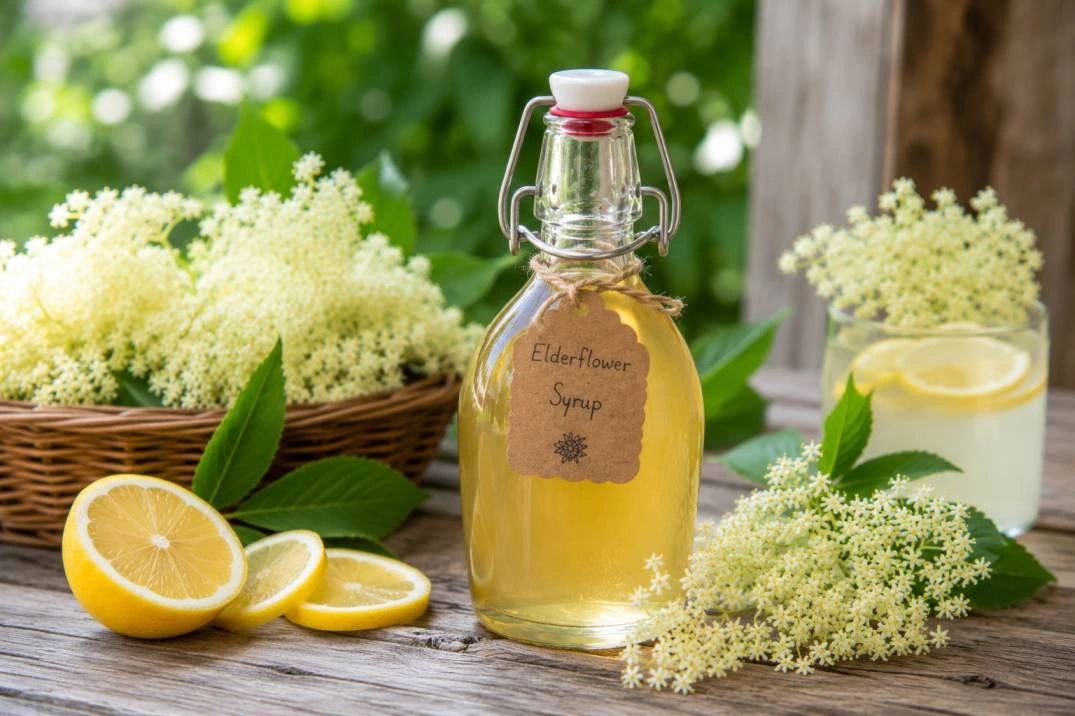
How to Make Elderflower Syrup at Home: A Complete Beginner’s Guide
From foraging to bottling — everything you need to craft a perfect homemade Holunderblütensirup, explained by a culinary expert.
The Classic Elderflower Syrup Recipe (Makes ~1 Litre)
This recipe is the result of combining traditional methods with a few modern refinements for reliability and safety. Follow these proportions and you’ll have a consistent, well-balanced syrup every time.
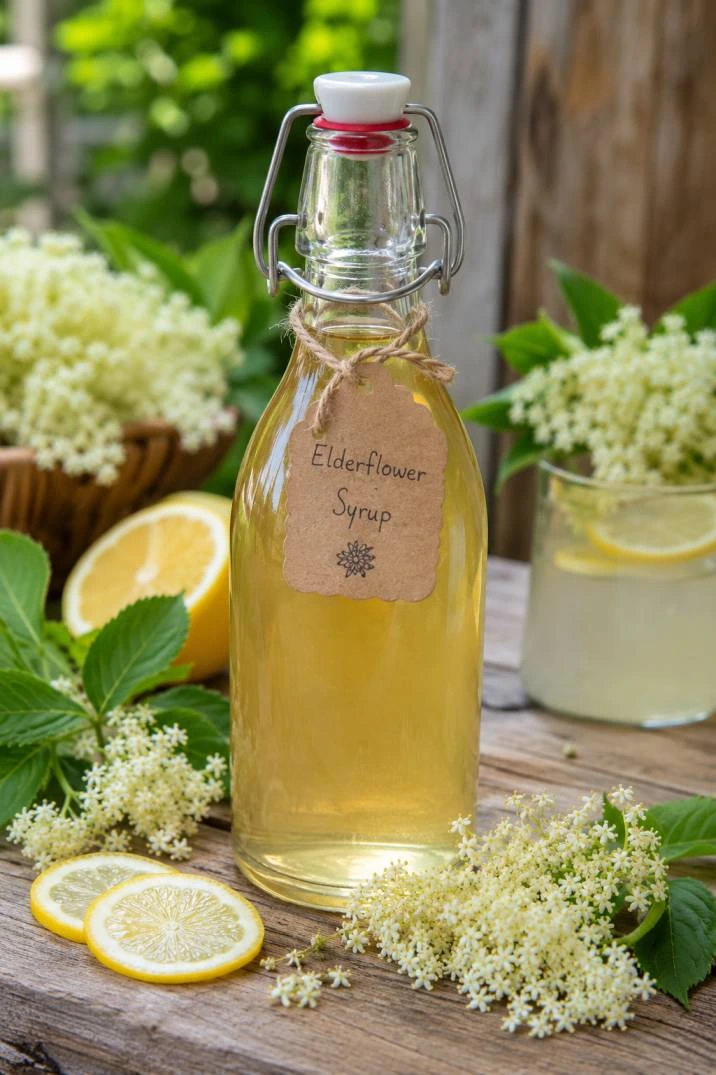
Homemade Elderflower Syrup (Easy Beginner Recipe)
Ingredients
Notes
What You’ll Learn in This Guide
- Why elderflower syrup is more than just a sweet drink — and how it benefits your body
- The exact recipe with ingredient quantities for 1 litre of syrup
- How long to steep elderflowers for maximum flavour
- The best natural preservation methods to extend shelf life
- How to troubleshoot the most common problems (mold, crystallisation, cloudiness)
Every spring, for a fleeting two or three weeks, the elder tree erupts into a froth of white, honey-scented blossoms. Most people walk right past them. But those who know — home cooks, foragers, grandmothers with well-worn preserving jars — stop, snip a few clusters, and take them home to make something extraordinary.
Elderflower syrup (known in German as Holunderblütensirup) is one of those rare kitchen projects that rewards you far beyond the effort involved. A few hours of your time yields something you genuinely cannot buy in a shop — not with this depth of flavour, not with this freshness. And the good news? You don’t need to be an expert to do it well. You just need to understand why each step matters.
That’s exactly what this guide is here for.
What Is Elderflower Syrup Good For?
Before we get into the kitchen, it’s worth understanding what you’re actually working with. Elderflower isn’t just a pretty flavour — it has a genuine track record in traditional European herbalism.
The blossoms of the elder plant (Sambucus nigra) are known to support the immune system, have mild anti-inflammatory properties, and are often used to soothe seasonal allergies and colds. They’re good for digestion too — the gut-supportive qualities of elderflower have long been recognised in folk medicine across Central Europe.
⚕️ Chef’s Note on Dosage
A reasonable daily intake of diluted elderflower juice is around 200–400 ml when properly diluted (roughly 1 part syrup to 5–7 parts water). Concentrated elderflower syrup is potent, so it should be used in moderation, as is recommended with any substance of a medicinal nature.. People with pollen allergies to elder should consult a doctor before consuming.
As a culinary ingredient, elderflower syrup is extraordinarily versatile. Use it to flavour sparkling water, cocktails, salad dressings, panna cotta, ice cream, or drizzled over fresh fruit. It’s one of those pantry items that quietly transforms everything it touches.
Step-by-Step Method
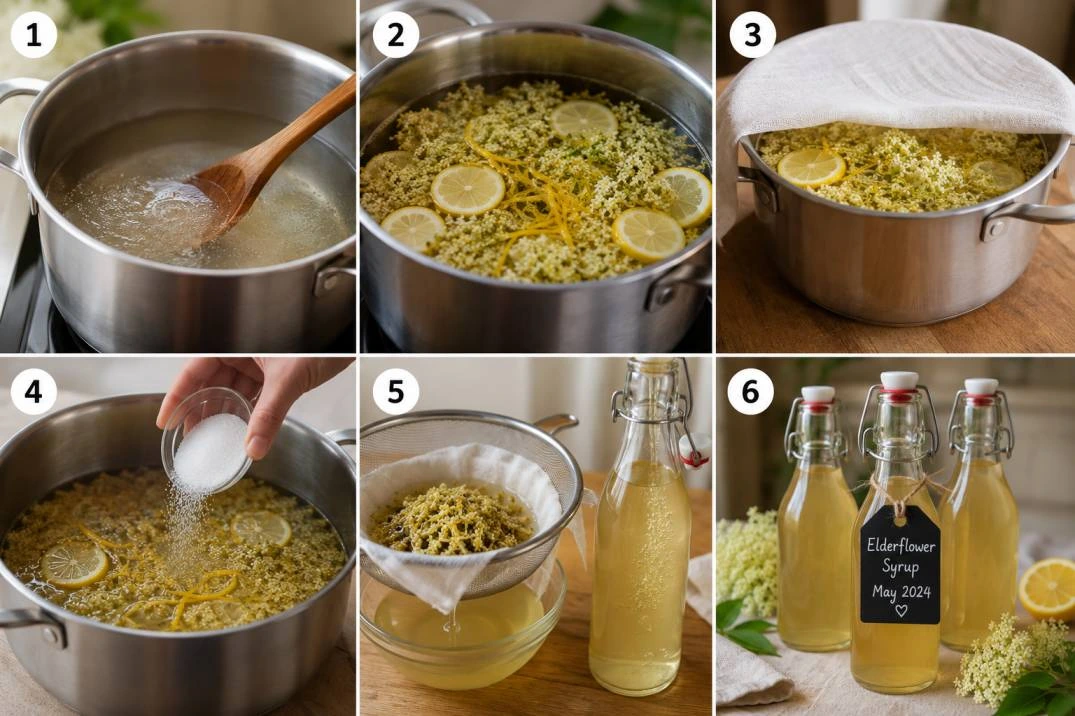
Prepare the Sugar Syrup Base
Combine the water and sugar in a large saucepan. Bring to a gentle boil over medium heat, stirring until every grain of sugar has fully dissolved — this takes about 3–5 minutes. Remove from heat immediately. A clean syrup base is the foundation of everything that follows; cloudy or partially dissolved sugar will affect both flavour and shelf life.
Add the Elderflowers and Lemon
Allow the syrup to cool for 5 minutes (not fully — you want it warm, not boiling hot). Add your elderflower clusters directly to the pot, along with the lemon zest and slices. Stir gently to submerge the flowers. The warm syrup extracts the floral compounds more efficiently than cold liquid.
Steep for 24–48 Hours
Cover the pot with a clean cloth or lid and leave to steep at room temperature for a minimum of 24 hours — and up to 48 hours for a deeper, more complex flavour. Stir gently once or twice during steeping. Do not exceed 48 hours: over-steeping introduces bitterness from the stems and can encourage unwanted fermentation.
Add the Citric Acid
After steeping, stir in the citric acid. This is your key preservation tool: it lowers the pH of the syrup, inhibiting bacterial and mould growth, and gives the syrup a clean, bright flavour that balances the sweetness. Use 20 g for a milder result, 30 g for a sharper, more preserved syrup. Don’t skip this step — it’s what separates a syrup that lasts from one that spoils in a week.
Strain and Bottle
Strain the syrup through a fine-mesh sieve lined with a clean cotton cloth or muslin, discarding the spent flowers and lemon. For absolute clarity, strain twice. Pour the finished syrup into sterilised glass bottles while still warm (not hot), seal immediately, and turn upside down for 2 minutes to create a vacuum seal.
Label and Store
Label your bottles with the date. Store sealed bottles in a cool, dark place. Refrigerate after opening. Your syrup is ready to use immediately, but the flavour deepens and mellows beautifully over the first week.
Add the Citric Acid
After steeping, stir in the citric acid. This is your key preservation tool: it lowers the pH of the syrup, inhibiting bacterial and mould growth, and gives the syrup a clean, bright flavour that balances the sweetness. Use 20 g for a milder result, 30 g for a sharper, more preserved syrup. Don’t skip this step — it’s what separates a syrup that lasts from one that spoils
Methods for Storing Elderflower Syrup and Its Shelf Life
Proper preservation is where many first-time makers go wrong. Here’s a straightforward reference for expected shelf life under different conditions:
| Storage Method | Shelf Life | Notes |
|---|---|---|
| Sealed bottle, cool dark cupboard | 6–12 months | With sufficient sugar and citric acid |
| Refrigerator (opened) | 4–6 weeks | Keep tightly sealed, use a clean spoon |
| Freezer (portioned) | Up to 2 years | Freeze in ice cube trays for easy use |
| Low sugar / no citric acid | 1–2 weeks | Not recommended for longer storage |
🧪 On Mold: What to Do
If you spot mold in your syrup, discard the entire batch — do not try to scoop it out. Mold in a liquid means the contamination has already spread beyond the visible patch. Prevention is straightforward: sterilise your bottles properly (10 minutes in boiling water), use sufficient sugar (minimum 700 g per litre), don’t reduce the citric acid, and always use a clean utensil when pouring.
Frequently Asked Questions
How long exactly should elderflower syrup steep, and what happens if I leave it too long?
The sweet spot is 24 to 48 hours. At 24 hours you get a delicate, floral result; at 48 hours the flavour is more pronounced and complex. Beyond 48 hours, however, the green parts of the stems begin releasing bitter compounds, and in warm conditions the natural yeasts on the flowers can trigger unwanted fermentation — you’ll notice bubbling and a faintly alcoholic smell. If that happens, the syrup is not necessarily ruined, but the flavour will be off and shelf life dramatically reduced.
How much sugar should I use for 1 litre of elderflower syrup?
Use between 800 g and 1 kg of white granulated sugar per litre of water. This high sugar concentration is not just about sweetness — it’s a preservation mechanism. Sugar draws water away from microorganisms through osmosis, preventing them from thriving. Reducing the sugar below 700 g significantly shortens the shelf life and increases the risk of mold, even when citric acid is present. If you prefer a less sweet syrup, dilute it more when serving rather than reducing sugar during production.
Why is citric acid used in elderflower syrup, and can I substitute something else?
Citric acid is used as a natural preservative and flavour brightener. By lowering the pH of the syrup, it creates an inhospitable environment for bacteria and mold. It also enhances the floral aroma and adds a pleasant tartness. For 1 litre of syrup, 20–30 g is the standard range. The most natural substitute is fresh lemon juice — roughly the juice of 4–5 lemons per litre — though it produces a slightly less stable and more perishable result. Tartaric acid is another option, popular in winemaking, and performs similarly to citric acid.
Why is my elderflower syrup going mouldy, and how can I prevent it?
Mold almost always traces back to one of four causes: insufficient sugar, too little or no citric acid, improperly sterilised bottles, or contamination during handling (using a wet or dirty spoon, for example). The fix is systematic: sterilise every bottle and utensil in boiling water for at least 10 minutes before use, stick to the recommended sugar and citric acid quantities, bottle while still warm, and store in a cool dark place. Once opened, refrigerate immediately and consume within 4–6 weeks. If mold appears despite all precautions, discard the batch and review your bottling process.
Your First Batch Is Waiting
Elderflower season is short — just a few precious weeks each year. This guide gives you everything you need to make the most of it. Gather your flowers, trust the process, and this time next year you’ll wonder how you ever let those blossoms go to waste.