The Foolproof Cupcake Recipe I Give Every Beginner Baker
The first cupcakes I ever taught someone to bake came out looking like little volcanoes — domed, cracked, and sunk in the middle by the time they’d cooled. Sound familiar? Don’t worry. After years in professional kitchens and just as many years teaching complete beginners, I can tell you that cupcakes are one of the easiest bakes to get right once you know the handful of things that actually matter. Everything else is noise.
This is the recipe I hand to nervous first-timers, along with the little bits of know-how that never quite make it onto the recipe card.
Quick takeaways before you start
- Room-temperature butter and eggs make all the difference — cold ingredients won’t emulsify properly
- Don’t overmix once the flour goes in, or you’ll knock the air straight back out
- Plain flour with baking powder gives you more control than self-raising
- Fill your cases two-thirds full, no more — that’s the secret to a flat, even top
What you’ll need
This makes 12 standard cupcakes — enough for a proper batch without a mountain of leftovers.
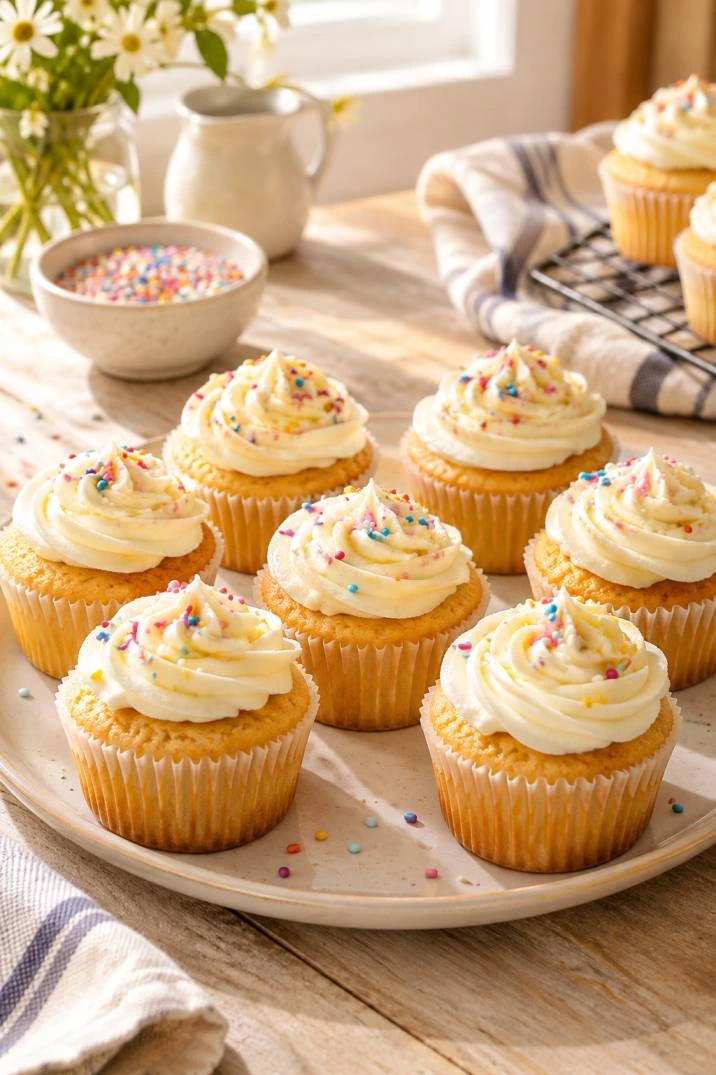
Foolproof Vanilla Cupcakes
Ingredients
Quick word on that flour: I always reach for plain flour plus baking powder rather than self-raising. Self-raising works in a pinch, but you’ve got no control over how much lift you’re getting, and cupcakes are unforgiving when the balance is off. Measuring your own leavening means consistent results every single time.
The method:
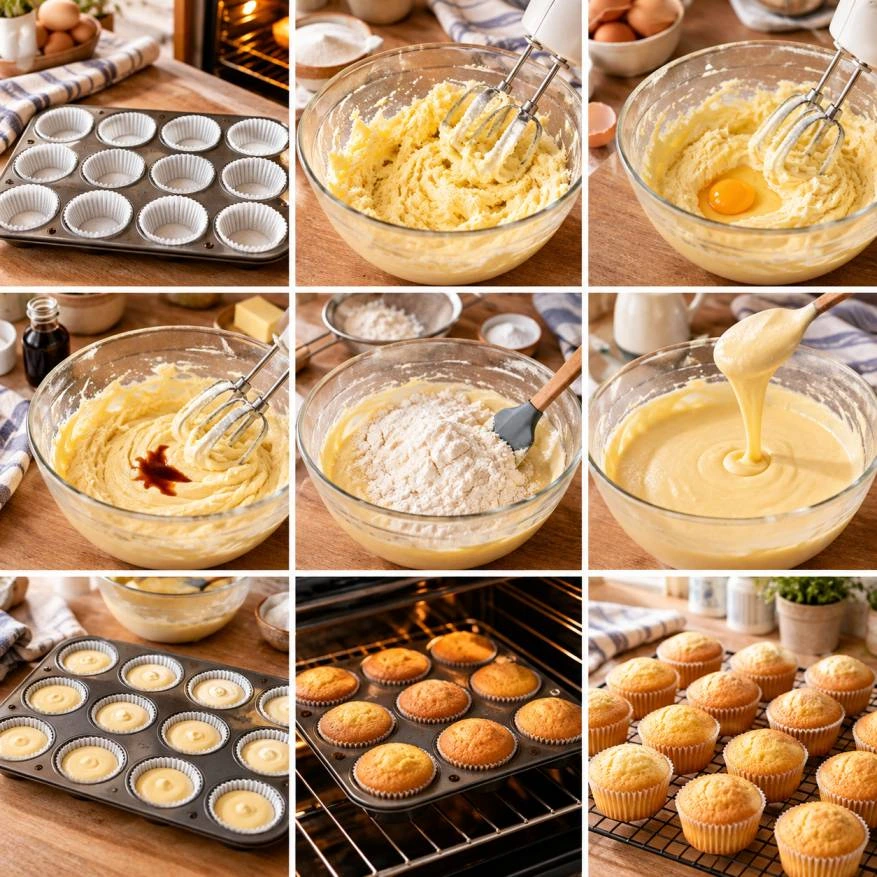
- Heat your oven to 180°C (160°C fan) and line a 12-hole muffin tin with paper cases. Do this first — cupcake batter doesn’t like to sit around waiting.
- Cream the butter and sugar together for a full 3–4 minutes, until it’s pale, fluffy, and noticeably lighter in colour. This isn’t a step to rush. This is where your air comes from, and air is what separates a good cupcake from a dense one.
- Add the eggs one at a time, beating well after each. If the mixture looks like it’s splitting or curdling, add a spoonful of your flour to bring it back together.
- Beat in the vanilla extract.
- Sift in the flour, baking powder and salt, then fold gently using a spatula or the lowest speed on your mixer. Stop as soon as you can’t see streaks of flour. This is the step that makes or breaks your texture — more on that below.
- Loosen with milk, a tablespoon at a time, until the batter drops off a spoon in a smooth ribbon rather than a lump.
- Divide between the cases, filling each two-thirds full. Resist the urge to add more — they’ll rise a good deal further than you expect.
- Bake for 18–20 minutes, until golden and a skewer inserted into the centre comes out clean. Try not to open the oven door before the 15-minute mark; a sudden cold draught is a classic cause of sunken middles.
- Cool in the tin for 5 minutes, then transfer to a wire rack to cool completely before icing.
Why cupcakes actually go wrong
Nine times out of ten, a disappointing batch comes down to one of two things: overmixing, or an oven that’s hotter (or colder) than the dial says. Once you’ve folded in the flour, every extra stir develops the gluten in that flour a little more, and too much gluten gives you a tough, chewy cupcake instead of a tender one. If you’re not sure whether you’ve overdone it, look at the batter — it should still look slightly lumpy and loose, not smooth and elastic like bread dough.
An oven thermometer is the cheapest £5 you’ll ever spend on your baking. Most domestic ovens run at least 10–15°C off from what the dial claims, and that’s more than enough to turn a golden, springy cupcake into a dry one — or an underbaked, sunken one.
Getting that soft, moist crumb
This is the question I get asked more than any other, and the answer is almost always fat and sugar. Butter gives cupcakes their flavour and structure, but a little oil in the mix — even just a tablespoon swapped in — adds moisture that stays put for longer, since oil remains liquid at room temperature while butter doesn’t. If you want a cupcake that’s still soft on day three, that’s your trick.
The other unsung hero is a light brushing of sugar syrup over the warm sponge before icing. It sounds fussy, but it takes thirty seconds and makes a genuinely noticeable difference to how long your cupcakes stay soft.
A word on flavour swaps
No vanilla extract in the cupboard? Don’t stop what you’re doing to run to the shops. Almond extract works beautifully in a smaller quantity (about half as much, as it’s stronger), or you can leave it out entirely and lean on citrus zest, a spoonful of cocoa, or a spice like cinnamon instead. The vanilla is there for warmth and roundness, not as a load-bearing ingredient — your bake won’t fail without it.
Frequently asked questions:
What is the key to a moist cupcake?
Balance your fat: a mix of butter for flavour and a touch of oil for lasting moisture, and don’t overbake — pull them out the moment a skewer comes out clean.
What is the secret to fluffy cupcakes?
Proper creaming of the butter and sugar to trap air, room-temperature ingredients that combine easily, and a gentle hand once the flour goes in.
Can you use self-raising flour for cupcakes?
You can, but I’d suggest plain flour with measured baking powder instead — it gives you consistent, predictable rise rather than leaving it to chance.
What can I use if I don’t have vanilla extract?
Almond extract at half the quantity, or skip it and add citrus zest, cocoa powder, or a warm spice instead.
Over to you
Cupcakes reward patience far more than skill — get the creaming right, don’t overwork the flour, and trust your oven thermometer over the dial, and you’re most of the way there. Give this batch a go this weekend, and if you try one of the flavour swaps above, I’d genuinely love to hear how it turns out. Drop a comment below with your results — or your disasters. We’ve all had a volcano cupcake or two.